Fufu Kyoto: An Intimate Retreat Between a Meiji Garden and Private Onsen


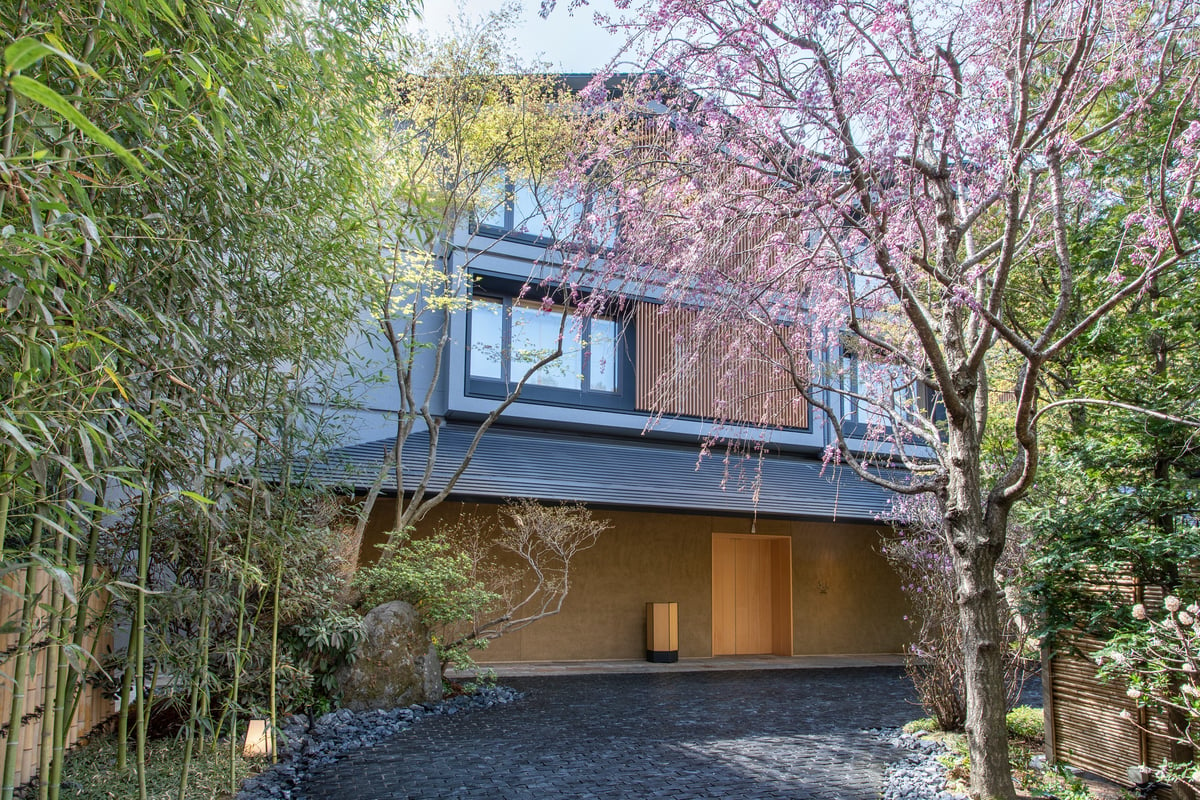
In Kyoto, some addresses seem to reveal themselves in whispers, like a secret. Nestled in the Okazaki district, on the doorstep of Higashiyama’s cultural treasures, FUFU Kyoto embodies a contemporary vision of Japanese hospitality that favors restraint over brilliance, precision over ostentation and intimacy over spectacle. Behind its understated elegance, this luxury ryokan, which opened in 2021, offers a rare immersion in the Kyoto art of living: spacious rooms with private hinoki onsen, a garden inherited from the Meiji era, exquisitely delicate seasonal cuisine and a hushed atmosphere where wood, water, light and fragrance create a profoundly serene sensory journey.
A Hidden Ryokan Among Temples, Museums and Gardens
In the heart of Okazaki, one of Kyoto’s most cultured and refined districts, FUFU Kyoto enjoys an exceptionally elegant setting between the historic Lake Biwa Canal, the foothills of Higashiyama and some of the city’s most important heritage sites. Just steps from the Kyoto Museum of Art, Nanzen-ji Temple and Murin-an, a masterpiece of Meiji-era landscape design, the hotel stands amid a setting steeped in history, long favored by the elite for their private villas and secluded retreats. Discreetly nestled beside the water, this luxury ryokan, which opened in 2021, cultivates an atmosphere of absolute serenity: a private, greenery-lined path leads to a peaceful garden and small pond, creating an intimate haven within a traditional neighborhood where temples, museums, restaurants and boutiques are all easily explored on foot.


The Understated Elegance of a Contemporary Ryokan
At FUFU Kyoto, style speaks in whispers: in the sound of flowing water, in light filtered through latticework and in wood warming the contemporary lines. Designed by Saiun Design, the interiors blend modern minimalism with Japanese sensibility, using a palette of natural tones in which every detail appears to have been placed with quiet restraint. Enveloped in wood and washi-paper partitions, the reception area establishes a hushed, almost ceremonial atmosphere from the moment of arrival, while the welcome over a seasonal drink sets the tone for hospitality that is both meticulous and gracious.


This understated elegance is woven into the DNA of FUFU Japan, a collection of intimate luxury resorts founded in Atami in 2007 that has gradually achieved cult status among discerning travelers. With around ten properties across Japan, including the eagerly awaited FUFU Tokyo Ginza, which opened in 2025 and which we also had the opportunity to experience a few months ago (read our article: Discovering FUFU Tokyo Ginza: The Modern Ryokan in Central Tokyo), the brand continues to refine its singular vision of Japanese hospitality: contemporary, intimate and deeply connected to nature and the seasons. In Kyoto, this philosophy takes shape through dark corridors punctuated by beams of light that illuminate delicate ikebana arrangements, alongside soothing views of the Japanese garden. Everything here contributes to a quiet sense of luxury, imbued with the timeless grace of cypress, flowers and light.


The Rare Intimacy of 40 Rooms with Private Onsen
With just 40 rooms spread across four floors, FUFU Kyoto cultivates a rare sense of privacy and exclusivity, made all the more precious by dimensions that are exceptionally generous for Kyoto. Available in six categories, the rooms range from approximately 42 to 101 m², from Comfort Twin-Bed Suites to the most exclusive suites overlooking Daimonji-yama and the surrounding mountains.


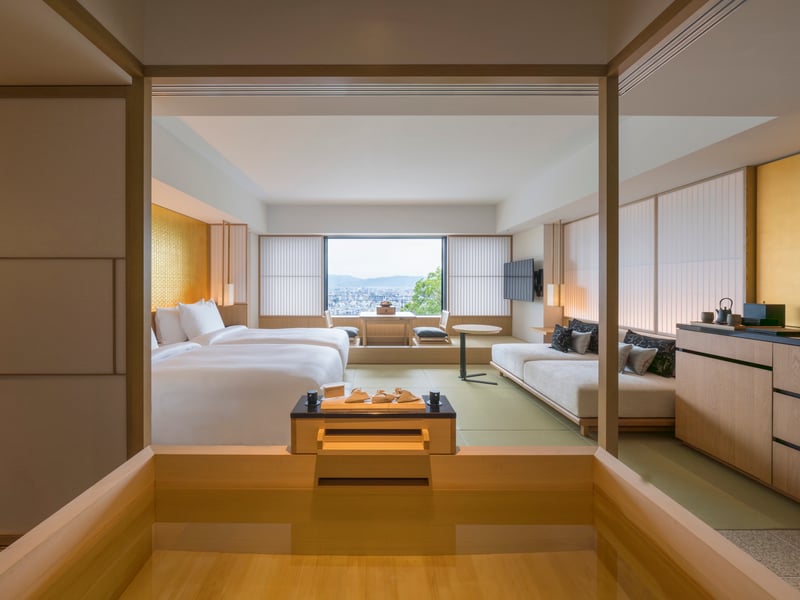
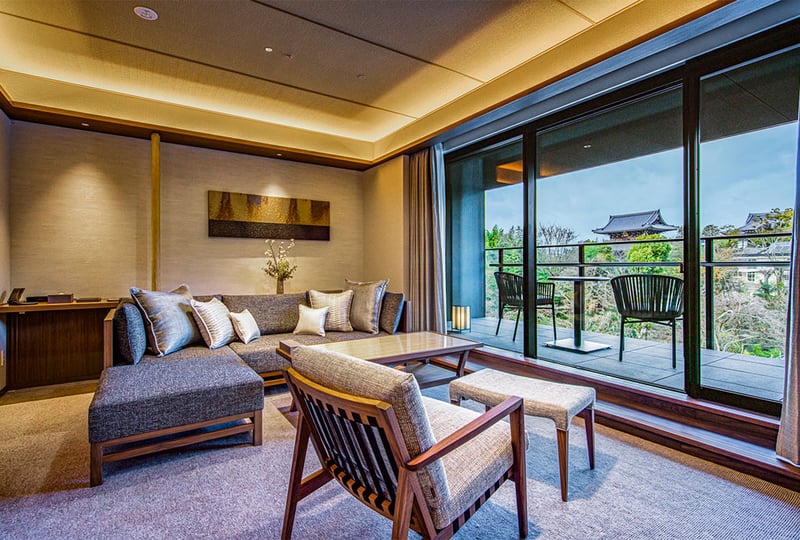
During my stay, the 74 m² FUFU Luxury Corner Suite struck a superb balance between contemporary elegance and Japanese refinement: beds fitted with remarkably comfortable Simmons mattresses, a long, clean-lined sofa facing the garden, gleaming lacquerwork, delicate lattice screens filtering the light, handcrafted ceramics and seasonal floral arrangements. Bespoke carpets adorned with Kanze-mizu motifs, evoking the ripples of the Lake Biwa Canal, added a subtly poetic touch.


Perhaps the most intimate luxury at FUFU Kyoto is the private onsen found in every room, supplied with gentle thermal water and set within a hinoki bathtub, crafted from Japanese cypress prized for its soothing fragrance. Opening the sliding windows allows a light breeze to drift into the room as reflections from the water dance across the ceiling, creating an almost meditative atmosphere. Every detail contributes to a sensory immersion in the Kyoto art of living: the sandalwood and cherry blossom scents of YOKOU’s organic amenities, sencha tea served with a cast-iron kettle, artisan-made vases and glimpses of greenery through the windows. Another discreet yet thoughtful detail is the private delivery compartment beside each room’s entrance, allowing guests to receive meals, snacks or gifts selected by the hotel without opening the door, thereby preserving complete privacy.

A Morning Box in Which Kyoto Awakens
Breakfast unfolds as a refined morning ritual, served in an elegant tiered lacquer box known as Fukue-zen, a symbol of layered happiness. Its four compartments reveal a colorful assortment of delicate dishes, prepared with a distinctly Japanese attention to detail and seasonality. Available both in the restaurant and in the privacy of one’s room—the option we chose—it becomes a suspended moment to savor in perfect tranquility. Accompanying this harmonious composition is a steaming bowl of Anto jiru, adding warmth and depth: a generous soup combining Kyoto’s local white miso with FUFU’s signature dashi, for a morning experience that is comforting, authentic and deliciously sophisticated.


A Poetic Dinner Inspired by Kyoto’s Seasons
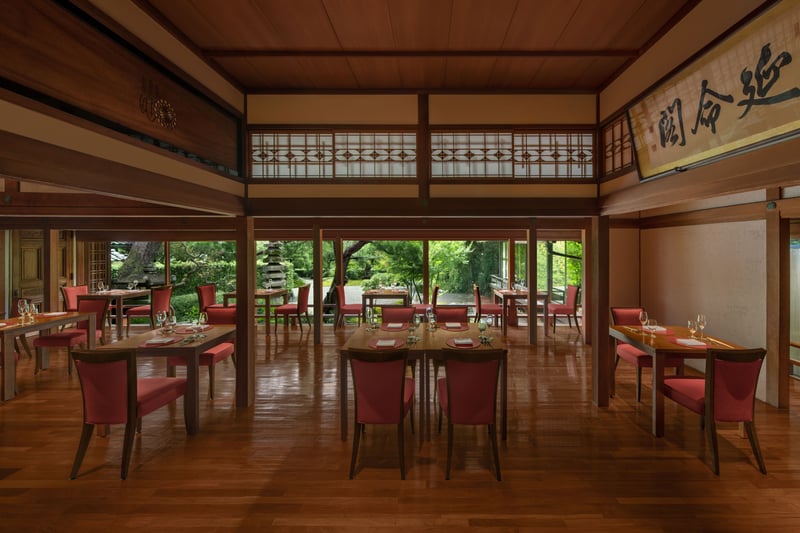
At Ioto restaurant, dinner is enjoyed overlooking the Japanese garden, in a hushed setting where the vertical lines of the partitions evoke the winding lanes of old Kyoto. Shitomi-do inspired by noble residences of the Heian period, Genji-ko motifs, hand-pressed Rakusui-shi paper, suspended bonsai trees, seasonal flowers and Makie lacquer trays create an exquisite backdrop. In this intimate, airy atmosphere, FUFU Kyoto celebrates local produce through refined Japanese cuisine, showcasing Kyoto’s traditional vegetables, known as Kyo-yasai, alongside charcoal-grilled preparations. Each dinner promises a multisensory experience in which regional techniques, impeccably fresh ingredients and elegant presentations reveal a contemporary interpretation deeply rooted in Kyoto’s traditions.


Our dinner began with a delicate constellation of seasonal bites, adorned with colorful threads evoking the wishes made during the Tanabata festival. Each element appeared conceived as a miniature summer landscape: octopus simmered until silkenly tender was paired with the velvety sweetness of pumpkin and taro, while Kamigamo tomato prepared ratatouille-style added a sun-kissed, fragrant note. Grilled scallop with zucchini and water shield offered an elegant aquatic freshness, followed by salmon and lotus root fried in a crisp rice-cracker crust. Summer turnip, white celery and Kyoto mizuna leaves brought a graceful vegetal lightness, heightened by burdock chips and onion vinaigrette, creating an opening course that was at once ceremonial, poetic and profoundly seasonal.

Continuing this first evocation of summer, the soup was unveiled beneath a lid decorated with botanical motifs. The chilled winter melon broth was clear and silky, with an almost crystalline freshness, enveloping fried pike conger whose texture was both tender and subtly crisp. Fine, elegant strands of white somen noodles lent a delicate grace to the composition, while slices of okra punctuated the surface with vibrant touches of green. A yuzu and pickled plum sauce created a refined tension between acidity, citrus fragrance and saline depth, transforming the soup into a delicate, fresh and sophisticated prelude.

After this limpid interlude, SEN TO HIASOBI arrived as an elegant marine composition exploring the contrast between icy freshness and the heat of the grill. Presented in a black bowl set over crushed ice, sea bream and bluefin tuna revealed their delicate textures, enhanced by colorful garnishes, finely sliced vegetables and a touch of wasabi. Alongside them, grilled eel delicately glazed with a white sauce was paired with sponge gourd for a soft, melting accent. Grilled nori added a crisp, briny note, complemented by small bowls of sauces that allowed each bite to be adjusted with precision. Refined and almost ceremonial, the dish brought the purity of sashimi into dialogue with the smoky depth of grilled seafood.

The culinary narrative continued with a tribute to the Gion Matsuri festival. The pike conger “Kosode” sushi, delicately paired with sweet potato simmered with lemon, offered a refined sweet-tart quality, while pickled myoga ginger enlivened the composition with floral spice. An aspic of summer vegetables and kuruma prawn played with transparency and freshness, punctuated by asparagus and baby corn. Elsewhere, Manganji red pepper was softened by a thick edamame purée, while ayu wrapped in yuba and water-pepper tempura added vegetal depth, crisp texture and a delicately briny note. Together, these elements created a plate that was festive, poetic and exceptionally elegant.

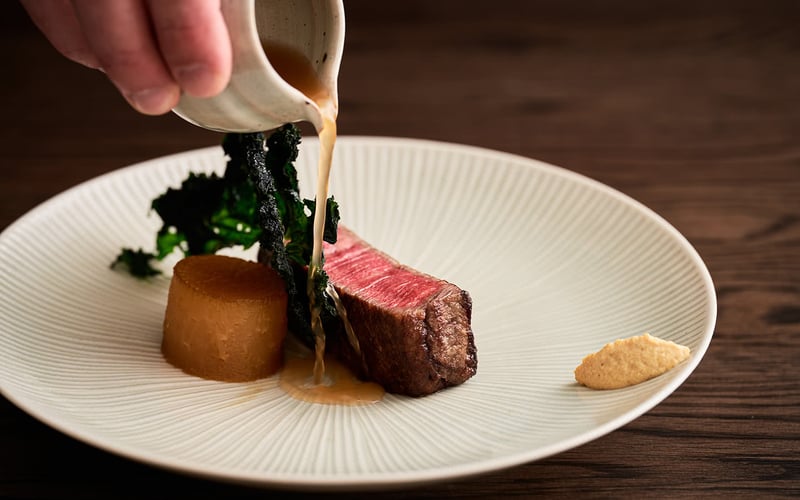
Next came the Yuan-Yaki wagyu sirloin: several cubes of charcoal-grilled beef, seared on the outside and delicately pink at the center, accompanied by Awaji onion, atsuage and Kujo green onion. Glossy and succulent, the meat delivered the melting richness for which wagyu is renowned, while charcoal grilling lent it an elegant smoky depth. On the side, white miso with sansho offered a sweet, savory and subtly citrusy note, complemented by wasabi and salt served separately, allowing each bite to be seasoned with finesse.


In a more comforting register, the konabe arrived as a small Japanese hot pot of understated elegance. Within a clear, delicately amber broth were tender summer duck and a soft-textured duck meatball, accompanied by translucent slices of Awaji onion, renowned for its sweetness, a piece of golden atsuage that deliciously absorbed the surrounding flavors, and fine ribbons of Kujo green onion bringing freshness and vibrancy. The dish embodied refined Japanese cooking, warming without heaviness, with every ingredient seemingly chosen for its seasonality, subtle fragrance and balance of umami depth, vegetal sweetness and gentle comfort.

The savory courses concluded with a quietly elegant Japanese ritual: in a still-warm black clay pot, Kyotango Koshikari rice, steamed with almost ceremonial precision, appeared soft and pearlescent beneath golden kernels of corn, broad mitsuba leaves and glossy, delicately caramelized pieces of teriyaki-style sea bass. Served with miso soup and pickled vegetables, the dish offered a distinctly Japanese balance between the sweetness of the rice, the fish’s umami, the glaze’s sweet-savory notes and a lively herbal freshness—a comforting, restrained and luxurious conclusion.


Finally, dessert provided a delicately refreshing finale. Silky panna cotta was topped with translucent pieces of white peach and juicy watermelon, immersed in a pink jelly made with red shiso from Ohara, which added an herbal, floral and gently tart note. Alongside it, a quenelle of pale, sunlit mango ice cream offered a creamy, exotic contrast, while a small cup of green tea completed the composition with elegant bitterness.

A Meiji-Era Garden
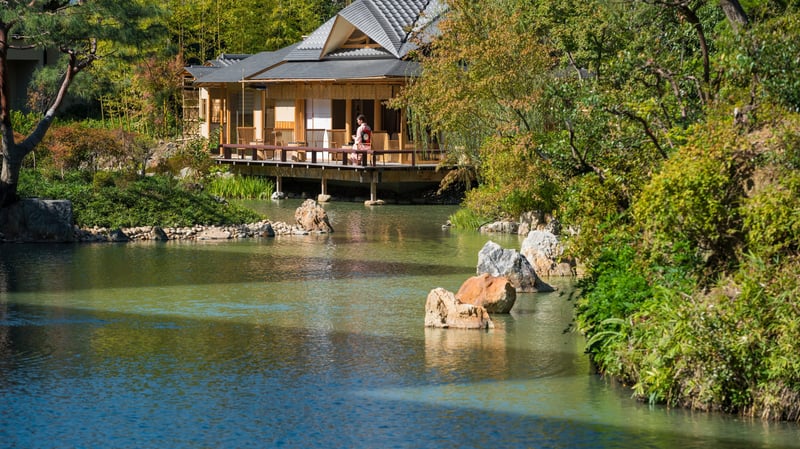
At the heart of the hotel lies a historic Japanese garden whose origins date back to the Meiji era, when numerous villa gardens were created throughout the Nanzen-ji district. Fed by the waters of the Lake Biwa Canal and inspired by the topographical harmony of Shijin-Souou, this enchanting landscape blends stepping stones, Japanese red pines, cherry trees and maples, revealing a new visual poetry with every season. Guests can admire it from the restaurant, stroll through it in perfect tranquility or enjoy the independent Yae-Hitoe annex, an elegant single-story wooden villa whose traditional architecture, Yatara-jima-patterned shoji and Kokera-buki roof converse with the surrounding nature. This intimate space offers privileged moments over a drink, as well as refined cultural experiences such as ikebana, tea ceremonies and private yoga sessions, in a setting where contemporary luxury gracefully recedes before the timeless spirit of Kyoto.


My Review
FUFU Kyoto leaves the rare impression of a place where every moment is attuned to the city’s secret rhythm: the murmur of water, the fragrance of hinoki, the precision of a seasonal dinner, the soothing warmth of a private onsen and the changing beauty of a garden inherited from the Meiji era. Set in a district removed from the bustle yet never far from Kyoto’s great cultural treasures, the ryokan creates a deeply elegant, intimate and sensory retreat, ideal for travelers seeking a Japan that is refined, contemporary and profoundly rooted in tradition. Guests come to sleep in peace, bathe in the privacy of their room, savor delicate cuisine and walk to nearby temples; they leave with the feeling of having encountered a quieter, slower and more precious Kyoto—one revealed through its details and remembered long afterward.
What I Loved:
- The intimate atmosphere of the hotel, with just 40 rooms and suites, each featuring its own private onsen and further enhancing the sense of tranquility.
- The design of the building and rooms, with exceptionally polished contemporary Japanese décor.
- Both dinner and breakfast were outstanding: creative, varied and indulgent.
What I Regretted:
- Although the sleeping area is separate, the absence of an opaque partition means it cannot be completely isolated from the rest of the room.
Practical Information
- FUFU Luxury Corner Suite priced at €1,150 in July 2026, including breakfast and dinner.