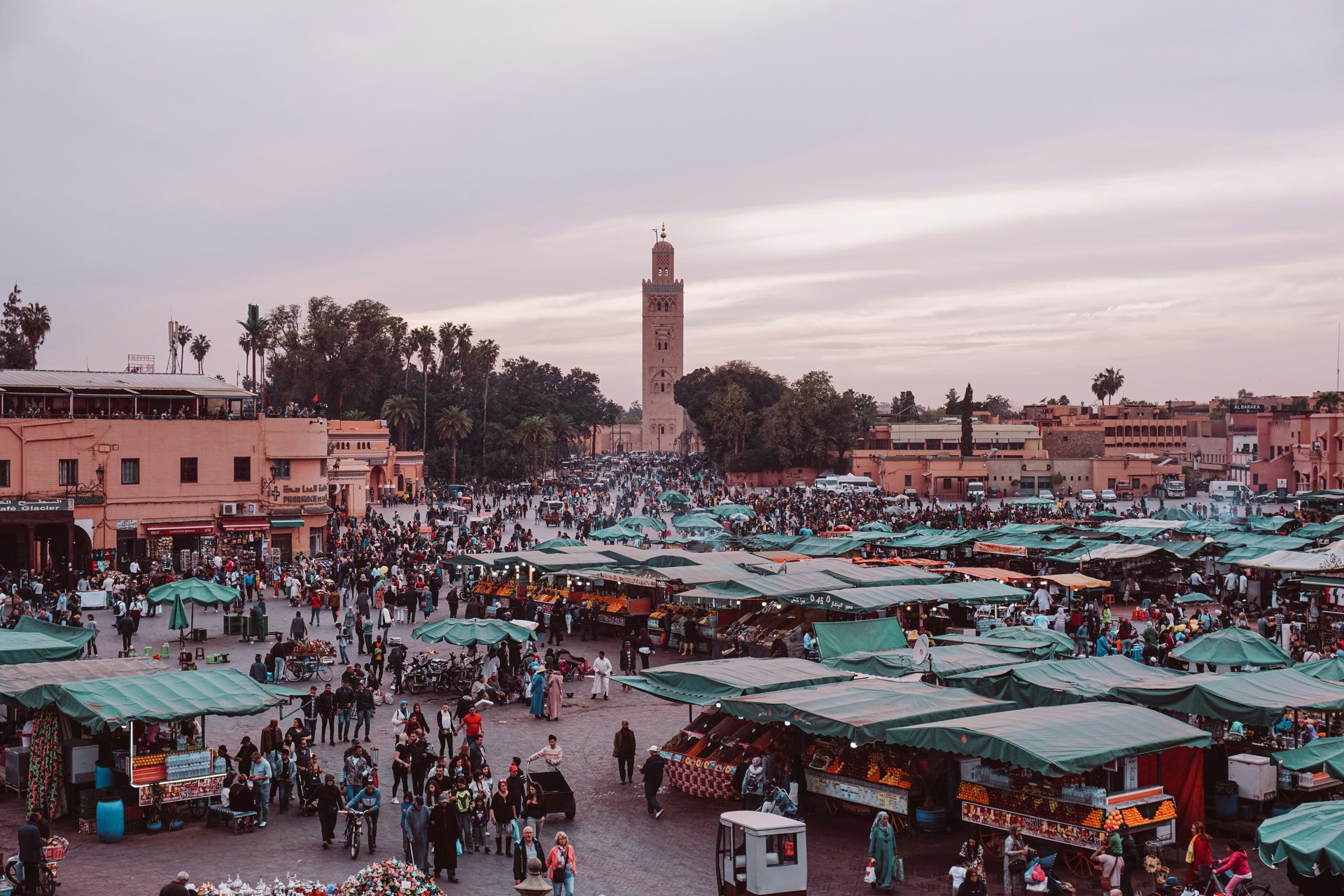
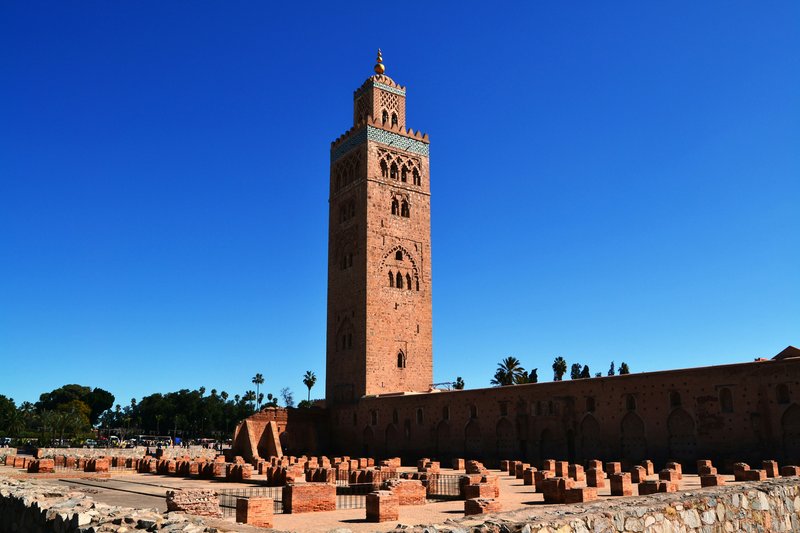
The medina remains the gravitational center of any visit. Behind unassuming doorways on Derb Dabachi or Riad Zitoun el-Kdim, centuries-old courtyard houses have been restored into intimate guesthouses where orange trees shade tilework pools. The Kasbah quarter near the Saadian Tombs offers quieter lanes and proximity to the Royal Palace, while Mouassine draws those seeking proximity to the souks and the photography museum. Beyond the ramparts, the Hivernage district and Route de l'Ourika present a different register entirely — landscaped grounds, Atlas views, and the kind of expansive pools impossible within medina walls.
Dining here follows its own rhythms. Long lunches unfold on shaded terraces; evenings begin late, often after 21h, when rooftop restaurants overlooking Jemaa el-Fna fill with the sounds of Gnawa musicians drifting up from the square below. The coffee culture has evolved considerably — specialty roasters now operate alongside traditional cafés where mint tea remains the order of the day. Whether you're drawn to the labyrinthine calm of a riad spa or the energy of Gueliz's contemporary gallery scene, the city rewards those who move slowly and stay curious.