César Ritz's 1910 palace, meticulously restored by architect Rafael de La-Hoz Castanys, anchors Madrid's Golden Triangle with Belle Époque grandeur reimagined in white and gold. Chef Quique Dacosta's two MICHELIN-starred Deessa commands attention alongside the crystal-canopied Palm Court, while The Beauty Concept spa offers sensation showers and Turkish baths beneath a heated marble pool. Gilded details and ultra-polished service define an experience tailored for travelers seeking cultural immersion with refined European elegance.
Explore Madrid
Where to Stay
This former aristocratic residence along Paseo de la Castellana pairs a modernist granite facade with interiors of quiet refinement—mahogany paneling, stained-glass staircases, and an embroidered textile by Jacky Puzey. The top-floor Real Suite delivers terrace views, a grand piano, and butler service. Chef Jesús Sánchez oversees Amós Restaurant's Cantabrian menu, while Sense Spa draws on Iberian botanicals including bay leaf and orange blossom for treatments rooted in Spanish-Arabic tradition.
Madrid's first luxury hotel, established in 1886 in the Barrio de las Letras, the Gran Hotel Inglés showcases Rockwell Group's Art Deco restoration—brass detailing, geometric motifs, original chandeliers—across 48 rooms, most with signature clawfoot tubs. The dramatic Lobbyto bar, its backlit liquor display suspended overhead, attracts a sophisticated local crowd for inventive cocktails and weekend live music, while Le Max Wellness Club delivers Sisley spa rituals and a Jacuzzi suite with rooftop terrace.
A 19th-century palace and 13th-century convent converge to form this lavishly restored Gran Meliá property, where rooms follow a Velázquez-inspired color palette ranging from Deluxe to Royal suite. Chef Manuel Arenilla's Restaurante Jardín de los Duques occupies the former stables, serving Habsburg-era flavors, while an Asian wellness area staffed by Thai therapists and a seventh-floor rooftop pool with whirlpool deliver panoramic city views and thorough relaxation steps from the Royal Palace.
The Duke of Santo Mauro's 1895 neoclassical palace anchors this 51-room retreat in residential Chamberí, where three historic structures—including converted stables—wrap around a private garden prized for summer gatherings. La Biblioteca Restaurant occupies the restored ducal library, while the art deco Gin Bar draws local gourmands. Persian rugs over parquet, marble fireplaces, and a spa with hammam and indoor pool complete the aristocratic retreat.
Philippe Starck reimagined this 1922 Gran Vía building with interiors echoing Parisian cafés—woven leather ceilings, surrealist canvases, hand-stitched headboards inscribed with handwritten notes. La Capsule spa unfolds 400 m² of white-and-gold serenity: 20-meter pool, flotation chamber, oxygen therapy. The restaurant's open charcoal oven delivers Mediterranean fare inflected by Lebanese and Galician traditions. Four suites claim private rooftop terraces; every bathroom features moss-green glazed terracotta mirrors shaped by hand.
Four historic buildings from the 1890s converge into this Centro Canalejas landmark, their 16,000 restored architectural elements now framing marble foyers, a 2,000-piece art collection—including eight-foot KAWS sculptures—and 200 rooms where chrome and upholstery balance period grandeur. Spain's largest spa sprawls across four floors beneath a rooftop Dani Brasserie commanding city views, while the 400 m² Royal Suite occupies the property's triangular apex with salons under a gold crystal chandelier.
Built in 1885, this 32-room Relais & Châteaux palace gained renown in the 1920s as a stage for theatrical performances, and retains authentic portraits of Spanish royalty—including King Ferdinand VII by Vicente Lopez—alongside trompe l'oeil flourishes. Mario Sandoval helms the kitchen, serving diners beneath the stars in a flowered courtyard, while an English-style tea room overlooks the gardens, offering a tranquil counterpoint to the Prado and Retiro Park minutes away.
Lázaro Rosa-Violán's 2021 renovation channels the aristocratic interiors of 1950s Madrid with midcentury furnishings and patterned rugs across 111 rooms. The Beldon Beauty spa delivers hammam, sauna, and a bespoke bathology ritual—personalized aromas and essential oils for in-room soaks. Martín Berasategui oversees the dining, while Picos Pardos Sky Lounge pairs rooftop cocktails with Balinese daybeds overlooking Salamanca's Golden Mile.
Ian Schrager's 200-room collaboration with Marriott anchors Puerta del Sol with signature white-on-white interiors punctuated by Jean-Michel Frank sofas and a single-slab marble pool table. The rooftop—Madrid's largest hotel pool—overlooks Royal Palace and Almudena Cathedral, sharing terrace space with Peruvian restaurant Oroya. Below, Jerónimo brings Enrique Olvera's modern-Mexican repertoire (mole negro, hamachi ceviche, lobster tostada) to a plant-filled dining room ablaze in pink and yellow.
Where to Eat
Dabiz Muñoz's three-star flagship delivers fun, hedonistic cuisine that breaks every convention of fine dining. His single 'Flying Pigs Cuisine' tasting menu—featuring whimsical creations like Galician lobster waking up on Goan beaches and drunken crabs partying in Jerez—fuses Asian techniques with Spanish ingredients, weaving in themes from invasive species to Pyrenean ecosystems. The result is a dream-like, irreverent culinary rollercoaster that constantly challenges the palate. Book well ahead.
Diego Guerrero's industrial-loft dining room in Salesas strips away convention with exposed brick, retro fixtures, and an open kitchen that connects diners directly to the creative process. The two-Michelin-starred kitchen fuses global ingredients into meats-and-grills cuisine that deliberately challenges comfort zones, deploying trompe l'oeil illusions and unexpected pairings across three progressive tasting menus. A Green Star recognizes the restaurant's commitment to sustainability within its boundary-pushing culinary vision.
Quique Dacosta's gastronomic vision takes residence in the Alfonso XIII salon of the Mandarin Oriental Ritz, where two Michelin stars illuminate a dining room overlooking the garden. Resident head chef Domenico Vildacci executes two tasting menus: 'Históricos', drawing from Dacosta's three-starred Dénia repertoire, and 'Contemporáneo', both exploring Mediterranean and Extremadura flavours. Weekday diners can opt for 'Chronos', a four-course distillation of either menu.
Paco Roncero's two-Michelin-starred dining room occupies the top floor of a nineteenth-century building, opening onto a spectacular terrace. The chef channels Madrid's bar culture through an avant-garde lens—his calamari sandwich reimagines a street classic, while the Filipino of foie gras with white chocolate pushes boundaries in the starters. Three tasting menus (Esencia, Madrid, Gran Madrid) explore traditional capital gastronomy with Asian touches, all accompanied by wine pairings.
Chef Ramón Freixa's two-Michelin-starred Atelier operates as a clandestine speakeasy within his larger Tradición restaurant in Salamanca. Ten diners gather around a single U-shaped table while the Catalan chef moves between his open kitchen and guests, serving the Origen tasting menu—a high-precision expression of tradition and creativity, with a vegetarian counterpart called Origen Vegetalia. The bread service alone pays tribute to his family roots.
Tucked behind the Hyatt Regency Hesperia with its own entrance, this two-Michelin-starred dining room seats just two tables and a Japanese-style counter facing the kitchen. Chef-driven Omakase menus—Kõsei no Hi and Matsuri—showcase lightly smoked and charcoal-grilled seasonal produce, matured fish, and meats, all touched with subtle global influences. The intimate, clandestine atmosphere encourages constant interaction between chefs and diners, making it ideal for those seeking both technical mastery and theatrical engagement.
The Sandoval brothers orchestrate a 1,100 m² gastronomic theatre where 2 Michelin stars and a Green Star reflect both culinary ambition and sustainability. Mario Sandoval's Madrid menu reinterprets regional cuisine through seasonal ingredients studied at his Agrolab, while the experience unfolds across an English bar, whisky salon, sherry sacristy, and kitchen aperitif before the teppanyaki-inflected dining room reveals creative Spanish cooking with vegan-vegetarian options.
Chef Ricardo Sanz broke Spanish culinary tradition by pioneering Japanese-Mediterranean fusion, earning this elegant Wellington Hotel restaurant a Michelin star. His legendary huevos rotos swap the usual ham for bluefin tuna and Canary Island potatoes, while nigiri crafted with Ebro delta rice and carabinero prawn usuzukuri showcase meticulous technique. The tasting menu pairs brilliantly with sake, wine, tea, or beer—trust the sommelier—and finish with delicate mochis.
Chef Sergio Manzano's one-star kitchen works premium Joselito Iberian pork and seasonal La Catedral de Navarra vegetables into contemporary plates grounded in technical precision and classical Spanish flavors. Signature Huevo de Mos layers Joselito ham tagliatelle with smoked eel; steak tartare arrives with equal refinement. Sommelier Valerio Carrera steers pairings from a deep cellar, while the wood-lined dining room and kitchen table offer contrasting settings for serious gastronomy.
Javier Sanz and Juan Sahuquillo bring their Casa-Ibáñez pedigree to this intimate one-star dining room inside Hotel Urban, where ingredients from their own vegetable garden and small-scale producers across Spain anchor two tasting menus. The Clásicos route delivers explosive flavor—line-caught squid is a standout—while the longer Temporada menu pushes creative technique further. Impeccable sauces and aesthetic plating define the style; finish with a drink on the rooftop terrace overlooking Madrid.
Frequently Asked Questions
Which Madrid neighborhoods are best for upscale hotels?
+
Salamanca offers the most prestigious addresses, with flagship hotels along Calle Serrano and surrounding streets. The Paseo del Prado corridor suits museum-goers, while Chamberí and Justicia attract guests seeking quieter residential settings with strong local dining.
What are the typical dining hours in Madrid?
+
Lunch runs from 2pm to 4pm, with most restaurants opening for dinner around 9pm. Weekend reservations at sought-after addresses often start at 10pm or later. Adjust expectations accordingly — rushing a meal here misses the point entirely.
Is Madrid walkable for visitors?
+
The historic center from Sol to Retiro Park covers manageable distances on foot. Beyond that, the metro connects neighborhoods efficiently. Summer heat makes morning and evening walks more pleasant, with midday best spent indoors or on shaded terraces.
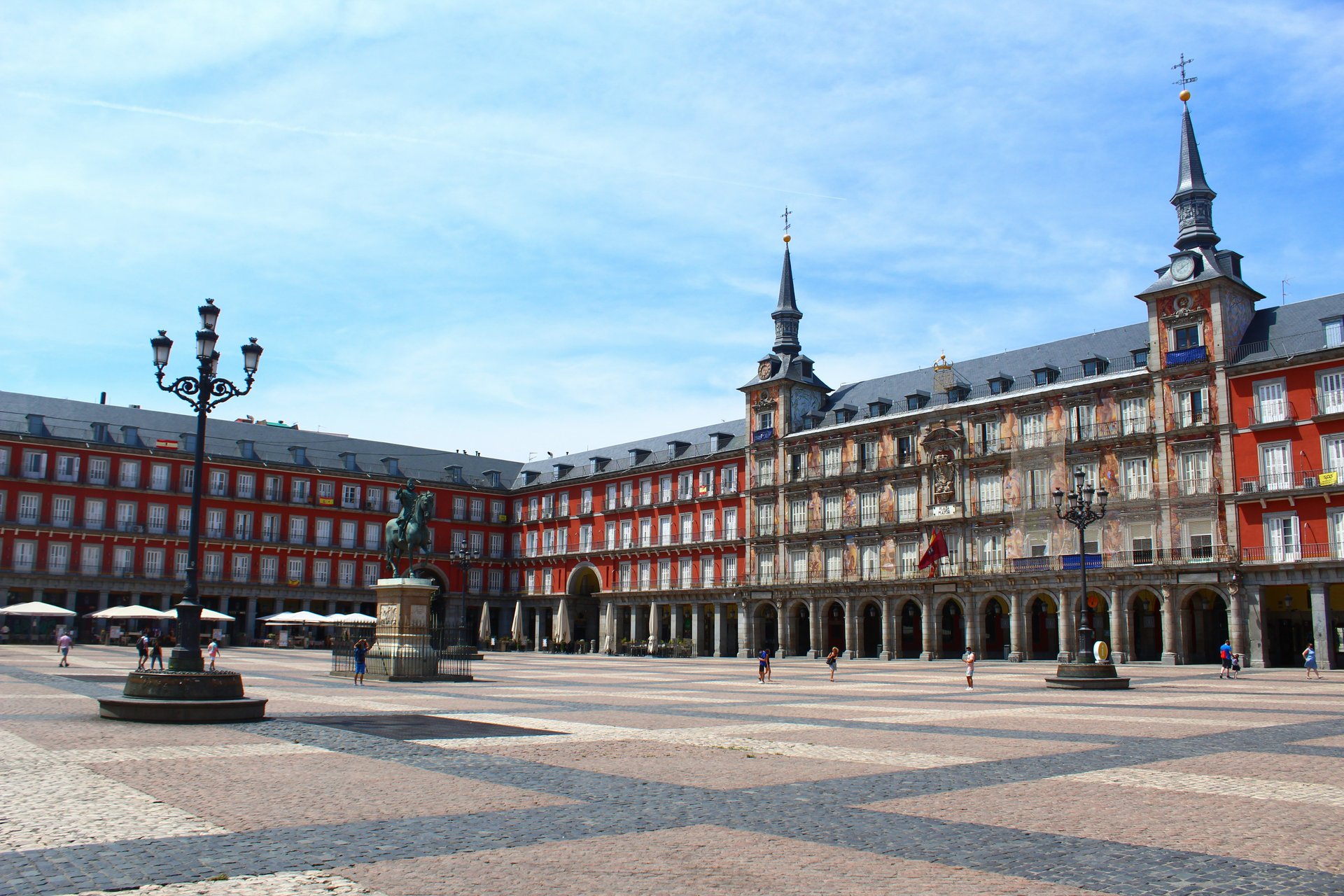
Madrid operates on its own clock. Dinner reservations at ten, vermouth at noon, streets that empty in August and fill again come September. The Salamanca district draws those seeking polished addresses and flagship boutiques, while Malasaña and Chueca offer converted townhouses with more character than square footage. Along the Paseo del Prado, grand hotels face the museum triangle — useful when the Thyssen or Reina Sofía are on your agenda.
The city's gastronomic restaurants have matured considerably, with Spanish chefs returning from abroad to open ambitious kitchens in refurbished industrial spaces and belle époque buildings. But Madrid remains proudly traditional too: century-old tabernas still serve cocido madrileño, and market halls like San Miguel stay packed from aperitivo hour until late. Finding the best hotels means choosing between the Habsburg quarter's cobblestones and the leafy avenues of Chamberí — each neighborhood offering a different rhythm to the day.