Banyan Tree Higashiyama Kyoto: Ryokan Elegance in a Contemporary Hotel


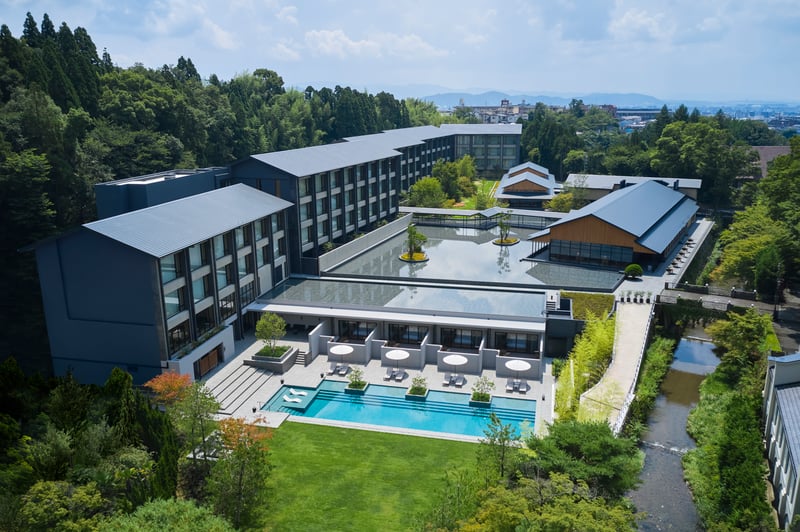
On the wooded heights of Higashiyama, just steps from Kyoto’s temples and historic lanes, Banyan Tree Higashiyama Kyoto invites guests to discover the city at a gentler pace. Opened in 2024, this 52-room retreat brings together Kengo Kuma’s architecture, elegant ryokan-inspired interiors and dining attuned to the seasons. Amid bamboo groves, hot spring baths and a kaiseki dinner at Ryozen, we discovered a wonderfully gracious expression of Japanese hospitality, where every return from sightseeing becomes a moment to savour.
A Peaceful Retreat on the Threshold of Higashiyama
Opened in 2024, Banyan Tree Higashiyama Kyoto sits apart from the bustle without ever feeling far removed, enjoying a coveted setting on the wooded slopes of Higashiyama, in the heart of historic Kyoto. Nestled on a hillside enveloped in bamboo and dotted with mature sakura cherry trees, the hotel offers a deeply serene retreat while placing guests just a few minutes’ walk from landmarks such as Kiyomizu-dera temple, Yasaka Pagoda, the beautifully preserved lanes of Ninenzaka and the Gion district. Its position slightly removed from the busiest streets lends a precious sense of calm, away from the crowds, while keeping the city’s essential sights within easy reach. Above all, this location makes it possible to explore nearby temples and shrines early in the morning, before other visitors arrive, then return to the hushed calm of an intimate retreat surrounded by nature.

Kengo Kuma Reimagines Kyoto Through Craftsmanship, Nature and Modernity
At Banyan Tree Higashiyama Kyoto, design unfolds like a slow breath, where the sacred meets the contemporary. Conceived by Kengo Kuma, the hotel sits with exceptional sensitivity among bamboo groves, restored gardens and beautifully pure architectural lines. Inspired by yūgen, the mysterious, quiet beauty of Japanese aesthetics, and in-sei, the art of retreating into nature, the property forms a sanctuary of understated elegance, where every threshold seems to invite a slower pace. Throughout the hotel, delicate handcrafted pieces in wood, woven fibres, ceramics, metal and textiles pay tribute to Kyoto’s artisanal traditions.


The interiors subtly blend traditional craftsmanship with contemporary refinement. Warm wood, stone, granite, dark slate and naguri textures come together in a natural, almost meditative palette. In the triple-height lobby, light filters through open slats while expansive windows frame the gardens like living paintings. A welcome of matcha tea and wagashi extends this sense of quiet grace, revealing a luxury that favours texture, silence and balance over spectacle.

The crowning feature of this poetic setting, the Bamboo Pavilion rises amid the greenery, with the bamboo forest as its backdrop. Majestic and distinctive, this open-air Noh stage, the only one within a Kyoto hotel, appears to float above a reflecting pool, visible from Ryozen restaurant and the terrace. By turns a focus for contemplation, a cultural symbol and a venue for performances celebrating Japanese arts, it creates a rare harmony between tradition, nature and modernity.


52 Japanese Sanctuaries of Tatami, Shoji and Gold Leaf
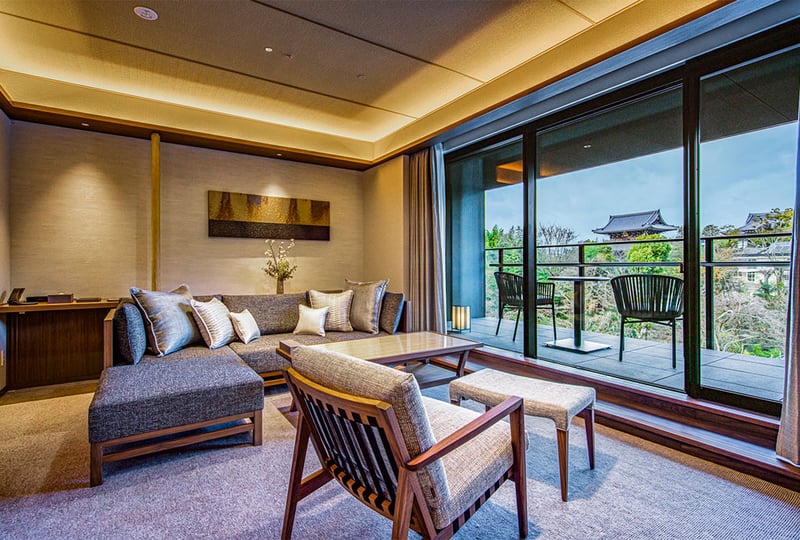
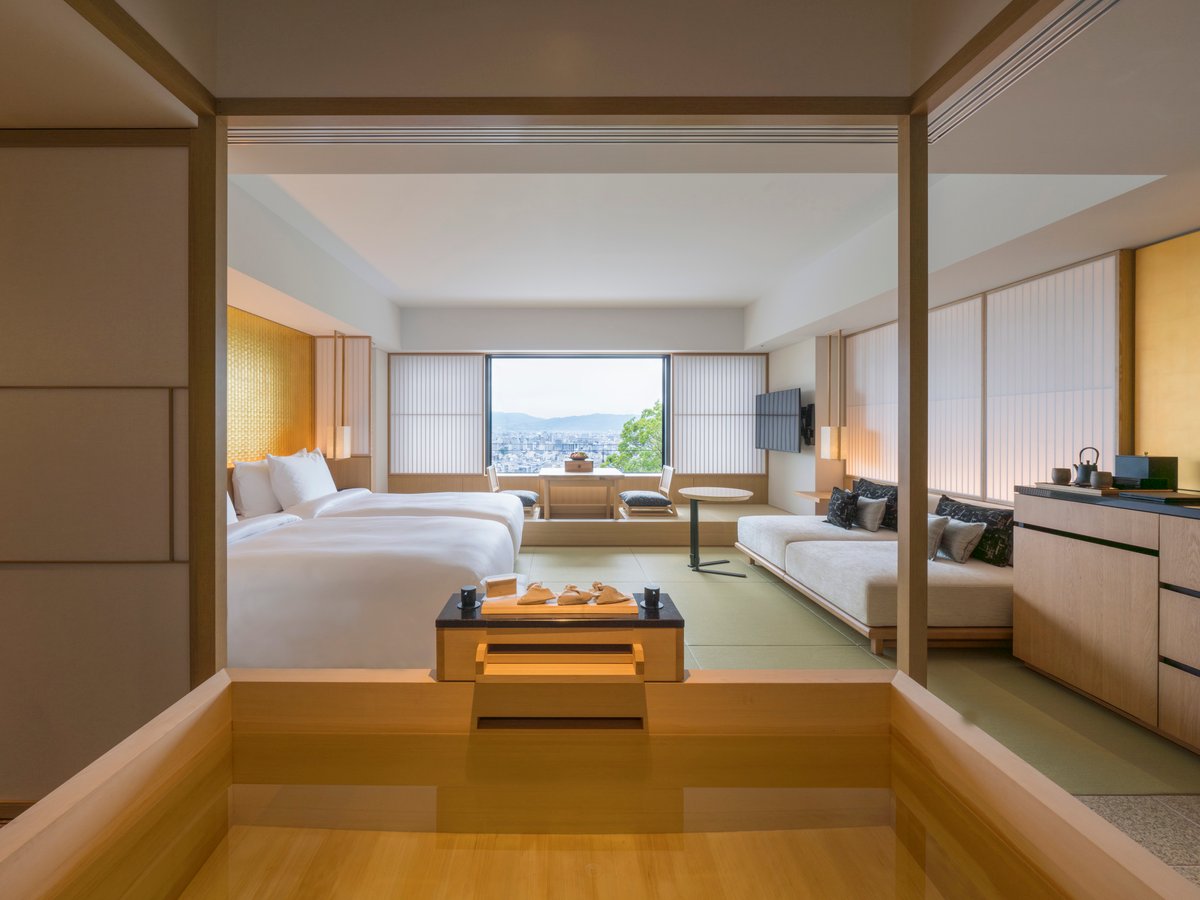
The 52 rooms reinterpret the spirit of the ryokan with a contemporary sensibility that feels intimate and deeply soothing. Designed by the late Japanese designer Yukio Hashimoto, they create a subtle dialogue between traditional craftsmanship and modern comfort: tatami floors, sliding shoji partitions, natural wood, stone, paper, clean-lined furniture and delicate touches of gold leaf establish a hushed, almost meditative atmosphere. Light, natural tones enhance this feeling of calm, while Japanese artworks add discreet elegance. Beside the broad windows, horigotatsu seating areas invite guests to settle in facing the landscape, perfect for reading, enjoying tea or simply contemplating the gardens, Kyoto’s tiled rooftops, pagodas and distant mountains.

Our Serenity room, generously sized at 48 to 55 square metres, offered a wonderfully soothing retreat after a day exploring Kyoto. The king-size bed, dressed in 100% cotton linens, was exceptionally comfortable, while the large, deep sofa and beautifully balanced proportions enhanced the sense of a cocoon. The bathroom was one of the highlights of the experience: exquisitely arranged, it could be closed off with shoji partitions, creating an intimate, distinctly Japanese atmosphere. At its centre, a deep bathtub in aromatic hiba wood invited a true ritual of relaxation; its natural, subtly woody fragrance mingled with the warm water, which could be gently scented with a sachet chosen at check-in. For an even more exclusive escape, the Onsen Retreat rooms feature a private onsen fed by natural thermal water at 40°C from the spring beneath the hotel, offering the rare privilege of enjoying a hot spring bath in the privacy of your own room.


A Morning Feast, from Sashimi to Croissants
Breakfast caters to every mood, from Japanese refinement and balanced wellness options to Western classics. The Japanese breakfast celebrates local flavours with Spanish mackerel grilled with Saikyo miso, assorted sashimi, Kyoto pork simmered with Chinese cabbage, seasonal dishes and a delicate savoury egg custard with Tamba chicken, accompanied by Nichinan Koshihikari rice or rice porridge, Kyoto Yamari miso soup, pickles and seasonal fruit. For a lighter option, the wellness breakfast brings together salad with Saikyo miso dressing, granola, yoghurt, berries, cheeses and fruit. Those drawn to Western comforts can choose scrambled eggs, an omelette or fried eggs, served with bacon, sausage, a potato cake, mushrooms, beans simmered in tomato sauce, sautéed broccoli, a small green salad and a selection of breads, from croissants to golden toast.


Ryozen, Where Kyoto’s Local Flavours Become Poetry
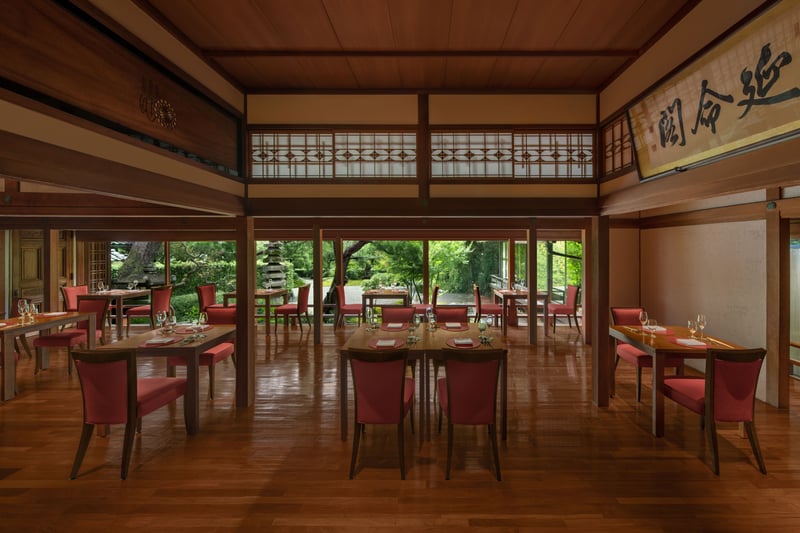
The exploration of local flavours continues at Ryozen, a kappo-style restaurant beside the Bamboo Pavilion. Open for breakfast and dinner, it offers a serene setting overlooking the reflecting pool and Noh stage, with bamboo as the backdrop. The cuisine celebrates the seasons and local producers through Kyo-Yasai, Kyoto’s vegetables, local miso and Black-Shichimi, a regional spice blend. Served on hand-painted ceramic tableware, each composition reflects as much care for presentation as for flavour.

In this exquisite setting, we enjoyed the Fushi Kaiseki, an eight-course dinner exploring the essence of the four seasons through a succession of refined small portions. Delicate preparations and precise plating complement a cuisine that allows each ingredient to express its nuances, throughout a meal imbued with Japanese hospitality. The restaurant also offers the Kaden Kaiseki, a seven-course experience devoted to Kyoto’s authentic flavours, along with an immersive counter dinner where chefs prepare dishes on the grill before their guests.
The appetisers open the Fushi Kaiseki like a miniature seasonal landscape: on a dark tray adorned with foliage, colourful morsels sit alongside delicately shaped bowls. Aubergine simmered in Daigo sauce and grilled eel, accompanied by sesame tofu and cucumber, create a gentle prelude, while wild peach, cured ham with fig and candied sweet potato introduce fruity, indulgent notes. Ezo abalone, thick Japanese omelette and roast duck enrich this mosaic, completed by spicy cod roe with lotus root, rolled burdock and konjac simmered in soy sauce. Facing the garden, the fine bubbles of Kagura Sparkling sake lend lightness to this opening course, whose variety hints at the richness of the menu to follow.


After this mosaic of flavours, the seasonal broth invites a more pared-back tasting experience. It reveals a clear dashi made with Rishiri kombu aged for five years, katsuobushi bonito flakes and maguro-bushi tuna flakes. A conger eel dumpling, somen noodles and pumpkin form this delicate course, lifted by bright yuzu notes and the tart touch of plum paste. The pairing continues with Roasted Green Sparkling, a sparkling roasted green tea served in a tall stemmed glass, with a beautiful amber hue.

The sashimi arrives in a presentation of striking beauty. Three varieties of fish, precisely sliced, alternate pearlescent tones, deep red and translucent flesh. They are simply accompanied by shiso leaves, a few herbs, a dab of wasabi, radish and delicate flowers, adding freshness and dimension while keeping the fish firmly at the centre of attention.

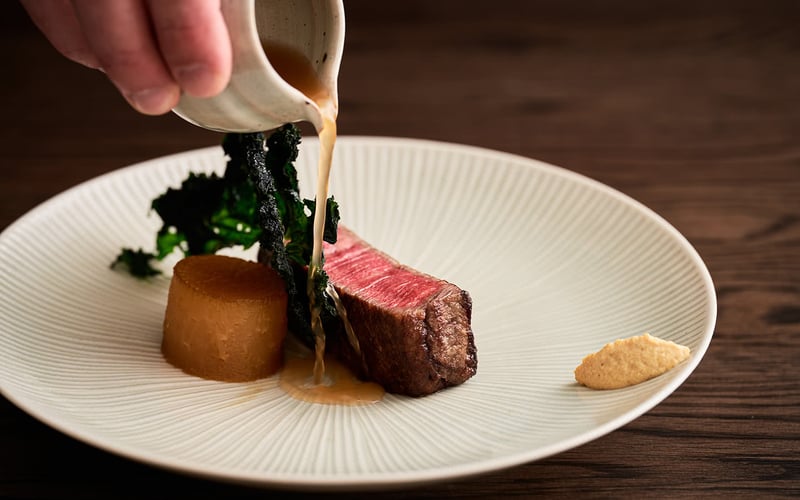
The freshness of the sashimi gives way to the aromas of fire, with a Kuroge wagyu fillet seared over binchotan charcoal. The slices reveal a rosy, juicy and generously marbled centre, edged with a delicately golden crust carrying the fragrance of charcoal. Around them, grilled vegetables — tender squash, baby corn, red and yellow peppers — add sweetness, colour and smoky notes. The carefully arranged condiments — black chilli and salt, wasabi and Akegarashi — allow guests to adjust the intensity of each bite while preserving the flavour of the beef.

After the grilled flavours of the wagyu, a small lotus root bun with wood ear mushrooms and crabmeat sauce takes the meal in a lighter direction. In this warm dish, the care devoted to texture and temperature guides the tasting, allowing the character of each ingredient to emerge. The crabmeat sauce brings a gentle sweetness from the sea, lifted by the bright heat of wasabi, which adds dimension to the dish. Paired with it, Beniharuki Black Sparkling beer reveals an amber colour topped with a fine crown of foam.


The interplay of textures continues with a prawn and three varieties of vegetables wrapped in an airy, pale batter with fine blisters, fried just enough to preserve the freshness of the ingredients beneath a crisp coating. The delicately curved prawn brings its gentle sweetness, while the vegetables reveal deeper vegetal notes, balancing tenderness with a hint of bitterness. Fine Kyoto salt subtly enhances the dish, highlighting its flavours without overpowering them.

Rice brings the savoury part of the meal to a peaceful, deeply comforting close. A bowl of pearly steamed rice, delicately scattered with sweetcorn, crisp edamame and small morsels of simmered beef, allows the melting richness of the meat to envelop the simplicity of the grain. Served with steaming miso soup and a few bright, tangy homemade pickles, the ensemble creates a moment of understated, almost meditative elegance.


We finish with a dessert celebrating peaches, with peach compote and black tea ice cream adding a final touch of freshness. The silky beige ice cream rests on meltingly tender pieces of peach, while a small pitcher of amber syrup invites guests to adjust the sweetness as they taste. The restrained, refined presentation echoes the quiet elegance of the entire dinner. Their balance brings the meal to a delicate, soothing close, in harmony with the serenity of the setting.

Cocktails and Local Sakes at Ryozen Bar
Located beneath the restaurant, Ryozen bar reveals an intimate twenty-seat retreat, where soft lighting invites guests to savour the Japanese art of drinking. Its menu brings together more than thirty local and premium sakes, including selections from Fushimi and a few rare bottles, available to explore through tasting flights. Cocktails extend this journey through flavours, from the Ryozen Green Tea Gin and Tonic to the Mirin Breeze and the Kyoto martini, which combines Junmai Daiginjo sake with vegetal notes, while a selection of rare Japanese whiskies will appeal to connoisseurs. For a leisurely aperitif or a more generous tasting, a ninety-minute unlimited sake offering is accompanied by chef-prepared bites, including smoked salmon tamari sushi, fried tofu with scallops and roast beef salad, all attentively served.


Where Kyoto Meets the Rituals of Bali and Thailand
Banyan Tree Spa Higashiyama Kyoto brings together Japanese wellness traditions and the brand’s signature Thai and Balinese massages. Treatments, created with fresh, natural ingredients, some sourced locally, follow a holistic approach founded on eight pillars of well-being. The onsen suite offers a particularly intimate escape, with its private hinoki cypress bath and steam sauna: the signature Onsen Indulgence ritual combines an hour of bathing with an hour of massage. Fed by a natural thermal spring on the property, the separate men’s and women’s onsens also feature indoor and outdoor pools for lingering relaxation. A gym and morning yoga sessions near the bamboo forest complete this invitation to slow down in the heart of Kyoto.


My Verdict
Banyan Tree Higashiyama Kyoto offers a peaceful base for exploring the temples and historic lanes on foot, then returning to a spacious room with thoughtfully considered comforts. Kengo Kuma’s architecture, the Bamboo Pavilion and the ryokan-inspired interiors give the hotel a distinct Japanese identity. Between a soak in the hiba wood bathtub, time in the onsens and a kaiseki dinner at Ryozen, it is well worth leaving a few hours free after sightseeing. A particularly appealing address for travellers seeking to combine cultural discovery, gastronomy and relaxation amid the quiet heights of Higashiyama.
What I loved:
- The Serenity room, a superb balance of contemporary comfort and Japanese aesthetics, with tatami and a wooden bath beautifully capturing the spirit of a ryokan.
- Breakfast and dinner at Ryozen, both excellent.
- The hotel’s design, especially the lobby and the magnificent Bamboo Pavilion, both elegant, original and wonderfully distinctive.
What could be better:
- The hotel sits at the top of a hill: despite its proximity to the main sights, the walk up can be quite demanding, particularly in the summer heat.
Practical Information
- Serenity room priced at €1,000 in July 2026.
Contact Details
Check AvailabilityBanyan Tree Higashiyama Kyoto