KOGA: French Elegance in a Century-Old Machiya in Kyoto


In the heart of residential Kyoto, far from the bustle of the city's main tourist thoroughfares, KOGA embodies the rare discretion associated with its most exclusive addresses. Set within a beautifully reimagined century-old machiya, this Michelin-starred restaurant by Ryuji Koga invites guests to discover a refined union of French elegance and Japanese sensibility, in surroundings where every detail seems designed to suspend time. From the soft lighting to the almost poetic precision of each plate, the experience unfolds as a nuanced culinary narrative, shaped by exceptional ingredients, masterful technique, and a profound respect for the seasons. An intimate, luminous, and truly distinctive restaurant that reveals Kyoto at its most delicate.
The Contemporary Spirit of a Kyoto Machiya
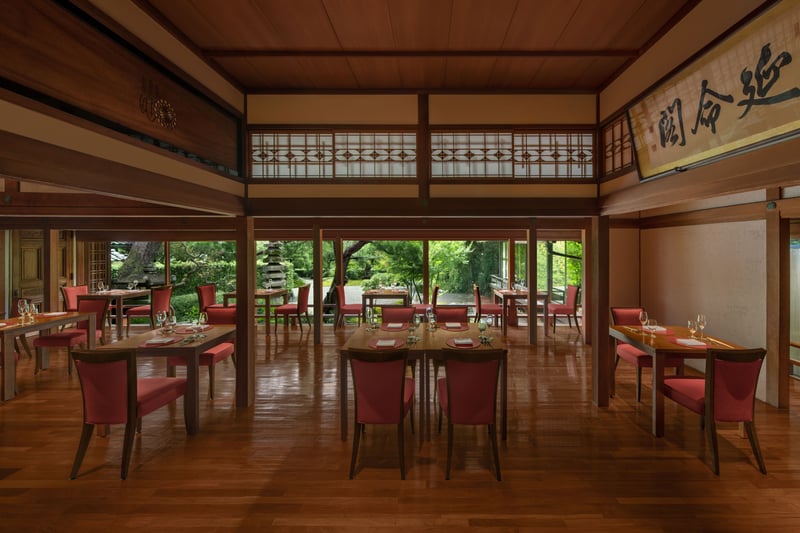
Tucked away in the peaceful residential district of Imadegawa, along discreet Ogawa Street, KOGA is one of those Kyoto addresses that captivates from the moment its façade comes into view: a meticulously restored kyo-machiya more than 120 years old, blending Kyoto's historic soul with contemporary elegance. Beyond its imposing traditional exterior, the softly lit interior unfolds in a soothing palette of white and beige, combining artisanal warmth, minimalist refinement, and tables upholstered in smooth leather. On arrival, a spacious lounge invites guests to pause for a few moments before being seated, while the open kitchen and private dining room, complete with a 3,000-bottle wine cellar, create an intimate and sophisticated setting equally suited to a discreet lunch or an exceptional business dinner.


From Japan to France's Finest Restaurants: Ryuji Koga's Journey
Born in Fukuoka Prefecture, chef Ryuji Koga embodies an elegant bridge between Japan and French haute cuisine. After training at the Tsuji Culinary Institute in France, he began his career at Joël Robuchon in Tokyo before refining his craft at some of France's most prestigious Michelin-starred establishments, from Le Chabichou in Courchevel and Villa Archange in Cannes to Ledoyen in Paris. His career reached a milestone at the Four Seasons Hotel George V, where, in 2016, he became the first Japanese executive sous-chef and menu designer at Le Cinq under the direction of Christian Le Squer. From his Parisian mentor, he inherited an almost olfactory approach to cooking, rooted in the pursuit of subtle harmonies between flavours and aromas. After returning to Japan and leading the kitchens of the Four Seasons Hotel Kyoto, he opened KOGA, now awarded one Michelin star—an intimate restaurant where French precision, Japanese sensibility, and a taste for harmony come together in a remarkably refined dining experience.

Exceptional Ingredients Elevated to Their Finest Expression
At Restaurant KOGA, gastronomy is conceived as a complete art form, with the setting, service, and cuisine working in harmony to create a singular moment, shaped as much by the guests as by those who welcome them. Guided by the culinary heritage acquired at some of France's finest Michelin-starred establishments, chef Takashi Koga celebrates French cuisine of rare sensitivity, founded on absolute respect for each ingredient and for those who produce it. Vegetables harvested that morning, fish delivered directly by producers, meticulously selected meats, and artisan breads compose a symphony in which every ingredient reveals its truest character. Like a perfumer, the chef combines aromas, textures, and flavours with precision, exploring subtle layers of taste until they reach their fullest expression, while charcoal grilling, sauces, and carefully chosen wine pairings extend this pursuit of harmony. In this delicately refined setting, each plate conveys the passion of its producers and invites guests to enjoy an authentic, elegant, and deeply memorable French dining experience.

A Lunch of Exquisite Precision
At lunchtime, the restaurant offers a chef's selection of eight to ten courses, including dessert—an ideal way to discover the spirit of the cuisine without surrendering to the more leisurely pace of dinner, which comprises ten to twelve courses. During our visit at midday, the experience proved precise, elegant, and perfectly paced, with each dish gradually building a culinary narrative in which technique receded behind beautifully balanced flavours and delicate presentation.
The amuse-bouches unfold like a small collection of precious objects: the corn fritter, a golden sphere served warm in a bowl lined with vine shoots, conceals a filling of duck foie gras and corn, balancing sweetness with indulgent depth. Beside it, a non-alcoholic cocktail sweet introduces a playful freshness, with notes of pineapple and ginger soda evoking a delicately sparkling mocktail. On the glass stand, the buckwheat shortbread with duck prosciutto and cheese brings a more earthy touch, combining the biscuit's rustic crispness with creamy cheese and the delicate salinity of the duck. The scallop tartlet, meanwhile, illuminates the composition with its pearlescent filling: a fresh, precise, and elegant scallop tartare with yoghurt, lime, and cucumber, accented by touches of green that heighten the impression of a refined aperitif, at once graphic and generous.
Continuing this subtly nuanced opening, the corn soup arrives in a small, pristine cup like concentrated sunshine: a smooth, silky cream of brilliant yellow, dotted with delicate bubbles and kernels of lightly charred corn that lend an almost mineral visual note. Its purity is striking, relying on just three ingredients—Kyoto corn, water, and salt—allowing the corn's natural sweetness to shine with remarkable precision. On the palate, its velvety texture and delicate vegetal sweetness achieve a balance of consummate summer elegance.


The plant-based theme then expands with the warm seasonal salad, presented like a miniature Japanese garden on a glass plate. At its centre, an abundance of seasonal vegetables—most from Kyoto, particularly Takagamine—brings together tender leaves, radishes, edible flowers, crisp textures, and cooked elements arranged with almost jeweller-like precision. Around them, purées of carrot, corn, courgette, artichoke, pumpkin, broccoli, and sweet potato form colourful lines and droplets, creating an aromatic palette to explore with every bite, while a warm onion sauce adds depth and sweetness. Served at different temperatures and prepared using a variety of techniques, each vegetable reveals its own personality, from garden freshness and mellow sweetness to natural intensity, making this signature plate as spectacular as it is subtle.

After this interlude devoted to vegetables, the black sea bass with courgettes and saffron turns towards the sea. The tempura fish reveals pearlescent, tender flesh beneath a fine, golden, crisp coating. Alongside it, long ribbons of green and yellow courgette bring freshness, colour, and elegance, crowned with a vibrant tomato brunoise that enlivens the composition. The saffron sauce, arranged in luminous round touches, offers a subtle aromatic warmth, while the green basil sauce punctuates the plate with fragrant herbal notes. Presented with restraint on a large white plate, the dish plays with contrasts of texture and colour, combining culinary precision, Mediterranean lightness, and contemporary refinement.

The journey continues with premium Kyoto chicken, green beans, and chasseur sauce, presented with measured elegance at the centre of a large white plate that allows the ingredients to take centre stage. Juicy pieces of poultry with delicately golden skin are coated in a rich, glossy brown chasseur sauce, scattered with herbs and tiny aromatic accents. The plump green beans, still vibrant and gleaming, add garden freshness and graceful height to the plate, while small golden morsels with a mochi-like texture introduce an unexpected note, both tender and lightly crisp.


To begin the transition towards dessert, the goat's milk, thyme, and lime course appears as a frozen miniature whose simplicity accentuates the crystalline brilliance of its presentation. A vibrant lime and lemon granita rests upon a silky goat's milk preparation, bringing freshness, tension, and an elegant hint of bitterness. Fine shards of sugar, translucent like fragments of frost, crown the composition and offer a crisp contrast, while thyme introduces a subtle Mediterranean herbal note that gracefully prolongs the citrus freshness.

Next comes the passion fruit and apricot kernel soufflé, arriving with all the ceremony of haute pâtisserie. Served in a copper mould at the centre of a white plate with delicately scalloped edges, the warm soufflé has a golden, airy surface lightly dusted with sugar, while behind it, a pearlescent spoon holds precious layered cubes of sunny yellow and creamy white. Initially deceptive, this morsel appears to be a miniature dessert in its own right; in fact, it is intended to be folded into the soufflé, releasing a fresh, exotic sauce combining coconut, mango, passion fruit, pineapple, and a hint of almond. The gesture creates a beautifully elegant contrast between hot and cold: the soufflé's soft warmth meets the bright acidity of tropical fruit, transforming its light texture into a fragrant, vibrant, and enveloping sauce for a finale that is sunny, refined, and subtly nostalgic.

Finally, the petits fours arrive as one last delicate ritual, both playful and refined. Small golden financiers, still nestled in their metal mould, offer buttery indulgence with caramelised edges, while charming little chocolate mushrooms rest in a dish, their dusted caps evoking a miniature woodland scene. Beside them, an exquisite box reveals colourful, graphic Japanese sugar confectionery, like tiny pastel fragments resting on a white cloud. Everything is accompanied by an elegant tea service poured into fine transparent cups: my husband chose the rose tea, floral and enveloping, while I opted for the fresh herbal infusion, which brought a greener, more soothing note—perfect for gently extending the final moments of the meal.


My Review
At KOGA, Kyoto reveals itself at its most subtle: the quiet beauty of an ancient machiya, the precision of discreet service, the exacting standards of French cuisine infused with Japanese sensibility, and the emotion of a meal in which every detail seems to have found its rightful place. From the first amuse-bouche to the final petits fours, the experience unfolds with consummate grace, shaped by the purity of the ingredients, the elegance of the presentation, and aromatic pairings of rare delicacy. For travellers seeking an intimate, refined restaurant deeply rooted in the spirit of Kyoto, this Michelin-starred address is an exceptional destination—a place to savour a suspended moment in which heritage, seasonality, and culinary artistry converse in memorable harmony.