Commissioned in 1959 to anchor Portugal's first world-class luxury address, this landmark property merges Louis XVI opulence with Art Deco grandeur across interiors adorned by over 1,000 artworks, including Almada Negreiros's celebrated Trilogie des Centaures. Michelin-starred Cura champions regional Portuguese cuisine while O Japonês delivers refined Nikkei plates, complemented by a rooftop gym with panoramic running track and dual heated pools—one piping music underwater—for travelers seeking both cultural immersion and top-tier wellness facilities.
Explore Lisbon
Where to Stay
This 18th-century palace on Praça Luís de Camões preserves its Pombaline façade and the legacy of the Grand Hôtel de l'Europe. Pritzker laureate Eduardo Souto Moura's 2018 restoration weaves contemporary Portuguese art—including Rui Chafes sculptures—through 87 rooms. The fifth-floor BAHR restaurant showcases Michelin-starred chef Nuno Mendes's menu, while the rooftop terrace frames Tagus views. A Susanne Kaufmann spa and sauna complete the wellness offering for design-conscious travellers.
Architect Teresa Nunes da Ponte restored this 1750 palace with a bold contrast of period stucco and contemporary lines, creating just 19 rooms ranging from silk-tapestried Royal Suites to minimalist modern chambers. SUBA's inventive Portuguese cuisine and The Lisbon Club 55 cocktail bar both face the Tagus, while the rooftop pool delivers 360-degree panoramas best savoured at sunset. Intimate, adult-focused service includes custom breakfasts and arranged in-room treatments.
A 19th-century count's residence transformed into a palace hotel, Olissippo Lapa Palace commands Lapa Hill with sweeping Tagus River panoramas. Hand-painted ceilings and Murano glass chandeliers recall its Orient Express heritage, while Portuguese tile murals and marble interiors echo the era of King João and Queen Maria. Subtropical gardens shelter a heated pool and fountains—an oasis favored by royalty, diplomats, and past guests including Barbra Streisand and Bruce Springsteen.
A century-old townhouse in the upscale Amoreiras district, Sublime Lisboa preserves period architecture while introducing bold contemporary colors and eclectic artworks throughout its 15 intimate rooms. The property extends the refined aesthetic established at the group's Comporta retreat. Chef Isaac Kumi, formerly of the Cipriani empire, runs Davvero, a sophisticated Italian restaurant that elevates this pet-friendly boutique into a compelling destination for couples seeking romance slightly off Lisbon's beaten path.
Behind a discreet door on Avenida da Liberdade lies a townhouse-inspired boutique with 48 rooms draped in moody palettes and retro furnishings. Portuguese artisanship—handmade porcelain, gilded landscape paintings, Moorish woodwork—fills the sultry living room, while a sheltered patio with pool offers refuge from boulevard traffic. The Suite Valverde pairs vintage red-and-turquoise décor with a porthole window framing Lisbon's terracotta rooftops; upstairs, a rooftop plunge pool crowns the address.
A former government ministry building anchors Praça do Comércio's waterfront, its canary-yellow façade giving way to interiors by architect Jaime Morais—candelabras, carved headboards, and museum-loaned artwork throughout ninety rooms. The Dom Pérignon Suite crowns the property with Irish green marble and dual balconies over the Tagus. Downstairs, RIB Beef & Wine dry-ages tomahawk steaks for terrace dining, while an indoor pool and spa await between explorations.
Pale wood interiors and abundant greenery set a sleek-yet-welcoming tone at this 44-room boutique hotel steps from Avenida da Liberdade. Rooms blend mid-century furniture with playful retro touches—Marshall speakers, Smeg mini-fridges stocked with Portuguese snacks—while the ground floor houses a Mediterranean restaurant and a library with an honesty bar. The rooftop pool, framed by Lisbon's skyline, anchors the experience.
This 1533 aristocratic palace gains new life through designer Jaime Beriestain's contemporary minimalist interiors, creating striking contrast against ornate original architecture. Full-service spa facilities include both indoor and outdoor pools, while the Condes de Ericeira restaurant serves beneath dazzling frescoed ceilings. Breakfast arrives à la carte on the terrace shaded by a century-old dragon tree, and marble-floored bathrooms feature freestanding soaking tubs alongside modern conveniences like bedside USB outlets.
This intimate nine-room retreat occupies a 19th-century residence in Lapa, perched above the Tagus with sweeping river panoramas. Eclectic interiors—spanning multiple eras with claw-foot tubs, rain showers, and carefully chosen furnishings—give each space a gallery-like quality. A compact garden pool and private dining room serving seasonal Portuguese cuisine complete the adults-only experience, designed for travelers seeking art-filled seclusion above the city center.
Where to Eat
Chef Henrique Sá Pessoa's two-Michelin-starred dining room occupies an 18th-century building once used as a warehouse for the world's oldest bookshop. Two tasting menus anchor the experience: Alma showcases the chef's signature work, while Costa a Costa celebrates Portuguese fish and seafood through dishes like scarlet shrimp with pumpkin and harissa, or baked mullet with grilled sea lettuce. Sá Pessoa himself frequently appears tableside, guiding service and conversing with guests.
Chef José Avillez earned Lisbon's first two Michelin stars at this Bairro Alto landmark, housed in vaulted stone rooms near a convent damaged in the 1755 earthquake. His creative cuisine—once ranked 42nd globally—draws from the city's shifting light, Atlantic proximity, and neighbourhood character, philosophy he calls "cooking as fado." Two tasting menus explore Portuguese classics reimagined: lobster with caviar and cocoa purée, sea bass with smoked avocado, childhood-inspired sweet egg desserts finished with a sleeve-shaped napkin.
Twelve seats surround a central island kitchen in this wood-clad former wine cellar beneath Torel Palace Lisboa, where chefs Vítor Matos and Guilherme Spalk orchestrate a one-Michelin-star fusion menu. Portuguese ingredients meet French technique in dishes like onion chawanmushi and violet shrimp, served without fixed timing—guests set their own pace while the duo performs with infectious energy and theatrical flair.
Chef Rodolfo Lavrador commands the open kitchen at this Michelin-starred dining room within the Four Seasons Hotel Ritz, presenting two distinct tasting menus that trace his culinary evolution. Percurso reinterprets Portuguese recipes through contemporary technique, while Passo chronicles the chef's career through audacious, technically assured plates. Both formats offer vegetarian variants, underscoring the kitchen's versatility alongside its Japanese-inflected modern approach.
French chef Vincent Farges brings his 'Gravitational Taste' philosophy to Lisbon's Chiado district, earning a Michelin star for creative, vegetable-forward cuisine served in an open kitchen framed by Tagus views. Two tasting menus—Inspirações (eight courses) and Epurismo (ten)—explore Leonardo da Vinci's principle of simplicity as sophistication, delivered in a minimalist dining room accented with historic azulejo tiles and geometric ceilings. Signature compositions include spider crab with granny smith apple and cumin oil.
Perched above the Amália Rodrigues gardens with sweeping views of Eduardo VII park, this one-Michelin-starred address showcases German chef Joachim Koerper's five decades of Mediterranean mastery. His four menus range from a career retrospective to a blue lobster showcase, while signature plates like lacquered suckling pig with mango and shrimp reveal bold creative instincts. The minimalist dining room suits occasion meals built on seasonal, local ingredients.
André Cruz commands the Michelin-starred kitchen at Altis Belém's light-filled dining room overlooking the Tagus. His seasonal Semente menu—offered in Leaf, Roots, and two vegetarian versions—reimagines Portuguese classics with precision: the Cozido do Mar layers fish, bivalves, and local vegetables, while Alentejo's convent-inspired Sericaia arrives with honey and native herbs. Metallic ceiling cubes and Portuguese linen soften the contemporary architecture.
A panoramic lift climbs the Vasco da Gama tower for exactly fifty seconds before delivering diners to Rui Silvestre's elevated dining room, 120 metres above Lisbon with sweeping views across the Tagus and Troia peninsula. The youngest Portuguese chef to earn a Michelin star, Silvestre presents a single 'Fauna and Flora' menu in ten, twelve or fourteen courses, combining local produce with spices and citrus—octopus and beet arrive with yogurt-herb and massala sauces, alongside garlic-butter nan.
Chef Philippe Gelfi brings contemporary French technique to Alfama's historic Pátio de Dom Fradique, earning a Michelin star for cuisine rooted in local seasonal produce. Two tasting menus—Grenache and Experience—unfold at kitchen-side tables where diners watch chefs in traditional toques work under Gelfi's direction. The romantic terrace, set beside the Palácio dos Condes de Belmonte, offers an intimate setting for special occasions.
Chef Paulo Morais practices kaiseki—imperial Japan's ceremonial cuisine—at an eight-seat counter where every nigiri is explained in detail. The single Michelin-starred menu honors the philosophy's formal progression while allowing careful reinterpretation, escalating toward haute-cuisine flourishes at dinner. Scallop, clam, tuna belly, turbot, and scarlet prawn demonstrate the quality underpinning this minimalist setting, where technique and sourcing justify the premium.
Frequently Asked Questions
Which Lisbon neighborhoods are best for upscale accommodation?
+
Chiado offers historic elegance near the Teatro Nacional de São Carlos and independent boutiques. Príncipe Real appeals for its garden squares, antique dealers, and converted 19th-century palaces. The Avenida da Liberdade corridor provides grand boulevard addresses with proximity to Baixa's grid of Pombaline architecture. For river views and contemporary design, the Santos and Alcântara waterfront districts house converted industrial spaces.
What is the best time of year to visit Lisbon?
+
Late spring (April to June) brings mild temperatures, blooming jacarandas, and fewer crowds before summer's peak season. September and October offer warm days, comfortable evenings ideal for outdoor dining, and the grape harvest in nearby wine regions like Setúbal and Arrábida. Winter remains mild by European standards, with occasional rain but clear days for exploring the city's miradouros and museum collections without queues.
How does Lisbon's geography affect getting around the city?
+
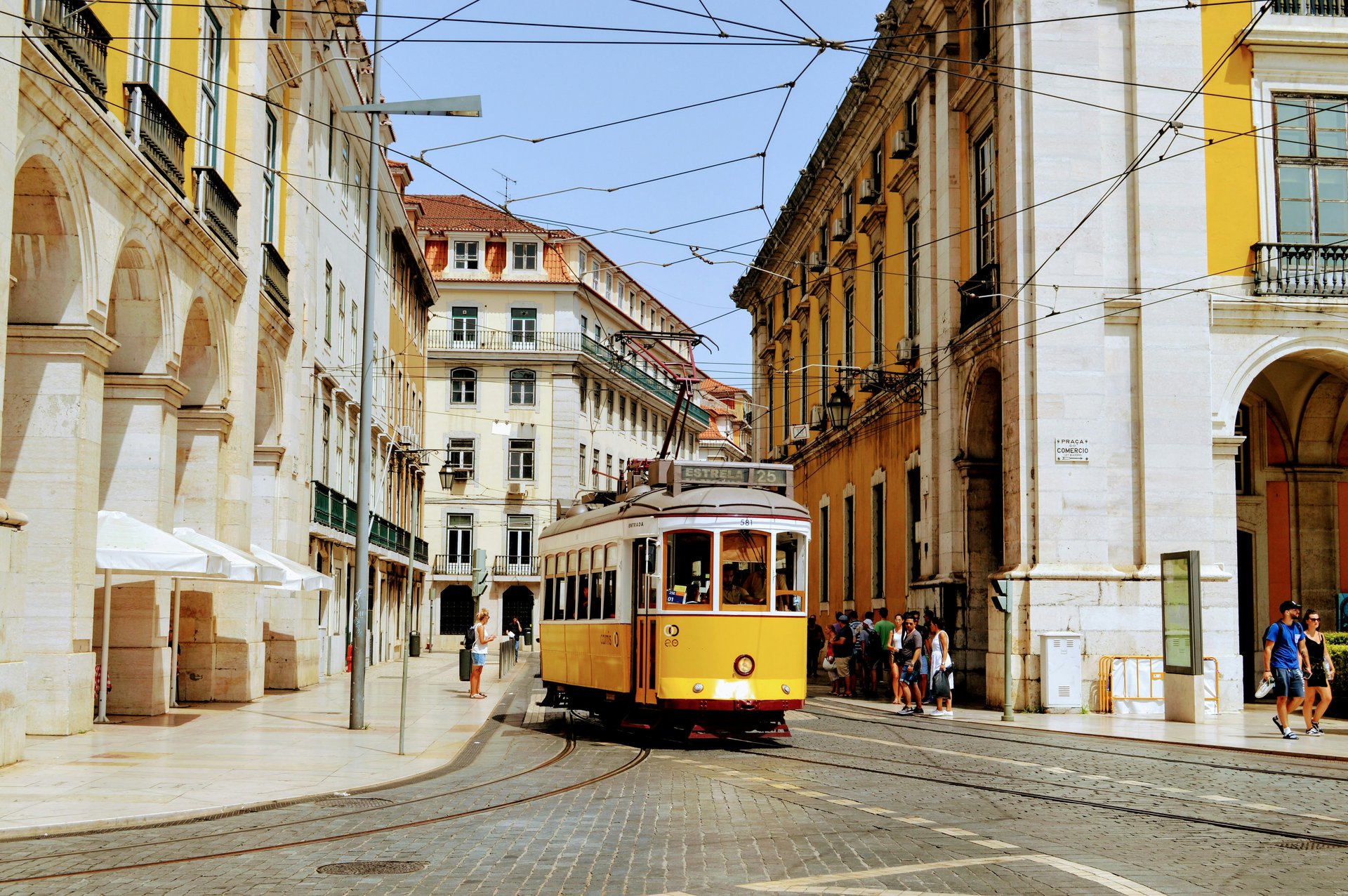
The seven hills make comfortable footwear essential and add character but also challenge. Historic funiculars — the Glória, Bica, and Lavra — connect lower and upper neighborhoods. Tram 28 threads through Alfama, Graça, and Estrela, though it's often crowded. The metro efficiently links major districts, while taxis and ride services navigate the steeper gradients. Many visitors base themselves in flatter Baixa or Cais do Sodré for easier movement.
Lisbon sprawls across seven hills above the Tagus estuary, its terracotta rooftops and azulejo-clad façades catching Atlantic light from dawn until the long golden evenings. The city's geography shapes its distinct neighborhoods: Alfama's labyrinthine alleys cascade down from São Jorge Castle, while Chiado and Príncipe Real offer leafy squares and 19th-century townhouses converted into refined hotels. Along the riverfront, former warehouses in Santos and Alcântara have been reimagined as contemporary spaces, and the Belém district stretches westward past Manueline monuments to where the Tagus meets the sea.
The dining scene reflects Portugal's Atlantic position and colonial history. Traditional tascas serve bacalhau preparations passed down through generations, while a new generation of chefs at the city's gastronomic restaurants reinterprets these foundations with precision and creativity. The coffee culture runs deep — locals gather at marble-countered cafés for bica shots and pastéis de nata still warm from the oven. As evening arrives, rooftop bars in Bairro Alto fill with the sound of fado drifting up from the streets below, and the city settles into its unhurried rhythm.