Hotel Okura Kyoto Okazaki Bettei: A Sacred View of the Greenery


In northeastern Kyoto, where the Higashiyama hills soften the rhythm of the city, Hotel Okura Kyoto Okazaki Bettei reveals itself as one of those discreet addresses that lend travel a rare depth. Set beside the Shinshū Ōtani-ha Okazaki Betsuin temple, this intimate hotel combines the precision of Japanese luxury, the beauty of Kyoto craftsmanship and an atmosphere of almost spiritual calm. From suites overlooking the greenery and an inspired breakfast to exceptional French dining and a morning experience within the neighboring sanctuary, a stay here offers a refined immersion in a quieter, more elegant Kyoto, deeply rooted in tradition.
A Meditative Retreat at the Foot of Yoshida-Yama
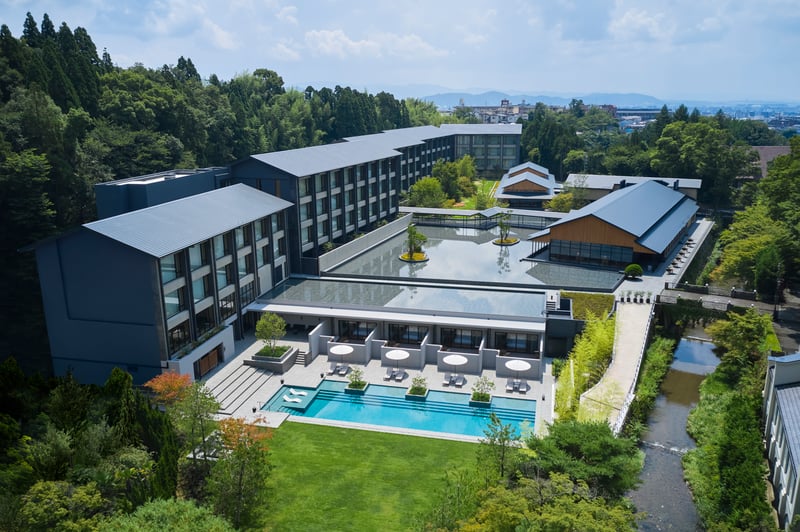
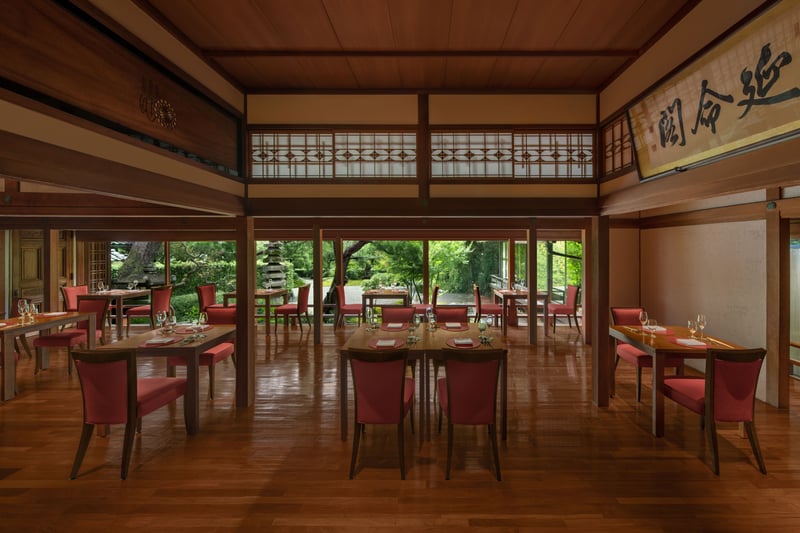
In northeastern Kyoto, within the cultural district of Okazaki, Hotel Okura Kyoto Okazaki Bettei occupies a rare setting, removed from the bustle yet never far from the essentials. Located within the same grounds as the Shinshū Ōtani-ha Okazaki Betsuin temple, the hotel enjoys an uncommon privilege in Kyoto: from its most intimate spaces, it offers a truly immersive view of a strikingly beautiful Japanese garden. From the lobby, restaurant and north-facing rooms, the gaze drifts across peaceful paths, moss, artfully composed foliage and the temple’s sacred grounds, forming a living tableau that changes with every season. In spring, the plum and cherry trees of Geishun Garden soften the landscape with their delicate blossoms; in autumn, Senshu Garden is cloaked in deep reds and golds. Such immediate proximity to a setting that is at once spiritual, exquisitely landscaped and remarkably preserved lends the stay an almost meditative atmosphere.


This privileged location places guests at the heart of a refined and contemplative Kyoto. Some of the city’s most beautiful cultural landmarks lie nearby, from Heian Jingu Shrine and Nanzen-ji to Ginkaku-ji and the National Museum of Modern Art, not to mention the Philosopher’s Path running alongside the Lake Biwa Canal. The city center is around ten minutes away by taxi, while the surrounding area at the foot of Yoshida-yama invites leisurely walks among shrines, temples and gardens transformed by the seasons. Within this verdant setting, the hotel offers a haven of profound serenity, revealing the Kyoto art of living in its most intimate form.
Kyoto Between Heritage and the Avant-Garde
The hotel’s style unfolds as a contemporary meditation on the soul of Kyoto. Opened in 2022, this 60-room retreat brings together contemporary lines, Japanese serenity and exceptional craftsmanship. Designed in collaboration with GO ON, a collective of local creators whose work is celebrated far beyond Japan, the hotel displays original pieces conceived especially for its interiors. At the entrance, Tomoko Kawao’s calligraphy, “Homei Choyo,” lends the lobby an almost ceremonial elegance, while woven copper-wire lighting, kanaami tsuji lampshades and bamboo compositions gradually reveal the quiet precision of Kyoto’s traditional crafts.


The interior architecture favors fluidity: the lobby, reception, lounge and elevators flow seamlessly into one another, naturally drawing the eye toward the garden and echoing the soothing horizontality of traditional Japanese homes. Walls clad in Nishijin textiles play with the light through exquisitely delicate three-dimensional reflections, while Asahiyaki pottery, bamboo works and creations by emerging artists punctuate the spaces with understated beauty. Inspired by wabi-sabi, Higashiyama culture, shoin-zukuri, gardens and ink painting, the ensemble creates an aesthetic of continuity: a Kyoto looking toward the future while remaining profoundly faithful to its gestures, textures and innate sense of harmony.


The Bettei Suite as a Theater of Greenery
Conceived as mountain villas nestled in the heart of Higashiyama, the 60 rooms celebrate natural materials and Japanese craftsmanship with rare delicacy. Cedar, walnut, Hosoo Nishijin-ori fabrics evoking reflections on water, and shelving inspired by Kitayama cedar logs create a hushed and deeply soothing atmosphere. In the corridors, at the entrance to each room, the numbers are illuminated by lights crafted using the expertise of Kaikado, the renowned Japanese house founded in 1875, whose understated beauty is designed to acquire a graceful patina over time.

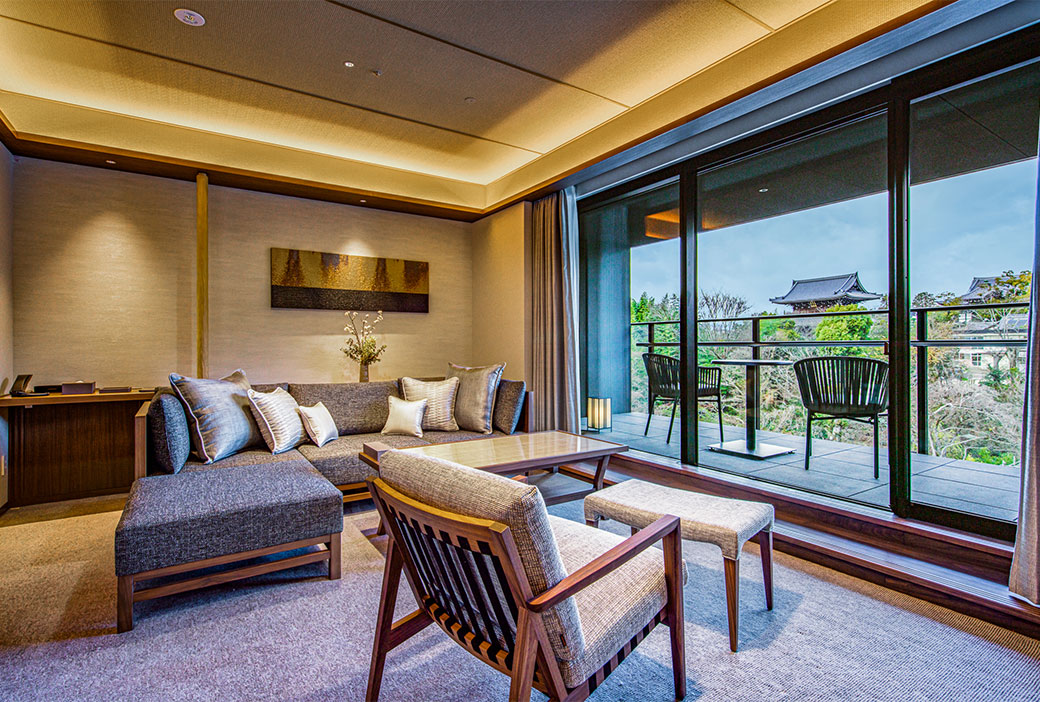
Ranging from 32 to more than 65 square meters, the rooms offer contemporary comfort seamlessly integrated into this serene world, with a Nespresso machine, Bose Bluetooth speaker, 4K television, air purifier and humidifier, and Japanese tea bowls. We had the pleasure of staying in the Bettei Suite, the hotel’s signature 70-square-meter suite, extended by a private balcony overlooking Higashi Honganji Okazaki Betsuin temple. From the moment we first entered, the experience took on an almost theatrical dimension: the curtains slowly opened to reveal the greenery, the temple rooftops and, in the distance, the celebrated gate of Konkai Komyoji. From the balcony, Kyoto can be contemplated in rare silence, like a living painting blending sacred architecture, luxuriant nature and shifting light. The suite becomes a truly intimate belvedere over the city, combining quiet elegance, exceptional craftsmanship and contemplation. It is completed by an exceptionally comfortable bathroom featuring the renowned Bamford amenities, along with an ultra-luxurious hairdryer.


Breakfast from the Fertile Lands of Miyama
Breakfast delicately celebrates the flavors of Miyama, a mountain village north of Kyoto where pure water and fertile soil nurture produce of remarkable freshness. In a serene atmosphere, guests can enjoy freshly squeezed orange or grapefruit juice, coffee or tea, before discovering a composed salad reminiscent of a garden. Golden pastries, including a croissant and pain au chocolat, accompany eggs prepared to order and served with bacon, sausage and potatoes. Beans simmered with tomato and cheese add a comforting touch, while fresh, subtly tangy Miyama yogurt is served with granola and homemade jam. A plate of fresh fruit concludes this indulgent experience, at once generous, refined and deeply rooted in Japanese nature.

Nouvelle Epoque, a New Era Between Kyoto and the Great French Tradition
Overlooking the Japanese garden, Nouvelle Epoque celebrates French gastronomy infused with the soul of Kyoto. An heir to Okura’s culinary tradition, pioneered by Masakichi Ono, regarded as the father of French cuisine in Japan, the restaurant ushers in a new era in which classical techniques meet the delicacy of seasonal produce. Under the direction of Executive Chef Shinichi Ikeda, whose career has taken him from Tokyo and Amsterdam to Okura’s finest restaurants, each ten-course menu reveals cuisine of remarkable precision and nuance, allowing Japan’s marine treasures and the natural flavors of its ingredients to shine with elegance. The experience unfolds in a setting of rare serenity, where the windows frame the garden’s luxuriant vegetation and the subtle passage of the seasons. Bamboo woven by Kochosai Kosuga, Asahiyaki ceramics, Kaikado tableware and placemats adorned with metallic leaves inspired by Nishijin-ori create a delicately Kyoto-inflected art of the table.


Our tasting menu began with amuse-bouches accompanied by a glass of Laurent-Perrier La Cuvée, bringing a luminous freshness. The first bite arrived in a delicate golden monaka-style shell filled with a dense and refined venison pâté. The tasting then moved into more maritime territory with marinated salmon accompanied by vegetables and an onion sauce, creating a balance of sweetness, acidity and aromatic richness. Restrained, luxurious and perfectly judged, this highly precise opening awakened the palate while foreshadowing the finesse of the journey ahead.


After this understated introduction, the next dish arrived as a composition of exquisite delicacy, meticulously arranged on a broad dark plate that accentuated its fresh, refined colors. Pearlescent cutlassfish intertwined with crisp cucumber pickles, fine herbs and delicate floral touches, while caviar added luxurious briny depth. The luminous orange-pink tomato espuma evoked the gently tangy sweetness of Kamigamo tomatoes, balanced by dill and the icy vibrancy of cucumber granita, whose intense green refreshed the entire dish. Elegant, airy and almost summery, it brought together the sea, the garden and pure freshness with Japanese precision and the sensuality of haute cuisine.

Continuing this theme of marine freshness, conger eel was served in a dark bowl that highlighted the fish’s pearlescent tones, the plump flesh of abalone and the small golden pearls of fregola. The dish rested in a clear, glistening broth with an almost briny character, while a bouquet of fresh herbs and young shoots added vegetal vibrancy and a touch of color. The result was discreet, precise and deeply evocative of the coast, like a breath of sea air before a more generous sequence.

The meal then gained in generosity with a remarkably fresh dish: the abundant, pearlescent flesh of lobster, streaked with red, nestled beneath fine shavings of crisp fennel, lifted by young shoots and edible flowers that added an exquisitely refined botanical touch. Around it, the deep, glossy orange lobster bisque concentrated the crustacean’s full maritime intensity, while the pale green, silky coconut and basil sauce softened the composition with an aromatic, exotic note.

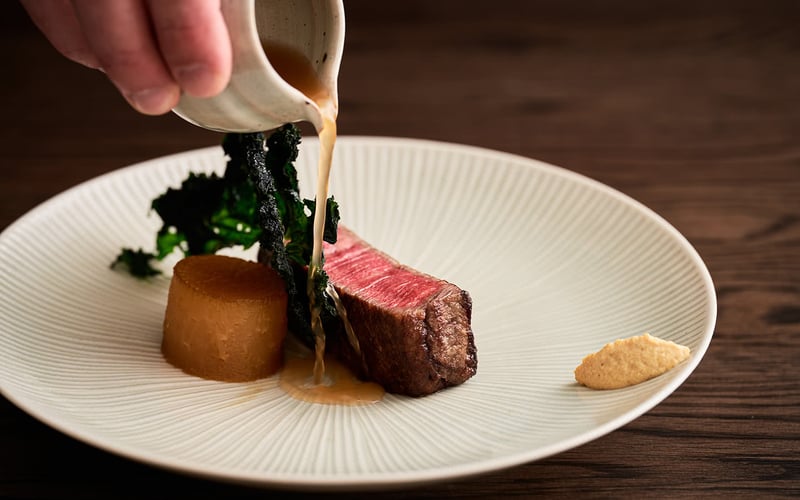
After these marine and tropical accents, the Wagyu beef fillet displayed a distinctly Japanese elegance. A precisely seared cut of Kumamoto beef revealed a pearly-pink center of almost silken tenderness, accented with a few peppercorns and coated in a dark, glossy and deeply flavored jus. Alongside it, Manganji pepper added a refined vegetal note beneath a delicate golden herb crust, while Kamo eggplant caviar introduced a smoky, velvety sweetness that counterbalanced the richness of the Wagyu.

At this point in the menu, the cheese course offered an elegant and quintessentially French interlude, served on a smoked-glass plate that allowed the simplicity of the produce to shine: several batons of firm cheese, a creamy piece with a bloomy rind, almonds, honey and thin slices of lightly toasted fruit bread. The composition played on delicate contrasts between melting, milky textures, the sweetness of dried fruit and the golden warmth of the bread, offering a refined transition toward dessert without the slightest ostentation.

To refresh the palate came a frozen interlude of watermelon granita, its luminous, crystalline red immediately evoking the juicy freshness of summer fruit, while gin jelly added delicate, almost jewel-like transparency with a lightly aromatic botanical note. A few leaves used as garnish emphasized the finesse of the composition and introduced a subtle vegetal contrast. This was an airy, thirst-quenching and sophisticated pre-dessert, playing on the purity of its textures through icy fragments, fruity sweetness and an elegantly spirited finish.

Continuing in a softer, more floral vein, dessert appeared as a precious miniature, arranged at the center of a broad white plate with the elegance of a jewel: a base of juicy, translucent peach held silky vanilla cream and ethereal shards of coconut meringue, crowned with a quenelle of vibrant pink red-shiso ice cream, delicately enhanced by petals, touches of gold and a slender upright herb. The dessert played gracefully with contrasts: the sun-ripened sweetness of peach, the enveloping roundness of vanilla, the light crunch of meringue and the fresh, almost aromatic vegetal character of red shiso.

Finally, the petits fours brought the meal to a close with a golden slice of cake, dense yet tender in texture, accompanied by a delicate shortbread biscuit shaped like a green leaf, a botanical touch that enlivened the sweetness. A cup of green tea provided soothing warmth, while the subdued lighting prolonged the atmosphere of this exceptional dinner.

Morning Prayers at the Okazaki Pavilion
Hotel guests have the privilege of experiencing the rare opportunity to attend Jinjō morning prayers at Shinshu Otani-ha Okazaki Betsuin, held in its recently renovated main pavilion, before extending this contemplative moment with a walk through the garden and its seasonal beauty. Steeped in history, this is said to be the place where Shinran Shonin once established a humble hermitage after leaving Mount Hiei, making the sanctuary a spiritual site of profound resonance. To the rhythm of Jodo Shinshu prayers, with recitations of the Shoshinge and Gobunsho, visitors discover an intimate and soothing side of Kyoto, poised between contemplation, Buddhist heritage and quiet elegance.


My Opinion
At Hotel Okura Kyoto Okazaki Bettei, Kyoto is savored in rare intimacy, amid sacred gardens, exceptional craftsmanship, inspired French gastronomy and contemplative silence. The Bettei Suite provides one of the stay’s most memorable moments, with its private balcony overlooking Higashi Honganji Okazaki Betsuin temple, the garden foliage and the distant silhouette of Konkai Komyoji—a unique view that accompanies the stay like a living painting. From morning prayers to the refined cuisine of Nouvelle Epoque, the hotel creates a deeply elegant interlude shaped by Okura’s discreet savoir-faire and Kyoto at its most serene.
What I liked:
- The exceptional view from the suite, as well as from the restaurant, overlooking a magnificent garden that embraces every hallmark of traditional Japanese landscaping.
- A superb suite offering impeccable comfort and exceptional attention to detail: a luxury hairdryer, premium bathroom amenities, an included minibar and two televisions.
- An excellent dining offering, from the French dinner to the particularly high-quality breakfast.
What I found disappointing:
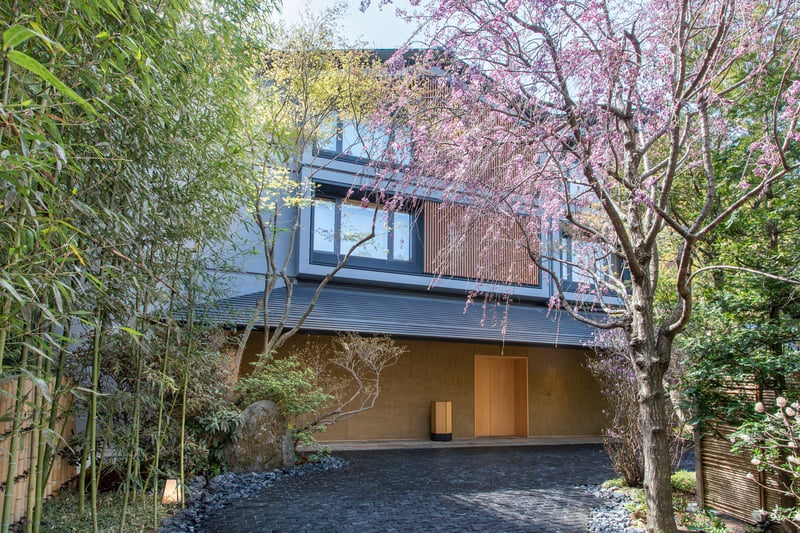
- The arrival experience could be improved, particularly from the moment guests step out of their taxi, to better reflect the hotel’s standing and the expected level of service.
Practical Information
- Bettei Suite priced at €800 in July 2026.