Marufukuro in Kyoto, Nintendo’s Former Headquarters Turned Exceptional Retreat


In Kyoto, certain addresses seem to whisper their history rather than display it, and Marufukuro belongs to that rare category of hotels where every detail invites you to slow down. Housed in Nintendo’s former headquarters, this intimate retreat blends the Art Deco elegance of the 1930s with the contemporary restraint introduced by Tadao Ando. Behind its storied façades, the hotel reveals 18 distinctive rooms, intimate lounges, a library dedicated to the world of Nintendo and an exquisitely refined tempura restaurant. Combining Japanese heritage, understated design, seasonal cuisine and an almost secretive atmosphere, Marufukuro offers a deeply evocative way to experience Kyoto, far from the bustle and close to the city’s discreet soul.
The Discreet Charm of a Kyoto Neighborhood in Renaissance
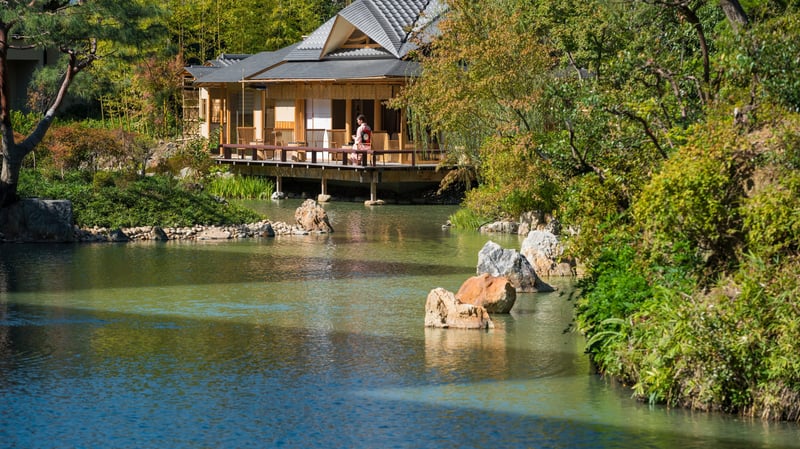
In Kyoto, Marufukuro enjoys a rare location in the Kagiyacho district, just a short distance from the station and near the banks of the Kamo River, amid an urban landscape still imbued with old-world charm. Removed from the tourist bustle yet perfectly connected, the hotel provides an ideal base for exploring the former imperial capital: Shosei-en Garden, an outlying property of Higashi Honganji Temple, Sanjusangendo Temple and the Kyoto National Museum are all within easy reach. With its quiet lanes, historic buildings and new hidden gems, this rejuvenated neighborhood cultivates a nostalgic, elegant atmosphere, ideal for experiencing a more intimate side of Kyoto.


The Birthplace of Nintendo Reawakens as an Exceptional Hotel
In this discreet Kyoto neighborhood, Marufukuro draws its elegance from a remarkable history. It was here in 1889 that Fusajiro Yamauchi founded Nintendo, opening a small workshop devoted to hanafuda, the traditional Japanese playing cards adorned with intricate motifs. From this artisanal craft gradually emerged a thriving company that became one of Japan’s leading names in playing cards. In the 1930s, to support its expansion, the Yamauchi family commissioned a complex combining offices, warehouses and a private residence: a place for both work and daily life, imbued with the spirit of Marufuku, a former name associated with the company, which was reborn in April 2022 as the quietly elegant Marufukuro hotel.


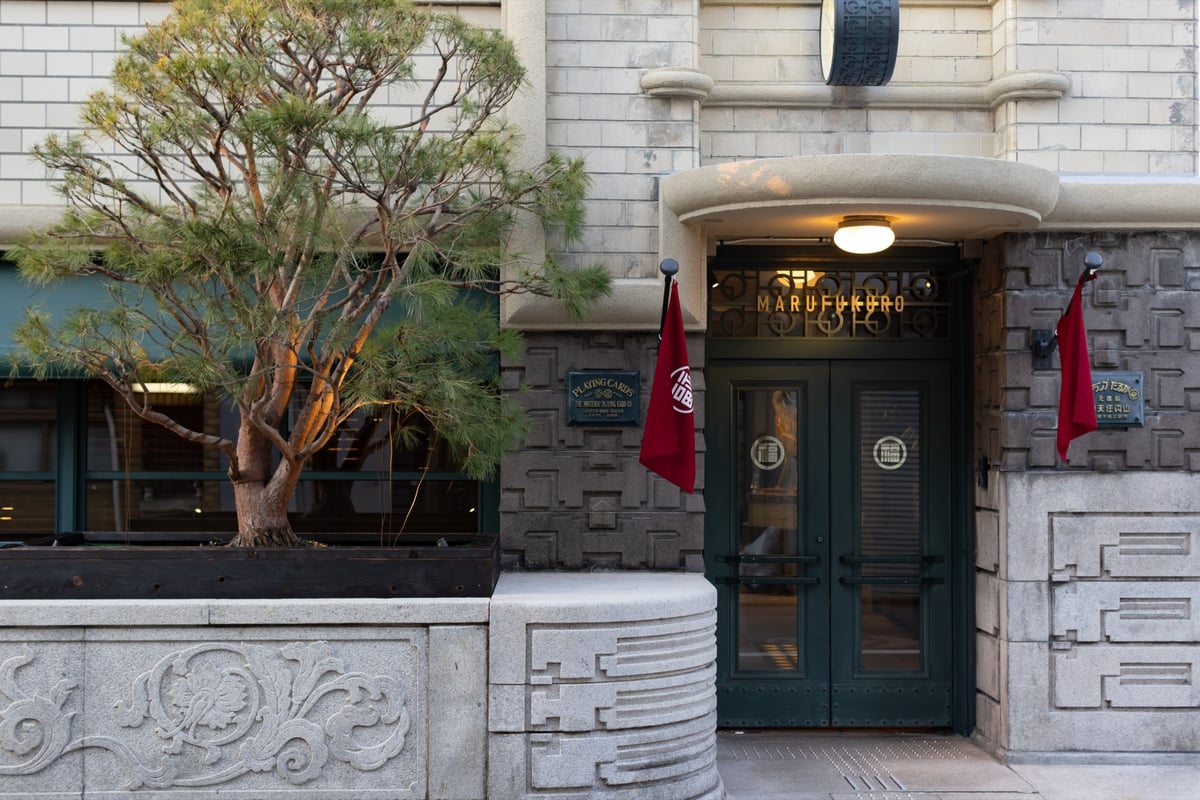
The property first captivates with its Art Deco architecture, inherited from the early Showa era. Clean lines, geometric motifs, colorful accents, stained glass and original tiles create an exceptionally harmonious setting, meticulously restored with deep respect for the original buildings. Nothing here feels frozen in time: traces of the past appear in a preserved sign, an emblem and the silhouettes of the façades, as well as in period features retained and incorporated into the décor, including the original elevators. Together, these details offer subtle nods to the era when Nintendo produced hanafuda, karuta and other playing cards, long before entering the global imagination through digital entertainment.


The renovation orchestrates a delicate dialogue between heritage and contemporary creation. The three historic buildings are joined by a wing designed under the direction of Tadao Ando, where concrete, light and pure volumes introduce a calm, almost meditative modernity. The various spaces named Spade, Heart, Club and Diamond subtly extend the playing-card theme, while the library designed by Suppose Design Office, the artworks and archival objects give the property the character of a collector’s home. Marufukuro thus offers a discreet, cultured and profoundly Japanese form of luxury, where every detail connects its artisanal origins with a distinctly contemporary vision of hospitality.
18 Keys Blending Retro Charm with Tadao Ando’s Clean Lines
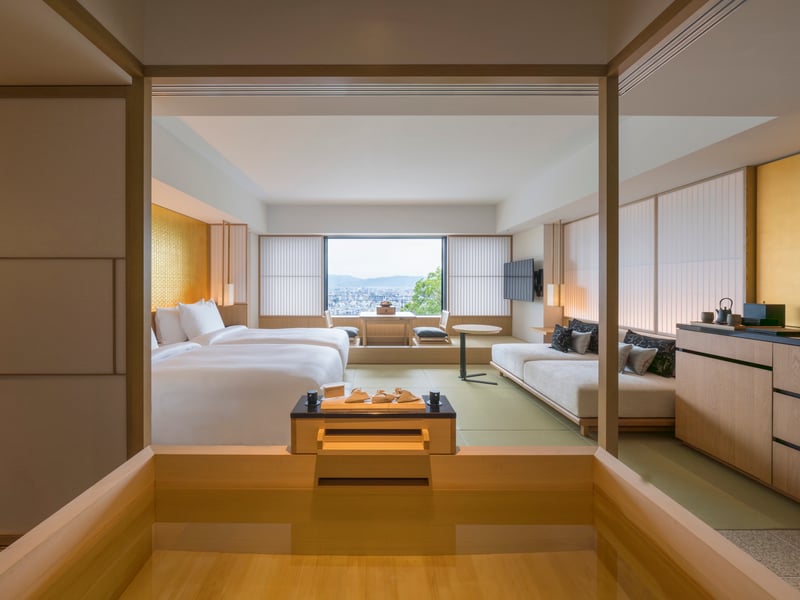
Marufukuro is home to just 18 rooms and suites, spread across the three historic buildings and the contemporary annex. Each differs in volume, atmosphere and layout, cultivating a highly individual charm that blends 1930s elegance, Nintendo heritage and thoroughly modern comfort. In the original buildings, the rooms subtly evoke the soul of the former headquarters through moss-green tones, carefully selected furnishings and retro details, while the new wing emphasizes natural light, clean lines and the exposed concrete so closely associated with Tadao Ando. Among the finest categories, the Japanese Suite, set within the former Yamauchi residence, enchants with its traditional aesthetic, tatami flooring and outdoor rotenburo bath; the Residential Suite, designed as a true 75 m² apartment with a kitchenette and laundry room, offers a brighter, more contemporary atmosphere; and the Marufukuro Suite, perched atop the new annex, brings past and present together in a spectacular space of approximately 78 m², extended by a vast terrace.


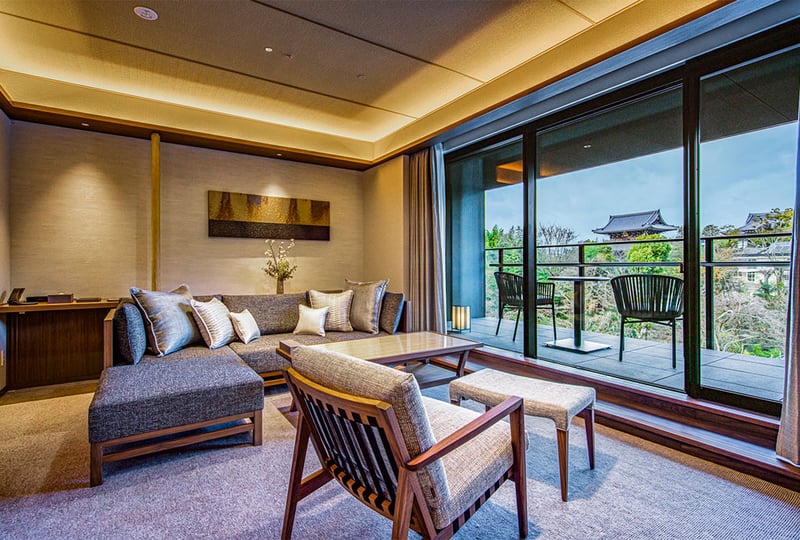
We had the pleasure of staying in the Japanese Balcony King, located on the top floor of the historic building. At 45 m², it strikes a beautiful balance between intimacy, space and refinement in a Japanese-Western atmosphere. Its private balcony opens onto panoramic views of Higashiyama, while the high, triangular-beamed ceiling lends the room a distinctive character and enhances the sense of space. Elegant without ostentation, the décor blends retro spirit, contemporary comfort and delicately Japanese details, creating an especially inviting cocoon after a day exploring Kyoto. It features everything that defines Marufukuro’s discreet charm: a generously stocked minibar, postcards in the hotel’s signature colors and a room opened with a charming antique iron key adorned with a key ring inspired by vintage Nintendo signage. The bathroom includes a deep soaking tub, locally made amenities, and traditional Japanese wash bowls and stools.


The Refinement of a Japanese Morning
The day begins with a delicate Japanese breakfast, rich in savory nuances, where every preparation celebrates the season and the elegance of local flavors. Carefully cooked in an earthenware pot, the rice is accompanied by comforting miso soup, the fish of the day—such as grilled salmon with soy sauce—and a choice of refined small dishes, from Kameoka beef sukiyaki to noodles scented with aromatic vegetables. A selection of traditional accompaniments—chirimen sansho, ume, hijiki, Manganji pepper with miso and tsukudani-style simmered ginger—invites guests to savor every bite slowly, in the spirit of a Japanese morning that is at once simple, generous and deeply considered.


Our Dinner at Tempura Marufuku
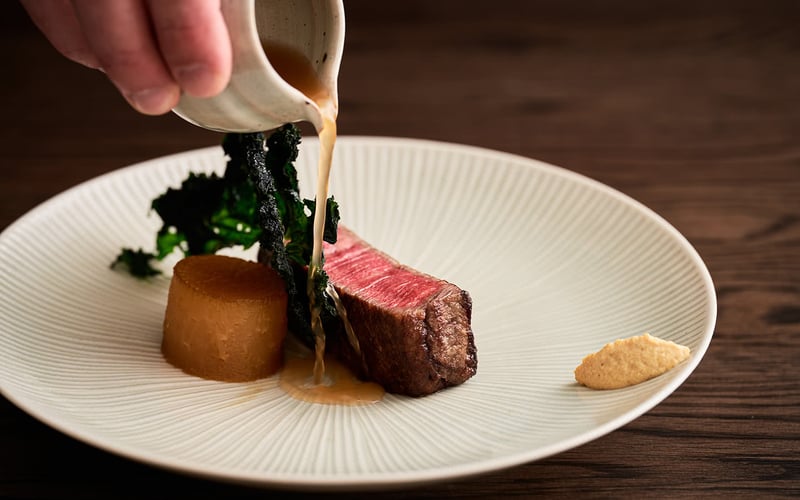
At Marufukuro, dining unfolds as a precious encounter with Kyoto and its seasons. Behind the discreet noren curtain of Tempura Marufuku, the chefs perform a delicate culinary ballet before your eyes, placing each freshly fried piece of tempura on the other side of a superb counter crafted from polished pale wood. Light and airy, each one delicately reveals the purity of ingredients carefully sourced from Kyoto and its surroundings, served on artisanal tableware from across Japan. In the evening, the experience takes the form of 12- or 17-course tempura kaiseki menus.


Our 12-course dinner begins with a freshwater clam soup of quintessentially Japanese restraint, served in a small ceramic cup. From the very first sip, the tasting opens on a delicate yet profound note, centered on the gentle minerality of the freshwater clams, with an enveloping warmth that prepares the palate without weighing it down. To accompany the meal, I chose a dry Sawaya Matsumoto sake, which brought crystalline precision, while my husband preferred the Nude Beer Kyoto Craft Komorezora, extending the sense of freshness like a luminous pause between umami, delicate salinity and artisanal elegance.


The kuruma prawn is presented with elegant Japanese simplicity. Encased in a light, golden, almost weightless batter, it reveals a delicate fry that allows the prized prawn’s pearly, sweet flesh to shine through, while the head and slender crisp legs introduce a more intense, briny richness. This bite evokes the quiet luxury of an omakase meal: precision of technique, purity of produce and the immediate pleasure of contrast between fragile crispness and tender seafood.


Following this marine expression, Kyoto’s Kamo eggplant introduces a gentle vegetal sweetness, served in a small green ceramic bowl that highlights the golden tones of the delicately fried eggplant. Its flesh is meltingly soft, almost creamy, with lightly crisp edges, coated in a dark, glossy sauce with deep umami notes. The shavings of dried bonito scattered on top add an airy, saline and smoky touch that dances in the heat of the dish and accentuates the natural sweetness of this prized Kyoto variety.

The vegetal register then gains intensity with Manganji pepper and bottarga, presented as a delicately fried bite in which the pepper’s tender green hue shows beneath a fine layer of light, crisp batter. Generously scattered as a golden powder, the grated bottarga lends a briny, saline intensity that contrasts with the vegetal sweetness of the Manganji pepper, renowned for its subtly sweet flavor and very gentle heat. The result evokes contemporary Japanese elegance, bringing airy tempura together with a luxurious Mediterranean condiment in a texture that is at once crisp, melting and granular—an ideal way to continue the meal on a refined, vibrant and profoundly umami note.

On a sunnier note, the sweet corn arrives as a delicate golden bite. Light and finely irregular, the batter creates an airy, almost lace-like texture, while its honey-blond color promises the corn’s natural sweetness concentrated beneath a crisp shell. Served alone and without embellishment, this small piece relies on the purity of the ingredient and the precision of the technique: seemingly simple yet refined, it brings the corn’s vegetal sweetness together with the subtle warmth of perfectly mastered fried batter.

The meal then returns to flowing waters with ayu, presented whole in a fine golden coating whose crisp contours reveal the delicacy of this river fish. Alongside it, a small touch of sanshō leaf sauce brings a fresh, peppery and almost citrus-like vegetal note, enlivening the flesh’s subtle sweetness and balancing the airy texture of the batter.

As a counterpoint to this riverine delicacy, the carrot appears as a bite of minimalist elegance: a long slice in a vivid shade of orange, its base wrapped in a fine, crisp tempura coating. The contrast between the carrot’s anticipated vegetal sweetness, the smoky depth of its coloring and the airy texture of the batter is particularly appealing. The result feels both rustic and refined, perfectly embodying the spirit of a Japanese fine-dining counter where every detail, from service to cooking, celebrates precision and seasonality.

Next comes the tempura of the day’s fresh fish with caviar, a bite of rare elegance: a piece of daily catch enveloped in a very light, pale and crisp tempura batter. A generous spoonful of caviar on top adds a dark, pearlescent gleam, contrasting with the delicate coating and white flesh in a meeting of warmth, brininess and luxurious salinity. A lemon wedge placed alongside offers a touch of vibrant acidity, prolonging the sense of refinement in an understated, intimate and precious Japanese presentation.

The marine progression continues with turbo shellfish, served by hand on a slender skewer, its light, lace-like batter revealing the shellfish’s pearly nuances beneath a crisp veil. The texture plays on the contrast between the airy crunch of the coating and the briny, almost creamy flesh, enhanced by a liver and seaweed sauce that promises deep umami, saline and subtly earthy notes.

As the savory courses draw to a close, the conger eel tempura rice bowl arrives, with pearly, soft and glossy rice topped by generous pieces of conger eel tempura, fried until perfectly golden and delicately glazed with an amber-colored sauce. The coating is fine and crisp, with irregular ridges that promise a light bite before revealing the fish’s tender flesh, while the rice gently absorbs the sweet and savory notes.


Finally, the vanilla ice cream with sweet potato is a dessert of refined simplicity, served in a wide, translucent bowl that highlights the contrast between the smooth, creamy scoop of ivory ice cream and the golden and purple pieces of roasted sweet potato. The milky sweetness of the vanilla envelops the denser, almost candied texture of the sweet potato, whose lightly caramelized edges lend a warm, rustic note. It is a minimalist yet charming composition, its elegance arising from the balance of freshness, rounded sweetness and earthy flavors—an ideal conclusion to the meal, delicate, soothing and deeply comforting.

Two Lounges Between Intimate Memories and Japanese Avant-Garde
The Guest Lounge elegantly extends the arrival experience in an atmosphere that is both intimate and steeped in history. Located in the historic building, it occupies a former reception room now reserved for guests, where check-in is also conducted over a welcome drink. This intimate lounge retains period furnishings and decorative features, providing an ideal setting in which to absorb the soul of the property. Highlights include original armchairs, an antique desk and a LEGO model of the building—a discreet nod to the company’s playful heritage. Self-service beverages are available throughout the day, inviting guests to pause here whenever they wish.


In the new wing, the Dining Lounge reveals a more contemporary atmosphere, conceived as a combined living and dining room open at all hours. Designed in the architectural spirit of Tadao Ando, it also hosts breakfast and offers drinks, light bites and late-night snacks, while standing out for its striking artistic presence. Pieces donated by Tadao Ando sit alongside various artworks, including works by Yayoi Kusama, creating a subtle dialogue between heritage, design and contemporary art. Whether settling in for a quiet pause, an impromptu coffee or a moment of relaxation at the end of the day, each of these two lounges possesses a character of its own and invites guests to enjoy the property at their own pace.


The Library Honoring Nintendo
Named “dNa,” Marufukuro’s library offers a rare immersion in Nintendo’s heritage. Conceived under the supervision of SUPPOSE DESIGN OFFICE, this elegant guest-only lounge brings together Japanese and international books, vintage consoles, collectibles and contemporary works centered on the brand’s founding universe. From interactive installations by Rhizomatics and references to hanafuda cards to iconic pieces such as the Famicom and Game Boy, the space delicately reveals Nintendo’s origins, imagination and philosophy as interpreted by the Yamauchi family.


The library can be explored at any hour in an intimate atmosphere equally suited to conversation and contemplation. Just a few steps away, the self-service bar invites guests to settle in with a coffee in the afternoon or, later, to prepare their own drink from a fine selection of whiskies, Scotches and gins, some recalling the preferences of Nintendo’s founder. Leafing through a rare book, admiring a console elevated to the status of an art object, then savoring a drink amid this memory-filled décor creates a singular experience that is at once cultural, playful and resolutely refined.

My Opinion
Staying at Marufukuro means surrendering to a rare form of luxury—one that favors memory over spectacle, precision over excess and intimate emotion over grand statements. In this former Nintendo home turned insiders’ retreat, Kyoto reveals itself with particular gentleness, through Art Deco heritage, contemporary architecture, seasonal cuisine and hospitality of exemplary delicacy. The property will appeal equally to design enthusiasts and admirers of Japanese history, gourmet travelers and those seeking an intimate retreat away from the most predictable itineraries. Marufukuro stands out as one of those precious destinations that inspire you to slow down, see Kyoto differently and savor every moment with renewed attention.
What I loved:
- The superb restoration of Nintendo’s former headquarters: the atmosphere of the 1930s has been fully preserved, while the integration of Tadao Ando’s new building is flawlessly executed.
- The hotel’s deeply intimate character, with just 18 rooms, as well as its small exclusive lounge where everything is included.
- Exceptional cuisine: an excellent fine-dining tempura restaurant and a remarkable breakfast.
What I regretted:
- Absolutely nothing: the experience is exceptional. Of course, with just 18 rooms, guests should not expect the facilities of a large hotel, but that is precisely what gives the property its charm and exclusivity.
Practical Information
- Japanese Balcony King room priced at €750 in July 2026.