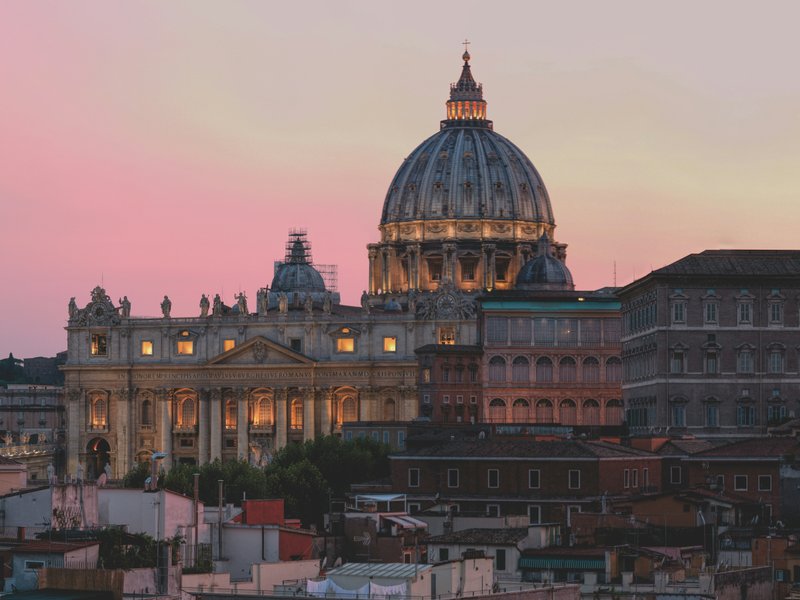
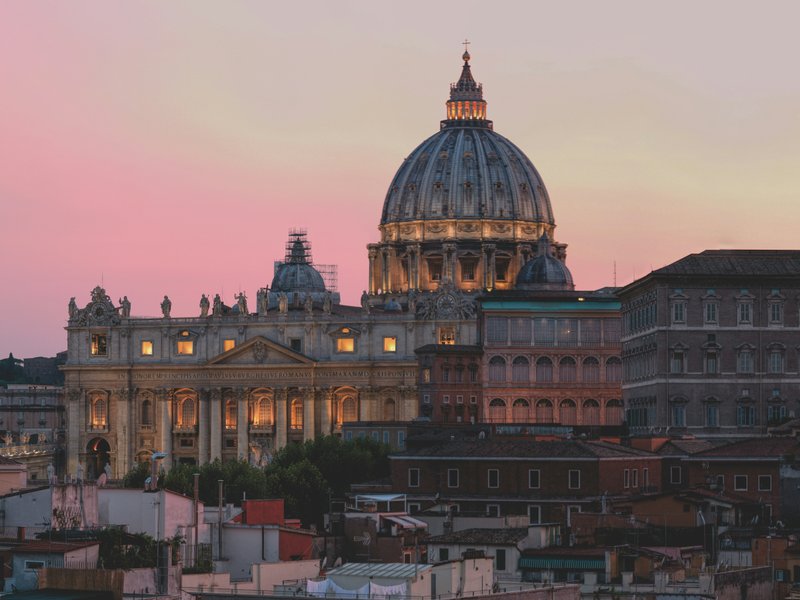
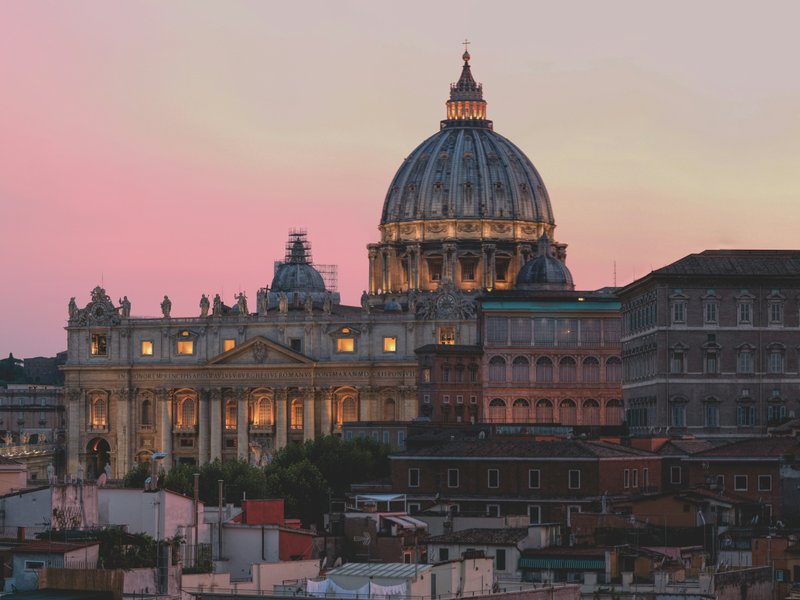
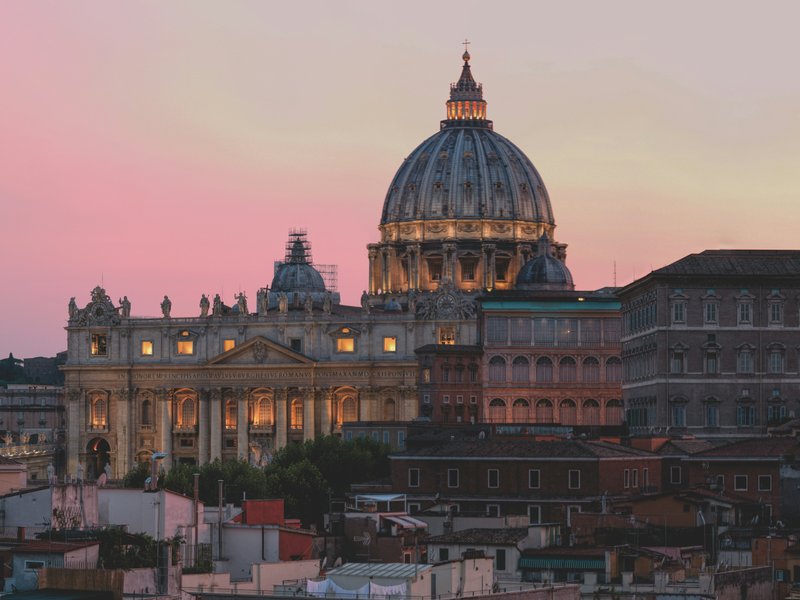
An ancient statue of Emperor Augustus from the Torlonia Collection greets arrivals at this restored 1930s palazzo on Piazza Augusto Imperatore. Antonio Citterio and Patricia Viel's interiors layer exotic marbles—yellow brocatelle, Sudanese red jasper, Brazilian Taj Mahal white—throughout 110 rooms of restrained opulence. The 16,000-square-foot spa centres on a Bisazza mosaic pool beneath marble columns, while La Terrazza surveys Rome from the Mausoleum to St. Peter's. Chef Niko Romito commands Il Ristorante with refined Italian cuisine.
Explore Rome
Where to Stay
Perched atop the Spanish Steps, this 18th-century palazzo channels Grand Tour elegance through architect Tommaso Ziffer's vision and Olga Polizzi's refined interiors. The rooftop Cielo Bar delivers 360-degree panoramas stretching to St. Peter's Basilica, while George Carter's geometric courtyard garden provides an intimate urban retreat. Fulvio Pierangelini oversees the fine-dining kitchen, and the Irene Forte Spa draws on organic Sicilian botanicals for its treatments.
Behind a modest Via del Babuino façade lies a 30,000-square-foot terraced garden where Picasso and Cocteau once plucked oranges from the trees. This historic palazzo, steps from Piazza del Popolo, draws a discreet clientele to its full spa with Turkish bath and marine hydro-pool, while the Stravinskij Bar pours champagne-spiked French mojitos and Sunday brunch on the garden terrace remains a Roman institution.
Rome's former school of architecture now houses this 27-room boutique where Michele Bönan's interiors pair ancient marble sculpture reproductions with contemporary art against ornate moldings and gilded accents. Handcrafted rosewood four-poster beds and bathrooms in striped gray-and-white Italian marble define the rooms, while the JKMaster suite adds a marble fireplace and book-lined walls. Downstairs, JK Café draws stylish Romans to its jewel-toned lounge steps from the Spanish Steps.
Orient Express's inaugural hotel occupies a 17th-century palazzo steps from the Pantheon, where Hugo Toro has layered Art Deco refinement over original vaulted ceilings and Murano chandeliers. Rooms channel sleeper-car elegance with bespoke trunk nightstands and Rosso Verona marble bathrooms. The crowning draw: one of Rome's largest rooftop terraces, placing aperitivo-sipping guests eye-level with the Pantheon's ancient dome, while a hidden speakeasy below serves route-inspired cocktails.
César Ritz's grand Roman palazzo still operates its original 1874 wrought-iron elevator, a fitting symbol for a hotel where heritage functions rather than fossilizes. The private wing with its dedicated lift accommodates visiting dignitaries seeking total seclusion, while the Bottega Veneta suite offers fashion-forward guests sleek Italian design. Evening brings the theatrical sabrage ritual at Lumen Bar, piano notes drifting through gilded halls where butlers remain perpetually on call.
Film director Luca Guadagnino transformed this 16th-century palazzo into a singular Roman address where period grandeur meets bold contemporary vision. The 26 rooms feature custom furniture and original artworks, while the top-floor Talìa Suite ranks among the city's finest. A Roman bath-inspired spa with hammam offers restoration, and restaurant Tramae showcases chef Marco Coppola's farm-fresh Italian cooking. For aesthetes seeking cinematic glamour with historic gravitas.
A third-century Roman sarcophagus murmurs as a fountain in the courtyard of this former 17th-century convent, now a family-owned hotel two streets from Piazza del Popolo. Arnaldo Pomodoro's marble sphere anchors the hall, while works by Warhol and Burri line the corridors. Art deco details—curved moldings, inlaid panels—frame 78 rooms. The rooftop Etere bar pours serious wines; San Baylon's weekend brunch draws a devoted Roman crowd.
Six generations of the same Swiss family have presided over this landmark crowning the Spanish Steps since 1893, cultivating a staff whose discretion has drawn everyone from Audrey Hepburn to contemporary VIPs. The 87 rooms showcase individual designs rich in tapestries, Venetian lamps, and frescoes, while the flagship Hassler Penthouse offers butler service and Hermès-clad bedrooms. Imàgo restaurant delivers Michelin-starred dining with sweeping city panoramas; below, the Amorvero Spa and 1940s-inspired Carmen's Bar complete the picture.
A cornerstone of Roman hospitality since 1889, Hotel Eden commands the Via Veneto neighborhood that inspired Fellini's La Dolce Vita. Designers Bruno Moinard and Claire Bétaille—the team behind the Plaza Athénée Paris—crafted interiors balancing art deco grandeur with contemporary ease. La Terrazza delivers Michelin-starred dining against sweeping city panoramas, while the Eden Spa offers private steam baths and Valmont treatments. A discreet gem: La Libreria's secret bar, concealed behind mirrored bookshelves.
Where to Eat
From its terrace perched on Monte Mario, the entire Eternal City unfolds in panoramic silence—a backdrop befitting Heinz Beck's three-Michelin-starred kitchen, where he has refined Italian-Mediterranean cuisine since 1994. The recently redesigned dining room honors Rome through Travertine marble and warm red tones, while sommelier Marco Reitano navigates a spectacular cellar with effortless mastery. Beck's commitment to sustainable, light cooking delivers precision without heaviness.
Chef Daniele Lippi holds two Michelin stars at this blue-hued dining room near Piazza del Popolo, where his tasting menus reward adventurous palates with dishes like a Turkish-inflected cuttlefish preparation that has become the kitchen's calling card. A fish-focused option or a more expansive menu including meat courses allows flexibility, while a thousand-label wine list ensures precise pairings for every course.
Within Villa Laetitia's Art Nouveau splendour, Chef Domenico Stile holds two Michelin stars for creative Mediterranean cooking shaped by his Campanian roots. The columned dining room, dressed in ornate stucco, opens onto a secluded garden steps from the Tiber—a Parisian echo in Rome. His dishes are technically intricate yet remarkably clean, supported by an Italian-focused wine programme spanning two dedicated sections.
Chef Anthony Genovese channels four decades of globetrotting into blind tasting menus that pivot between Italy and Japan with startling precision—signature gyoza filled with Piedmontese finanziera arrive with oxtail-inspired broth and powder, a dish that encapsulates his fusion philosophy. The intimate dining room operates under maître Matteo Zappile's polished direction, while sommelier Luca Belleggia navigates nearly 2,000 wine references for pairings that match the kitchen's ambition.
Chef Riccardo Di Giacinto's one-starred table occupies the basement of The H'All Tailor Suite, where two sleek dining rooms give way to outdoor seating when weather permits. His Roman repertoire arrives cleverly subverted: carbonara distilled to its essence, cappelletti suspended in concentrated dry broth, tiramisù reimagined with salt cod and potato alongside the classic sweet version. Playful technique meets regional soul.
The Colosseum fills the frame at this rooftop table, with the Domus Aurea and Vittoriano completing an ancient panorama that few dining rooms can match. Chef Giuseppe Di Iorio holds a Michelin star for cooking that moves between Roman tradition and Campanian influences, offered through four tasting menus—including a vegetarian sequence—or à la carte. The covered terrace operates year-round, making this a destination for any season.
A former carriage workshop on a lively Trastevere lane, Glass Hostaria retains its original soaring ceilings while housing chef Cristina Bowerman's one-Michelin-starred kitchen. Her tasting menus—including a thoughtful vegetarian sequence—draw on Roman tradition yet veer decisively toward invention. An extensive wine list and curated spirits selection complete the refined, design-forward setting suited to guests seeking creative Italian cuisine with substance.
Frequently Asked Questions
Which Rome neighborhoods are best for sightseeing on foot?
+
Centro Storico places you within walking distance of the Pantheon, Trevi Fountain, and Piazza Navona. Campo de' Fiori offers a morning market and proximity to Trastevere across the Tiber. The area around Piazza di Spagna connects easily to Villa Borghese gardens and Via del Corso shopping.
When is the best time of year to visit Rome?
+
April through June brings warm weather before summer crowds and August closures. October and November offer mild temperatures and shorter queues at major sites. August empties the city of Romans—many restaurants close—but delivers uncrowded streets for those who tolerate the heat.
What is the traditional Roman dining schedule?
+
Lunch runs from one to three, dinner rarely before eight-thirty. Restaurants serving at six target tourists; Romans appear after nine. Many establishments close between lunch and dinner, reopening around seven-thirty. Sunday lunch remains a family institution, with many places closed Sunday evening and all day Monday.
Nearby Destinations
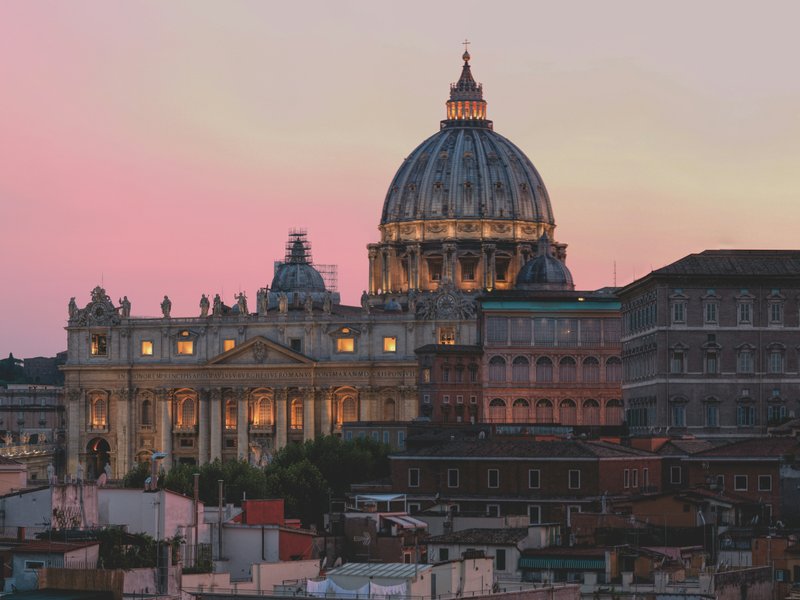
Explore ItalyRome unfolds across seven hills where ancient ruins share streets with Renaissance palaces and Baroque fountains. The Centro Storico delivers proximity to the Pantheon and Piazza Navona, while Trastevere offers cobblestoned intimacy south of the Tiber. Parioli and Aventino attract those seeking residential calm minutes from the monuments. The city's best hotels range from converted convents to Belle Époque grandes dames along Via Veneto, each reflecting centuries of architectural layering.
Roman dining operates on tradition refined rather than reinvented. Testaccio remains the stronghold of quinto quarto cooking—offal preparations dating to the old slaughterhouse district—while the gastronomic restaurants near the Spanish Steps interpret these roots through contemporary technique. Aperitivo culture peaks between seven and nine, when bars from Monti to Pigneto fill with Negronis and suppli. Coffee demands standing at the bar; anything else marks you as a tourist.