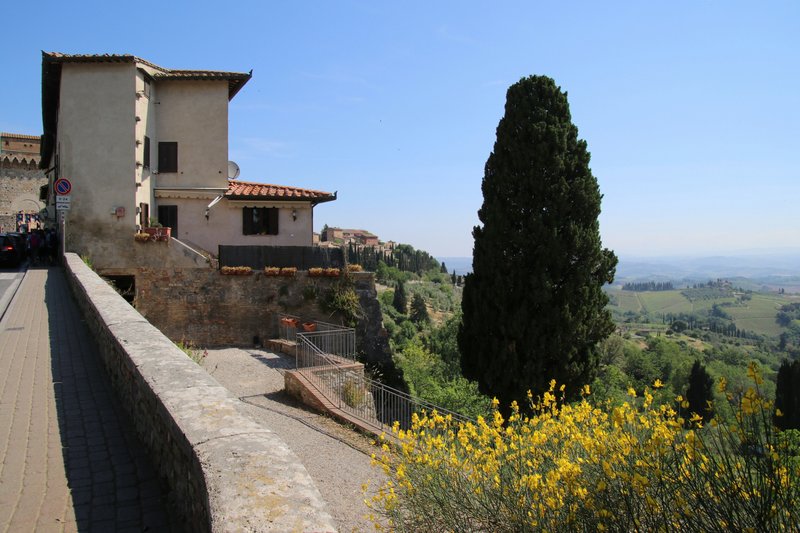
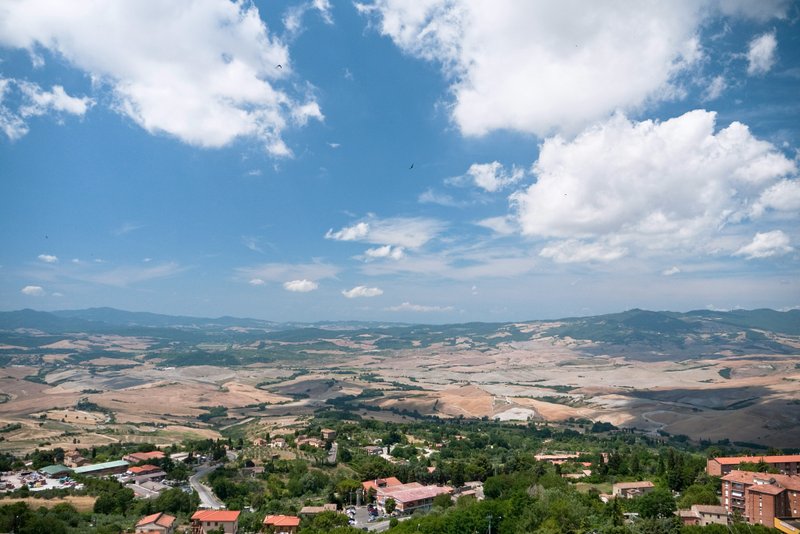
Umbria's largest spa anchors this adults-only retreat in the vineyard-clad hills near Perugia, with treatments designed specifically for couples. Guest rooms reveal exposed wooden beams and open onto private terraces surveying the rolling countryside. At Elementi Restaurant, regional ingredients receive refined interpretation. The atmosphere suits honeymooners and those seeking an intimate escape among Umbrian landscapes.
Where to Stay
Ancient stone walls from a 12th-century Umbrian monastery frame ultra-modern designer furniture at this adults-only retreat near Perugia. The twelve rooms balance atmospheric heritage with contemporary luxury, while the restaurant pairs creative Umbrian cooking with global accents in an indoor-outdoor setting. A seasonal pool, spa treatments on request, and a bar pouring local wines complete the intimate, design-forward escape.
A tenth-century watchtower crowning the Umbrian hills, restored by architect Christopher Chong and designer Seonaid Mackenzie with an uncompromising medieval-modern vision. Seven minimalist suites feature travertine walls and sunken stone baths; some offer cantilevered glass balconies over the valley. The rooftop infinity pool surveys olive groves and oak forests, while a forest spa with marble hammam and outdoor jacuzzi deepens the contemplative atmosphere. Solar-powered and naturally ventilated, this is architecture as pilgrimage.
A historic residence on the outskirts of Perugia, Alla Posta dei Donini pairs period architecture with a modern spa that draws wellness seekers to Umbria's green hills. Botanical gardens and an outdoor pool provide quiet retreats between treatments, while the on-site gourmet restaurant keeps guests from venturing far. Spacious suites accommodate families, and the overall value remains notably strong for the region.
A meticulously restored farmhouse and chapel in the Umbrian countryside, Chiesa del Carmine delivers barefoot luxury with five-star polish. The pool commands sweeping views across the hills, its generous shallow section welcoming younger swimmers, while gardens, a play area, and table tennis round out the family-friendly appeal. Groups seeking privacy can book the entire property for an exclusive rural retreat.
A working agriturismo outside Perugia, Relais Casamassima arranges its whitewashed rooms around a leafy central courtyard, each entrance private enough to feel like a small apartment. The farm setting encourages a hands-off hospitality that suits independent travelers seeking quiet over programmed activities. Contemporary interiors keep the aesthetic bright and uncluttered, while the grown-up atmosphere rewards those content with their own company.
Umbria's sole Grand Dame hotel occupies a commanding position on Piazza Italia, its historic five-star interiors balancing old-world refinement with genuinely warm, unhurried service. A subterranean pool and spa provide welcome respite after exploring Perugia's medieval streets, while generously sized suites and connecting rooms accommodate families with ease. For travelers seeking regional authenticity wrapped in polished hospitality, the Sina Brufani delivers quietly and confidently.
Where to Eat
Chef Andrea Impero holds a Michelin star at this refined Umbrian table perched in the hills above Torgiano. His cooking channels the agricultural wealth of central Italy—Umbrian truffles, Lazio oils, heritage grains—through dishes of striking intensity and imagination. The intimate dining room and attentive service create an unhurried atmosphere suited to travelers seeking a serious gastronomic evening away from Perugia's busier center.
Down a narrow alleyway near the church of Sant'Ercolano, chef Ada Stifani holds one Michelin star for her contemporary take on Umbrian tradition. The signature tagliatelle with cardoncelli mushrooms and scampi exemplifies her approach: regional ingredients, precise technique, intense yet balanced flavours. Two dining rooms offer contrasting atmospheres—one with an open kitchen, the other a sleek mezzanine—both suited to unhurried, flavour-focused meals.
Perched above the Umbrian hills near Torgiano, Quattro Sensi commands sweeping views of Perugia from its glass-enclosed veranda—an ideal setting for leisurely afternoon meals. The kitchen channels regional traditions through contemporary technique, with dishes like pappardelle dressed in Cinturello Orvietano pork ragù brightened by orange and fennel. An elegant interior dining room accommodates more formal occasions.
A faded 1980s sign marks the winding approach to this Bib Gourmand address near Orvieto, where the kitchen champions uncomplicated Umbrian cooking. Vegetables come from the garden, charcuterie is cured in-house, and the wine list spotlights small-production native varietals. The grilled pork glazed with maple syrup arrives as an unexpected signature — rustic precision with a modern flourish.
This Bib Gourmand address in medieval Montone delivers honest Umbrian cooking with a wine cellar running over 400 labels deep. The kitchen turns out regional classics—notably a maritozzo di mazzafegato layered with escarole, caramelised onions, and olives—while a curated selection of local olive oils underscores the terroir-driven approach. A worthy detour from Perugia for serious eaters.
A century of family stewardship anchors this Bib Gourmand trattoria in Recorfano, where the kitchen's motto—'Chi mangium nustran' ('here we eat local')—signals unwavering dedication to Lower Po valley traditions. Midday brings honest, affordable Lombardian plates; evenings shift to a single tasting menu that unfolds leisurely before a dessert trolley laden with homemade temptations. Regional authenticity at its most genuine.
A seventeenth-century waystation built for Rome-bound pilgrims now hosts three Venetian brothers who have made Umbria their culinary home. Twin chefs Stefano and Andrea work the kitchen, weaving regional ingredients and home-grown herbs into dishes that nod to both local and Venetian traditions, while sommelier Samuele orchestrates pairings from the dining room. Generous, skillfully executed plates reward those who venture beyond Perugia's centro storico.
Descending from Via Bartolo into brick-vaulted dining rooms named for the medieval jurist Bartolo da Sassoferrato, guests find a kitchen devoted entirely to meat and Umbrian tradition. The menu pivots with the seasons—black truffles claim their own section when available—while the subterranean architecture keeps the atmosphere cool and contemplative. Service is warm and precise, matching the regional focus.
Cuttlefish ink tagliolini draped in perch ragù announces the kitchen's intent at L'Officina: creative cooking rooted in regional instinct yet pulled toward cosmopolitan experimentation. The Michelin Plate holder occupies a versatile space on Borgo XX Giugno, equally suited to leisurely dinners among friends or focused business lunches—the latter chalked daily on a blackboard, keeping the offer sharp and seasonal.
An ancient mill in the hamlet of Chiugiana provides the atmospheric setting for this Michelin Plate restaurant, where contemporary Italian cooking draws deeply on Umbrian traditions. The kitchen prioritizes rigorously sourced local ingredients, while the wine program champions small-scale artisanal and natural producers from the region and beyond—an understated destination for travelers seeking authentic terroir-driven dining near Perugia.
What to Do
A medieval fortress turned wellness retreat, Borgo dei Conti spreads its 7,000-square-foot spa across two floors within 40 acres of century-old Italian gardens. The salt room offers halotherapy while a sensory deprivation suite provides complete immersion in stillness. Nescens treatments, a bio-sauna, hammam, and heated outdoor pool complete the offering. Traditional Umbrian dishes arrive in vaulted dining rooms overlooking the surrounding hills.
Frequently Asked Questions
What neighborhoods should I explore in Perugia?
+
The centro storico along Corso Vannucci offers the densest concentration of historic architecture and evening atmosphere. The area around the Università per Stranieri has a younger, more international feel with late-night bars. For quieter stays, the countryside between Perugia and Torgiano provides vineyard views and access to Umbrian wine country.
When is the best time to visit Perugia?
+
Umbria Jazz in July transforms the city into an open-air concert venue, though accommodation books months ahead. Spring brings wildflowers to the surrounding hills and truffle season runs from late autumn through winter. Summer evenings on the Corso are warm enough for outdoor dining until late, while winter offers the city at its most local.
How does Perugia compare to other Umbrian towns?
+
As the regional capital, Perugia has urban infrastructure — a university, year-round cultural programming, proper nightlife — that smaller hill towns lack. It functions as a working city rather than a preserved museum piece, which gives it an authenticity that Assisi or Orvieto, however beautiful, cannot match during peak tourist months.
Nearby Destinations
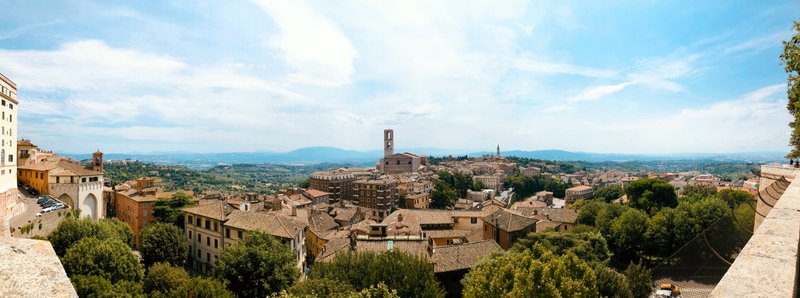
Explore ItalyPerugia commands its hilltop above the Tiber Valley with the authority of a city that predates Rome. The Etruscan walls still frame the centro storico, where the Corso Vannucci draws its evening passeggiata past medieval guild halls and Renaissance facades. Accommodation here divides between converted palazzos within the walls — stone staircases, frescoed ceilings, views across terracotta rooftops — and agriturismi in the surrounding olive groves, where the rhythm shifts to vineyard walks and meals served under pergolas.
The dining scene reflects Umbria's landlocked terroir: hand-rolled strangozzi with black truffle from Norcia, wood-grilled meats, lentils from Castelluccio. Restaurants cluster around Piazza IV Novembre and the stepped alleys descending toward the Università per Stranieri, the latter drawing an international crowd that keeps the bar and café scene lively well past midnight. Beyond the walls, the countryside delivers some of the region's most compelling tables — farmhouse kitchens where the menu follows whatever the morning brought from the orto.