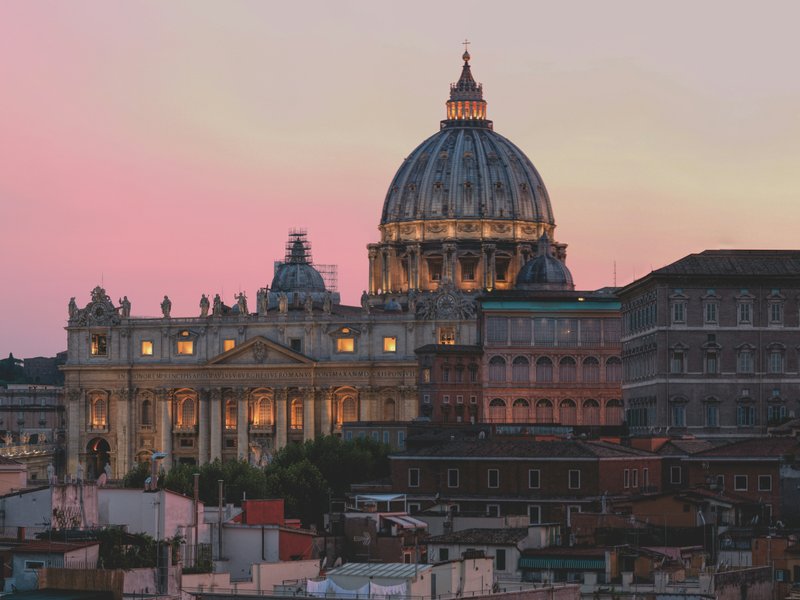
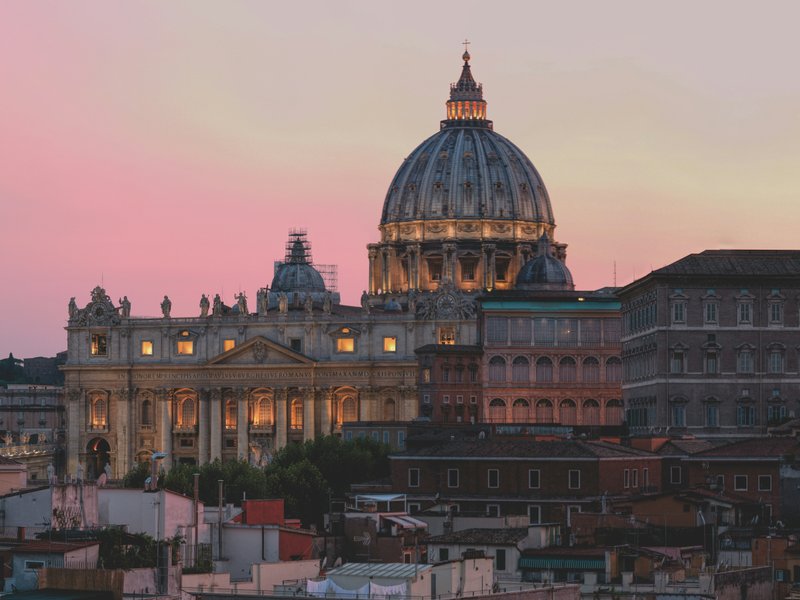
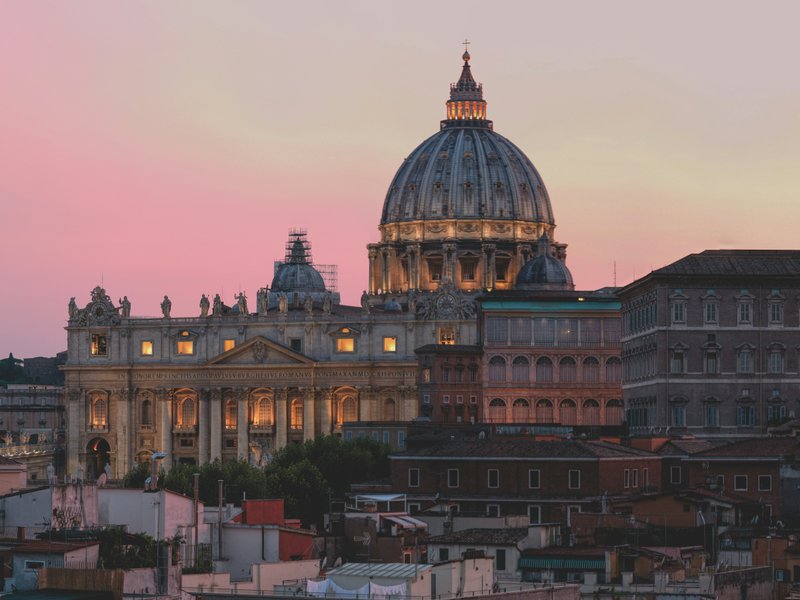
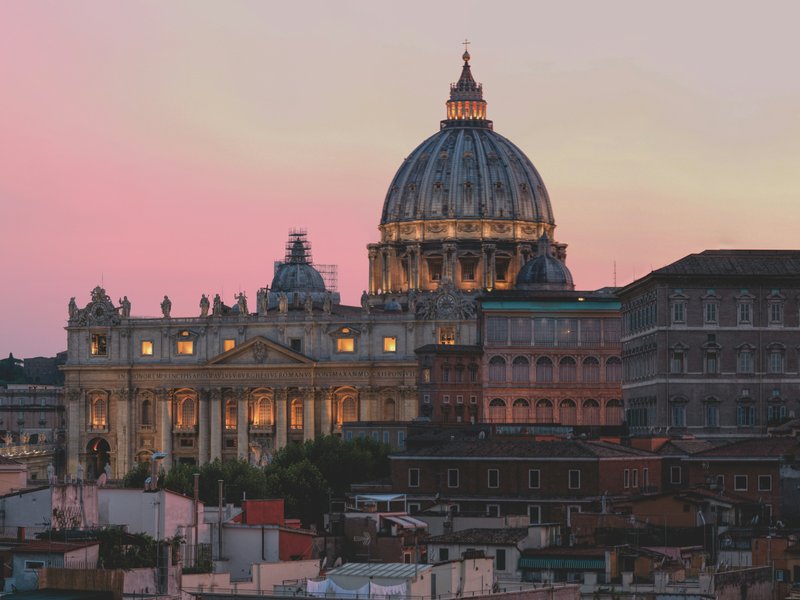
An ancient statue of Emperor Augustus from the Torlonia Collection greets arrivals at this restored 1940s landmark on Piazza Augusto Imperatore. Architects Antonio Citterio and Patricia Viel layered rare marbles—yellow brocatelle, Sudanese red jasper, Brazilian Taj Mahal white—throughout 110 rooms of restrained opulence. The 16,000-square-foot spa stuns with its Bisazza mosaic pool beneath marble columns, while La Terrazza rooftop sweeps from Augustus's mausoleum to St. Peter's dome.
Explore Rome Hotels
Where to Stay
Perched atop the Spanish Steps in an 18th-century palazzo, Hotel de la Ville channels Grand Tour elegance through architect Tommaso Ziffer's vision. The rooftop Cielo Bar delivers 360-degree panoramas stretching to St. Peter's dome, while chef Fulvio Pierangelini oversees the fine-dining restaurant. George Carter's geometric courtyard garden and the Irene Forte Spa—featuring organic Sicilian treatments with hammam and jacuzzi—draw style-conscious travelers seeking Roman glamour with contemporary edge.
Behind an unassuming Via del Babuino façade lies a 30,000-square-foot terraced garden designed by Giuseppe Valadier in 1818, where Picasso and Cocteau once plucked oranges between the palm trees and climbing roses. Today's guests retreat to a spa with marine hydro-pool and Turkish bath, then settle into the Stravinskij Bar for champagne-laced French mojitos as evening music drifts up from Piazza del Popolo.
Rome's former school of architecture now houses this intimate 27-room retreat where Michele Bönan's interiors pair ancient marble sculpture reproductions with contemporary art. Four-poster rosewood beds anchor rooms finished in striped gray-and-white Italian marble, while JK Café pulls a well-dressed Roman crowd for all-day drinks amid jewel-toned furnishings. The JKMaster suite adds a marble fireplace and library-style shelving for those seeking theatrical grandeur.
Orient Express makes its hotel debut in a 17th-century palazzo steps from the Pantheon, where French-Mexican architect Hugo Toro channels golden-age rail travel through warm woods, Rosso Verona marble baths, and bespoke trunk nightstands. The rooftop terrace — one of Rome's largest — places aperitivo hour at eye level with the ancient dome, while a hidden 30-seat speakeasy serves cocktails inspired by legendary train routes.
César Ritz's original Roman grande dame still operates one of the city's oldest lifts — a wrought-iron 1874 cage elevator gliding past Murano chandeliers and hand-painted frescoes now hung with Galleria Continua contemporary works. The Lumen bar's nightly sabrage ritual gives way to DJ sets, while mornings bring a harpist at breakfast. Suites include a Bottega Veneta–designed residence and a 300-square-meter Royal Suite with private elevator access, served by round-the-clock butlers.
Film director Luca Guadagnino transformed this 16th-century palazzo near Piazza di Spagna into a design-forward retreat where Renaissance architecture meets contemporary Italian craft. Each of the 26 rooms features custom furniture and original artworks, while the Roman bath-inspired spa offers hammam and sauna rituals. At Tramae, chef Marco Coppola prepares farm-to-table Italian classics—ideal for aesthetes seeking cinematic glamour with historic gravitas.
A third-century Roman sarcophagus murmurs as a fountain in the courtyard, while Arnaldo Pomodoro's marble sphere and works by Warhol line the halls of this family-owned palazzo. The 1920s art deco details—curved moldings, inlaid panels—frame 78 refined rooms two streets from Piazza del Popolo. San Baylon draws local crowds for Roman brunch; Etere's rooftop pours serious Italian and French wines with panoramic views.
Six generations of the same Swiss family have shaped this grande dame crowning the Spanish Steps, where 87 rooms showcase Venetian lamps, rich tapestries, and marble floors in singular configurations. The rooftop Imàgo restaurant surveys landmarks from the Victor Emmanuel monument to Sant'Agnese, while the Amorvero Spa and Carmen's Bar—channeling 1940s glamour—complete an address that has hosted royalty and Hollywood since its founding.
Bruno Moinard and Claire Bétaille—the designers behind Paris's Plaza Athénée—shaped Hotel Eden's art deco interiors with high ceilings and custom furniture that honor the property's 1889 origins in the Via Veneto district. La Terrazza delivers Michelin-starred dining with sweeping city views near the Spanish Steps, while the ground-floor La Libreria conceals a secret bar behind mirrored bookshelves. Three spa treatment rooms with private steam baths complete the experience.
Where to Eat
From its terrace perched on Monte Mario, the entire Eternal City spreads below in a silent panorama that no repeat visit quite prepares diners for. Heinz Beck, commanding this three-Michelin-starred kitchen since 1994, pursues lightness and sustainability through seafood-focused Mediterranean cuisine that feels both imaginative and deeply Italian. Sommelier Marco Reitano's wine list matches the ambition, completing an evening suited to Rome's most consequential occasions.
Chef Daniele Lippi holds two Michelin stars at this sleek, blue-hued dining room steps from Piazza del Popolo. His tasting menus showcase bold creativity—the shorter progression centers on seafood, including a striking cuttlefish preparation threaded with Turkish influences, while the extended option weaves in meat courses. A thousand-label wine list and polished, unobtrusive service complete evenings of generous, substance-driven contemporary cooking.
Chef Domenico Stile brings Campanian instincts to two-Michelin-starred kitchens inside Villa Laetitia, a Renaissance-Baroque residence where stucco columns and garden-facing windows conjure an almost Parisian elegance steps from the Tiber. His creative Mediterranean plates favor intricate technique yet land with striking clarity, each dish clean and purposeful. The Italian-focused wine program, presented in two volumes, rewards serious collectors and curious palates alike.
Chef Anthony Genovese channels four decades of global wandering into blind tasting menus that pivot between continents with startling fluidity—gyoza filled with Piedmontese finanziera, finished with oxtail-inspired Roman accents, exemplifies his Italy-Japan fusion. The intimate dining room operates with quiet precision under maître Matteo Zappile, while sommelier Luca Belleggia navigates a cellar approaching 2,000 labels. Two Michelin stars confirm the ambition.
Riccardo Di Giacinto's one-starred table occupies the basement of The H'All Tailor Suite, where two contemporary dining rooms give way to terrace seating in warmer months. His Roman repertoire arrives reimagined: a concentrated 'summary' of carbonara, cappelletti suspended in 'dry broth,' lamb alla romana with modern precision. The tiramisù appears twice—once sweet, once savoury with potato and salt cod—capturing the kitchen's playful intelligence.
Few dining rooms command such theatrical proximity to ancient Rome: the Colosseum fills the frame from this rooftop terrace, with the Domus Aurea and Vittoriano completing the panorama. Chef Giuseppe Di Iorio holds a Michelin star for cooking that roots itself in Roman tradition while drawing on Campanian influences and contemporary technique. Four tasting menus—including a vegetarian progression—allow guests to compose their own sequence, served year-round beneath a retractable cover.
A former carriage workshop in Trastevere's winding streets now houses Cristina Bowerman's one-Michelin-starred kitchen, its original high ceilings lending dramatic scale to an otherwise intimate dining room. The chef's tasting menus—including a thoughtful vegetarian progression—draw on Roman tradition while pursuing bold creative tangents. A carefully assembled wine program and impressive spirits collection complete evenings suited to gastronomes seeking substance over spectacle.
Frequently Asked Questions
Which Rome neighbourhood is best for first-time visitors?
+
The centro storico offers unmatched convenience, placing you within walking distance of major monuments, trattorias, and evening passeggiata routes along Via del Corso. Expect higher prices and more crowds, but the immersion in Rome's theatrical streetlife compensates.
When is the best time to visit Rome?
+
April through early June and September through October offer mild temperatures and manageable crowds. August sees many neighbourhood restaurants close as Romans flee to the coast, while winter brings fewer tourists and moody skies over ancient ruins.
What should I know about dining customs in Rome?
+
Romans eat late—lunch from 1pm, dinner rarely before 8:30pm. Restaurants often close between services. Tipping is modest; a few euros suffice. Reservations matter for popular addresses, particularly Thursday through Saturday evenings when locals dine out.
Nearby Destinations
Explore ItalyRome operates on its own clock. The morning ritual of cornetto and cappuccino at a neighbourhood bar gives way to long afternoons where shutters close and streets empty. By evening, the city transforms—trattorias fill with regulars, piazzas hum with aperitivo crowds, and the Tiber reflects the warm glow of ochre facades. This rhythm shapes everything, from when to book a table at the city's finest gastronomic restaurants to understanding why your hotel concierge insists dinner before 8pm marks you as a tourist.
The centro storico remains the gravitational pull for most visitors, with its dense concentration of Renaissance palazzi converted into hotels and the constant proximity to the Pantheon or Piazza Navona. Yet neighbourhoods like Trastevere offer a rougher charm—narrow lanes, vine-covered terraces, and the clatter of evening passeggiata. Parioli draws those seeking residential calm, while Monti has become the preferred ground for design-minded travellers. For families navigating cobblestones and ancient sites, the best family hotels provide considered amenities without sacrificing character. Those in search of respite from summer heat will find relief at properties with pools—essential when August temperatures push past thirty-five degrees.