Hacienda Vison: A Retreat between Design and Nature in Mie


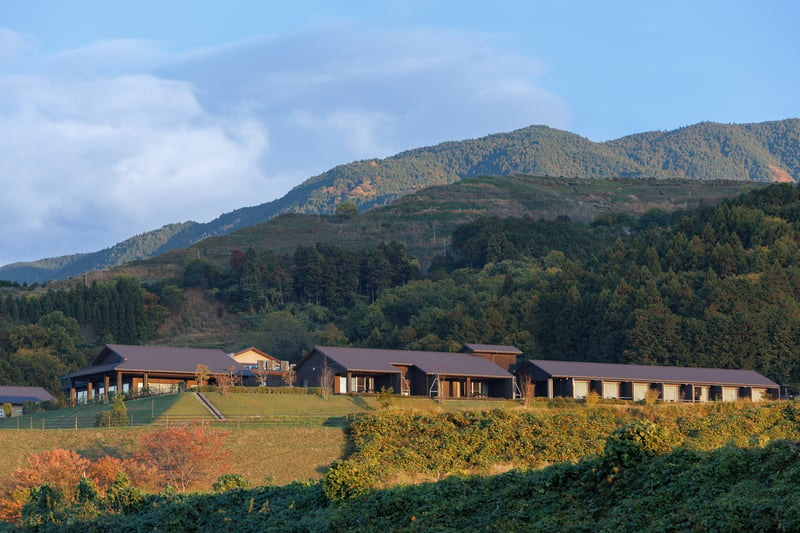
Amid the lush landscapes of Mie Prefecture, HACIENDA VISON offers a retreat where modern design meets nature and local gastronomy. Designed under the supervision of The Conran Shop, this intimate six-room property reveals interiors inspired by celebrated artists and designers, within an estate devoted to Japanese flavors and craftsmanship. From our stay in the Bauhaus-inspired Dessau room to dinner at IZURUN and visits to the shops of the VISON complex, join us as we discover this distinctive destination near the Ise Grand Shrine.
Mie, a Green Escape on the Doorstep of the Sacred
In Taki, in the heart of Mie Prefecture, HACIENDA VISON nestles within the expansive VISON estate, surrounded by lush greenery. With mountains to the north and forests and gardens to the south, the hotel enjoys a peaceful setting that invites you to switch off. The Ise Grand Shrine, one of Japan’s most revered spiritual sites, is around a 30-minute drive away, making it easy to combine a visit with a stroll through the lanes of Okage Yokocho, where traditional houses shelter shops and regional specialties. The ancient Kumano Kodo pilgrimage routes and the landscapes of Ise-Shima National Park, from deep forests to intricate coves, offer further opportunities to explore, for a stay that blends nature, culture and serenity.


A Contemporary Hacienda by The Conran Shop
Designed under the supervision of The Conran Shop, HACIENDA VISON takes its name from the traditional farm estates of southern Spain while embracing a contemporary aesthetic far removed from rustic conventions. Behind its façade of clean geometric lines, six rooms create an intimate world, each inspired by a renowned artist or designer and furnished with mid-century pieces and collectible objects. At the heart of the lobby, a large kitchen lends the property the welcoming spirit of a home: guests gather here to enjoy a refined dinner prepared by a local chef, watch their craftsmanship at work or cook with family and friends, perhaps during a cooking class.


Six Rooms, Six Artistic Reveries
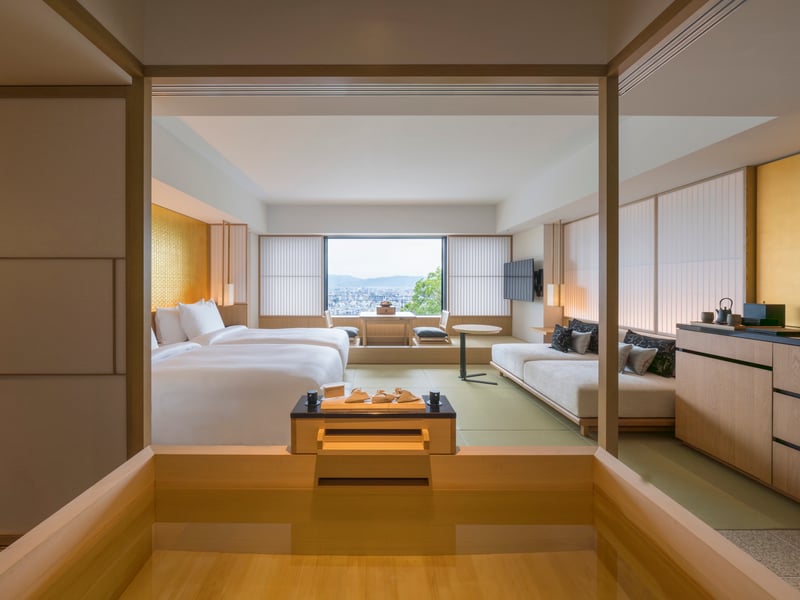
With just six rooms, HACIENDA VISON cultivates an intimate atmosphere surrounded by nature. Each explores a distinct artistic world, from Georgia O’Keeffe’s home in Abiquiu to Le Corbusier’s retreat in Cap-Martin, via Malaga, Picasso’s birthplace, Henry Moore’s sculptural forms and Terence Conran’s understated, functional design. All feature two double beds and a kitchen, ideal for preparing a meal with fresh produce from the VISON market or the nearby farm. On the ground floor, the Abiquiu and Málaga rooms open onto private gardens; the latter also welcomes dogs, with beds, bowls and treats provided.


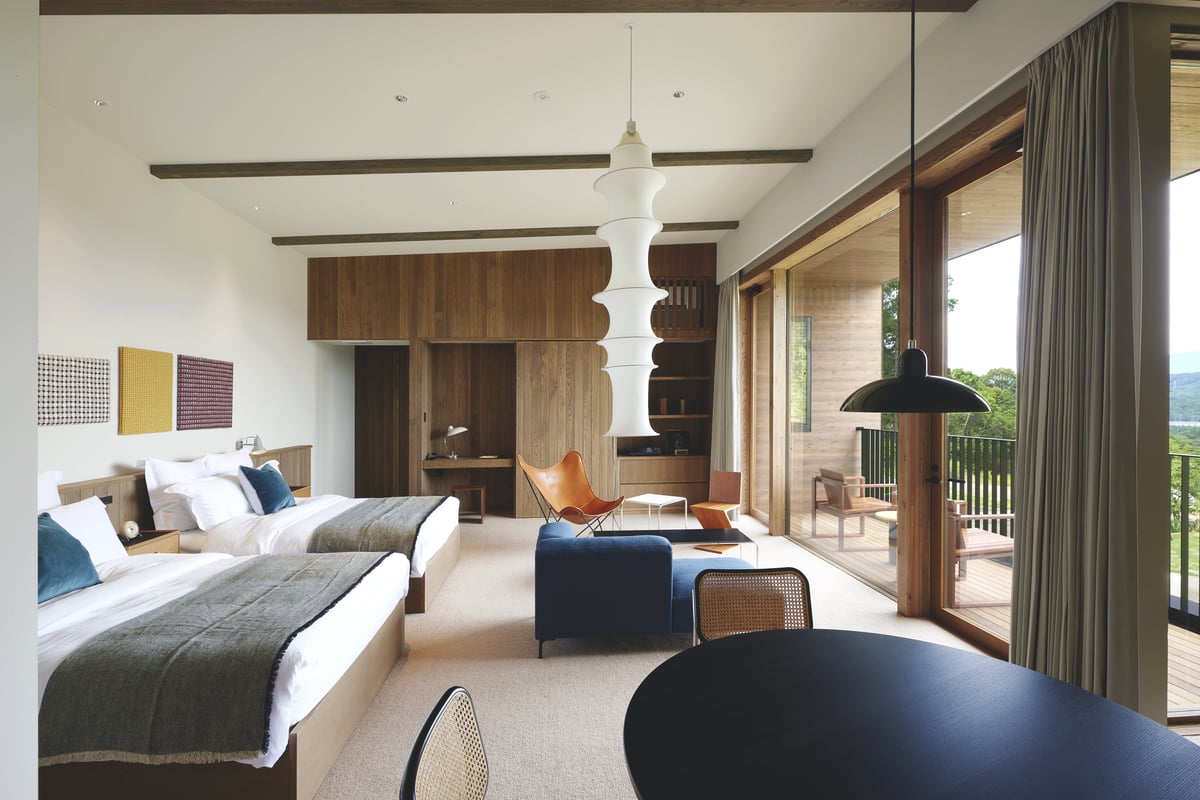
We stayed in room 203, named Dessau, a 90 m² space accommodating two adults and two children, with interiors that pay tribute to the Bauhaus and its founding principle: form follows function. As soon as you enter, the dining area catches the eye with Marcel Breuer chairs and Christian Dell pendant lights. Textile panels on the walls evoke the work of Anni Albers, while patterns by contemporary artists add a lively touch. Gerrit Thomas Rietveld’s Zigzag chair and Bruno Munari’s lighting enrich the setting, where each piece invites you to see furniture in a new light. With two double beds, a kitchen and a dedicated relaxation area, the room offers a generous setting for a peaceful escape, surrounded by iconic creations of modern design. A bathroom with a shower and bathtub completes the space.


A Morning Symphony of Garden Vegetables and Iberian Ham
Breakfast is enjoyed in the privacy of your room, overlooking the green landscape. Created under the supervision of Makoto Konno, chef of Orby restaurant at Azabudai Hills, this particularly original menu gives pride of place to fresh vegetables grown on the VISON farm. Over tea, we discover a soup, a salad and two generously topped slices of toast: one pairs grated carrots with meat, while the other combines scrambled eggs and Iberian ham. Fruit and yogurt round out a breakfast that encourages you to linger, accompanied by your favorite music.

Basque Dining beneath the Skies of Mie
At HACIENDA VISON, dining unfolds according to your mood, from discovering local flavors to sharing convivial moments. The large lobby kitchen invites you to watch a chef prepare dishes with regional produce or cook for yourself with family and friends. Each room also has a kitchenette, ideal for putting together a few appetizers with fresh ingredients and spices found at VISON, preparing a snack or enjoying a meal in the privacy of your accommodation.

To extend the experience, VISON’s restaurants open up further culinary horizons, beginning with IZURUN on the top floor of Hotel VISON. Inspired by the gastronomic culture of San Sebastián, its cuisine brings together ingredients from Mie Prefecture and Spain. At the helm, chef Akira Nakatake draws in particular on his experience at Akelarre and Arzak to convey the spirit of Basque dining. A cellar devoted to Spanish wines, comprising some 300 labels and 1,000 bottles, accompanies this meeting of two terroirs. The offering is complemented by wines by the glass, sherries and Basque beers, along with liqueurs and digestifs to conclude the meal.


It is here that our TXULLO tasting menu begins with a cocktail at the bar, before we are led into the kitchen for a first bite enjoyed standing up, in the convivial spirit of the famous tapas bars. Resting on a small pedestal, a seashell holds delicately browned morsels that we savor beside the stoves, with a close-up view of the kitchen team at work. This opening immediately takes us behind the scenes of the restaurant and gives the meal a wonderfully lively dimension.


After this first immersion, we enter a secret room called the Refrigerator: behind a door resembling that of an actual refrigerator lies a space where we enjoy amberjack ceviche. Presented in a small glass vessel, it is adorned with thin slices of okra, orange pearls and delicate purple and white petals. This fresh, colorful composition charms with its meticulous presentation, contrasting with the simplicity of the table and extending the surprise of this unusual interlude.

The tasting continues at our table with Kumano chicken, presented in an understated arrangement on a wooden plate topped with a bundle of straw. Its glossy, golden skin immediately catches the eye. Raised exclusively in the city of Kumano, this chicken, a cross between Shamo “Yakido,” Ise Akadori and Nagoya Cochin, is distinguished by its firm, reddish meat and the rich flavor of heritage poultry. Smoked before our eyes, it is served with buttered mushrooms, a gently spicy yuzukoshō and an egg and salt sauce, bringing richness and brightness to the dish.


After this tribute to Japanese terroir, Txistorra takes us back to Spanish flavors, reinterpreting the traditional sausage with duck in place of pork. Set on a small golden bun, it is served with an anchovy, garlic, tomato and olive oil sauce that adds a Mediterranean touch to this interpretation. A generous crown of young shoots and vegetables from the VISON farm tops the dish, their vivid colors standing out against a broad ceramic plate in mineral shades.

Continuing these Mediterranean notes, the salmorejo showcases cherry tomatoes from Sanko Harenohi Farm in Tsu, Mie Prefecture, whose sweetness recalls ripe fruit. Served in a glass bowl, this traditional tomato soup reveals an intense red hue, accented with a few delicate leaves and beads of oil. A mozzarella and chorizo skewer accompanies it, while ham and bread served alongside add an indulgent touch. Lemon and clove lend fresh, spicy notes that complement the sweetness of the tomatoes.

The meal then turns to the sea with areolate grouper. Its white flesh is topped with golden, crisp skin and a scattering of salt crystals. The fish rests on a curry tartar sauce, whose yellow hue adds a bright touch to the presentation. Beyond the pairing of flavors, this accompaniment introduces a personal note to the menu: it echoes the chef’s youthful dream of opening a curry restaurant.

This personal recollection is followed by foie gras, served in a delicate blue and white ceramic bowl. Two pan-seared pieces, coated in glossy teriyaki sauce and sprinkled with sesame seeds, rest on a bed of rice and white corn. Chef Nakatake, Martiko’s ambassador in Japan, showcases this foie gras from Navarre, whose silky texture and depth of umami marry beautifully with the sweetness of the corn and the sweet and savory notes of the sauce. This original and utterly delicious combination emerged as our favorite dish of the menu.

After the richness of the foie gras, the Interlude offers a fresh, fruity pause with watermelon granita. Its pink crystals are crowned with three local blueberries, their dark hue contrasting delicately with the soft pink of the watermelon. This pared-back presentation provides a welcome breather in the tasting, gently preparing the palate for the next course.

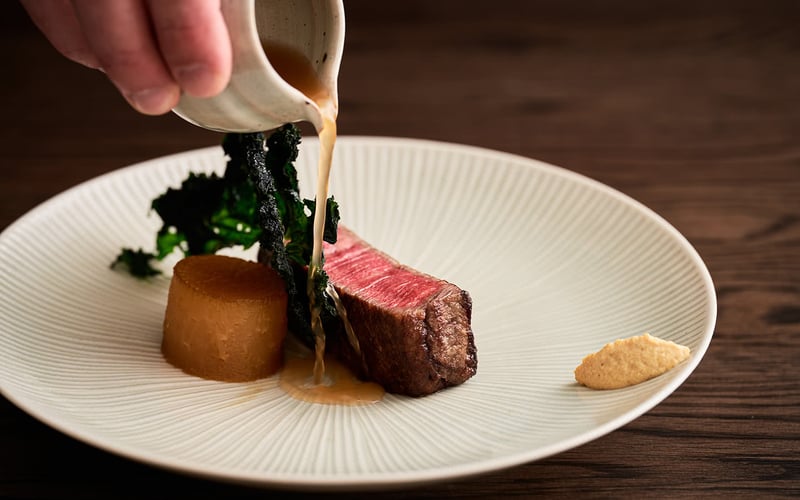
The tasting resumes with Mikumano beef, served as a beautiful cut with a golden crust and a pink center, accompanied by vivid green chimichurri sauce, a wedge of roasted squash and white eggplant. The meat comes from Japanese Black heifers carefully raised to around 36 months of age at Okada Farm in Mie Prefecture. Set on a wooded hill overlooking the Kumano Sea, this small producer brings around a hundred cattle to market each year. This limited production finds expression in a restrained dish where the meat takes center stage.

To conclude this succession of savory courses, “Back to the Origins” offers a nod to Japanese gastronomy with cold udon, accompanied by karasumi, a bottarga prepared by the chef, seaweed and sudachi. In a dark bowl, thin slices of this Japanese citrus contrast with the deep tones of the seaweed and the amber color of the bottarga. Balancing freshness and briny notes, this understated composition echoes our stay in Japan and continues the dialogue between cultures that runs throughout the menu.

The transition to sweets begins with a bite of matcha zenzai, shaped into a small pale green dome with a glossy glaze, topped with a deeper green pearl. Each bite rests in a slender black spoon, arranged on a wooden tray strewn with dried tea leaves. Understated and refined, the presentation highlights the nuances of matcha and gives this Japanese sweet the appearance of a precious edible jewel.

Following this first sweet treat, the egg flan arrives on a broad glass plate, coated in amber caramel that accentuates its golden hue. A scoop of vanilla ice cream crowns it, adding freshness and a delicate contrast to this simply yet carefully presented dessert. Together, they create an indulgent interlude before the meal’s final sweets.

To finish, three sweet treats take the spotlight: a slice of cherry Basque cake, whose fruity center contrasts with its golden pastry, a cube of Basque cheesecake with a dense, creamy texture, and a cannelé with a brown, delicately ridged exterior. A cup of tea celebrates the tradition of Japanese tea in Mie Prefecture, particularly in the former province of Ise. The first harvest of the new season begins there in late April at the earliest, while specific varieties are used to produce Ise black tea. This final thoughtful touch extends the connections woven throughout the meal between Basque delicacies and local flavors.

The Original Concept behind the VISON Complex
The VISON complex stands out for its distinctive concept: an expansive destination with contemporary architecture, bringing together some 70 establishments devoted to gastronomy, well-being and Japanese craftsmanship. Hugely popular with locals, who come to shop, share a meal or enjoy a day of relaxation, it is a destination in its own right in the Mie region. Visitors wander among restaurants led by renowned chefs, Japanese and international pastry shops, and a market showcasing produce from the sea and the mountains. Organic farms and shops offering immersive experiences enrich this modern setting, where the discovery of local traditions goes hand in hand with a creative, contemporary approach.


My Verdict
HACIENDA VISON’s character lies in an unexpected combination: six rooms shaped by the great figures of design, a kitchen that brings Mie’s harvests to the table, and Spanish influences that extend to the plate. The Dessau room makes this encounter tangible, with furniture you can use and appreciate every day. Just a few steps away, VISON’s shops and IZURUN’s cuisine continue the discovery of a region deeply attached to its produce and craftsmanship. An address to remember for the rare pleasure of staying somewhere with a confident aesthetic vision, while enjoying comfort and conviviality.
What I loved:
- The hotel’s intimate atmosphere, with just a handful of rooms. These are true little apartments with thoughtful design, fully equipped kitchens, outstanding comfort and soothing views of nature.
- The particularly thoughtful and original breakfast, deeply rooted in the identity of the property and beautifully showcasing vegetables grown on site.
- The absolutely incredible VISON complex, a destination in its own right with its many shops, restaurants and experiences celebrating the Japanese art of living.
What could be improved:
- The lack of fully blackout blinds, allowing daylight into the room from early morning.
Practical Information
- Room rate of €550 in August 2026.