Skip to content

Santiago De Compostela

Where to Stay

1. A Quinta da Auga

1 Michelin Key· Relais & Châteaux

A converted 1792 paper mill set on a bucolic hectare of riverside parkland, this Relais & Châteaux property retains its original stonework beneath French country-manor interiors. Guest rooms overlook landscaped gardens, while the spa complex offers heated pools, saunas, and treatments drawing on both Eastern and Western traditions. Filigrana restaurant showcases contemporary Galician cooking paired with regional wines, and the hotel arranges visits to nearby wineries and artisan cheese producers.

2. Parador de Santiago de Compostela (Spain)

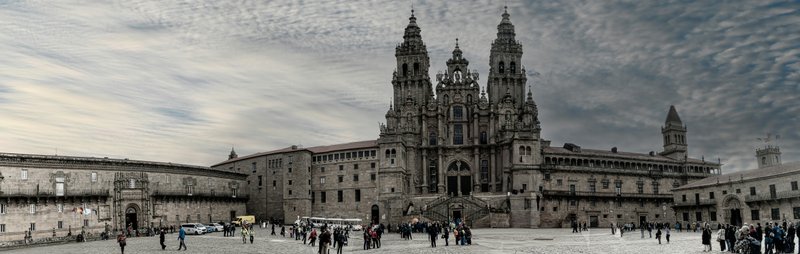
Built in 1499 as a hospice for pilgrims completing their journey to the Cathedral of St James, the Parador de Santiago de Compostela ranks among the world's oldest functioning hotels. Its position directly on the Praza do Obradoiro remains unmatched—guests wake steps from the cathedral façade. The property maintains its pilgrim welcome tradition while offering refined comforts, with family rooms and cots making it suitable for travelers of all ages.

3. Retiro Costiña Wellness & Villas

Seven stark white, pill-shaped villas dot the rural Galician landscape at this intimate retreat, their minimalist interiors designed for contemplation rather than distraction. The property forgoes conventional resort trappings in favor of nature-led renewal, though Chef Manuel Garcia's acclaimed restaurant anchors the experience—guests drift from kitchen to wine cellar to dining room through each progressive course. Pet-friendly, with just seven rooms total.

Where to Eat

1. Retiro da Costiña

★★ Michelin

Three generations of the García family have shaped this two-Michelin-starred destination in rural Galicia, where the anniversary tasting menu unfolds as a theatrical progression through multiple spaces—Champagne corner, working bakery, vaulted bodega, and finally a firelit lounge for spirits and petits-fours. Spider crab, local sea bass, and free-range chicken anchor a creative yet deeply rooted Galician repertoire.

2. A Tafona

★ Michelin

Chef Lucía Freitas holds a Michelin star for her health-conscious fusion cooking at this atmospheric stone-walled dining room, where a striking skylight illuminates tables crafted from traditional batea wood—the rafts once used for mussel farming along the Galician coast. Her two tasting menus, Limiar and Alba de Gloria, showcase pristine local seafood and vegetables from her own garden in technical, colorful preparations.

3. O'Pazo

★ Michelin

The Vidal brothers have built a Michelin-starred temple to fire cooking outside Padrón, where Óscar commands the wood-fired grill and Manuel orchestrates the dining room. Their Rescaldo tasting menu centers on native Rubia Gallega beef—the signature steak braised then filleted tableside—alongside Atlantic seafood and local field produce. A deep cellar of Spanish and international wines completes the experience.

4. Casa Marcelo

★ Michelin

Steps from the cathedral where pilgrims complete their journey, chef Marcelo Tejedor orchestrates surprise tasting menus of four or eight courses at a communal table surrounded by his open kitchen. The one-Michelin-starred cooking draws on Galician tradition while weaving in Chinese, Mexican, and Peruvian accents—a cosmopolitan reward after the Camino. A rear garden terrace offers a quieter alternative to the convivial main room.

5. Simpar

★ Michelin

On a cobbled street steps from the cathedral, young chefs Áxel Smyth and Claudi Merchán have earned a Michelin star for their inventive Galician cooking rooted in same-day sourced ingredients. The signature fish of the day arrives with silky mashed potatoes and a three-textured ajada sauce, while their tripe—crowned Best in the World 2024—draws devoted followers to this contemporary dining room.

6. A Horta d'Obradoiro

Bib Gourmand

A 1690 house once inhabited by cathedral musicians now shelters this Bib Gourmand address, where two chefs craft seasonal fusion plates with meticulous presentation. Original beams have been repurposed into a characterful wine bar, while a working vegetable garden—rare in the historic center—supplies the kitchen. The atmosphere drifts between conservatory brightness and colorful, beach-hut informality.

7. A Viaxe

Bib Gourmand

A Peruvian chef commands this intimate Bib Gourmand bistro tucked into a quiet square, building tasting menus around lesser-known fish species secured directly from auction. The 7 Destinos and 9 Destinos menus trace each plate's origins—Peru, Colombia, Ecuador, the Basque Country, Galicia—turning dinner into edible cartography. The compact room fills quickly; reservations prove essential for this globe-spanning take on regional seafood.

8. Abastos 2.0 - Mesas

Bib Gourmand

Adjacent to the bustling Mercado de Abastos, this Bib Gourmand address channels Galician tradition through a daily-changing carte dictated by market availability. The kitchen maintains radical transparency, displaying precise supplier origins and distances for every ingredient. Two tasting formats—Do Mercado and Da Casa—showcase impeccable local fish and seafood in a modern, informal setting where reservations prove essential.

9. Anaco

Bib Gourmand

A few steps from the Museo do Pobo Galego, chef Víctor Lobejón runs his first solo kitchen within atmospheric bare stone walls. The Palencia-born cook, trained across Spain's best tables, channels Galicia's seasonal bounty into precise contemporary plates. His daily-changing #amesaposta menu reveals a restless creativity, while a dedicated sommelier guides diners through a cellar worth exploring. Bib Gourmand distinction confirms the value.

10. Asador Gonzaba

Bib Gourmand

A glass-fronted maturing cabinet greets diners at Asador Gonzaba, signaling the restaurant's commitment to prime cuts. The Bib Gourmand holder builds its traditional menu around Galician beef and veal, supplemented by churra lamb and daily-catch grilled fish. Classically appointed dining rooms and a well-assembled Galician wine list complete an honest, meat-focused experience for carnivores passing through the pilgrimage city.

What to Do

1. A Quinta da Auga SPA

Relais & Châteaux

Beneath a glass-roofed sanctuary spanning 650 square meters, an 18th-century paper mill houses one of Galicia's most complete wellness circuits. The flotarium, hydrotherapy pool, and ice fountain anchor a relaxation journey, while treatment rooms deploy both Eastern rituals and Western techniques using natural cosmetics and essential oils. Downstairs, the Filigrana restaurant pairs contemporary Galician cooking with regional wines, and the hotel arranges oenology courses at nearby wineries.

Frequently Asked Questions

What are the main neighborhoods to explore in Santiago de Compostela?

+

The Zona Vella (old town) centers on the cathedral and includes the atmospheric streets of Rúa do Franco and Rúa do Vilar. The Ensanche, developed in the 19th century, offers wider boulevards and contemporary dining options. San Pedro and Conxo to the south provide a more residential, local feel away from pilgrimage crowds.

When is the best time to visit Santiago de Compostela?

+

May through June and September through October offer mild temperatures and fewer crowds than the peak summer pilgrimage season. July 25th, the Feast of Saint James, transforms the city with fireworks and celebrations but also brings significant visitor numbers. Winter is quiet and atmospheric, though expect frequent rain.

What local specialties should visitors try in Santiago de Compostela?

+

Galician cuisine centers on Atlantic seafood: percebes (gooseneck barnacles), pulpo á feira (paprika-dusted octopus), and zamburiñas (small scallops). Tarta de Santiago, an almond cake dusted with the cross of Saint James, originated here. The local Albariño and Ribeiro wines pair naturally with the region's briny flavors.