Named for the olive tree blossom—bagá—this one-starred dining room beside the San Ildefonso basilica distills Jaén's terroir into a single tasting menu of striking restraint. Chef Pedro Sánchez builds each course around minimal ingredients: carrueco pumpkin consommé, Motril quisquilla with partridge escabeche. The intimate designer space demands advance booking, rewarding those who secure a table with concentrated regional flavors.
Explore Jaen
Named for the chef's grandmother who first taught him to cook, Dama Juana holds one Michelin Star for its modern interpretation of Andalusian traditions. Chef Juan Aceituno channels the landscapes of Jaén through three tasting menus—Madre, María, and Triana—each a narrative of place and memory. His annual stages at temples like Les Prés d'Eugénie keep the cuisine evolving within a minimalist downtown dining room.
Chef Javier Jurado named his Michelin-starred restaurant Malak—Arabic for 'angel'—after his grandparents' establishment where his culinary passion began. The open kitchen delivers creative reinterpretations of Sierra del Segura mountain cuisine through two tasting menus, 'Aldeas Perdidas' and 'Sierra de Segura'. Expect acorn-fed Iberian ham croquettes with sheep's milk, and signature Aguamula River trout with pilpil and rinrán.
Chef Juanjo Mesa earned his Michelin star by channeling childhood memories from Pegalajar into two surprise tasting menus—Bercho at nine courses, Charca at fifteen—served in a compact bistro with an open kitchen. His 2023 title as Best Olive Oil Chef surfaces in dishes built on French-technique sauces and Sierra Mágina traditions, none more personal than his signature broad beans with cod and radish, a tribute to his mother.
Within a sixteenth-century monastery whose covered cloisters now host aperitifs of manzanilla sherry, chef-owner Juan Carlos García holds one Michelin star for his creative interpretation of Andalusian tradition. Two tasting menus showcase humble regional ingredients—many from García's own vegetable garden—refined into precise compositions. A standout: squid paired with Iberian ham, enriched by concentrated dashi broth and silky tartare.
Casa Antonio anchors its modern cuisine in the culinary traditions of Jaén, presenting regional flavors through a contemporary lens across several dining rooms and a welcoming tapas bar. The kitchen's daily specials and tasting menu, La Comanda del Chef, showcase this approach, while the signature Ponche dessert—a family recipe reinterpreting the province's classic peach punch—delivers a sweet note of local heritage. Michelin Plate distinction.
Beneath the streets of Úbeda, a sixteenth-century stone cellar houses this intimate address where Jaén's prized extra virgin olive oil anchors every dish. The kitchen forgoes à la carte entirely, presenting two surprise tasting menus—Legado and Renacimiento—that shift with the seasons. Wine pairings accompany both, making this a compelling stop for gastronomes exploring Andalusia's Renaissance heartland.
Inside the Picualia olive oil cooperative, chefs Paco Simón and Toña López de la Huerta have built a Bib Gourmand restaurant where liquid gold governs every plate. Their two tasting menus—Fenologicum and Labora Olivae II—trace the rhythms of local tradition through dishes like Josper-grilled Coto Ríos trout with olive oil mayonnaise. Visitors can pair lunch with cooperative tours and tastings.
A converted railway station on Úbeda's outskirts, Cantina La Estación seats diners inside a reimagined vintage train carriage—an atmospheric setting for the Bib Gourmand cooking of owners Montserrat and Antonio José. Their contemporary seasonal menu changes daily, anchored by slow-cooked stews and accompanied by house-baked breads and a curated selection of local olive oils. Worth the short detour from the Renaissance quarter.
Behind a robust stone façade in central Linares, chef-owner Juan Pablo Gámez has fashioned a striking contemporary dining room overlooking an interior patio. His Bib Gourmand kitchen revives forgotten Jaén recipes through modern technique, with two tasting menus anchoring the experience: 'GastrÓleO' celebrates the region's prized extra virgin olive oil, while 'Un guiño a la TIERRA' requires advance booking for its deeper exploration of provincial heritage.
Frequently Asked Questions
What makes Jaén's olive oil reputation significant for visitors?
+
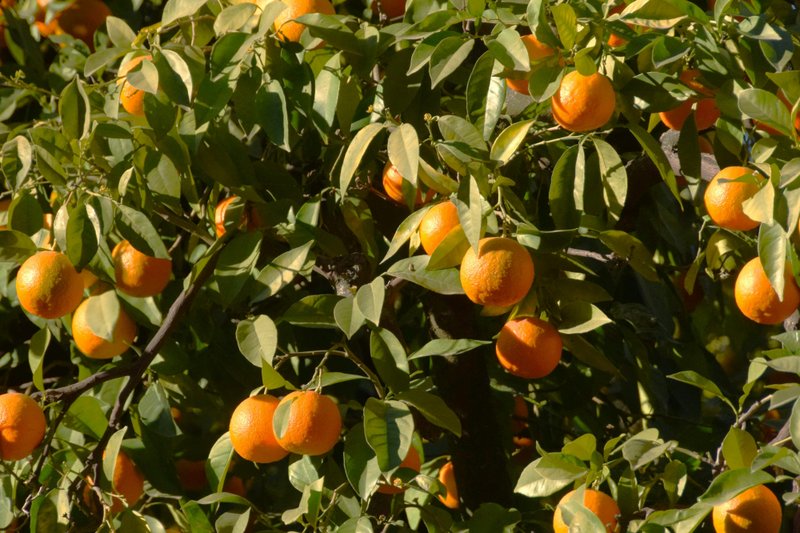
The province produces roughly half of Spain's olive oil and a fifth of the world's supply. Visitors encounter this heritage directly — mills offer tastings and tours, restaurants build menus around seasonal pressings, and the oil itself becomes a focal point of the culinary experience rather than a mere ingredient.
Which historic quarters should visitors prioritize in Jaén?
+
The Judería beneath the cathedral retains its medieval street plan and houses the restored Arab baths, among the largest in Spain. The climb through the San Juan neighborhood toward Santa Catalina castle rewards with views across the olive-covered valleys and direct access to the parador occupying the fortress.
How does Jaén's food culture differ from coastal Andalusian cities?
+
Mountain cuisine dominates here — wild boar, venison, and partridge from the nearby sierras appear regularly alongside hearty dishes like andrajos stew. The emphasis falls on olive oil as the primary fat, used more liberally and with greater variety than anywhere else in Spain, with single-estate bottles treated with the reverence coastal cities reserve for sherry.
Nearby Destinations
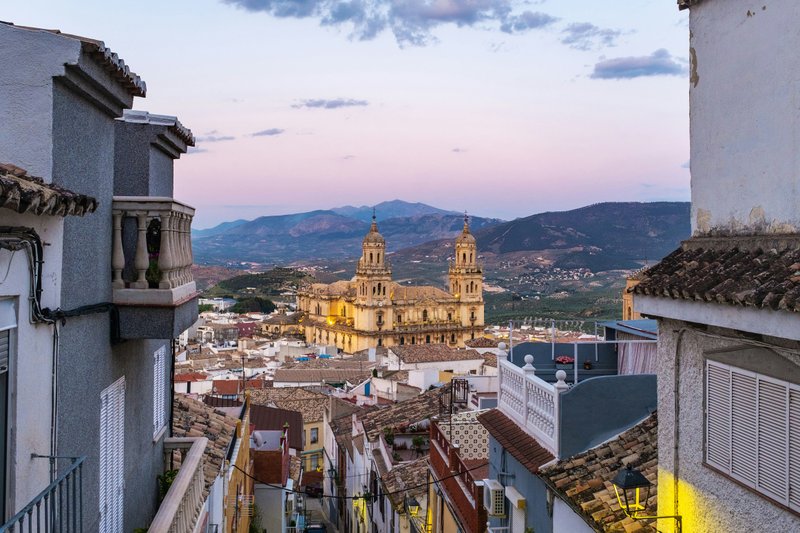
Explore SpainJaén rises from endless olive groves that carpet the valleys of eastern Andalusia, a provincial capital where Renaissance architecture meets the working rhythms of agricultural Spain. The old quarter climbs toward the Santa Catalina castle, its narrow streets lined with tapas bars serving the region's exceptional extra virgin oil — poured generously over breakfast toast, drizzled on salmorejo, used to finish nearly every dish. The cathedral, designed by Andrés de Vandelvira, anchors the historic center with its twin towers and houses one of Christianity's most venerated relics.
Beyond the monumental core, neighborhoods like La Magdalena and San Ildefonso maintain their village character, where local bars fill at midday with workers from nearby cooperatives. The dining scene runs deep in tradition — game meats from the Sierra de Cazorla, slow-cooked stews, and the distinctive pipirrana salad appear on menus alongside contemporary interpretations of Jaén's olive oil cuisine. Evening crowds gather along Calle Nueva for copas, while the Arab baths beneath the old Jewish quarter hint at the city's layered medieval past.