A Renaissance palazzo concealing 11 acres of private gardens, the Giardino della Gherardesca, where a 91-foot pool sits among 15th-century sculptures and an Ionic temple. Inside, frescoed ceilings and bas-reliefs dating to 1473 line the corridors. Il Palagio restaurant showcases chef Paolo Lavezzini's modern Tuscan cooking beneath antique vaulted ceilings. A two-story spa and summer kids' club with dedicated children's treatments make this equally suited to couples and families.
Explore Florence
Where to Stay
Built in the sixteenth century for the noble Landini family, this Medici villa occupies twenty-two acres along the Arno, its gardens designed by Maria Chiara Pozzana and planted with Florence's signature irises. Il Verrocchio restaurant serves candlelit dinners overlooking the river, while the Arno Spa features a Roman pool and green marble Turkish bath. A fifteenth-century cellar hosts private Tuscan wine tastings with regional charcuterie.
The Ferragamo family's flagship property occupies a prime stretch of the Arno's south bank, steps from the Ponte Vecchio. Michele Bönan's maritime-inspired interiors in whites and blues display over 450 twentieth-century artworks, including Picasso and Cocteau originals. For medieval atmosphere, the thirteenth-century Marsili Tower offers exposed brick walls and canopy beds. Chef Claudio Mengoni's Michelin-starred Borgo San Jacopo delivers refined Tuscan cuisine with river views.
A former 19th-century college founded by Barnabite Fathers crowns a secluded hilltop fifteen minutes from the Duomo, its original frescoes and coffered ceilings now framing 83 suites with private wine cellars. The old headmaster's office serves as a cocktail and cigar lounge, while olive-shaded gardens shelter a panoramic pool and the Aelia spa—ideal for families and travelers seeking Florentine grandeur with countryside calm.
Baron Oppenheim commissioned this neo-Renaissance palazzo for his bride in the nineteenth century, and its theatrical grandeur endures—canopy beds draped in velvet, ceiling frescoes, Persian rugs across 44 rooms. Perched near the Boboli Gardens, Villa Cora offers a heated year-round pool amid manicured grounds and Spa Béné treatments crafted from Tuscan ingredients. A refined retreat for travelers seeking old-world opulence minutes from Florence's crowds.
Dante's muse Beatrice once called this fifteenth-century palazzo home, and the building's thirteen suites preserve that Renaissance grandeur with period aesthetics alongside modern comforts. Steps from Florence's cathedral, the property houses the Vita Nova spa with its indoor pool and sauna, while the MICHELIN-starred Atto di Vito Mollica adds serious culinary credentials to an already storied address.
Architect Luigi Fragola drew from the Renaissance façade of Santa Maria Novella across the piazza to craft interiors where pastel tones meet midcentury lighting and Italian glass. The twenty-room townhouse trades a formal reception desk for cocktails by the fireplace, while upstairs the Duomo Penthouse offers a private altana balcony facing Brunelleschi's dome. Evenings belong to the rooftop terrace and the hotel's barrel-aged Negroni, honored through a two-hour masterclass on the cocktail's 1919 Florentine origins.
Filippo Brunelleschi's 15th-century palazzo on Piazza Ognissanti preserves its Renaissance grandeur through Medici-era ceilings and the Winter Garden's remarkable stained-glass canopy. Bartenders rank among Florence's finest, marking each evening with champagne sabering, while a tea sommelier orchestrates afternoon service with Dammann Frères selections. Butler service attends premium suites around the clock, and Bentley tours extend the experience into Tuscan countryside.
The Vecchietti family built this sixteenth-century palace as wealthy Renaissance traders and patrons to artists, and their legacy persists in ornate cornices and carved wooden walkways threading through the central atrium. Michele Bonan's interiors name each of the fourteen rooms for Florentine poets and painters, while two apartments—Lorenzo de' Medici and Leonardo da Vinci—offer private roof terraces and kitchenettes for travelers seeking residential intimacy steps from the Duomo.
A late 19th-century landmark where Enrico Fermi and Gabriele D'Annunzio once stayed, the Helvetia & Bristol anchors one of Florence's prettiest squares. The 2019 expansion brought 25 Anouska Hempel-designed rooms and central Florence's largest spa. Beneath the glass-ceilinged Bristol Winter Garden—its mint walls painted with Tuscan chinoiserie—Cibrèo Ristorante delivers polished Florentine classics to travelers who prize discretion and heritage.
Where to Eat
Three Michelin stars confirm Enoteca Pinchiorri's place among Italy's greatest dining destinations. Within a magnificent 17th-century palazzo, frescoed walls and old-master paintings frame chef Riccardo Monco's contemporary Italian cuisine—refined without ostentation, each dish delivering intense, lingering flavours. Francesco Federici's extraordinary desserts close the meal with equal precision. A landmark for those seeking Florence's pinnacle of gastronomic artistry.
Florence's oldest circular tower, the Byzantine Torre della Pagliazza, conceals one of the city's most intimate dining rooms—just six tables beneath a Murano glass chandelier. Chef Rocco De Santis holds two Michelin stars for his elaborate Mediterranean cooking, where Campanian influences shape refined fish and seafood preparations. The location, tucked into a quiet piazza off tourist circuits, rewards those who seek it out.
Behind Florence's cathedral, chef Vito Mollica commands a one-starred table within Palazzo Portinari's Corte degli Imperatori, the Salviati family's former residence. His kitchen favors the sea, threading unexpected pairings through each course while a fountain murmurs beneath sixteenth-century frescoes of the Odyssey. Tuscan and Umbrian olive oils arrive tableside, the fragrant bread is house-baked, and service moves with quiet precision.
Chef Claudio Mengoni's one-starred table occupies a privileged position within Hotel Lungarno, where two balcony seats hover just steps from the Ponte Vecchio—reservations for these are fiercely contested. The kitchen delivers creative meat and fish preparations inflected with Tuscan sensibility, available through two tasting menus or à la carte. Oltrarno's intimate streets provide the perfect backdrop for this refined yet unfussy dining experience.
Massimo Bottura's creative vision meets Florentine grandeur at this one-starred address overlooking Piazza della Signoria. Chef Takahiko Kondo, Japanese by origin but Italian in technique, orchestrates a menu where signature tortellini bathed in Parmesan cream share billing with dishes bearing subtle Japanese inflections. The setting within the Gucci building adds fashion-house polish to an already refined culinary proposition.
Beneath Murano glass chandeliers in the Palazzo della Gherardesca, Chef Paolo Lavezzini holds one Michelin star for contemporary cooking that favors clarity over complexity. His two tasting menus and à la carte showcase impeccable ingredients through preparations that feel both inventive and restrained. Marble surroundings and an air of Renaissance grandeur make this a compelling choice for romantic, occasion-driven dining in Florence.
Chef duo Cappelletti and Querini helm this one-starred table within the La Gemma hotel, presenting a deliberately concise menu that pivots on creative technique and impeccable sourcing. Goat tagliolini dressed with anchovies, Sorrento lemon, and caviar exemplifies their approach—bold pairings grounded in Italian tradition. Request an oval table overlooking the kitchen for an intimate evening framed by Florence's monumental surroundings.
Chef Ariel Hagen moves between his open kitchen and dining room tables, personally guiding guests through a farm-to-table tasting menu that earned both a Michelin star and Green Star for sustainability. The wine program impresses with rare bottles from the 1980s and 90s alongside Borgo Santo Pietro estate selections. Finish with the Caterina De' Medici's rose—a contemporary zuccotto layered with Alkermes liqueur.
Perched in the Fiesole hills within a restored Medici villa, Serrae commands sweeping views over Florence that alone justify the short drive from the city center. The one-starred kitchen delivers Italian contemporary cooking deeply rooted in Tuscan terroir, with signature preparations like pigeon paired with ingenious chicken-liver "olives" demonstrating both technical precision and playful creativity. A destination for travelers seeking refined gastronomy in historic splendor.
Within the Villa Bardini museum complex, chef Filippo Saporito channels Italian tradition through a restlessly creative lens, sourcing meat, bread, and pasta from sustainable producers. The summer terrace delivers views toward Santa Croce amid aromatic herb gardens—cicadas humming as if the Tuscan hills had crept into the city. A dedicated vegetarian menu reflects the kitchen's farm-to-table convictions with equal finesse.
What to Do
Behind the Renaissance grandeur of The St. Regis Florence, two ultra-private treatment cabins offer refuge from the city's cobblestone itineraries. The Iridium Spa holds exclusive rights to My Blend by Clarins, a skincare system calibrated to shifting life circumstances. Hydra-jet baths infused with essential oils precede a focused menu of eight facials and fourteen massages—intimate scale, uncompromising indulgence.
RAKxa's first European outpost brings Bangkok's renowned integrative wellness philosophy to a medieval Tuscan estate. Thai-inspired treatments draw on locally sourced herbs and essential oils, while two open-air gazebos offer massages against a backdrop of rolling hills. The thermal circuit—Turkish bath, saunas, vitality pool, sensory showers—feeds into a heated indoor-outdoor infinity pool framed by floor-to-ceiling windows overlooking the countryside.
Behind a butter-yellow façade, treatment rooms open onto floor-to-ceiling views of the eleven-acre Giardino della Gherardesca, where centuries-old trees and contemporary sculpture create an atmosphere of cultivated tranquility. The signature Iris Sensations ritual—iris powder scrub, arnica wrap, therapeutic massage—draws directly from the surrounding gardens, while products from Officina Profumo-Farmaceutica di Santa Maria Novella employ formulations dating to the thirteenth century. Family programming includes private mother-child suites.
Frequently Asked Questions
Which Florence neighbourhood is best for boutique hotels?
+
The Oltrarno, particularly around Santo Spirito and San Frediano, offers characterful boutique properties in converted Renaissance buildings. These smaller hotels provide an authentic residential atmosphere away from the tourist density north of the Arno, while remaining within walking distance of major sites.
Where do Florentines themselves go for dinner?
+
Sant'Ambrogio market and its surrounding streets draw a local crowd, as does the Santo Spirito neighbourhood in the Oltrarno. San Frediano remains decidedly residential, with trattorias that have served the same dishes for decades. Avoid restaurants directly facing the Duomo or Ponte Vecchio if seeking genuine Florentine cooking.
What is the best area for rooftop dining in Florence?
+
Hotels and restaurants along the Lungarno — the streets bordering the Arno — often feature elevated terraces with views of the river and historic bridges. Several properties near Piazza della Signoria also offer rooftop access with sightlines to the Duomo and Palazzo Vecchio tower.
Nearby Destinations
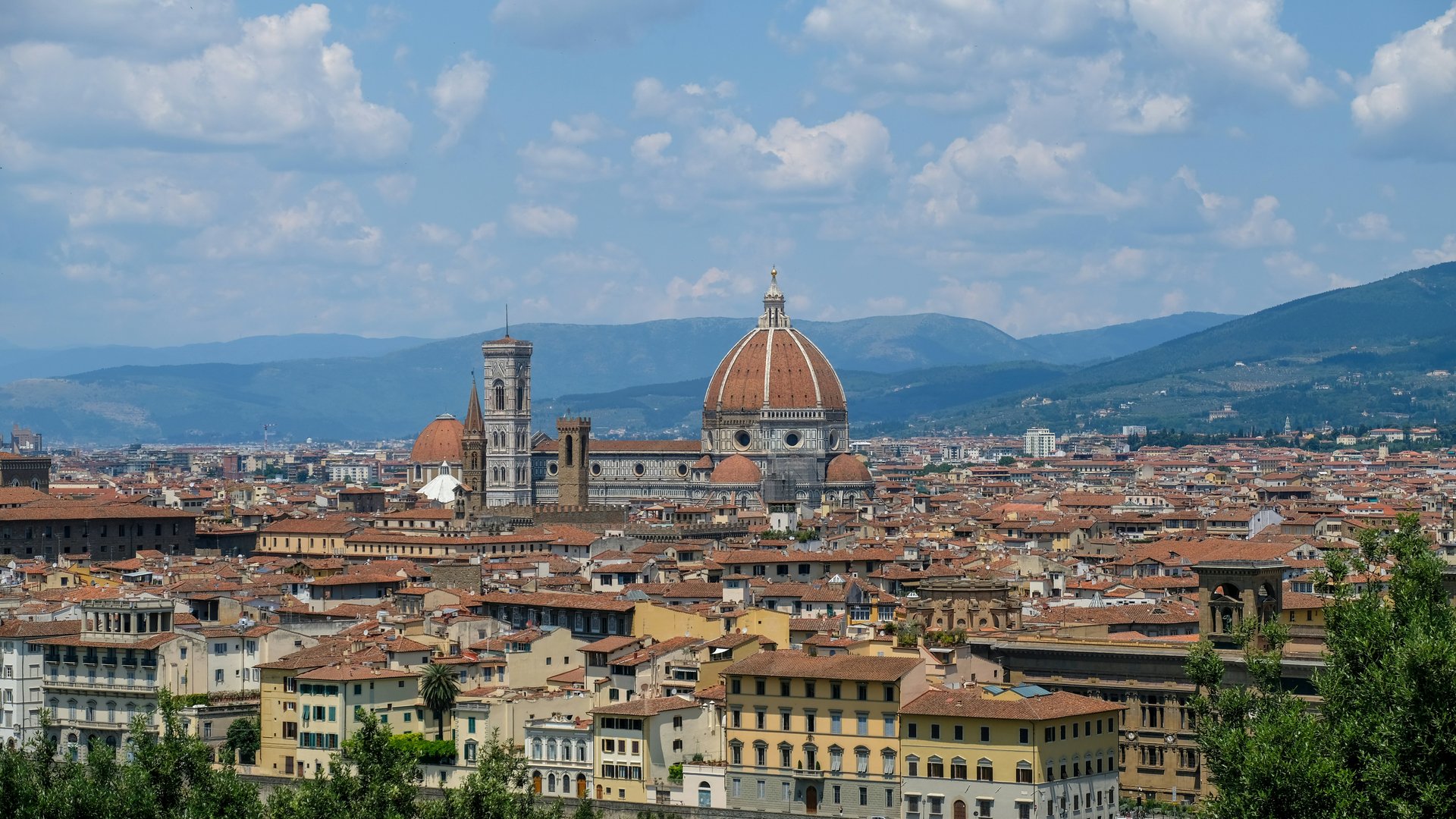
Explore ItalyThe Arno River divides Florence into distinct quarters, each with its own rhythm. North of the water, the centro storico clusters around the Duomo and Piazza della Signoria, where centuries-old palazzi now house intimate hotels behind heavy wooden doors. Via de' Tornabuoni draws those seeking fashion houses and grand café terraces, while the quieter streets near Santa Croce reveal neighbourhood restaurants where reservations pass through generations of the same families.
Cross the Ponte Vecchio to the Oltrarno, and the atmosphere shifts. Santo Spirito's piazza fills each evening with locals and visitors sharing bottles of Chianti at outdoor tables. Artisan workshops still operate along Via Maggio and Borgo San Frediano, and small hotels occupy restored Renaissance buildings with views across terracotta rooftops to Brunelleschi's dome. San Niccolò, tucked against the hillside leading to Piazzale Michelangelo, offers a village pace within the city walls — wine bars spill onto narrow pavements, and trattorias serve ribollita and bistecca alla fiorentina without ceremony.