Skip to content

Strasbourg Travel Guide: Best Hotels, Restaurants & Experiences

Boutique hotels, Michelin-starred dining, Alsatian winstubs, riverside terraces, and half-timbered heritage stays.

Explore Strasbourg

Hotels (7)
Restaurants (10)

Where to Stay

1. Les Haras

$$$$ · 1 Michelin Key

The royal stables that once served 18th-century France now house one of Strasbourg's most architecturally striking hotels, where Parisian designers Patrick Jouin and Sanjit Manku have layered Seventies-inspired hues and futuristic minimalism over exposed timber frames. A 17-meter pool anchors the expansive spa, while the Brasserie des Haras—helmed by Marc Haeberlin and François Baur—serves Alsatian-inflected French fare beneath soaring wood-lined ceilings. Design-focused travelers find quiet across the river from the old town.

2. 5 Terres - MGallery

$$$$

A 16th-century half-timbered landmark turned five-star retreat along the Alsace Wine Route, named for the five soil types nourishing Barr's vineyards. Twenty-seven rooms blend exposed beams with velvet and leather accents, while La Table du 5—helmed by chefs Quentin Dassé and Paul Boizet—delivers bistronomic cuisine grounded in regional terroir. Below, centuries-old Vosges sandstone vaults shelter a spa with indoor pools framed by stone archways, hammam, and sauna.

3. Cour du Corbeau - MGallery

$$$$

This 1528 coaching inn pairs half-timbered Renaissance architecture—crooked beams, dark wood balconies—with MGallery's contemporary Parisian aesthetic: Louis XV furniture against clean lines, original floorplans retrofitted with rainfall showers and plush king beds. Sixty-three rooms overlook either bustling cobblestones or the double-glazed courtyard; suites retain vaulted ceilings and exposed joinery. Minutes from the cathedral, it welcomes pets and offers interconnecting configurations for families navigating Strasbourg's medieval quarter.

4. Régent Petite France

$$$$

A 17th-century mill where ice was once produced for Strasbourg now houses this riverside hotel, with preserved cast-iron wheels and machinery anchoring its 75 rooms. Each overlooks the canals and half-timbered facades of Petite France, some from private balconies facing the Covered Bridges. A gourmet restaurant helmed by a Michelin-starred chef, spa with sauna and jacuzzi, and interconnecting rooms make it suited to families and couples alike.

5. Léonor

$$$$

Designer Jean-Philippe Nuel transformed the former residence of Maréchal Léonor Marie du Maine du Bourg into a 116-room address pairing neoclassical architecture with ultra-chic interiors. Contemporary artworks and full-length city-view windows define the guest rooms, while the ground floor houses a versatile dining space overseen by two-Michelin-starred chefs Nicolas Stamm and Serge Schaal, serving Alsatian bistro cuisine alongside pastry chef Matthieu Bray's tea-time service beneath an eight-meter solid wood bar.

6. Maison Rouge

$$$$

A fixture of Strasbourg's historic centre for nearly a century, Maison Rouge retains its Art Deco spirit across 131 rooms and suites, several framing views of the cathedral spire. The Salons Mistinguett recall 1920s elegance, while the spa provides a quieter counterpoint. French classics anchor the restaurant, grounding the hotel's appeal in Alsatian tradition and enduring architectural character.

7. Le Graffalgar

$$$$

Local artists were granted complete creative freedom across all 38 rooms here, resulting in a visual anthology spanning graffiti murals, steampunk installations, forested retreats, and Op Art fantasies. No two spaces share an aesthetic language. The Graffateria serves breakfast through dinner in equally eclectic surrounds, while complimentary bikes let guests explore what's widely considered France's most cycle-friendly city. A co-working lounge doubles as an informal social hub.

Where to Eat

1. 1741

$$$$ · ★ Michelin

Chef Jérémy Page, Robuchon-trained, brings delicate precision to modern cuisine at this one-starred address facing Palais Rohan's eighteenth-century facade. Alsatian inflections surface in sauces: seaweed cream beneath lightly seared John Dory, Grand Veneur jus flanking wild boar medallion. Cosy, hushed dining rooms and a counter overlooking the kitchen team create an intimate backdrop, while the wine list showcases Alsace grands crus and organic cuvées in equal measure.

2. Guillaume Scheer - Les Plaisirs Gourmands

$$$$ · ★ Michelin

Guillaume Scheer and his wife Charlotte run this Michelin-starred table in central Strasbourg, where the chef's background at Pavillon Ledoyen and 1741 informs his precise handling of blue lobster from Brittany, squab, and Charolais beef fillet. Modern cuisine anchored by rich sauces and jus, with meticulous execution and polished service throughout.

3. de:ja

$$$$ · ★ Michelin· Green Star ●

Scandi-inspired minimalism frames a culinary philosophy rooted in sustainability and botanical creativity at this Michelin-starred address holding the Green Star for environmental excellence. Dishes arrive named with haikus rather than descriptors, each reflecting fermentation-driven technique, plant-forward composition, and textbook-perfect execution—high-precision cooking yielding bold, assertive sauces and jus. A natural wine list complements both omnivore and fully vegetarian tasting menus, the latter as technically ambitious as its conventional counterpart.

4. Buerehiesel

$$$$ · Michelin Selected

A 17th-century half-timbered farmhouse rebuilt stone by stone in the Orangerie Park, Buerehiesel delivers creative Alsatian refinement beneath heritage beams. Signature frog's legs sautéed in chervil and free-range pullet roasted casserole-style (backeoffe) anchor a menu that layers tradition with contemporary seasonal plates. The conservatory dining room and patio open onto leafy parkland adjacent to the Council of Europe—an unexpectedly pastoral setting for precise, ingredient-led cooking.

5. Au Crocodile

★ Michelin· Relais & Châteaux

A legendary stuffed crocodile—Napoleon's Egyptian campaign souvenir—guards this 19th-century Strasbourg institution, where Romain Brillat, protégé of Gilles Goujon and distant kin to Brillat-Savarin, earned a Michelin star with Alsatian-rooted finesse. Scallop ravioli with squash cream and Dover sole dressed with buddha's hand exemplify his balance of classical technique and contemporary creativity, served beneath Lalique sconces that echo the three-star era of Émile Jung.

6. Les Funambules

$$$$ · ★ Michelin

Guillaume Besson's Michelin-starred dining room balances minimalist design—white walls hung with art, parquet floors, wooden accents—with cuisine that honors its tight-rope walker namesake. The prix fixe menu, 'sur le fil', delivers modern creative cooking that is precise, occasionally bold, always harmonious. Plates showcase impeccable technique and clear presentation, making this an essential address for travelers seeking inventive gastronomy executed with quiet confidence.

7. Umami

$$$$ · ★ Michelin

René Fieger runs his Michelin-starred kitchen solo in Petite France's historic quarter, crafting modern dishes that marry French tradition with global influences. His halibut preparation exemplifies the approach: precise vegetable work, green beans, and a bright dashi-kefir emulsion that balances acidity and cream. The dining room sits among half-timbered houses, and the menu shifts with market availability, showing restrained technique rather than showmanship.

8. Bistrot Coco

$$$$ · Michelin Selected

Constant Meyer, honed at Le Crocodile and Le Relais de la Poste, helms this industrial-chic dining room in Strasbourg's old town with a confident carte-blanche approach. The multi-course format, available in omnivore or vegetarian configurations, showcases Alsatian ingredients through a refined contemporary lens, balancing bold regional flavours with technical precision. The relaxed, convivial atmosphere makes it an ideal choice for curious diners seeking substance over formality.

9. Gavroche

$$$$ · Michelin Selected

Chef Alexy Fuchs brings contemporary finesse to the intimate Krutenau quarter, crafting dishes that honor Alsatian roots while embracing modern technique. Langoustine arrives with apple salad and mustard ice; scallops are paired with sweet potato, crispy ravioli, and bisque emulsion. The foie gras terrine with fruit chutney and dampfnudel nods to regional tradition. Service is warm and attentive, making this quiet side-street address a refined yet unpretentious choice for discerning diners.

10. La Casserole

$$$$ · Michelin Selected

Former Au Crocodile maître d' presides over this refined dining room, serving traditional French cuisine built on impeccable ingredients. The signature choco-beef tartare—surf and turf reimagined with Kristal caviar and quail egg—exemplifies the kitchen's inventive edge, while tableside crêpes Suzette, flambéed to order and paired with just-churned vanilla ice cream, honor time-tested technique. Contemporary décor frames the experience with understated elegance.

Frequently Asked Questions

Which neighborhoods in Strasbourg have the best dining options?

+

La Petite France and the streets surrounding the cathedral concentrate the highest density of notable restaurants, from traditional winstubs to contemporary fine dining. The Krutenau quarter, a former working-class neighborhood south of the Grande Île, has emerged as a destination for younger chefs and wine bars. For quieter meals away from tourist traffic, the Orangerie district near the European institutions offers residential calm and several respected tables.

What is a winstub and where can I find authentic ones?

+

A winstub is a traditional Alsatian wine room, typically wood-paneled with communal tables, serving regional dishes like baeckeoffe, choucroute, and flammekueche alongside local wines by the glass. The most authentic examples cluster around Place du Marché-aux-Cochons-de-Lait and Rue du Maroquin, identifiable by their carved wooden signs and steamed windows. Reservations are essential, particularly during the winter markets from late November through December.

When is the best time to visit Strasbourg for food and wine?

+

Autumn brings the vendange and fresh musts, making September through November ideal for wine-focused visits. The Christmas markets, running from late November to late December, transform the city into a showcase for Alsatian specialties—bredele cookies, pain d'épices, and vin chaud spiced with cinnamon and star anise. Spring and early summer suit terrace dining along the canals, though August sees many restaurants close for annual holidays.

Strasbourg

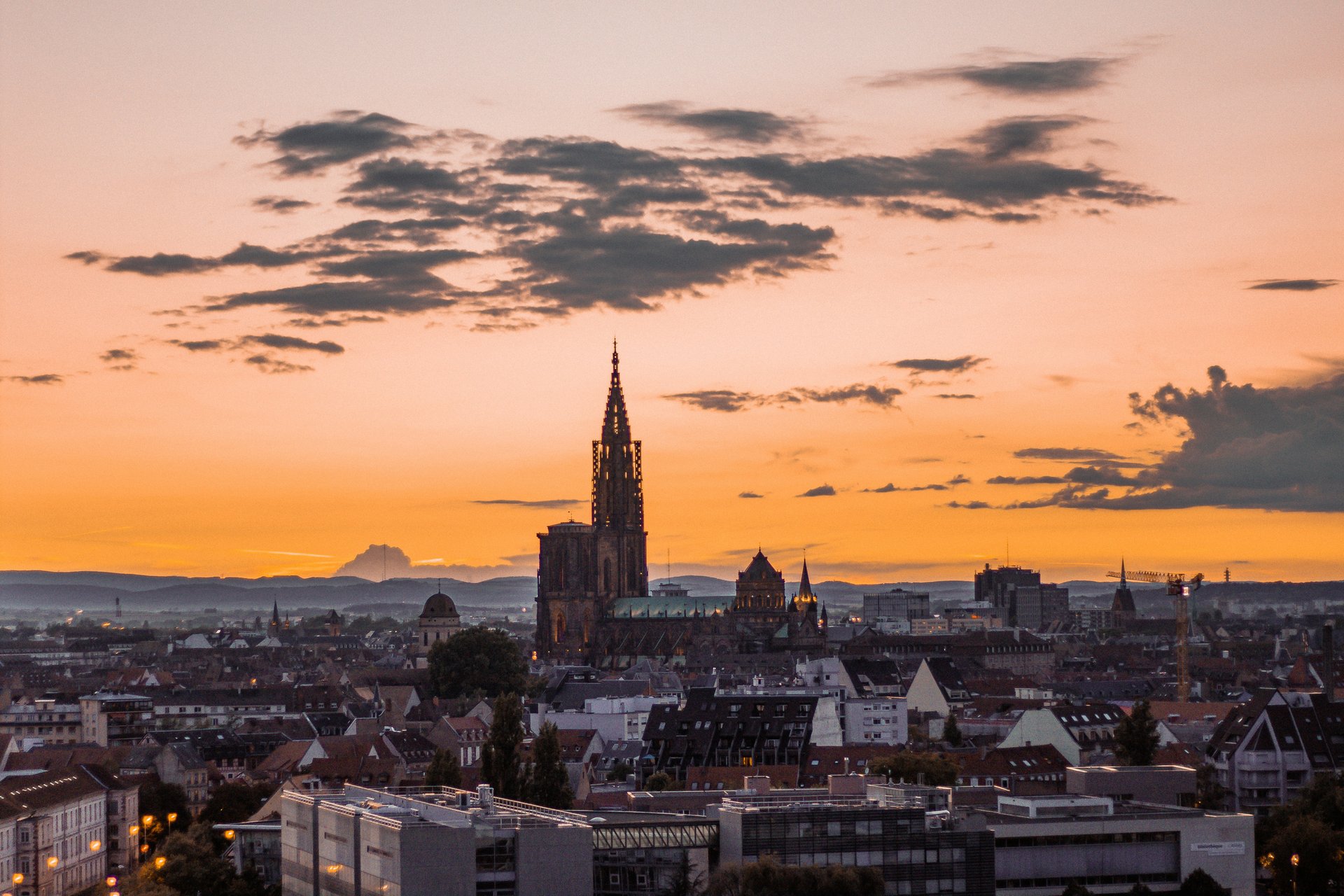
The Grande Île, a UNESCO World Heritage site since 1988, anchors the city within a loop of the Ill River. Around the cathedral's rose-colored sandstone façade, narrow lanes open onto Place Kléber and the quarter of La Petite France, where 16th-century tanners' houses now shelter some of the region's finest historic restaurants. The European Parliament quarter to the northeast offers a contrasting modernist skyline and a quieter pace for evening drinks.

Alsace's dual Franco-German heritage shapes everything here, from the choucroute served in wood-paneled winstubs to the Rieslings poured alongside tarte flambée. The gastronomic scene balances regional tradition with contemporary technique, while historic hotels occupy converted townhouses along the canals. In summer, outdoor terraces line the waterfront from Quai des Bateliers to Ponts Couverts, each table angled toward the passing tourist boats and the spire beyond.