Rough-hewn stone walls evoke a medieval fortress, yet behind them unfolds a 28-room retreat of modern luxury near the France-Germany-Luxembourg tripoint. The 800-square-metre vaulted spa features sensory pools and Gemology treatments, while the tower suite crowns the estate with a bedside jacuzzi and valley panoramas. Guests dine at Le K for refined gastronomy or Le Komptoir's wood-fired fare, and explore the countryside on the domain's Iberian horses.
Where to Stay
Fourteen contemporary lodges scatter across lakeside and forest just minutes from central Metz, split between two distinct aesthetics: primary-colored modernist retreats with graphic interiors, and Scandinavian-inspired Wikkel cabins in raw birch with bold accent tones. A greenhouse wellness pavilion houses an indoor pool, hammam, and sauna, while the glass-walled Vol128 restaurant showcases chef Germain Samoun's seasonal cooking against panoramic woodland views.
On the road to Malbrouck Castle, this 12-room inn operates with the warmth of a private home rather than hotel formality. The owner's personal touch shows everywhere: Moselle wines at the bar, Mirabelle plum tart served each afternoon, suspended nest chairs on the terrace. A small lobby shop stocks regional finds, and the garden welcomes dogs. Ideal for travelers seeking village authenticity over polished anonymity.
Where to Eat
Five generations of the Schneider family have shaped this one-Michelin-starred table, housed in a former church farm along the Metz-Strasbourg road. Chef Stephan Schneider maintains exacting traditions: whole animals butchered in-house, charcuterie cured on the premises, vegetables from his own potager and trusted local growers. The dining room's worn parquet and gleaming Sarreguemines faïence cabinets anchor the meal in regional identity.
Heavy timber rafters and a Treviso crystal chandelier frame chef Benoit Potdevin's one-starred kitchen at Domaine de la Klauss, near the German and Luxembourg borders. His cooking balances precision with zeitgeist sensibility: roast scallops arrive with Jerusalem artichoke and a Moselle whisky-infused jus, while gin-flavoured venison comes with a robust juniper gravy. For something more relaxed, Le Komptoir offers tapas and wood-fired dishes.
Chef Frédéric Sandrini's one-starred table occupies a pink sandstone building opposite Hagondange station, its understated contemporary interior belying the precision within. The kitchen runs on meticulously sourced ingredients: abalone hand-gathered by divers from the Bay of St Brieuc, fish landed at Saint-Quay-Portrieux and Boulogne-sur-Mer, and a trolley dedicated to master cheesemakers. Menus shift constantly, driven by imagination and seasonality.
Named for a volcanic lake in Hokkaido's national parkland, Toya draws its culinary philosophy from that Japanese region's wild abundance—foraged herbs, pristine fish, and carefully cultivated produce. Chef-owner Loïc Villemin, shaped by mentors including Jean-Georges Klein and Bernard Loiseau, presents a weekly mystery menu where technical precision meets bold creativity. The Michelin Green Star signals a genuine commitment to sustainable gastronomy throughout.
Inside the Centre Pompidou-Metz, chef Charles Coulombeau orchestrates an intimate omakase experience for just twenty guests. His Japanese training surfaces in precise compositions—Vosges quail, Crézy Wagyu, Meuse truffles—filtered through Lorraine terroir. Shigeru Ban's wood furniture and museum canopy views frame each course, while playful desserts nod to contemporary art exhibitions nearby. One Michelin star confirms the ambition.
A century-old cedar presides over the garden terrace at Alexis Baudin, where carte blanche menus celebrate Lorraine's agricultural riches with quiet precision. The kitchen sources Wagyu beef raised in the region, mushrooms foraged from the Meuse, saffron from Guémar, and vegetables from small-scale growers—each dish arriving as a study in balance. Inside, soaring ceilings and muted beige tones create a refined contemporary setting matched by impeccable service.
Named for Montmartre's legendary street urchins, this Thionville address channels timeless Parisian elegance through large bay windows, Lloyd Loom chairs, and sleek contemporary lighting. The kitchen earns its Michelin Plate with refined French classics—lobster salad brightened by seasonal vegetables, golden pan-fried frogs' legs. A polished dining room for travelers seeking substance over spectacle, just minutes from Metz.
Brothers Mickaël and Morgan Emo have reimagined a former winegrower's house in the village of Plappeville, installing a contemporary interior that contrasts sharply with the rustic setting. The kitchen delivers precise modern French cooking—carpaccio of scallops with celery, squab paired with truffles, squash, and Madeira sauce. A serious wine cellar offers exceptional vintages by the glass, rewarding those who linger.
A nineteenth-century château deep in the Meuse Valley provides the stage for this family-run dining room, where ornate mouldings, worn hardwood floors, and heavy drapes set a tone of quiet grandeur. The kitchen balances classical French technique with contemporary inflections, earning Michelin recognition. An unhurried meal here suits travelers seeking refined cuisine paired with genuine provincial hospitality.
Beneath the soaring stained glass of Metz Cathedral—affectionately called 'La Lanterne du Bon Dieu'—chef Célia Bertrand returns to her native city with a cooking style shaped by the Jura, where she met partner Romain Bouchesèche. His wine service complements her modern plates: pollack paired with morels and vin jaune, regional accents woven through each course. Michelin Plate distinction.
What to Do
Stone vaults shelter 800 square metres of thermal sanctuary at this Lorraine countryside retreat. The mineral-rich pools maintain a constant 34°C, while hammam steam and bracing Finnish showers bookend balneotherapy sessions in double treatment cabins. Outside, a granite-edged pool with submerged bar extends the aquatic circuit, Balinese daybeds positioned to survey the rolling green hills beyond.
Frequently Asked Questions
What neighborhoods should I explore in Metz?
+
The Outre-Seille quarter offers medieval charm with narrow lanes and the Church of Saint-Maximin, whose windows were designed by Jean Cocteau. The Imperial Quarter showcases grand Germanic architecture along Avenue Foch. For contemporary culture, the Amphithéâtre district around Centre Pompidou-Metz combines modern design with waterfront promenades along the Seille.
What local dishes define Metz's culinary identity?
+
Lorraine's signature quiche originates from this region — the authentic version uses smoked lardons, eggs, and cream without cheese. Potée lorraine, a slow-cooked pork and vegetable stew, appears on traditional menus in colder months. Mirabelle plums dominate desserts and local eaux-de-vie, particularly during the August harvest festival.
How does Metz differ from other French destinations?
+
Metz carries the architectural imprint of four decades under German rule, visible in the Imperial Quarter's Romanesque Revival train station and the Temple Neuf on the river island. This Franco-Germanic heritage creates a distinct atmosphere rarely found elsewhere in France, complemented by the city's position as a contemporary art hub since the Pompidou-Metz opened.
Nearby Destinations
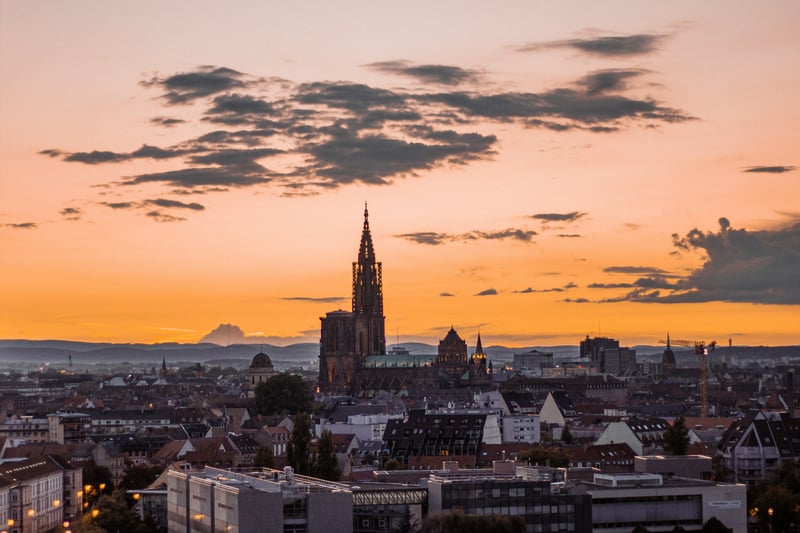
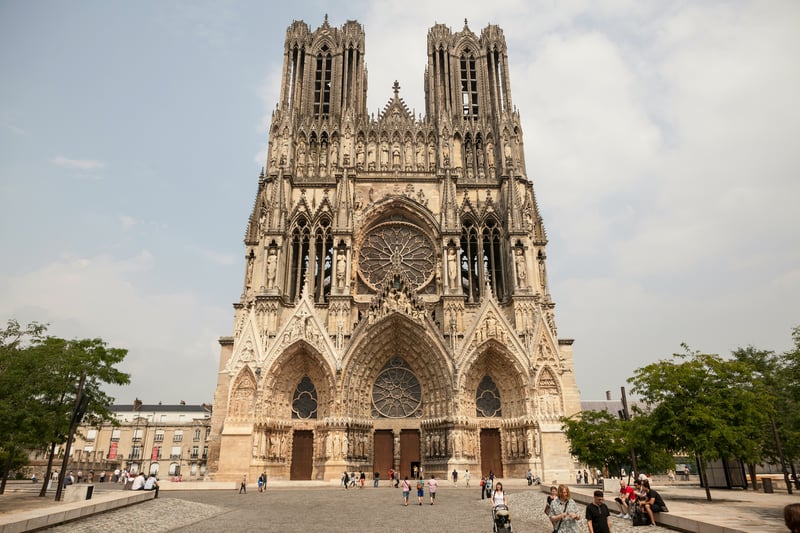
Explore FranceMetz commands attention from the moment you cross the Moselle. The cathedral of Saint-Étienne rises above the medieval streets of the Outre-Seille quarter, its Gothic stonework glowing amber at dusk. The German Imperial Quarter, built during annexation, contributes another architectural layer — heavy Wilhelmian façades that now house some of the city's most distinctive addresses. The Centre Pompidou-Metz has drawn a new creative energy since 2010, reshaping the Amphithéâtre district into a destination for contemporary art and design-forward hospitality.
The dining scene reflects Lorraine's position at a crossroads. Chefs here work with quiche and potée lorraine alongside influences from nearby Alsace and Luxembourg. The covered market at Place Saint-Jacques supplies mirabelle plums, Gruyère de Comté, and charcuterie from the Vosges. Along Place Saint-Louis, the arcaded medieval square hosts wine bars and bistros where locals gather after work, the limestone columns lit warmly against the evening sky.