Skip to content

Colmar Travel Guide: Best Hotels, Restaurants & Experiences

Boutique hotels, Alsatian winstubs, timbered inns, canal-side terraces, and gourmet dining rooms.

Explore Colmar

Hotels (2)
Restaurants (10)

Where to Stay

1. La Maison des Têtes

$$$$ · 1 Michelin Key· Relais & Châteaux

A 1609 bourgeois residence distinguished by 106 sculpted stone heads adorning its façade, La Maison des Têtes pairs historical grandeur with contemporary minimalism across 21 rooms featuring exposed beams and sleek design. Chef Eric Girardin's Michelin-starred restaurant delivers creative French cuisine—including 'puffed' Munster with Marc de Gewurztraminer—alongside the traditional Brasserie Historique serving Alsatian classics like choucroute and baeckeoffe. Relais & Châteaux luxury meets authentic regional character.

2. L'Esquisse - MGallery

$$$$

Fronting the Champ de Mars park within walking distance of Petite Venise, this five-star MGallery property pairs Giros & Coutellier interiors—metal, glass, marble, raw wood in monochrome tones—with a Clarins spa anchored by a heated indoor pool, hammam and sauna. Jean-Yves Schillinger's two-Michelin-starred JY'S is the jewel, serving inventive cuisine finished with a legendary mignardise trolley. Sixty-two rooms, including penthouses, face the park.

Where to Eat

1. JY'S

$$$$ · ★★ Michelin

Jean-Yves Schillinger's two-Michelin-starred table overlooks Champ-de-Mars park through floor-to-ceiling windows, setting the stage for cooking that bridges Alsatian tradition with Japanese precision and ideas gathered during his New York years. The ten-course menu unfolds ambitious compositions—Breton lobster prepared in a Cona coffee maker, foie gras on sushi rice—while a separate vegetarian tasting demonstrates equal ambition with root vegetables and seasonal produce.

2. Restaurant Girardin

$$$$ · ★ Michelin

Chef Éric Girardin's one-Michelin-star table occupies the Maison des Têtes, a Renaissance landmark whose grimacing stone faces overlook Colmar's old quarter. The minimalist dining room throws focus onto tasting menus rooted in Alsatian terroir: trout arrives in three acts with herb-spiked hollandaise, pigeon is paired with cabbage, orange and cashew. Modern technique meets regional ingredients in dishes praised for delicate refinement and visual precision.

3. L'Atelier du Peintre

$$$$ · ★ Michelin

Chef Loïc Lefebvre earned his Michelin Star with precise, seasonally driven modern cuisine marked by creative flourishes and refined technique. The Renaissance walls once neighbored Martin Schongauer's late-15th-century studio, lending historical gravitas to the contemporary dining room. Signature preparations—Marennes oyster poached with green apple and dill, matured Salers beef tenderloin with red wine sauce—balance freshness, subtlety, and indulgence. Traditional foundations meet inventive execution across each course.

4. Le Quai 21

$$$$ · Michelin Selected

Le Quai 21 anchors Colmar's Little Venice waterfront with its smart, fashionable interior and modern take on traditional French cuisine. The kitchen delivers deftly crafted plates that reflect contemporary technique: tartlet of prawns with samphire and spicy coconut milk, or skate wing from Brittany paired with spelt risotto, razor clams, snails, and chorizo cream. A polished choice for diners seeking inventive preparation within familiar registers.

5. À l'Échevin

$$$$ · Michelin Selected

Chef Paul Fabuel interprets Alsatian gastronomy through a modern lens in a half-timbered riverside setting, where the blue dining room overlooks the Lauch canal through centuries-old exposed beams. His seasonal menus balance local terroir with unexpected techniques—monkfish medallion, royal hare, venison with candied potatoes—supported by pastry chef Mazzolini Roland's desserts and an accessible wine list spanning regional estates.

6. Bord'eau

$$$$ · Michelin Selected

Chef Jean-Yves Schillinger's riverside bistronomy on the Lauch turns Alsatian tradition outward, layering regional saffron into rouille for red mullet with baby artichokes, pairing prawns with Thai vegetables in a cassolette, and finishing with wafer-thin apple tart and butterscotch. The contemporary dining room occupies a handsome regional building in Little Venice, serving a flexible prix-fixe that rewards adventurous palates without abandoning terroir.

7. La Maison Rouge

$$$$ · Michelin Selected

Chef Jean Kuentz—nicknamed Petit Jean and trained in Paris's top kitchens—runs this gourmet address inside an 11th-century building steps from Petite Venise. His menu navigates between Alsatian tradition and contemporary technique, each dish paired with carefully selected wines. The setting fuses medieval stone with modern refinement, creating an intimate stage for cuisine that respects heritage while embracing innovation.

8. Le Comptoir de Georges

$$$$ · Michelin Selected

A former butcher's shop in the Little Venice quarter now houses this modern brasserie with winstub appeal, serving carefully prepared Alsace specialities alongside prime cuts that honor its heritage. The contemporary dining room hums with conversation, while riverside tables on the Lauch terrace draw crowds on fine days. Michelin-noted for its fresh take on regional traditions and quality-driven menu.

9. Lucas et Chris

$$$$ · Michelin Selected

Lucas Gaertner and Chris Roldan—the latter a DJ when not front-of-house—run this approachable bistro a short walk from Colmar's historic quarter. Gaertner's kitchen delivers well-crafted, wholesome modern cooking: a three-course set menu at lunch, a more expansive card in the evening. The Michelin Plate recognition confirms the quality, but the atmosphere remains resolutely relaxed and genuinely welcoming.

10. Wistub Brenner

$$$$ · Michelin Selected

This authentic winstub specializes in Alsatian tradition, from Papi Lucien's onion tart and braised pork knuckle in Pinot Noir sauce to classic sauerkraut and Comté salad with cervelas. The kitchen sources locally and earned a Michelin Plate for its faithful execution of regional recipes. A terrace overlooks Little Venice's canals, offering outdoor seating when weather permits.

Frequently Asked Questions

Which Colmar neighborhood has the best dining options?

+

The Quartier des Tanneurs and streets surrounding Place de l'Ancienne Douane concentrate the city's strongest restaurant selection, from traditional winstubs to contemporary Alsatian tables. The pedestrian zone near the Unterlinden Museum also hosts several refined establishments.

What is the local dining culture like in Colmar?

+

Colmar's food culture blends French technique with Germanic heartiness. Expect multi-course meals built around choucroute, game, freshwater fish, and Munster cheese, paired with wines from nearby Grand Cru vineyards in Riquewihr and Ribeauvillé. Dinner service often begins at 19h and stretches leisurely into the evening.

When is the best time to visit Colmar for food and wine?

+

Late September through November brings the wine harvest and fresh game on menus. The Christmas markets from late November transform the old town, with vin chaud stands and seasonal Alsatian pastries. Spring and early summer offer terrace dining along the canals with milder crowds than peak season.

Colmar

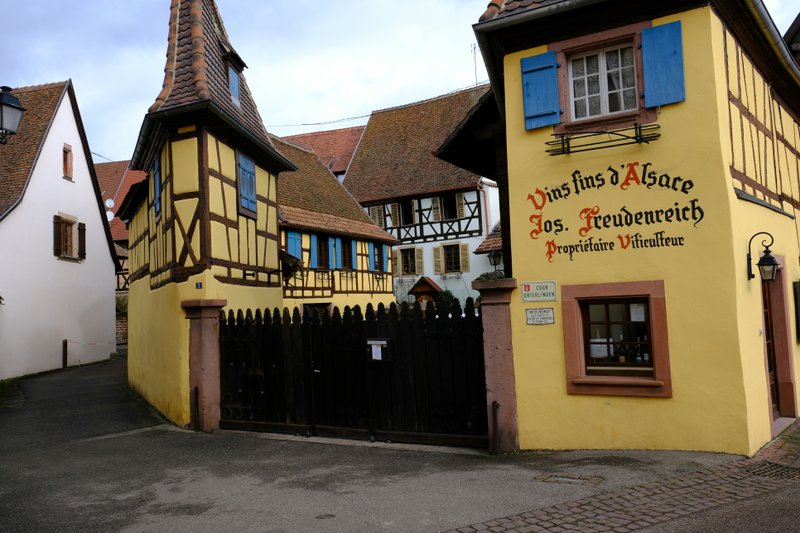
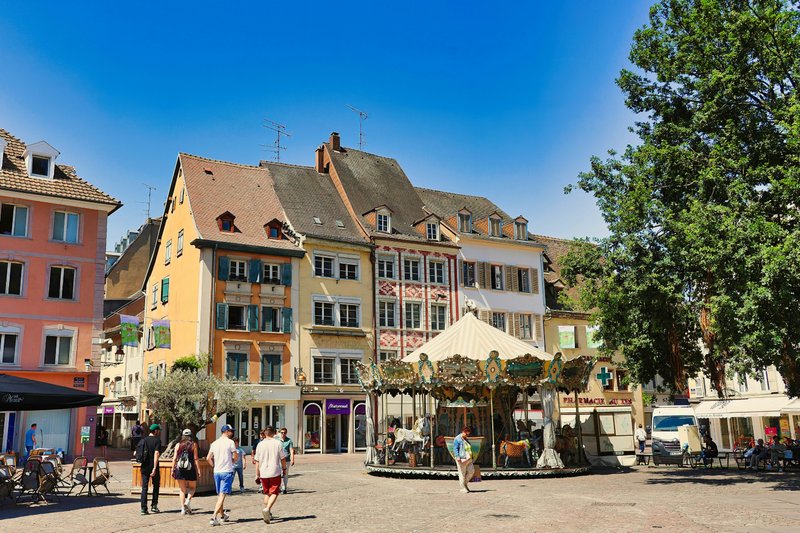
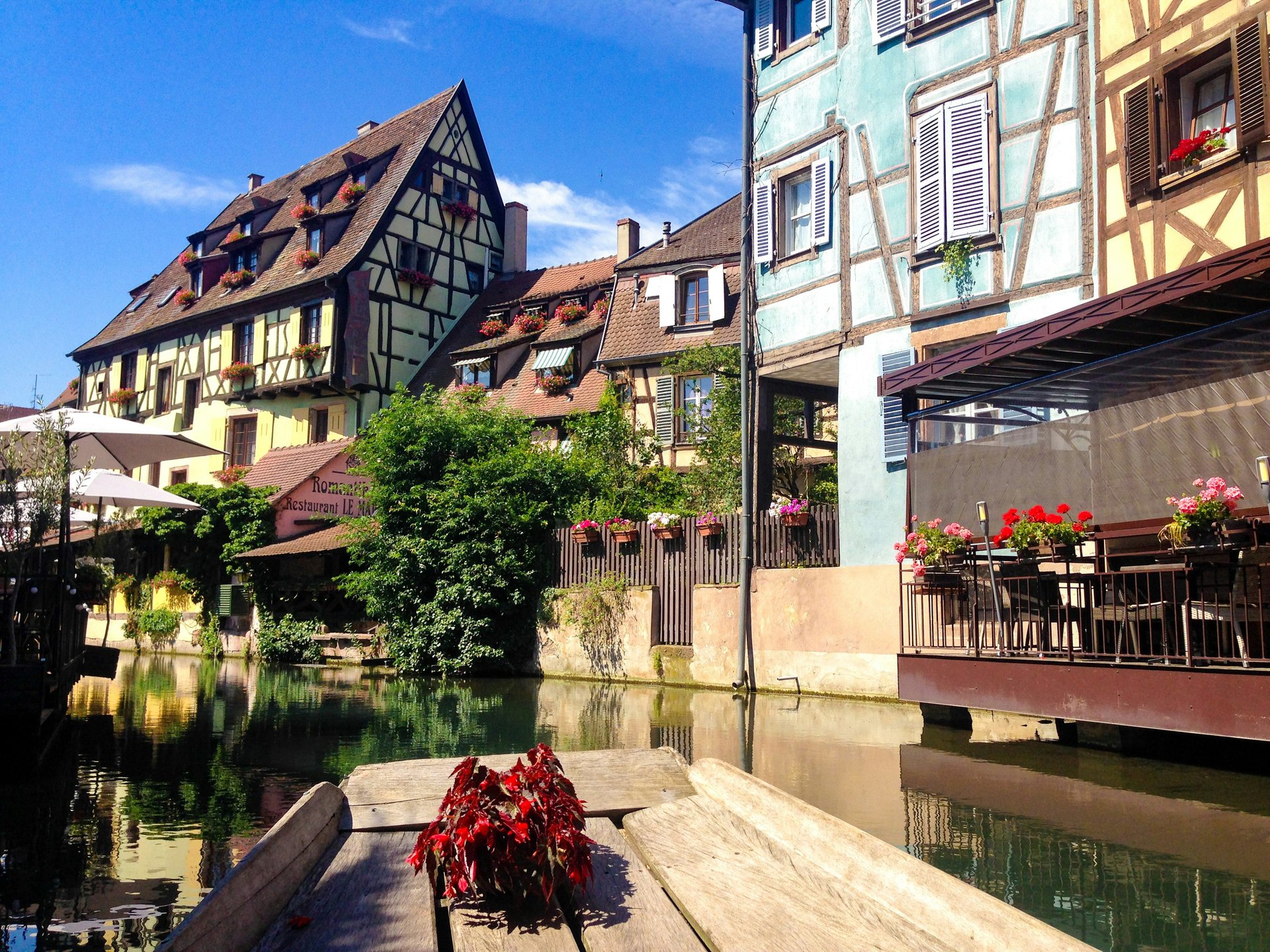
Colmar's old town unfolds along the Lauch River, its half-timbered houses painted in ochre, cobalt, and terracotta. The Petite Venise quarter draws visitors to its willow-lined canals, but the city's culinary strength lies elsewhere — in the winstubs of the Quartier des Tanneurs, where choucroute garnie arrives on copper platters, and in the refined dining rooms near the Unterlinden Museum where chefs reinterpret Alsatian classics with modern precision.

The hotel scene remains intimate. A handful of converted Renaissance merchants' houses offer rooms with exposed beams and views over the Pfister House's painted façade. For dining, the historic restaurants clustered around Place de l'Ancienne Douane serve dishes rooted in centuries of Franco-Germanic tradition — baeckeoffe slow-cooked in local Riesling, kougelhopf from wood-fired ovens. The city's boulangeries open before dawn, their bretzels and pains aux noix fueling early walks through the covered market on Rue des Marchands.