Three generations of the Decker family have shaped this Relais & Châteaux property into an Alsatian wellness destination where forest-inspired rooms in deep blues and greens overlook the Bruche Valley. The 2,500-square-metre Nature Spa spreads across three levels with biotope pool, Nordic bath, and signature honey-spoon massages using house-made products. Two restaurants include one-Michelin-starred Le Feuillage, anchoring the experience for spa devotees and gastronomes alike.
Where to Stay
A multigenerational family affair adjacent to the two-Michelin-star l'Auberge de l'Ill, this 19-room riverside property juxtaposes its original chalet—dark wood paneling, terracotta floors—with a striking contemporary wing of glass and timber channeling minimalist Japanese design. Gardens slope to the water's edge, while an organic spa, jacuzzi, and twin pools (indoor and outdoor) reward guests seeking both gastronomy and genuine repose.
Behind the imposing red façade of this 18th-century timbered property in Kaysersberg, the Nasti family orchestrates a distinctly Alsatian hospitality. Chef Olivier Nasti holds two Michelin stars at his refined restaurant, while the Winstub serves regional classics amid checked fabrics and communal tables — with sommelier Jean-Baptiste Klein, MOF and 2024 Gault & Millau Sommelier of the Year, guiding the pairings. Rooms overlook vineyards and hillsides; the 200-square-metre spa features an infinity pool opening onto a summer terrace.
Adults-only and resolutely contemporary, La Source des Sens brings minimalist design to Alsace's northern spa country. Thirty-two pared-back rooms anchor a property built around serious wellness: twin pools (indoor and out), jacuzzi, Turkish bath, and sauna reward those seeking quiet indulgence. Bicycles wait at the ready for vineyard rides through the surrounding hills—a sleek base for couples exploring the wine route.
Six suites occupy René Lalique's 1920 family residence, each room threaded with the glassmaker's sculptural legacy. The two-Michelin-starred restaurant unfolds within Mario Botta's luminous glass pavilion overlooking parkland, while below lies the cathedral-like wine cellar—60,000 bottles presided over by MOF sommelier Romain Iltis. Chef Paul Stradner's cuisine roots Alsatian terroir in Austrian creativity, a pairing as unexpected as it is precise.
Tall, narrow timber cabins rise above the treetops of a protected Alsatian forest, the vision of French-Danish landscape architect Emil Leroy-Jönsson and Norwegian architect Reiulf Ramstad. Their Nordic modernism—warm wood, organic lines, far-reaching views—feels both foreign and fitting in this wine country setting. Private saunas and Jacuzzis outfit select cabins, while the Felles Hytte lodge anchors the experience with panoramic dining.
Where to Eat
Nicolas Stamm-Corby holds two Michelin stars at this Obernai address, where creative technique meets deep Alsatian roots. Winter brings venison prepared two ways under grand veneur sauce—a direct tribute to the surrounding terroir. The meal closes with a parade of petits fours: kugelhopf, cherry financiers, lavender honey madeleines. Maître d' Serge Schaal orchestrates the room with practiced warmth.
Behind Hotel Le Chambard's iconic red façade, chef Olivier Nasti—Meilleur Ouvrier de France 2007—orchestrates a two-Michelin-starred celebration of Alsatian terroir. His visually striking plates showcase game, Vosges morels, foie gras, and Arctic char, with masterful sauces that anchor each dish. Sommelier Jean-Baptiste Klein navigates the wine list with infectious enthusiasm, making this an essential address along the wine route.
Four generations of the Haeberlin family have tended this riverside institution since the 1870s, building a repertoire rooted in Alsatian tradition—foie gras terrine served by the spoonful, frog's leg mousseline, salmon soufflé. Two Michelin stars reward a kitchen that honors classical technique while embracing contemporary touches. The 36,000-label cellar and garden dining beneath weeping willows complete an experience calibrated for unhurried celebration.
Austrian chef Paul Stradner's two-Michelin-starred kitchen occupies a striking Mario Botta glass pavilion adjoining René Lalique's 1920 villa, deep in the Northern Vosges. His intensely colorful creative cuisine—signature potato-truffle emulsion, lobster with spruce mousse—finds its counterpart in head sommelier Romain Iltis's legendary 60,000-bottle cellar, one of Europe's finest. A pilgrimage for serious gastronomes.
Chef Jérôme Jaegle's one-star table occupies a former village bar reimagined in pale Scandinavian wood and raw textures. His permaculture garden supplies the herbs and vegetables that anchor tasting menus split between earth and sea, earning a Michelin Green Star for the commitment to sustainability. A destination for diners seeking creative, plant-forward cuisine rooted in Alsatian terroir.
A former joiner's workshop stripped to Scandinavian minimalism, Enfin channels its woodworked bones into a one-starred celebration of Alsatian terroir. The young brigade works an open counter kitchen, sending out vegetable-forward compositions—kohlrabi paired with Gironde caviar, sweetbreads glossed in hazelnut butter—under poetically named menus like 'barbecue in the vegetable garden.' Strictly seasonal, quietly inventive, unmistakably local.
Within the chic confines of La Cheneaudière hotel, Le Feuillage holds one Michelin star for its refined modern cooking. The kitchen offers two seasonal set menus—Dégustation and Potager—that showcase dishes like Oscietra caviar paired with green beans and lobster vinaigrette, or veal prepared two ways alongside courgette terrine finished with a Crémant d'Alsace jus. Intimate and attentive throughout.
Chef Jean-Luc Brendel tends his own permaculture garden to supply this one-starred table, where Alsatian produce takes center stage in dishes like Petrowski turnip paired with ember-cooked humanely-reared veal. The sixteenth-century dining room balances medieval stonework against contemporary design, while two wine lists—one devoted entirely to Alsace's finest vintages—underscore the region's viticultural depth. A Green Star confirms the kitchen's sustainability commitment.
Julien Binz honed his craft at the legendary Auberge de l'Ill before establishing this one-starred table in the wine village of Ammerschwihr. His cooking channels Alsace terroir through refined technique: striped trout arrives with choucroute and a creamy Kaefferkopf riesling sauce, while Munster tortellini float in buttery stock. A plush dining room provides the stage for these polished regional classics.
A log fire crackles beside displays of seasonal vegetables in this wood-accented dining room where chef Thierry Schwartz—an Officer of France's Order of Agricultural Merit—channels Alsatian terroir through permaculture principles. Arctic char, pure spelt, wild sorrel, and organic farm eggs compose tasting menus of elemental clarity. The natural wine cellar, 1,500 bottles deep, matches the kitchen's sustainable philosophy. One Michelin star; Green Star distinction.
What to Do
An infinity pool stretches toward floor-to-ceiling windows that frame a sun-drenched terrace in Kaysersberg, where loungers and herbal tea await after laps. Inside, a jacuzzi delivers massaging jets while sauna and hammam sessions work away tension accumulated on the wine trail. The Nasti family's wellness annex to their celebrated hotel offers restorative calm between vineyard excursions and Michelin-starred dinners.
Three generations of the same family have shaped this 27,000-square-foot wellness sanctuary in the Vosges mountains, where light floods three levels of treatment spaces. The flotarium—a pool saturated with Epsom salts—offers rare weightless immersion, while two heated indoor pools and an infinity pool provide more active hydrotherapy. Treatments draw on the house-made Simples et Miel line, blending local botanicals with mineral therapies.
Architects Patrick Jouin and Sanjit Manku designed this Japanese-inspired sanctuary within an elegant timber pavilion on the Haeberlin family's storied Alsatian estate. Traditional Chinese and Japanese techniques guide treatments in dedicated ritual rooms, while sauna, hammam, jacuzzi, and indoor pools complement a generous outdoor pool. Light-filled suites overlook the water, extending the calm of the River Ill into every stay.
Frequently Asked Questions
Which villages along the Alsace Wine Route have the best grand cru vineyards?
+
Riquewihr and Hunawihr share the Schoenenbourg grand cru, prized for Riesling. Ribeauvillé claims three grands crus — Geisberg, Kirchberg, and Osterberg — on its steep slopes. Zellenberg and Mittelwihr produce exceptional Gewürztraminer from the Mandelberg vineyard, while Turckheim's Brand grand cru yields powerful wines from volcanic soil. Most domaines offer cellar visits by appointment.
What is the difference between a winstub and a traditional restaurant in Alsace?
+
A winstub is an informal wine tavern, traditionally wood-paneled with long communal tables, serving regional dishes like tarte flambée, bibeleskaes (fresh cheese with herbs), and charcuterie alongside wines by the glass. Service is casual and portions generous. Restaurants range from refined contemporary dining to Michelin-starred establishments with tasting menus. Many visitors alternate between both experiences during their stay.
When is the best time to visit the Alsace Wine Route?
+
Late September through October brings the grape harvest, when villages host wine festivals and new vintages become available for tasting. The vineyards display autumn colors and the weather remains mild. Late November through December transforms the route into a succession of Christmas markets — Colmar, Kaysersberg, and Riquewihr among the most atmospheric. Spring offers quieter visits with flowering vineyards, while summer means longer days for cycling between villages.
Nearby Destinations
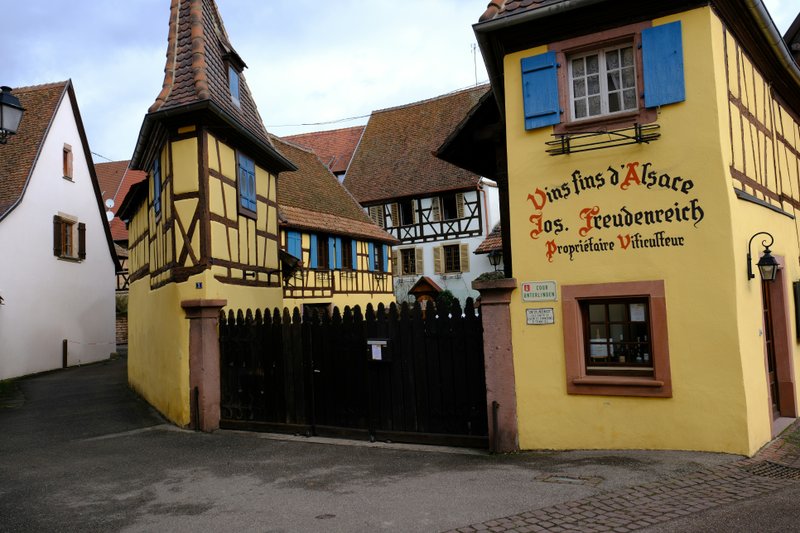
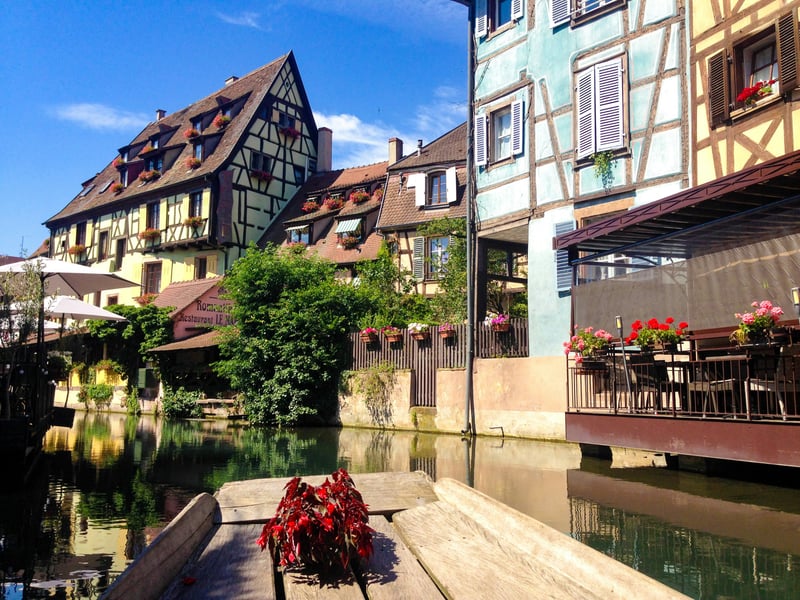
Explore FranceThe Route des Vins stretches 170 kilometers from Marlenheim south to Thann, threading through villages that have produced Riesling, Gewürztraminer, and Pinot Gris since the Middle Ages. Riquewihr's cobblestone lanes remain nearly unchanged since the sixteenth century. Kaysersberg clusters around its fortified bridge and ruined castle. Colmar's Petite Venise canals reflect painted façades in ochre, rose, and cerulean. Each commune maintains its own grand cru vineyards on the Vosges foothills, the granite and limestone slopes creating distinct terroirs within walking distance of village centers.
Dining here means winstubs serving choucroute garnie and baeckeoffe alongside tasting menus at establishments where chefs incorporate local Munster cheese, quetsch plums, and foie gras from nearby farms. The region's Germanic heritage shows in pretzel-shaped breads, kougelhopf cakes, and the tradition of serving wines by the glass in green-stemmed römer goblets. Autumn harvest festivals fill the villages from September through November, when new vintages appear and the vineyards turn amber against the forested slopes above.