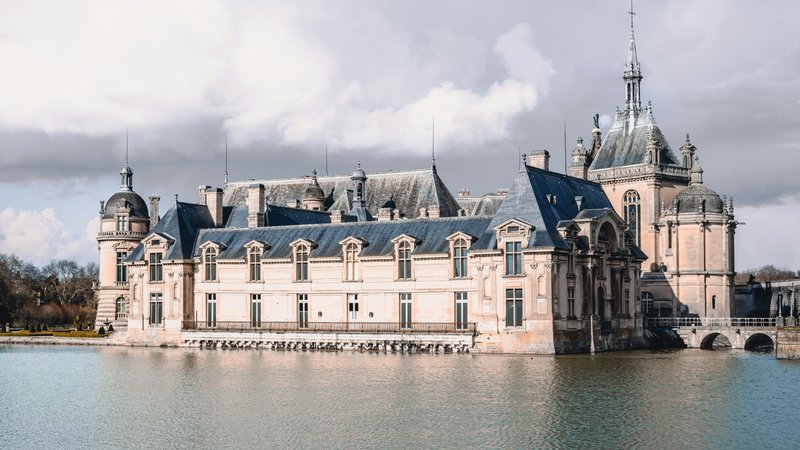
Madame Pommery's Belle Époque château, built in 1904 and set within seven hectares of formal gardens, now houses a Relais & Châteaux property with just twenty romantically appointed rooms. Chef Christophe Moret's two-Michelin-starred dining room showcases lobster, langoustine, and foie gras beneath soaring ceilings, while the contemporary brasserie Le Jardin offers bistronomic alternatives. A 600-bottle champagne list and arranged cellar tours anchor the estate's deep ties to the region's winemaking heritage.
Explore Reims
Where to Stay
Reims's 1920s fire station lives on as an Art Deco hotel whose champagne-hued facade faces the UNESCO-listed Notre-Dame Cathedral. Rooms on upper floors capture 14th-century views, while interiors by Julie Fuillet Studio channel Champagne's viticultural heritage through a glass-roofed winter garden. La Grande Georgette—named for the tradition of christening the grande échelle after the captain's wife—serves bistronomic fare, and a two-floor spa delivers hydromassage, hammam, and ice showers.
The Lallement family's brick-clad mansion, now home to Arnaud Lallement's three-Michelin-starred restaurant, pairs gastronomic excellence with 33 contemporary rooms where headboards showcase oversized reproductions of classical paintings. A glass-walled indoor pool overlooks landscaped gardens, while Suite 5 offers a private hammam, jacuzzi, and terrace. Champagne comes complimentary with every stay—essential for those touring northeastern France's wine country.
Where to Eat
Arnaud Lallement commands one of France's most celebrated three-Michelin-starred tables, drawing on training under Roger Vergé, Michel Guérard and Alain Chapel to craft generous, classically inspired cuisine with bold Breton influences. His signature blue lobster—a tribute to his father—exemplifies the meticulous care lavished on each ingredient, from farm-reared Onjon squab to memorable sauces that anchor accessible yet sophisticated dishes. The family-run mansion pairs contemporary interiors with a cosy champagne bar showcasing the region's finest cuvées.
Kazuyuki Tanaka's two-Michelin-starred table marries Japanese precision with French terroir in a contemporary dining room overlooking a Japanese garden. Langoustine and lobster arrive in elegant, technically masterful compositions layered with aromatic herbs, vegetables, and condiments that reveal unexpected flavour pairings. The 250-champagne wine list reflects Reims' viticultural heritage, while the pared-back interior and bay windows create a serene backdrop for creative modern cuisine.
Chef Christophe Moret crafts refined yet approachable two-Michelin-starred cuisine within a graceful early-twentieth-century château built for Louise Pommery. Premium ingredients shape generous dishes—spider crab infused with sea fennel, glazed mallard duck with juniper and elder—while Rosalie Boucher's desserts pursue maximum lightness. The wine list reaches nearly nine hundred champagnes, celebrating the region's viticultural legacy across seven hectares of grounds once home to the de Polignac family.
Philippe Mille, 'Meilleur Ouvrier de France', brings Champagne terroir to the fore in this 1874 townhouse, cooking over vine branches and weaving seven grape varieties—including the rare Arbane—into a modern cuisine awarded one Michelin star. Premium seafood—monkfish, turbot, lobster—receives meticulous treatment, with peppery accents and subtle citrus lifted by an exceptional champagne list. Contemporary interiors honour the region's viticultural heritage while the upstairs lounge showcases Reims glassmaking artistry.
Benjamin Andreux leads the kitchen at this Michelin-starred address near the cathedral, delivering an ambitious modern vision centred on impeccably sourced seafood. Intelligent creativity defines each plate—original compositions executed with technical precision and seasonal discipline. The fashionable interior provides an elegant backdrop for gastronomic occasions that balance bold ideas with refined restraint, appealing to diners seeking sophisticated, seafood-forward fine dining.
L'ExtrA operates inside a handsome 1920s Art Deco building facing the listed Boulingrin covered market, its minimalist dining room the work of a neurodivergent brigade overseen by experienced managers. The kitchen delivers confident modern plates—squid carpaccio with Soissons beans and piccalilli, Atlantic cod with creamy sweetcorn and bacon-wrapped leeks, Grand Marnier soufflé with bloody orange sorbet—earning a Michelin Plate for precision and warmth in equal measure.
Chef Julien Raphanel helms this modern French table inside a converted 1926 fire station, its name honouring the old custom of christening ladder trucks after the captain's wife. Diners work through precisely executed plates—langoustine with seaweed sabayon, Racan pigeon paired with caramelised apple and buckwheat espuma—while the terrace frames the cathedral's Gothic spires. The Michelin Plate–recognised kitchen delivers elevated technique; next door, sibling bistro Little Georgette offers approachable French classics.
Chef Jacky Louazé has cultivated a devoted local following at this Boulevard Foch address, where the kitchen's command of fish and shellfish runs deep. Expect marinated oysters paired with cucumber granita, roasted monkfish finished with Paimpol coco beans and sage foam, and a creative sensibility that lets premium ingredients lead. The Michelin Plate signals technical confidence without pretense—ideal for travelers seeking refined seasonal cooking on the Promenades.
Brasserie Le Jardin occupies an elegant pavilion within the grounds of Château les Crayères, offering seasonal modern cuisine that earned it Bib Gourmand recognition. The contemporary dining room opens onto a veranda and terrace overlooking the estate's working herb garden, which supplies ingredients for the flavoursome dishes. Smart yet relaxed, it provides a lighter alternative to its Michelin-starred sibling while maintaining the same commitment to quality and refined technique.
A carpentry workshop turned dining room, La Table Saint Thomas operates under the quiet guidance of a husband-and-wife team versed in hospitality's finer points. The kitchen builds seasonal menus around honest technique—turbot paired with asparagus gratin and Champagne sauce, Label Rouge salmon gravlax lifted by Sichuan pepper emulsion and beetroot gel. The approach favours clarity over flourish, tradition shaped by the rhythm of harvest calendars.
Frequently Asked Questions
When is the best time to visit Reims for champagne harvest?
+
The vendange typically runs from mid-September through early October. During this period, vineyards across the Montagne de Reims and Côte des Blancs buzz with activity, though many maisons limit cellar visits to accommodate production. Late September offers mild weather and the chance to witness pressing operations firsthand.
Which Reims neighborhoods are best for walking to major champagne houses?
+
The Quartier des Maisons de Champagne along the Butte Saint-Nicaise concentrates most grand marques within a fifteen-minute walk. Ruinart, Veuve Clicquot, Taittinger, and Pommery all maintain cellars in this southeastern district. The terrain climbs gently, offering views back toward the cathedral.
How far is Reims from Paris and what is the fastest transport option?
+
TGV trains from Paris Gare de l'Est reach Reims in 46 minutes, with departures every hour during peak times. The station sits a short tram ride from the cathedral district. Driving takes roughly 90 minutes via the A4 motorway, making day trips feasible though overnight stays allow proper cellar exploration.
Nearby Destinations
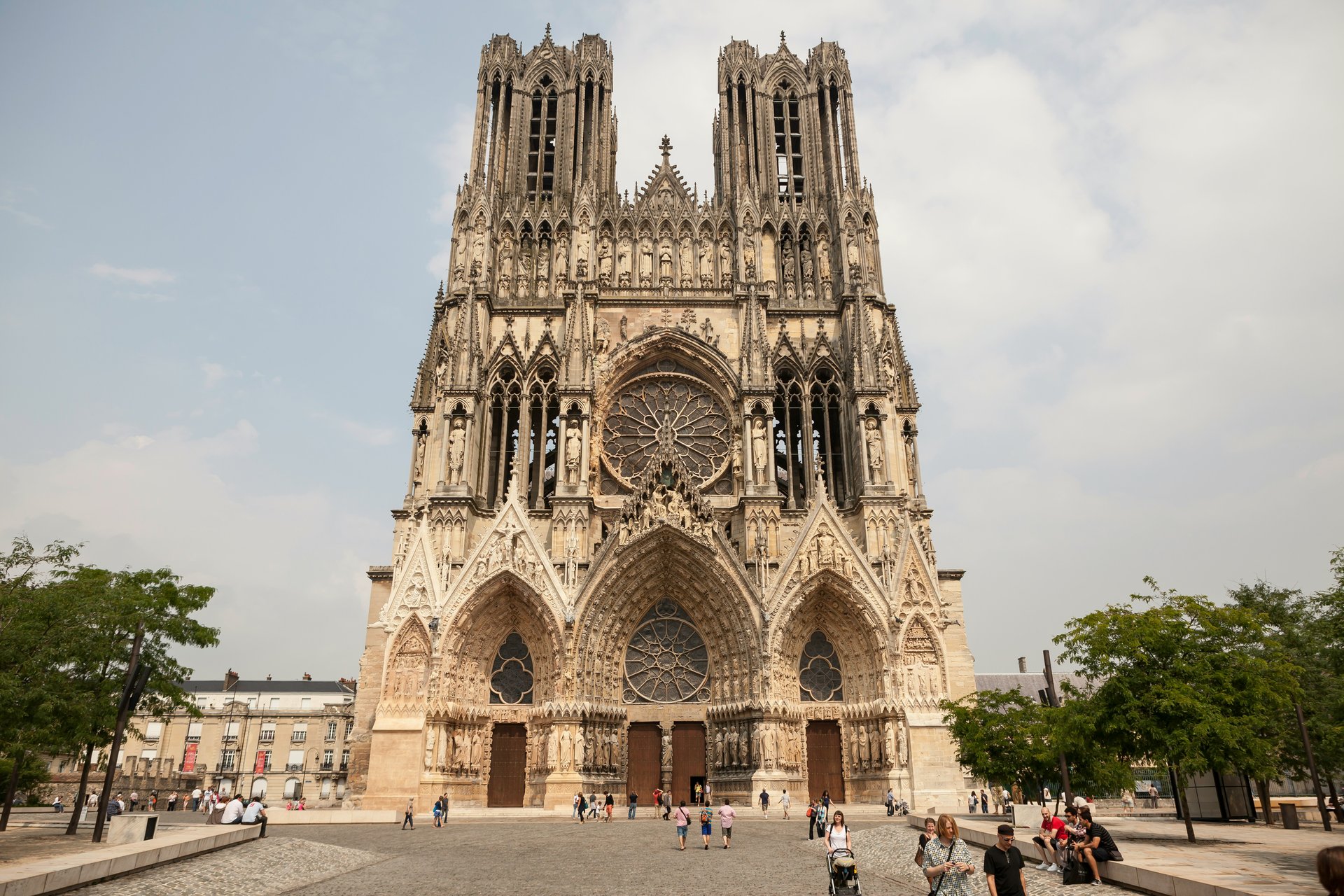
Explore FranceThe capital of Champagne sits an hour northeast of Paris, its skyline dominated by the Gothic cathedral where French kings once received their crowns. The city unfolds from Place Drouet-d'Erlon, the main pedestrian artery lined with brasseries and café terraces, toward the quieter residential quarters near the Parc de la Patte d'Oie. Underground, kilometers of chalk cellars carved by the Romans hold millions of aging bottles — many open for visits along the Avenue de Champagne in neighboring Épernay.
Rémois dining leans heavily on regional produce: Ardennes ham, Chaource cheese, pink biscuits from Maison Fossier. The best restaurants range from Michelin-starred tables to intimate wine bars serving côteaux champenois by the glass. After dinner, the scene shifts to the best bars around Place du Forum, where Art Deco façades frame late-night champagne service. The compact centre-ville makes everything walkable, from morning croissants near Saint-Jacques church to a nightcap in the shadow of the cathedral's flying buttresses.