Michel Kayser - Restaurant Alexandre: A Two-Star Michelin Escape Between the Gard and the Mediterranean


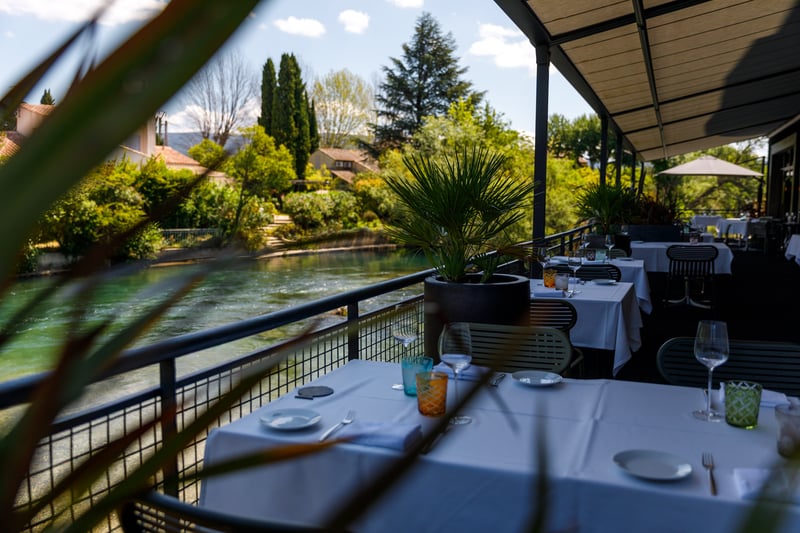
On the outskirts of Nîmes, Restaurant Alexandre offers a gastronomic experience of rare elegance, led by two-Michelin-starred chef Michel Kayser and shaped by a vision deeply rooted in the landscapes of the Gard. Between Provence and the Camargue, this Relais & Châteaux house cultivates an art of living in which the garden, natural materials, carefully chosen artworks, precise service, and the nobility of local produce create a serene and refined world. From the light-filled terrace to plates of remarkable intensity, every moment invites guests to discover a cuisine of place, sensitive and luminous, where technical rigor meets the generosity of the South.
At the Entrance to Garons, Terroir Becomes Poetry
At the entrance to Garons, just minutes from Nîmes, Restaurant Alexandre flourishes in the heart of a deeply inspiring Gard landscape, between Provence and the Camargue. This location is not merely a peaceful setting: it is the very foundation of Michel Kayser’s cuisine, a chef intimately connected to his adopted region and to those who bring it to life. Around him, a loyal network of local producers, who over time have become true partners and friends, nourishes a gastronomy built on proximity, traceability, respect for nature, and the celebration of terroir. Each ingredient tells a story, that of committed men and women whom the chef listens to, supports, and elevates with rare exacting standards, making this Michelin-starred address a true ambassador for the Gard and its riches.


A Conversation Between Nature and Art
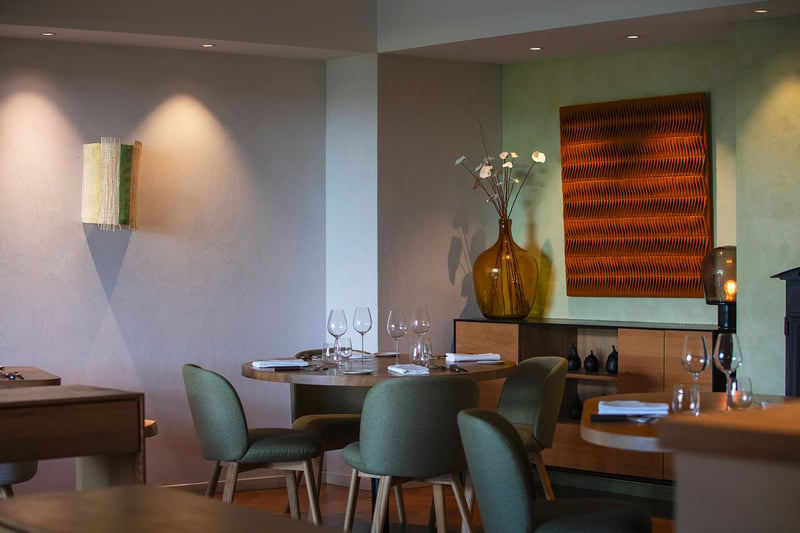
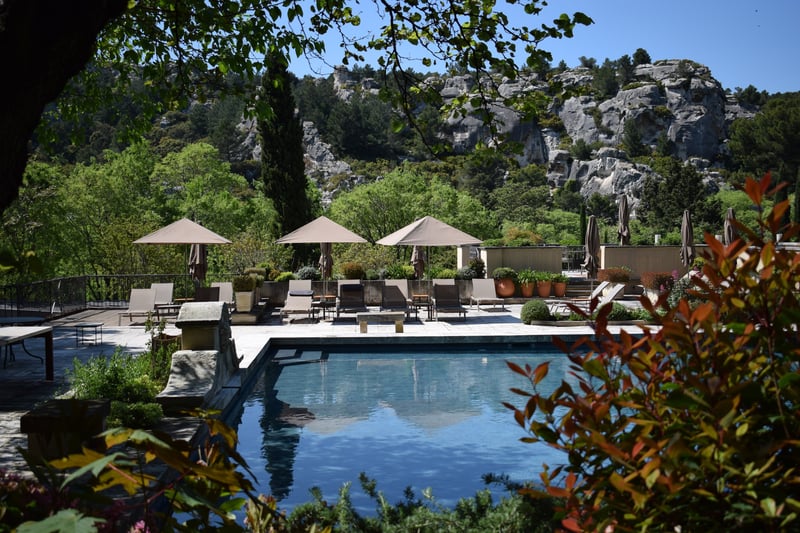
At Restaurant Alexandre, style unfolds like a peaceful conversation between nature, art, and gastronomy. From the moment of arrival, the garden creates a setting of rare serenity, with monumental pebbles, century-old pines, and shades of green, imagined by Michel Kayser together with his gardener as a living jewel box that changes with the seasons. Inside, the atmosphere extends this harmony through natural materials, muted colors, deep sofas in the library lounge, and artworks placed with quiet precision throughout the dining rooms. Nothing seems decorative by chance: every object carries intention, from Isabelle Doblas-Coutaud’s ceramic “sentinels” to chalice-shaped water glasses and coffee, tea, and water services fashioned like rocks. In this delicate yet daring world, luxury becomes discreet, meditative, almost philosophical, inviting guests to savor the moment with a renewed awareness of the beauty of simple things.


Generosity in Culinary Haute Couture
Restaurant Alexandre embodies a certain idea of haute gastronomy: a suspended moment, carried by the generosity of Michel Kayser, his wife, and a deeply committed team. Here, excellence is paired with a family spirit, creativity with a search for meaning, in an atmosphere where every detail is designed to stir emotion. In the kitchen, the Chef composes a sensitive and daring score, nourished by memories, encounters, inner journeys, and a profound attachment to the South. His plates, at once technical, precise, and vibrant, magnify local products in a subtle balance between classical foundations, intensity of flavor, and artistic freedom.


The experience continues in the dining room as on the peaceful terrace, thanks to attentive hospitality and an exceptional cellar orchestrated by head sommelier Lionel Delsol, a passionate ambassador for local winegrowers. With more than 600 references and 6,000 bottles, the wine list celebrates the terroirs of Languedoc-Roussillon, the Rhône Valley, and beyond, offering pairings of great precision with the Chef’s cuisine. Awarded two Michelin stars since 2007 and a member of Relais & Châteaux since 2011, Alexandre remains a prestigious house where art, precision of gesture, and an undimmed passion for taste come together to offer a rare gastronomic experience, deeply anchored in its region and resolutely turned toward emotion.
Michel Kayser, Eastern Rigor Beneath the Southern Sun
Born in the Vosges, Michel Kayser retains from his childhood a taste for forests, ponds, and generous family tables. Beginning his apprenticeship at a very young age, he forged his discipline through a demanding path, from Sarreguemines to Évian-les-Bains, from Courchevel to Strasbourg, including time in the Michelin-starred brigades of René Bouvarel and Kammerzell. The South, discovered alongside Paul Alexandre in Palavas-les-Flots, would gradually become his chosen land: in 1983, he settled with his wife Monique in Garons, near Nîmes, to take over the future of Restaurant Alexandre.

Year after year, Michel Kayser has established a cuisine of character, precise and sensitive, nourished by the rigor of the East and Mediterranean light. A first Michelin star recognized his work in 1987, before a second crowned the house in 2007, following a major renovation carried out with Monique. The true soul of the establishment, she orchestrates the dining room with warm elegance, balancing high standards, discretion, and a profound sense of hospitality, giving the chef’s creations the familial and refined setting that today forms Alexandre’s signature.
The Quintessence of the South in Eight Emotions
At Michel Kayser’s table, the experience is offered through Quintessence menus of 5, 8, or 10 emotions; we chose the 8-course version, a true sensory promenade in which each plate reveals precision, elegance, and depth. To accompany this journey, the house proposes a by-the-glass wine selection designed for especially accurate pairings. We opted instead for a non-alcoholic pairing created in collaboration with Victor Delpierre: after tasting different grape varieties, he worked on their aromatic complexity in order to recreate the spirit of wine, without alcohol. Throughout lunch, his creations brought a surprising and refined dimension, extending each dish with beautiful intensity.
The aperitif moment opens with a house fruit juice, served in elegant flutes and adorned with a sunny orange-red gradient evoking freshly pressed seasonal fruit, perfect for a toast on the terrace in this green haven. We begin with a hummus and tomato confit tartlet, between creamy softness, the melting acidity of tomato, and the vegetal freshness of young shoots. Next comes an already impressive play on texture with thinly sliced rabbit with tarragon presented in a spoon, accompanied by an ephemeral fennel meringue. The sequence finishes with a more daring marine bite around a tapioca seaweed crisp, anchovy cream, grated celery, and wasabi fish roe, for an opening that is refined, fresh, and subtly iodized.


Once seated at our table inside, a small tomato and anchovy brioche appears as a bite of discreet elegance: a little ingot of golden brioche, carefully toasted until its crust is caramelized and crisp. Beneath its apparent simplicity, it evokes all the refinement of the Mediterranean, with the buttery softness of the brioche, the saline depth of anchovy, the bright freshness of tomato, and the fruity gleam of a local olive oil served with precision, almost like a fragrance of terroir.

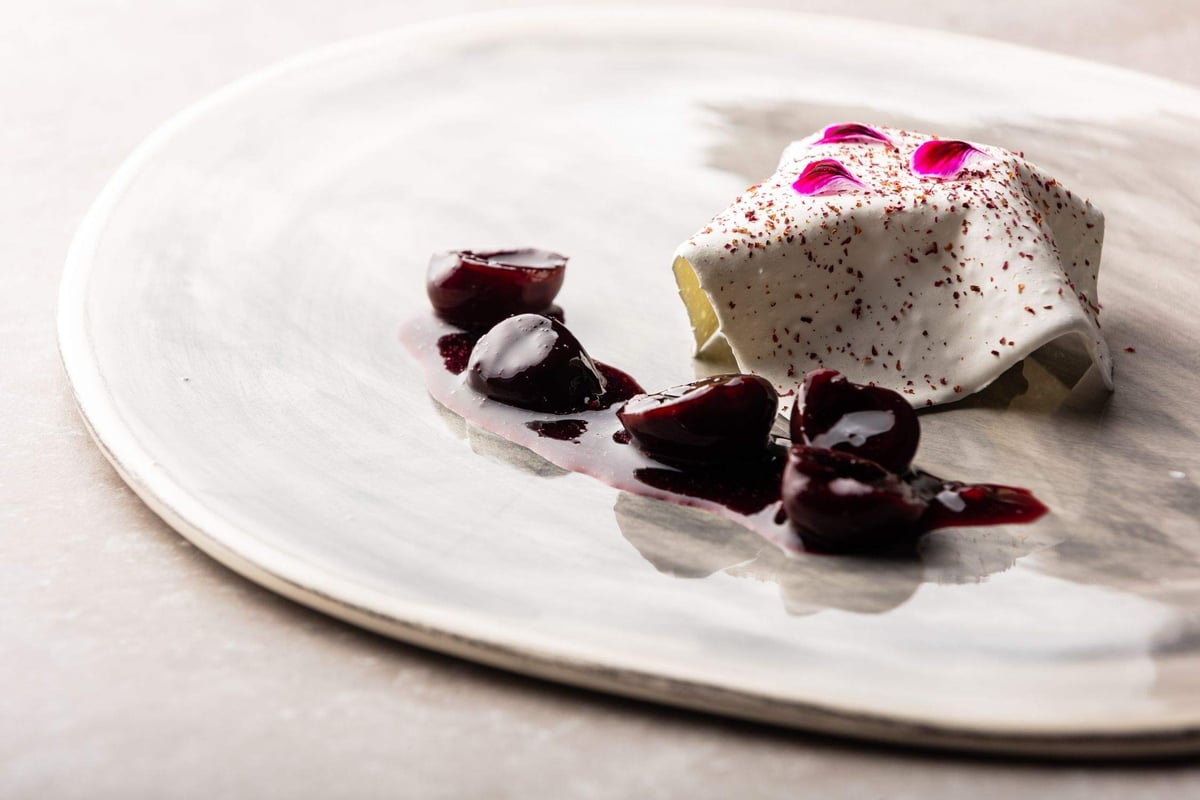
Continuing these first sensations, my husband began with the Ode to pink radish, presented as a miniature of high precision: a creamy, chilled dome, between emulsion and sorbet, immaculate then speckled with vivid pink, evoking the peppery freshness of radish. The creation plays on contrasts — milky sweetness, fresh acidity, delicate spice, airy and crisp texture — in a very pure, almost floral spirit. The non-alcoholic pairing, conceived as the equivalent of an Alsace or German Pinot Blanc, extends this impression with an acidic, floral structure that cleanses the palate and underlines the springlike finesse of the radish.

For my part, I began with the Costières artichoke composition, presented as a plate of great delicacy, where artichokes cut into fine white petals form a graphic heart. Around it, an amber jus brings depth, while the garnish of young shoots, red leaves, and crunchy vegetables evokes a precious, vivid, Mediterranean salad. Smoked Camargue bull seems to infuse a more earthy and subtly full-bodied note, contrasting with the vegetal freshness of the Costières artichokes, while the herb crisp promises the extra texture that awakens the whole.

After this vegetal opening, my husband continued with The Kitchen Aside of Homo habilis in Petite Camargue, a miniature Camargue landscape plated with almost poetic precision. The bull tartare appears delicately coated with a pale horseradish cream and lifted by fine shavings, surrounded by deep green vegetal touches. Iced samphire and spirulina evoke the salt marshes, between iodized freshness, herbal notes, and a saline sensation, while the whole conveys the impression of a refined, luminous lunch, almost suspended between wild land and gastronomic sophistication.

On my side, I continued with Mediterranean prawns seasoned with almond oil, a dish presented as a composition of great delicacy, almost pictorial, where the milky softness of smoked cream envelops the base of the plate with silky elegance. At the center, the prawns seem to emerge beneath a pale and tender veil of fava beans, subtly perfumed and enhanced with dried truffle. Around them, the condimented garnish draws a colorful crescent of young shoots, edible flowers, crunchy shards, and small purple dice, creating a refined contrast between freshness, acidity, and texture. The almond oil promises a discreet, almost velvety roundness that links the Mediterranean to a softer, more indulgent sensation, while the smoked cream adds muted aromatic depth.
The play of green and white sand-grown asparagus from Aigues-Mortes, confit, which my husband then tasted, appeared as a vegetal composition of great finesse, nestled at the center of a mineral plate with gray reflections: a heart of tenderly confit asparagus, topped with young shoots, fine herbs, and small flowers, bathed in an airy elderflower vinegar sabayon, foamy and luminous green. The lightly sweet softness of the white asparagus answered the more chlorophyll freshness of the green, while the floral acidity of the sabayon brought an elegant, almost perfumed tension to the whole. The pairing served in the glass, close to an orange wine with its deep amber hue, extended this impression of natural refinement, between honeyed notes, noble bitterness, and gastronomic freshness.

I continued with the blue crab like an eiderdown and Mediterranean trails, presented as a delicate and intensely perfumed marine evocation, beginning with the spoon: a warm, deep, almost amber bisque, born of roasted shells and mounted into an emulsion, immediately concentrating all the iodized power of the crustacean. On the plate, a fine squid pasta, white and supple, encloses at its heart a tielle-style blue crab mixture, at once melting, lively, and Mediterranean, punctuated with small crisp touches and fresh herbs. Around it, the bisque foam adds an airy texture.

In the same maritime spirit, my husband’s John Dory from our coasts, confit with seaweed, is plated with almost graphic precision. The fish, pearly and just confit, is accompanied by a smoky Levantine eggplant preparation, extended by an eggplant raviolo in the style of baba ganoush, supple and fragrant. Around it, the separated herb jus brings dark, glossy depth, lifted by a peanut and soy sauce with notes that are at once indulgent, saline, and slightly exotic. A few fresh herbs, fine crunchy vegetables, and a touch of seaweed recall the shoreline, while the whole plays on an elegant balance between the Mediterranean, iodine, and Levantine inspirations, in a haute cuisine spirit that is both pared-back and well-traveled.

The loin of pollack from our coasts, slow-cooked, was then presented to me as a marine composition of great delicacy. The fish, pearly white and perfectly satiny, seems to have retained all its tenderness thanks to steam cooking in a fig leaf, which lends it a subtle, almost milky vegetal nuance. Around it, an iodized mousseline refreshed with bergamot envelops the palate in saline softness, while small dots of yellow gels punctuate the plate with citrus brightness. Asparagus tails and pak choi, precisely cut, add crunch and freshness, in dialogue with a mounted butter infused with young fig leaves, whose glossy green, herbaceous sauce brings depth and elegance.

Then the zucchini flower with Rabasse d’Uzès reveals itself as a vegetal composition of great beauty: a bright, silky orange zucchini blossom shelters a fine stuffing, accompanied by delicate zucchini ribbons striped with green and scattered with dark touches evoking rabasse truffle. Around it, a vivid green jus with tangy flower pistils, bound with pumpkin seed oil, brings glossy roundness and lively, almost floral freshness. The whole plays on the contrast between the tender sweetness of zucchini, the aromatic depth of Uzès truffle, and the elegant acidity of the jus, in a refined presentation that celebrates the season with true haute couture precision.

For the meat course, my husband tasted the roasted leg of “Allaiton” lamb from Aveyron, revealed in a presentation that is both earthy and refined. The pink, juicy meat is coated in a glossy lamb jus infused with wild thyme, lifted by the aromatic freshness of wild garlic oil. Alongside it, a crisp offal preparation brings indulgent depth, balanced by the vivacity of kumquat, while carrots inspired by hummus offer silky texture and spiced sweetness. The whole plays on contrasts between melting, crunchy, tangy, and smoky, extended by a non-alcoholic pairing evoking a red wine made from red grapes, with smoky, tannic nuances, likely worked with pu-erh-style teas to recall the sunny, structured soul of a Bandol Mourvèdre.

The Camargue Angus seasoned with fragrant marrow was presented to me, in echo, as a refined and earthy evocation of the Camargue delta: at the center of the mineral plate, the dark, glossy meat rests in a deep, almost sanguine “Terre de Camargue” sauce, lifted by grated seaweed and anchovy butter that brings subtle marine salinity. Around it, a composition of apiaceae seasoned with anchovy plays on vegetal freshness and iodized intensity. The staging, between green touches, concentrated jus, and crisp textures, creates a plate both rustic and precious, where the power of Angus meets the elegance of herbs, perfumed marrow, and marine accents.

To enter fully into sweetness, the Spring Freshness served to my husband reveals itself as a delicate vegetal interlude, where the tender green shades of peas and confit fennel converse with the rosy softness of thyme flower sorbet. The pea sauce brings silky, almost chlorophyll freshness, while the finely worked fennel offers an aniseed note that is melting and luminous. A few herbs and petals perfect this light composition, as if gathered from the garden, in a setting bathed in light. As a pairing, the almond orgeat juice, golden in its slender glass, extends the experience with nostalgic roundness, evoking a return to childhood and subtly guiding this springlike prelude toward the world of dessert.

For my part, I was served the Citrus Delicacy. This dessert of luminous elegance is composed of a cylinder of meringue delicately speckled with Iranian black lemon and opening onto the tangy freshness of pomelo, while a golden disc topped with lemongrass jelly pearls, citrus segments, and small flowers brings almost jewel-like precision. Alongside it, a pale green quenelle of fromage blanc and coriander sorbet, set on a biscuit crumble, creates a vegetal and milky contrast of great finesse. The confit kumquat cream, honey gel, and Corsican pomelos in jelly compose a subtle balance between noble bitterness, honeyed sweetness, and citrus vivacity, for an airy, fresh, and perfumed finale, ideal in the hushed atmosphere of a great table.

Finally, the Library of Sweet Delicacies offers a true haute couture finale, an absolutely spectacular presentation with this enveloping trolley, designed like an alcove of pale wooden slats and custom-made with local artisans. Heir to a ritual established in the earliest days of Chef Alexandre’s restaurant, Alexandre himself having trained as a pastry chef, this trolley was preserved by Chef Kayser and then reimagined in 2003, at the time of the second star, to become this small gourmand architecture where each level reveals a temptation. That day, the sweet promenade moved between great classics and house signatures: licorice ice cream, a true institution, as well as vanilla and olive oil versions, candied fruits, lemon tart, caramel millefeuille, chocolate-kumquat dessert, caramel-mango rice pudding with puffed rice, citrus savarin, and Grand Marnier soufflé. In the soft glow of the wood, ice cream cups, verrines, entremets, and creams form a living library of textures and aromas, at once generous, precise, and deliciously theatrical.


My Review
On leaving the restaurant, one retains the impression of having crossed a landscape as much as experienced a meal, guided by Michel Kayser’s assured hand and by the attentive elegance of an entire house. From the softness of the garden to the final sweet flourishes of the Library of Sweet Delicacies, each stage reveals a profound attachment to the Gard, to its producers, to its light, and to that inner Mediterranean that inspires the plates with such precision. The cuisine combines rigor, generosity, and poetry, while the service, pairings, decor, and soothing silence of the place create a rare, intimate, and memorable experience. In Garons, this two-Michelin-starred table invites guests to slow down, to listen to the taste of the seasons, to recognize the nobility of a well-chosen product, and to savor that discreet luxury born when talent, sincerity, and a sense of hospitality move in perfect harmony.
Contact Details
Michel Kayser - Restaurant Alexandre