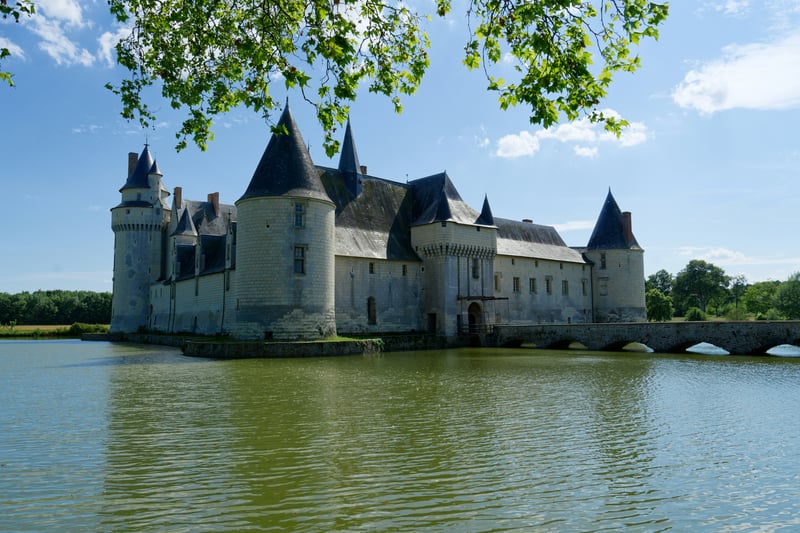
Spread hamlet-style across a 44-hectare estate bordering ancient Sologne forest, this sibling to Bordeaux's Sources de Caudalie occupies the 18th-century Château du Breuil and its dependencies—including pond-side cabins and the Baron Perché suite on stilts with private Nordic bath. Chef Pierre Frindel runs both Michelin-starred Le Favori and bistronomic L'Auberge, while the Caudalie spa offers signature grape-seed treatments and an oak barrel bath. Ideal for families seeking refined countryside immersion.
Explore Chambord
Where to Stay
Original hand-painted murals and grand fireplaces anchor this 17th-century château, where herringbone parquet floors lead to spacious rooms mixing antiques with contemporary design. The MyBlend & Alaena spa offers two pools, hammam, and sauna, while tennis courts designed by champion Guy Forget appeal to active guests. Restaurant Mémoire serves refined French comfort cuisine on a terrace overlooking formal gardens, a private lake, and forest trails explored by complimentary bicycle.
Where to Eat
Chef Pierre Frindel, who honed his craft at Sources de Caudalie, leads this one-Michelin-star table on a wooded estate near Cheverny. His cooking walks the line between tradition and invention—Bresse poultry arrives with silken aubergine, smoked caviar, and a luminous saffron jus, each element precisely calibrated. The dining room opens onto pastoral views, lending an unhurried elegance to meals built on technical mastery and local terroir.
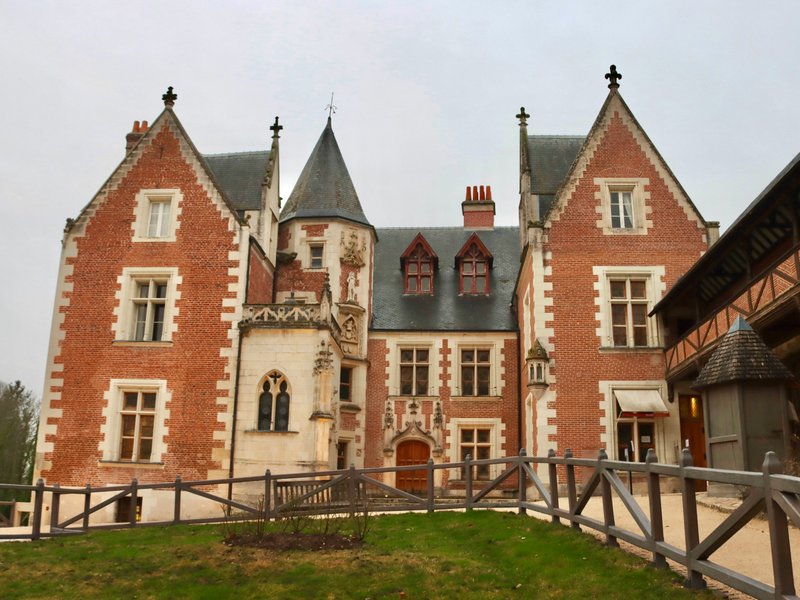
Romorantin—the Sologne town that once drew Leonardo da Vinci—harbors this Renaissance mansion where chef Didier Clément holds one Michelin star. His research into forgotten aromatics like grains of paradise, sand leek, and angelica shapes a cuisine rooted in terroir yet startlingly inventive. The dining room's walls, crafted from rare 18th-century 'stone cardboard,' frame meals paired with exceptional Loire wines.
Nicolas Aubry earned his stripes as executive chef under Christophe Hay before assuming command of this one-starred table near Chambord. The modern dining room offers views into the kitchen, where Aubry composes seasonal set menus rooted in Loire Valley produce. His cooking reads as refined yet characterful—subtle techniques yielding dishes with unmistakable personality, ideal for gastronomes exploring the château country.
An enterprising couple runs this modern dining room amid the forests and meadows near Chambord, the contemporary architecture reflecting the chef's philosophy of terroir-driven precision. Local girolle mushrooms, Racan pigeon, and Touraine pork anchor a menu where Breton heritage surfaces in a signature spider crab tart glazed with warm sea urchin mayonnaise. Each plate arrives as a study in clarity and forthright flavor.
A Grand Siècle château rises from the misty Sologne landscape, its dining room preserving seventeenth-century grandeur: marble fireplace, gilded mirrors, Versailles parquet underfoot. Beyond tall windows, forests shelter bellowing stags and lakes teem with fish. The kitchen honors this theatrical setting with contemporary dishes executed with precision, each plate reflecting the region's wild abundance through a refined, modern lens.
Two chefs who crossed paths at La Table du Connétable in Chantilly now anchor this Bib Gourmand address near Chambord, channeling Sologne's larder into precise bistronomic plates. Smoked local sturgeon arrives with pickled kohlrabi; slow-baked cod comes cloaked in frothy tomato mousse alongside basil-scented courgette. The cooking is inventive, the prices reasonable, and reservations essential—word travels fast in château country.
Chef Didier Doreau has built a Bib Gourmand stronghold in Bracieux, earning regional acclaim for his mastery of traditional Gallic cooking. Seasonal game drives the menu—hare, venison, wild boar prepared with exacting technique—while signature dishes like terrine of pike à la Chambord and warm pâté de gibier honor Loire Valley heritage. A benchmark address for hunters of authentic French gastronomy.
A crackling hearth anchors the dining room at this chic bistro within Les Sources de Cheverny's wooded estate, where open-flame cooking shapes the kitchen's identity. Seasonal plates trace a circuit through Loire Valley terroir: vegetables from Mont-Près-Chambord gardens, Sologne strawberries, Roi Rose pork loin from Touraine turning slowly over the fire. The approach is meticulous, the sourcing fiercely local.
Chef Stéphane Bureau brings genuine enthusiasm to this contemporary bistro near Chambord, frequently stepping out from the kitchen to greet diners personally. His cooking celebrates Loire Valley terroir through close partnerships with local producers and winegrowers, while herbs harvested from the restaurant's own garden add freshness to each aesthetically composed plate. A professional husband-and-wife team ensures warm, polished service throughout.
A restored coaching inn on the edge of Chambord's hunting grounds, La Diligence channels the Loire's agricultural bounty into honest, terroir-driven plates. The kitchen favors local producers, letting seasonal ingredients speak with minimal intervention. Summer guests drift between meals and the property's swimming pool, extending lunch into lazy afternoon territory. Comfortable rooms allow dinner to unfold without watching the clock.
Frequently Asked Questions
When can visitors watch the hound feeding at Cheverny?
+
The Château de Cheverny maintains a pack of approximately seventy French Tricolore and Poitevin hounds. The daily feeding, called the "Soupe des Chiens," takes place at 5pm from April through September and at 3pm during winter months. The ritual has continued since the estate's hunting traditions began centuries ago.
What makes the Cour-Cheverny wine appellation distinctive?
+
Cour-Cheverny AOC produces exclusively white wine from the Romorantin grape, a variety virtually extinct elsewhere. François I reportedly brought the vine from Burgundy in 1519. The wine tends toward mineral, slightly honeyed notes and pairs particularly well with the local freshwater fish and goat cheeses.
How far apart are Chambord and Cheverny châteaux?
+
The two châteaux sit approximately twelve kilometers apart, connected by the D112 road through forest and farmland. Cycling routes link them through the Domaine de Chambord, and most visitors combine both in a single day while basing themselves in villages like Bracieux or Cour-Cheverny.
Nearby Destinations
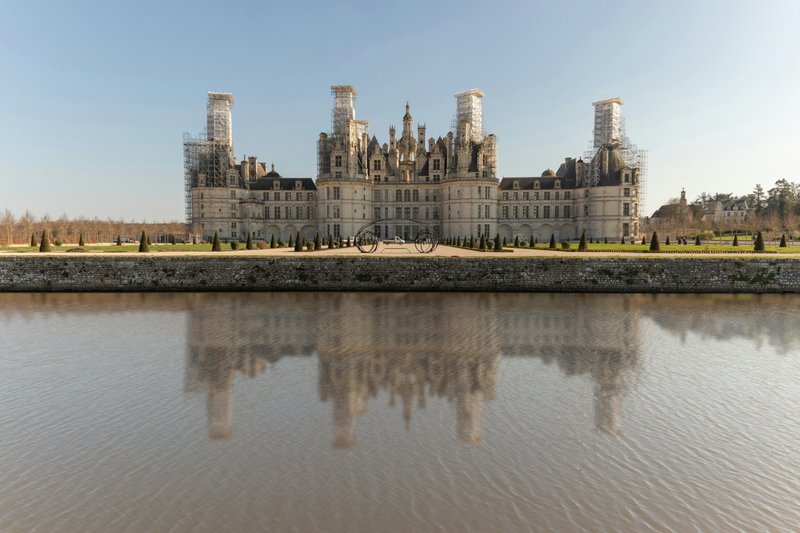
Explore FranceThe twin châteaux of Chambord and Cheverny anchor one of France's most concentrated stretches of aristocratic heritage. Chambord's famous double-helix staircase — attributed to Leonardo da Vinci — rises through a hunting lodge built for François I that sprawls across 440 rooms, though the king spent barely seven weeks here in his lifetime. The surrounding Domaine National covers 5,440 hectares of forest still managed for deer and wild boar. Cheverny, twelve kilometers south, offers a counterpoint: a privately-owned estate inhabited by the same family since 1634, its rooms furnished with original 17th-century tapestries and its kennels housing a pack of seventy hunting hounds fed daily at 5pm.
Between these landmarks, the villages of Bracieux, Cour-Cheverny, and Mont-près-Chambord provide the area's hospitality infrastructure. Cour-Cheverny produces its own AOC white wine from Romorantin grapes, a variety planted here since the 1500s and found almost nowhere else. The cooking leans on Sologne traditions: game in autumn, freshwater fish from the region's ponds, asparagus from the sandy soils near Contres. Most visitors base themselves within a twenty-minute radius of both châteaux, finding a landscape of dense forest, quiet waterways, and scattered manor houses that feels remarkably unchanged from the Renaissance maps.