


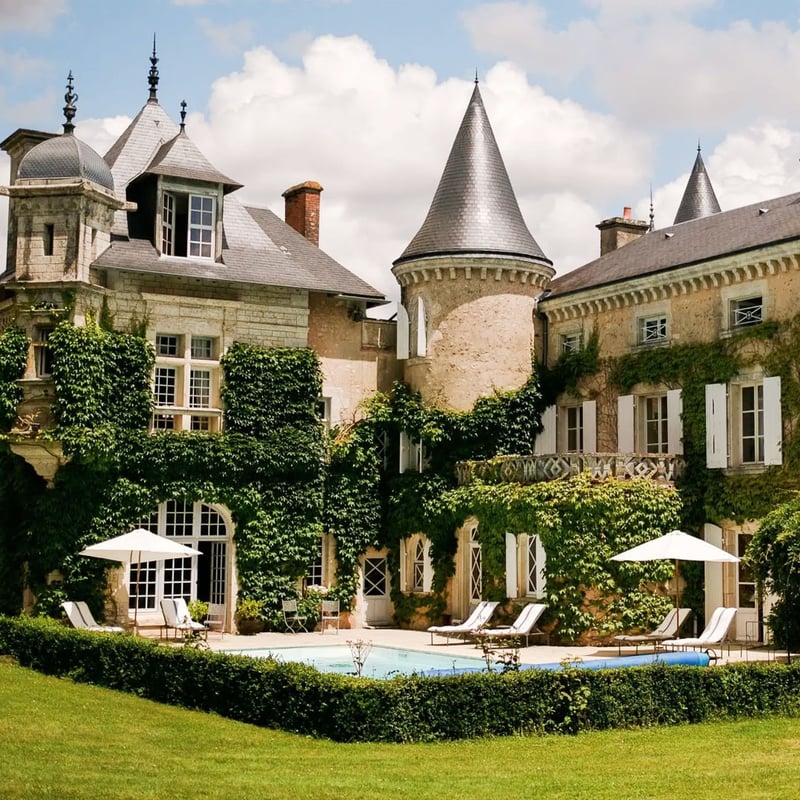
A 16th-century hilltop chateau with ivy-wrapped stone walls and slender turrets, Saint Victor La Grand' Maison offers just three rooms in an adults-only setting of quiet refinement. Parquet floors gleam beneath oil paintings and family heirlooms, while a baby grand piano anchors the book-lined salon. Guest rooms open directly onto manicured gardens, where two swimming pools await summer afternoons.
Angers Travel Guide: Best Hotels, Restaurants & Experiences 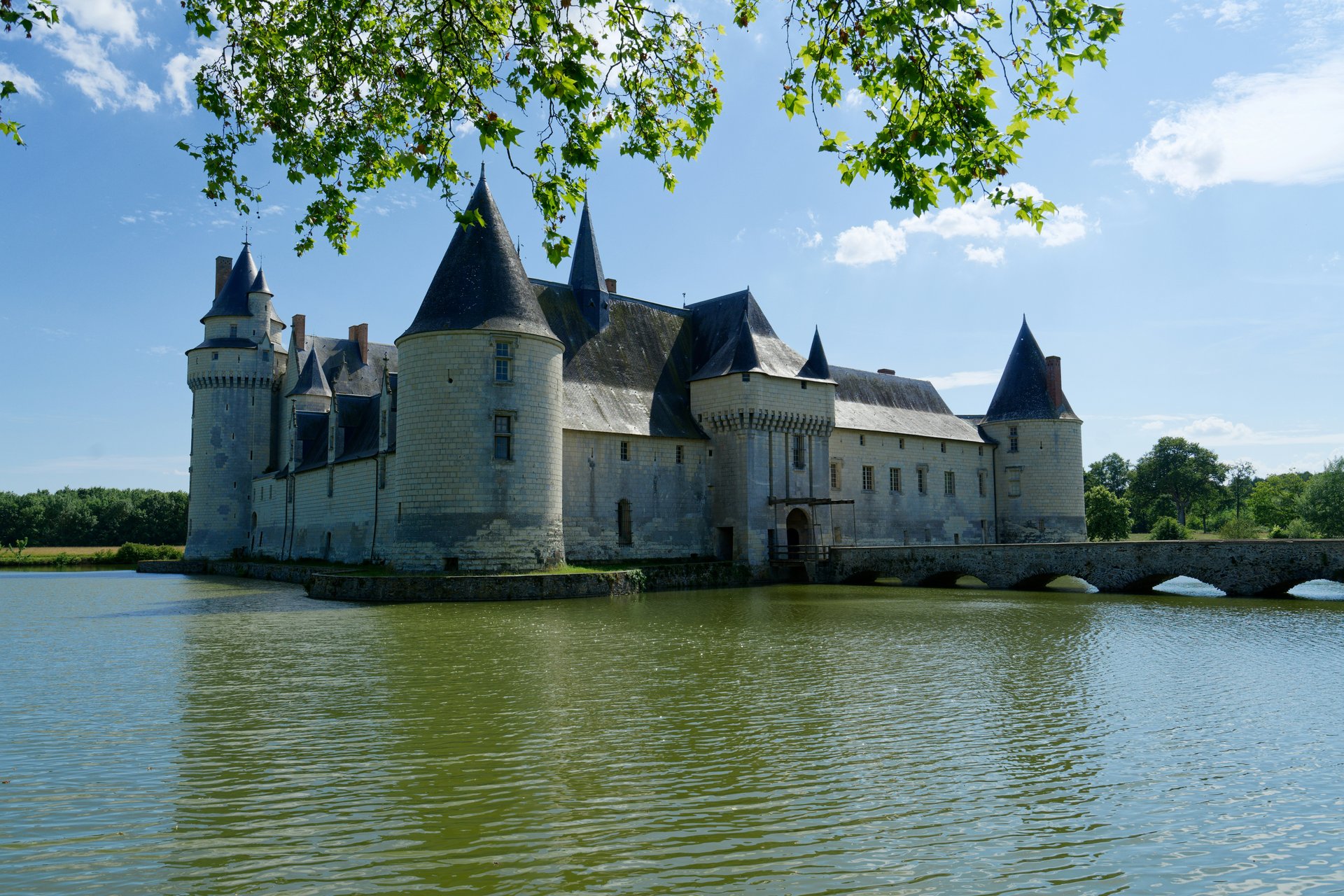
Explore Angers
Hotels (1)
Restaurants (10)
Where to Stay
Where to Eat

★ Michelin· Green Star ●
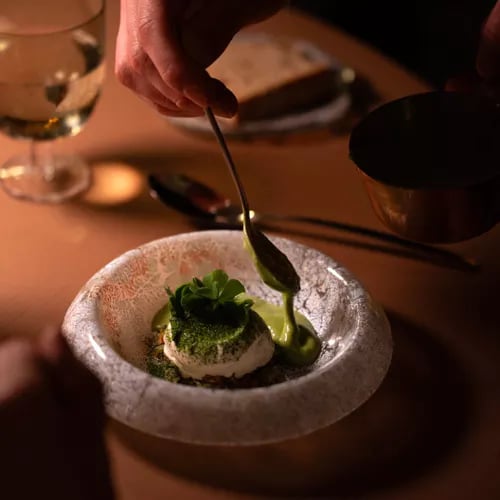
Chef Gaëtan Morvan brings a creative Mediterranean approach to this modern dining room across the River Maine, applying techniques honed at top kitchens to regional produce. Each course builds around unexpected spice combinations and inventive pairings that showcase local ingredients with global influences. The restaurant holds both a Michelin Star and Green Star, the latter reflected in Fanny Morvan's curated selection of environmentally conscious wines and the kitchen's commitment to sustainable sourcing.

Michelin Selected
A 17th-century château and adjacent 15th-century manor house overlook the River Loir, their grounds extending to a terrace where Italian chef Attilio Marrazzo serves modern French cuisine inflected with Mediterranean sensibility. Ingredients from his kitchen garden appear alongside free-range poultry and wild chanterelles, while the wine list privileges Loire Valley producers. An elegant riverside retreat minutes from Angers.

Michelin Selected
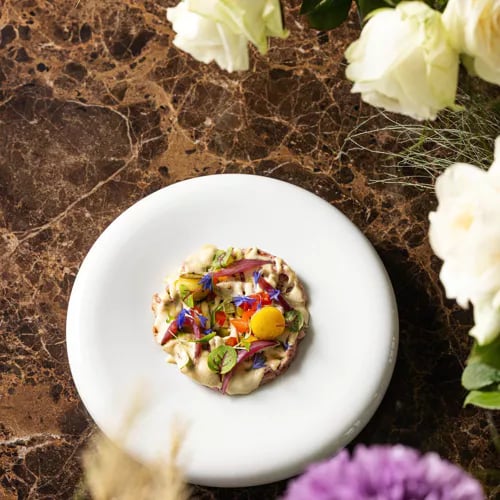
A 19th-century château sets the stage for chef Adrien Roux's bold, color-driven cooking. The dining room—ornate with ceiling mirrors, mouldings, and a grand fireplace—frames seasonal set menus built on hand-dived scallops, Brittany lobster, and Vendée rabbit. The restaurant's namesake pata negra bellota appears throughout, lending its rich, nutty depth to dishes marked by generosity and confident flavor.

Michelin Selected
A former post house turned local culinary landmark, Auberge de la Diligence pairs weathered stone walls with refined contemporary touches. Chef Michel Cudraz draws on herbs from the kitchen garden and spices gathered during travels to Asia, crafting a repertoire both personal and far-reaching. The wine cellar runs deep—over 400 labels—while summer meals unfold on an enchanting courtyard terrace.

Michelin Selected
Japanese chef Kazumi Hatakenaka operates a 12-seat counter where diners watch him prepare Black Angus beef, gambas, and seasonal vegetables on a teppanyaki plancha with surgical precision. The six-course blind tasting menu unfolds over three hours, each dish reflecting his rigorous training in traditional Japanese technique adapted to French ingredients. Michelin recognition confirms the delicate execution. Reserve well ahead; availability is tight.

Michelin Selected
Large picture windows frame Cathédrale St Maurice from this bright, intimate dining room with open kitchen and light wood tables. Clément Paillard, formerly at Aux Jeunes Pousses, crafts creative seasonal plates from local produce—veal sweetbreads with artichokes and wasabi peas, sole with asparagus purée and tempura. Textural contrasts define his modern cuisine, while evenings bring a more ambitious tasting menu. Michelin Plate-recognized.

Michelin Selected
A 16th-century mill on the banks of the River Loir provides the backdrop for this La Flèche address, where contemporary cooking shifts with the seasons. The Austrian-born proprietor brings Central European bottles to a carefully assembled wine list, adding unexpected depth to the cellar. When weather permits, the riverside terrace amplifies the charm of an already picturesque setting.

Michelin Selected
An 18th-century manor house at the confluence of the Maine and Loire rivers provides the backdrop for chef Romain Zarazaga's refined traditional cuisine. Trained under Laurent Petit, Emmanuel Renaut, and the Troisgros family, Zarazaga demonstrates particular mastery with sauces—his line-caught sea bass arrives with a butter-based fish stock brightened by Domaine Mosse vermouth. The charcoal-grilled squab, paired with an offal condiment and reduced elderflower syrup, rewards those seeking technical precision in an intimate riverside setting.

Michelin Selected
Nicolas Adamopulos runs a modern kitchen in Angers under twelfth-century vaulted stone, preparing precise seasonal menus from organic local produce. His cooking is defined by total ingredient use—pollack bones become honey, tomato skins form tart bases—and a commitment to market-driven composition. The Michelin Plate recognises sophisticated technique and a personal style that favours substance over convention, making this a compelling choice for diners seeking intelligent modern French cooking.

Bib Gourmand
Chef Alexandre Tessier and pastry chef Emmanuelle Moulié—named Gault & Millau's 2021 best hope in Western France—reimagine French bistro staples with contemporary flair at this Michelin Bib Gourmand recipient. The blackboard menu rotates with seasonal finds: pâté en croûte, tête de veau sauce gribiche, saddle of rabbit with potato purée and mustard sauce. An impressive cellar of Chartreuse liqueurs complements the food, while Moulié's kouign-amann with salted butter caramel provides a masterful finish.
Frequently Asked Questions
Which Angers neighbourhood is best for walking and dining?
+
The pedestrianised streets around Rue Saint-Laud and Place du Ralliement form the city's social centre, with restaurants, wine bars, and cafés concentrated within a few blocks of the castle. The Doutre quarter across the Maine offers a quieter alternative with medieval architecture and neighbourhood bistros.
What local specialities should visitors try in Angers?
+
Look for dishes featuring sandre (pike-perch) from the Loire, paired with Savennières or Coteaux du Layon wines. Rillauds — caramelised pork belly cubes — appear on many menus, as do local goat cheeses. Finish with anything involving Cointreau, distilled here since 1849.
Is Angers suitable for a day trip from Paris?
+
Direct TGV trains connect Paris Montparnasse to Angers Saint-Laud in roughly ninety minutes. The compact city centre makes it feasible as a day trip, though staying overnight allows time to explore the Doutre district and the surrounding Loire Valley vineyards at a slower pace.
Nearby Destinations
Explore France




Angers
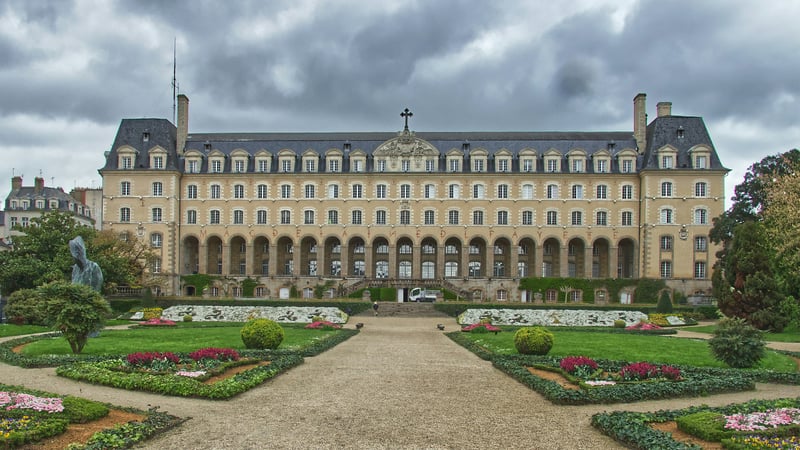
Angers commands attention from its slate-grey château overlooking the Maine river, the Apocalypse Tapestry within its walls drawing visitors who often discover the city's quieter pleasures beyond the fortress gates. The Doutre district on the western bank keeps its medieval street plan intact — half-timbered façades lean over narrow passages where neighbourhood restaurants serve Anjou wines by the glass. East of the centre, the Jardin des Plantes gives way to leafy residential quarters where converted maisons de maître now operate as intimate guesthouses.
The culinary scene reflects the surrounding Loire terroir: freshwater fish from the river, Cointreau from the local distillery, and the subtle funk of Anjou's goat cheeses. The city's best restaurants tend toward understated dining rooms where the focus stays on the plate. For a sense of continuity, historic restaurants occupy centuries-old buildings along Place du Ralliement and Rue Saint-Laud, their stone walls and oak beams providing the backdrop for contemporary cooking rooted in regional tradition.