Architect Nikola Bašić carved this adults-only retreat into a Dugi Otok hillside, building its stone exteriors from the excavated rock itself. The eight rooms evoke spacious yacht cabins, each capturing views of ancient olive groves or the Adriatic horizon. A century-old mill supplies olive oil to two gourmet restaurants showcasing regional seafood, while boat excursions to Kornati National Park depart from the property.
Explore Zadar
Where to Stay
On the Punta Skala peninsula minutes from Zadar, this contemporary resort channels the Adriatic through its design—blue accents echoing the sea, expanses of white, and blond wood lending a crisp nautical character. The Acquapura spa sprawls across four pools, hammam, and steam baths, while two beachfront restaurants showcase Dalmatian cooking shaped by Italian tradition. Generously proportioned rooms open onto full balconies facing the coast.
Hyatt Regency's Croatian debut occupies a prime seafront position minutes from Zadar's Roman ruins and famed sea organ. Interiors echo the Adriatic through gold, yellow, and sea-green tones, while floor-to-ceiling windows frame unbroken water views. A full-service spa offers indoor and outdoor pools, hammam, and sauna; the destination restaurant pairs Asian and South American flavors with sunset panoramas.
Two restored buildings anchor this 16-room boutique property in Zadar's old town: a former military hospital annex and the historic Narodni List newspaper offices, the latter dressed in saturated blues and mustard yellows. An in-house gallery rotates works by local and international artists, most available for purchase. Corte restaurant draws on Dalmatian terroir, paired with Croatian wines—ideal for collectors and architecture enthusiasts alike.
Where to Eat
French technique meets Dalmatian terroir at this Michelin Plate restaurant within Maslina Resort on Hvar. The kitchen draws herbs and vegetables from its own garden, composing dishes that shift with the seasons and the day's catch from Adriatic waters. Guests dine poolside or indoors, both spaces framing sea views, while a well-curated list spotlights Croatian and French wines.
Medieval fortifications meet refined gastronomy at Kaštel, where the remnants of a corner tower within Hotel Bastion provide an unexpectedly intimate backdrop for Dalmatian-inflected Mediterranean cooking. Italian influences thread through dishes rooted in Adriatic tradition, the kitchen earning Michelin recognition for its confident approach. Summer demands a terrace reservation—the panoramic views over Zadar's ancient walls justify the advance planning.
Stone walls hung with local crafts set the scene at this Dalmatian table near Zadar, where the kitchen applies modern technique to regional tradition. Seasonality drives dishes like smoked swordfish carpaccio with barley, cranberries, and timut pepper, or tagliatelle tossed with shrimp, sun-dried tomatoes, and pistachio. A focused Croatian wine list complements the cooking; summer diners gravitate to the terrace.
What to Do
Hvar's aromatic landscape—wild lavender, immortelle, Mediterranean herbs—forms the foundation of every treatment at this Adriatic wellness retreat. Therapists blend locally distilled essential oils into massages while yoga sessions unfold on terraces facing the sea. The approach extends to bioimpedance measurements and postural analysis, complemented by sound therapy, creating a program where the island's revitalizing climate becomes integral to restoration.
Frequently Asked Questions
Which neighborhoods in Zadar offer the best accommodation options?
+
The old town peninsula provides immediate access to Roman and medieval monuments, waterfront promenades, and the densest concentration of restaurants. Borik, three kilometers northwest, suits travelers seeking beachfront properties surrounded by pine forests. Puntamika offers a residential atmosphere with local beaches and easier parking for those arriving by car.
What makes Zadar's Sea Organ and Greeting to the Sun worth visiting?
+
Architect Nikola Bašić designed both installations on the western waterfront. The Sea Organ consists of underwater pipes that produce harmonic sounds as waves push air through them — the effect varies with tide and weather. Adjacent, the Greeting to the Sun is a 22-meter solar-panel disc that absorbs daylight and creates choreographed light patterns after dark, synchronized loosely with the organ's natural soundtrack.
How accessible are the Kornati Islands from Zadar?
+
Daily excursion boats and private charters depart from Zadar's harbor for the Kornati archipelago, reaching the national park in roughly ninety minutes. The 89 islands and islets are uninhabited and largely karst landscapes with limited facilities, so most visits are day trips that include swimming stops and lunch aboard. Closer islands like Ugljan and Pašman connect via regular car ferries taking under thirty minutes.
Nearby Destinations
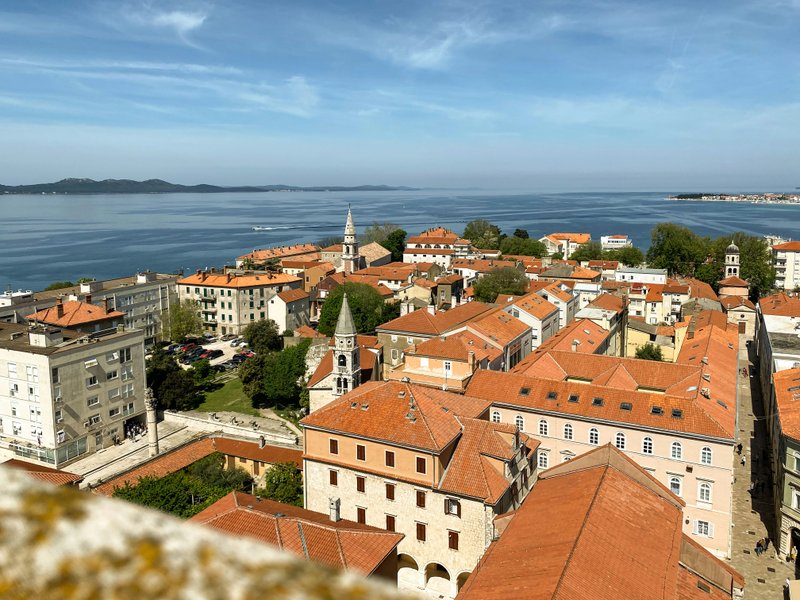
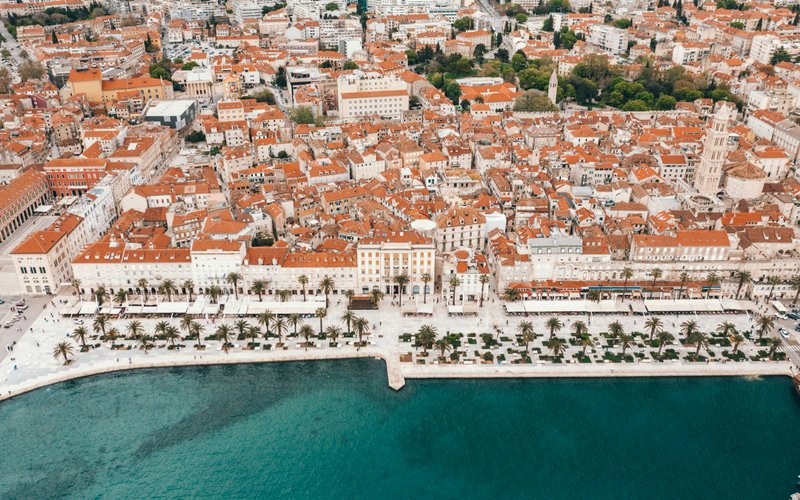
Explore CroatiaThe old town occupies a narrow peninsula jutting into the Adriatic, its Roman forum and medieval churches framed by Venetian ramparts now inscribed on the UNESCO World Heritage list. Kalelarga, the main limestone-paved street, runs the length of the peninsula past St. Donatus Church and the Cathedral of St. Anastasia, while the Sea Organ on the western promenade translates wave patterns into ambient music at sunset. The Greeting to the Sun installation nearby draws evening crowds watching solar-powered lights animate the waterfront.
Beyond the fortified old town, the Borik district to the northwest offers pine-shaded beachfront properties, and the Puntamika neighborhood provides quieter residential charm with direct sea access. The indoor market near the harbor supplies local pršut, Pag cheese, and maraschino cherries — ingredients that anchor the regional cooking found in konobas lining the backstreets. Ferry connections to Ugljan, Pašman, and the Kornati archipelago make the city a practical base for island-hopping along this stretch of the Croatian coast.