


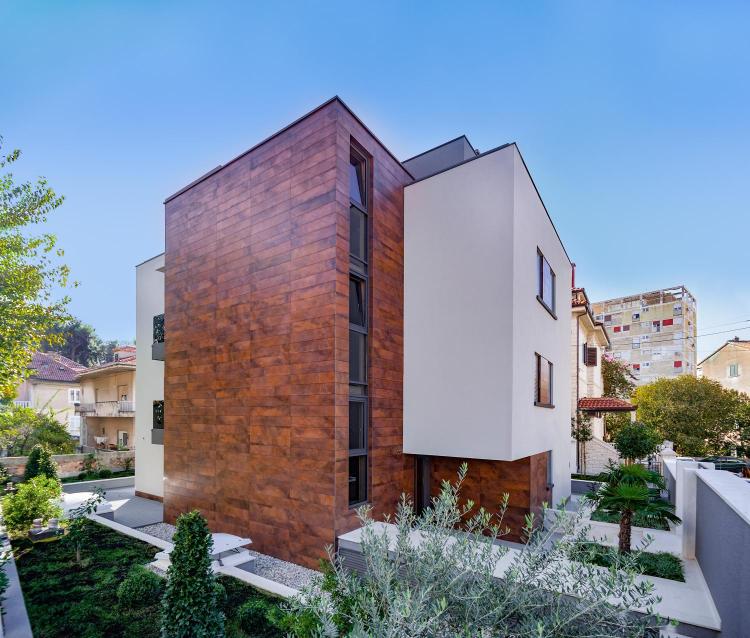
A ten-minute walk from Diocletian's Palace, this purpose-built apartment-hotel occupies a tranquil residential quarter of Split. Five generously proportioned suites—each with private kitchen—accommodate two to six guests, making the property particularly suited to families or extended stays. A compact spa and attentive concierge service complete the offering, delivering understated luxury without the formality of traditional hotels.
Split Travel Guide: Best Hotels, Restaurants & Experiences 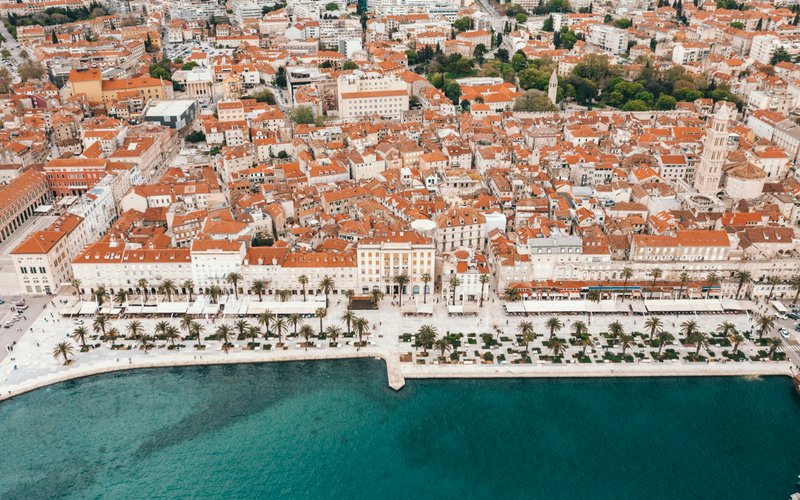
Explore Split
Hotels (4)
Restaurants (5)
Where to Stay

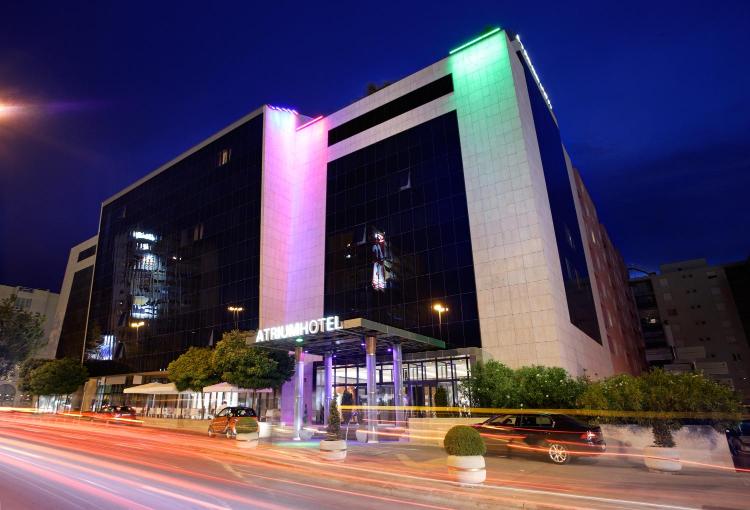
A contemporary high-rise in Split's business quarter, the Atrium delivers generously proportioned rooms and a wellness centre anchored by Finnish sauna, Turkish steam room, and serious gym facilities. Families find practical comforts in interconnecting rooms with cots on request, while the on-site restaurant satisfies guests who prefer not to venture out after long travel days.

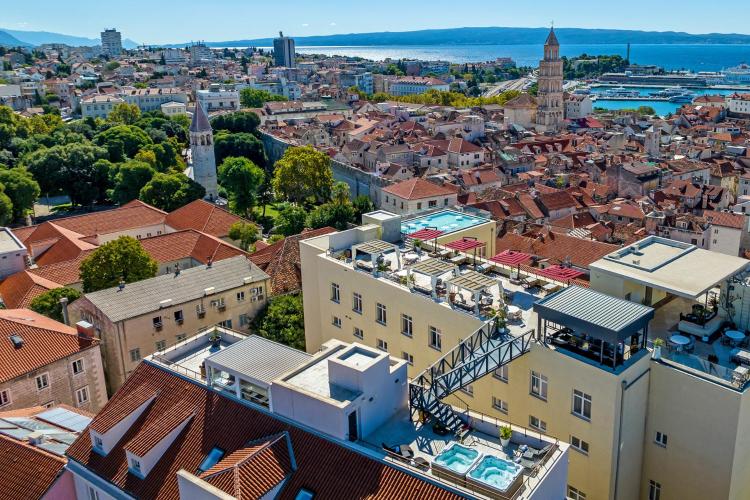
Steps from Split's Unesco-listed Old Town, the Cornaro Hotel delivers a polished urban retreat across 158 rooms. Two restaurants spill onto courtyard terraces for alfresco dining, while the rooftop bar—complete with splash pool and whirlpool—commands sweeping views over the city. A basement wine cellar adds vinous appeal, and pet-friendly policies welcome four-legged companions with dedicated amenities.

Occupying a fourth-century structure within Diocletian's Palace, this intimate heritage hotel delivers front-row views of Saint Domnius Cathedral from its street-facing rooms. Classical interiors and a bed-and-breakfast format create an atmosphere suited to couples seeking proximity to Split's ancient core. The location—on a quiet lane steps from the palace's central square—rewards guests with an unmatched sense of place.
Where to Eat

★ Michelin
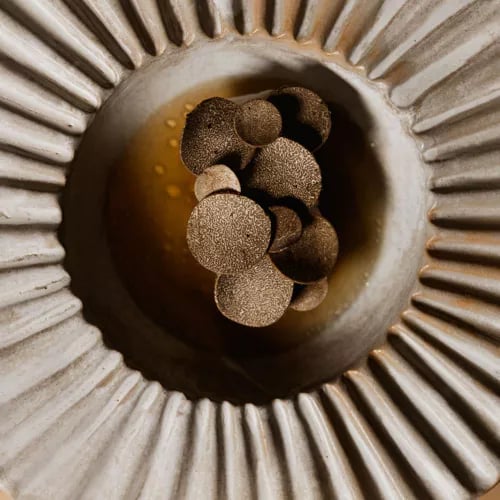
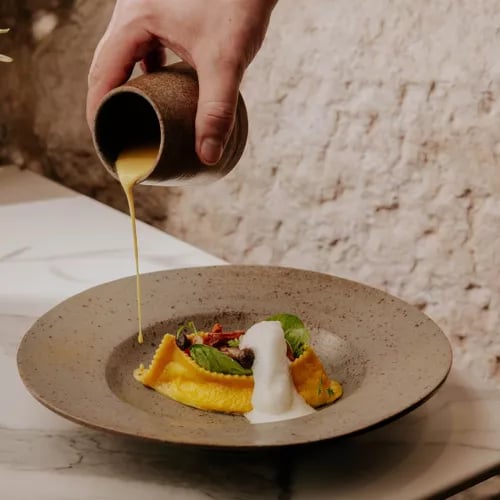
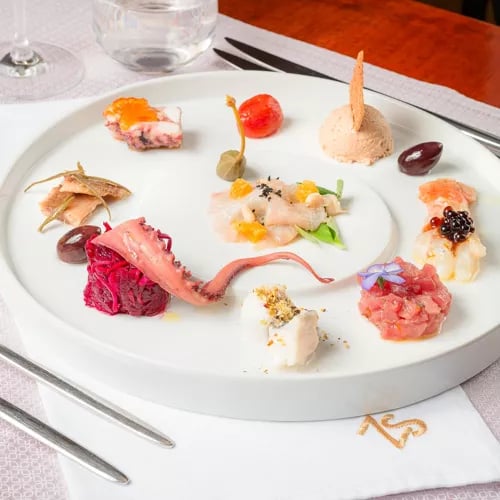
An L-shaped counter wraps around an open kitchen where chefs present each course personally, explaining its origins and inspiration. The Michelin-starred menu draws almost exclusively from the Adriatic and Croatian hinterland, with bread, butter, and fermented preparations all made on-site. Fish and meat age in glass-fronted refrigerators visible from every seat—a transparency that defines both philosophy and flavor.

Michelin Selected
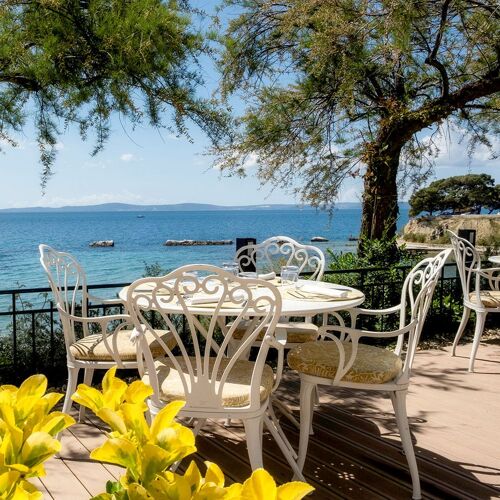
Just beyond Split's historic core, Dvor commands a shoreline position where a leafy garden terrace meets the Adriatic. The family-run kitchen centers on a wood-fired grill, turning the day's catch—displayed fresh at the entrance for diners to select—into straightforward Mediterranean plates. A carefully assembled wine list and unhurried service complete an afternoon or evening defined by coastal simplicity rather than ceremony.

Michelin Selected
An unmarked door at the edge of Diocletian's Palace leads to ZOI's rooftop revelation: a panoramic terrace suspended above Split's harbor. The kitchen delivers youthful, assured cooking that threads Mediterranean brightness through Croatian tradition with Michelin-recognized precision. A compact wine list rewards the curious, with staff guiding diners toward lesser-known regional bottles that match the view in character.

Michelin Selected
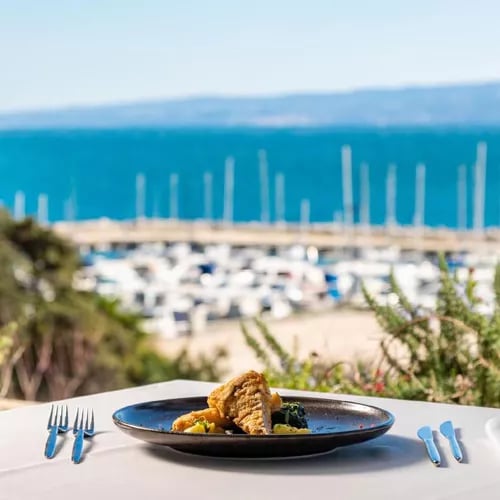
Perched above the ACI Marina, Zrno Soli commands sweeping views of Split's ancient skyline and bobbing sailboats below. The kitchen celebrates Adriatic fish with creative Mediterranean preparations—diners choose their catch directly from a well-stocked display case before it reaches the plate. Execution remains vibrant and precise throughout, while house-made desserts provide a satisfying finale to an unhurried waterfront meal.

Michelin Selected
Perched above the Adriatic, Kadena commands one of Split's most dramatic dining terraces, where panoramic sea views accompany platters of glistening fresh fish displayed on ice. The Mediterranean kitchen excels at generous sharing plates designed for two, while an unexpected sushi selection adds contemporary range. A thoughtfully assembled wine list featuring Croatian and international bottles, plus rare cognacs and whiskies, rewards those who linger.

Michelin Selected
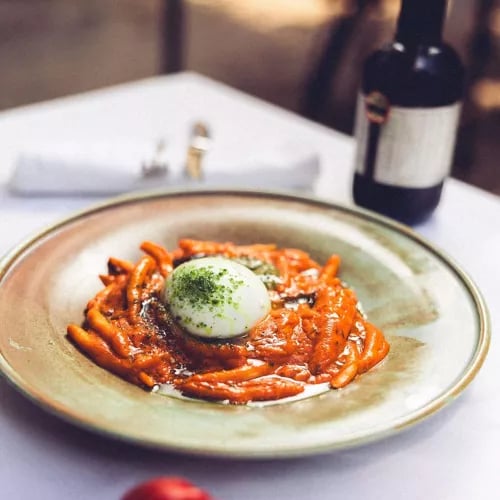
The name Šug—Croatian for sauce—signals the kitchen's priorities at this relaxed Dalmatian table set away from Split's tourist bustle. Generous plates of regional meat and fish arrive dressed in rich, carefully built sauces that nod toward nearby Italian traditions. Summer dining moves to a small inner courtyard, adding quiet open-air charm to an already appealing Mediterranean address.

Bib Gourmand
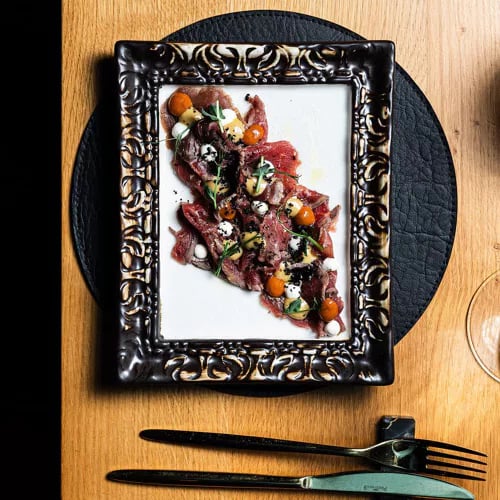
Tucked down a quiet alley near Split's central square, K.užina rewards those who find it with a Bib Gourmand-recognized kitchen where regional Croatian flavors meet modern technique. The talented chef works an open kitchen, sending out generous, thoughtfully composed plates at prices that genuinely impress. A large courtyard terrace provides the ideal setting—central yet peaceful—while attentive service completes an experience calibrated for relaxed, unhurried dining.

Michelin Selected
Chef-owner Mario Omrčen runs this intimate address in Split's bustling Trstenik quarter, where colorful, refined interiors set the stage for modern Mediterranean cooking. His plates emphasize textural contrasts and carefully calibrated flavors, paired with a wine selection spotlighting lesser-known Croatian estates. A covered terrace extends the season for those warm Adriatic evenings, while attentive service keeps the atmosphere relaxed yet polished.

Michelin Selected
Split's beloved Konoba Fetivi earns its Michelin Plate through rigorous simplicity: daily market runs dictate menus of Mediterranean fish and robust Dalmatian meat dishes, prepared without pretense in an immaculate dining room. The kitchen's commitment to freshness extends to dessert, where a signature dried fig and walnut cake offers a perfect regional finish. Warm, unhurried service completes the picture.

Michelin Selected
Down a narrow lane in Split's old town, Zinfandel runs from morning coffee through candlelit dinners accompanied by live music. The kitchen channels Dalmatian traditions through seasonal, market-driven plates that showcase the region's coastal larder. A thoughtfully assembled Croatian wine list—some fifteen selections poured by the glass—rewards exploration. Michelin Plate recognition confirms the bistro's consistent, confident cooking.
Frequently Asked Questions
Which Split neighbourhood offers the most atmospheric stay?
+
The Varoš district west of Diocletian's Palace retains its old fishing village character with narrow stone staircases, family-run konobas, and small hotels converted from traditional Dalmatian houses. For those preferring proximity to historic sites, staying within the palace walls places you steps from the Peristyle and the Cathedral of Saint Domnius.
What local dishes should visitors seek out in Split?
+
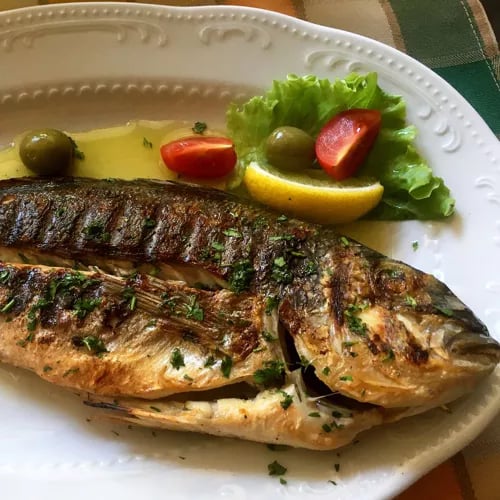
Peka deserves attention — lamb or octopus slow-roasted under a domed iron lid with potatoes and herbs, typically requiring advance ordering. Soparnik, a Swiss chard pie from the Poljica region, appears at traditional bakeries. The fish markets along the harbour supply restaurants with catches like orada (gilt-head bream) and škampi, best enjoyed grilled with olive oil and lemon.
When is the best time to visit Split?
+
May and late September offer warm swimming temperatures without peak summer crowds. The Riva promenade fills with locals during evening korzo strolls, and restaurant terraces remain pleasant into October. Summer brings the Split Summer Festival with opera and theatre performances in palace courtyards, though accommodation books quickly.
Nearby Destinations
Explore Croatia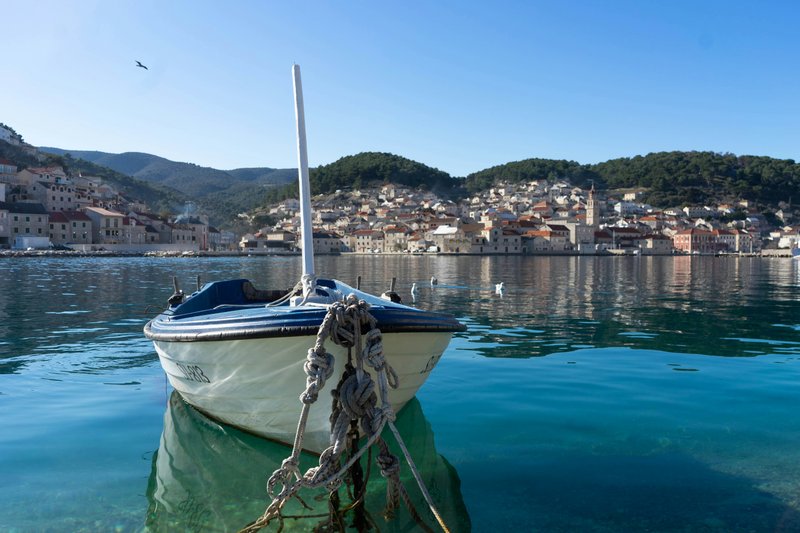




Split
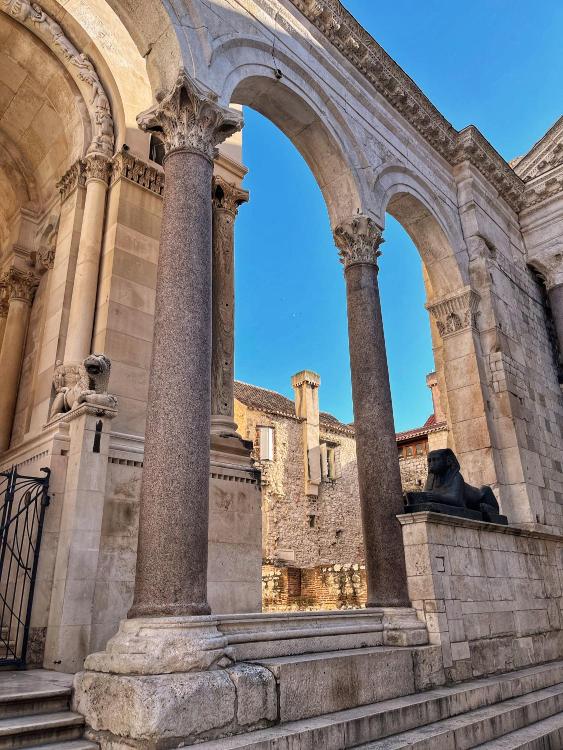
Diocletian's Palace forms the city's beating heart — a fourth-century Roman complex where ancient cellars now house cocktail bars and limestone walls frame contemporary interiors. Hotels here occupy converted medieval townhouses along marble-paved streets, their rooftop terraces overlooking the cathedral bell tower. The Riva promenade stretches west from the palace, lined with palm trees and café awnings, while the Marjan peninsula offers a quieter alternative with properties set among pine forests and swimming coves.
The dining scene draws on Dalmatian coastal traditions: grilled fish from the morning catch at Peškarija market, peka slow-cooked under iron bells, and pršut cured in the mountain winds of the hinterland. Restaurants cluster along Šperun street in the Varoš quarter and spill onto the palace's Peristyle square. Coffee culture runs deep — locals take their morning ritual seriously at neighbourhood spots where espresso comes with a view of fishing boats or Roman columns.