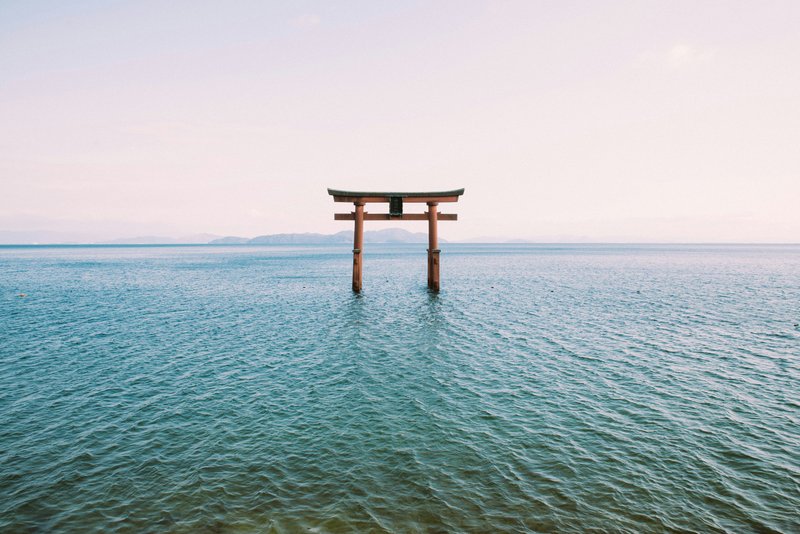
A Stay at Hotel Shisui to Discover Nara at Its Finest


In Nara, Japan reveals itself in a rare balance of ancient temples, peaceful forests, and free-roaming deer, with that precious feeling of being close to the essential without being swept up in the bustle. Opened in summer 2023, Shisui sits within a protected district, surrounded by listed sites, and offers a more intimate way to discover the former capital: heritage restored with tact, contemporary lines, rooms facing the greenery, thermal spring baths, Nara-inspired dining with a French touch, a spa using local herbs, and daily rituals such as champagne at dusk. Follow our account of this discreet address!
Free-Roaming Deer and Ancient Temples
Nestled at the gateway to Nara Park, Shisui, a Luxury Collection Hotel, Nara offers a dream starting point for exploring on foot one of Japan’s most foundational cities. A former capital and cradle of Japanese culture, Nara flourished early as a political, spiritual, and artistic center, enriched by the exchanges that reached this very place. Just steps from the hotel, vast expanses of greenery and free-roaming deer create an almost unreal setting, before leading naturally to the city’s great symbols: Todai-ji Temple and its monumental Buddha, then Kasuga Taisha Shrine, famed for its centuries-old lanterns. For a quiet interlude, Yoshikien Garden offers a pause of elegant serenity, a graceful counterpoint to the prestige of the sanctuaries.

What makes the location exceptional is this immediate proximity to major listed sites, without the sense of being caught up in tourist bustle. Opened in summer 2023, the hotel lies within the protected Yoshikien district, surrounded by World Heritage sites in an environment preserved for its lush vegetation. The layout was designed to limit disturbances and maintain a hushed, almost secluded atmosphere despite its centrality. In a city many visit only for the day, spending the night changes everything: in the evening, when the paths empty, and at dawn, when temples and forests reveal themselves before the crowds arrive, Nara discloses a more intimate, deeper, and infinitely more memorable dimension.

Restored Heritage, Modern Desire: A Style for Today’s Travelers
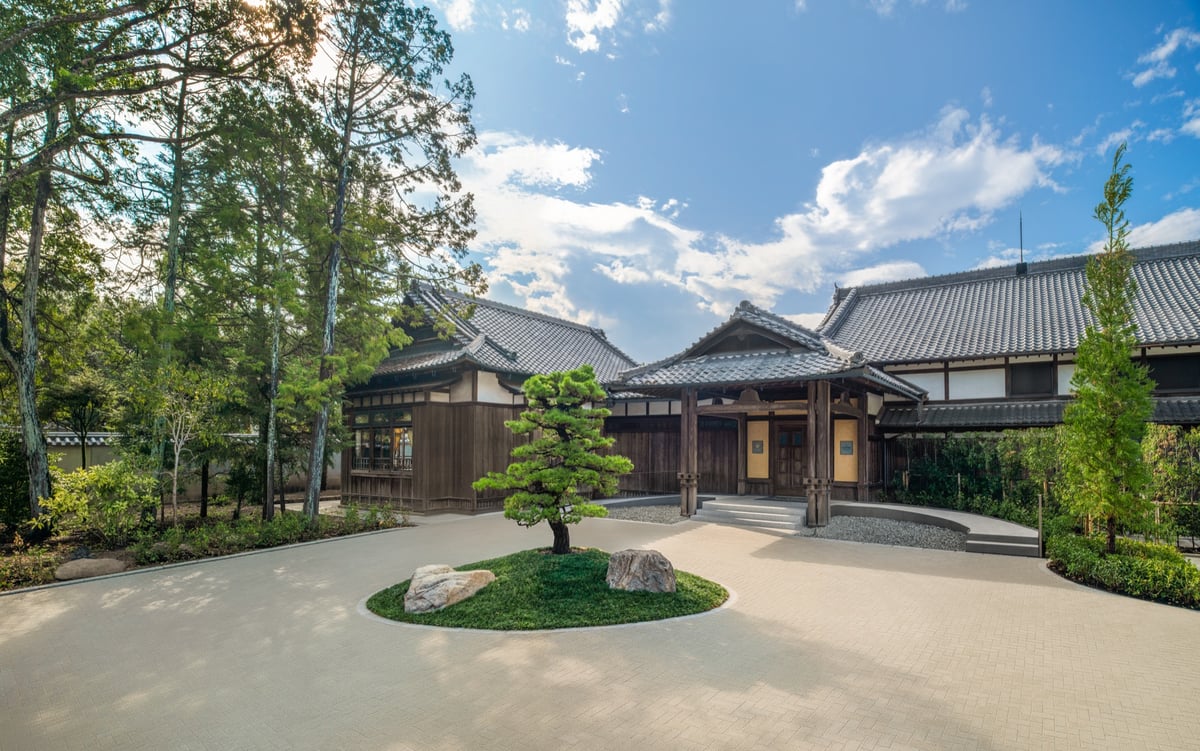
Across three hectares, the property follows a land structure still legible from the Edo period, composing a whole in which each building tells a chapter of Nara’s story. The former governor’s residence, completed in 1922, now houses the reception, restaurant, and lounge in a low wooden silhouette, faithful to the spirit of the Taisho era and to that “modern Japanese architecture” that blends Western codes with local traditions. Its covered gate, with confident Japanese classicism, marks the entrance as a ceremonial gesture. A few steps away, the former Seson-in, a rare remnant of a Kofukuji sub-temple dating from the late Edo period, has become a peaceful cafe, while the perspectives extend toward Yoshikien Garden, its historic elements from 1919, and its thatched-roof tea pavilion, like a delicate punctuation mark.


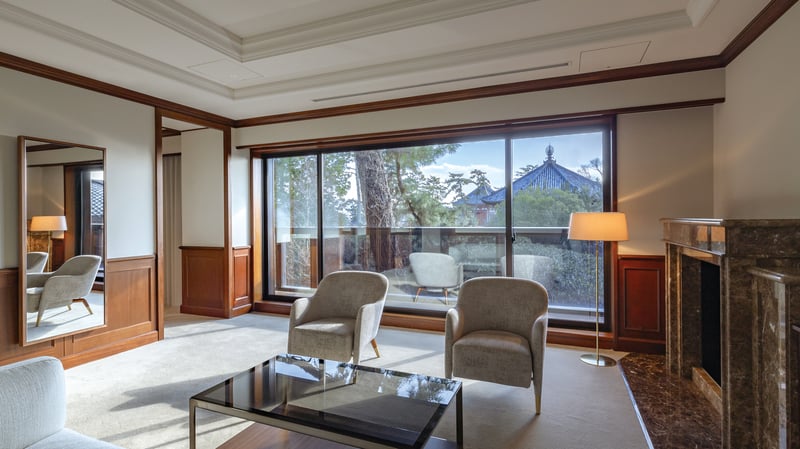
The restoration preserves the soul of the place while making it intensely desirable. The Room of Certification, where Emperor Showa signed the ratification documents of the San Francisco Peace Treaty, remains intact, an intimate and solemn landmark within the guest journey. In counterpoint, the accommodation building, resolutely contemporary, discreetly reprises Nara’s markers — a serene tiled roof, walls revealing thick columns — to create a better dialogue with what already exists. The rooms and suites, as well as one of the restaurants, bear the signature of Kengo Kuma and Associates: clean lines, a sense of emptiness and light, and large panoramic picture windows opening onto the gardens, an elegant way to inhabit time rather than simply contemplate it.


43 Keys with Only the Garden as a View
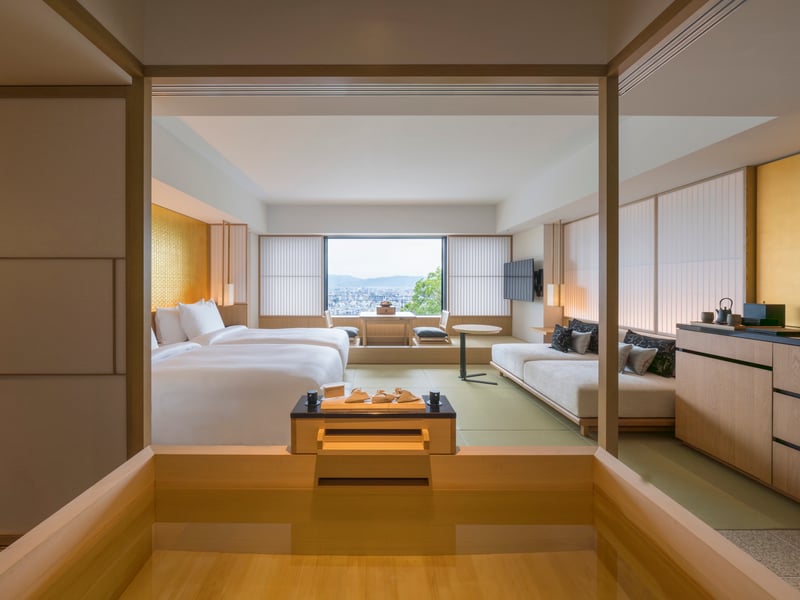
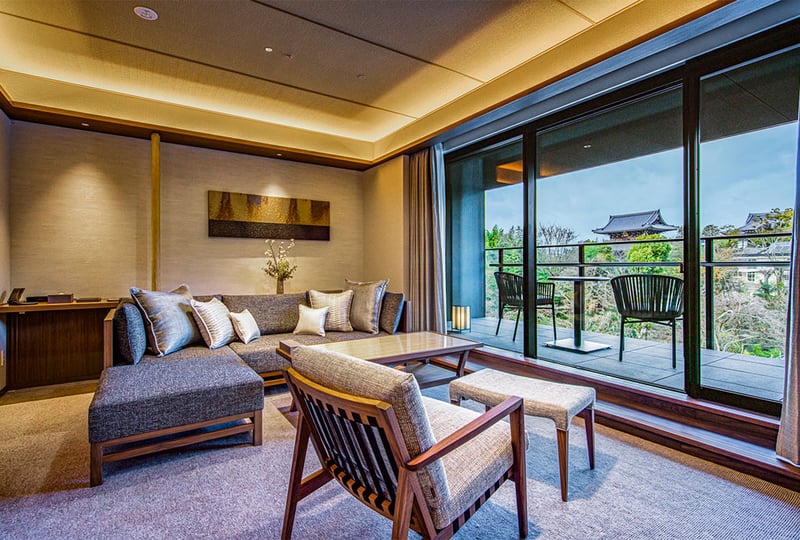
With only 43 rooms and suites, the hotel chooses rarity, and this is immediately felt in the more hushed atmosphere and in the quality of the naturally attentive service. Vast picture windows let in abundant light and frame the lush vegetation, while the volumes (from 40 to 98 sqm) favor open layouts, high ceilings, and a pleasant sense of space. The whole conveys a decidedly contemporary elegance while remaining deeply Japanese in spirit: clean lines, natural woods, soothing materials, and touches of local craftsmanship punctuated by traditional artworks from Nara. For well-being, 23 accommodations offer a private hot spring bath, indoors and fed by onsen thermal water, with some also featuring an outdoor version.


We stayed in a Superior Room (46 sqm) with a king-size bed and garden view, particularly successful in its layout. A lounge / relaxation area, distinct without ever partitioning the room, invites you to slow down from the moment you arrive. The true highlight remains the spectacular view of the Japanese garden, which accompanies every moment of the day like a living backdrop and gracefully reveals the passage of the seasons, from spring’s young shoots to autumn’s blazing hues. Between modern comfort, Japanese spirit, and a spacious, elegant bathroom, this room offers an ideal retreat for two, both serene and deeply restorative.


Japanese Breakfast with a View
Breakfast, typically Japanese, can be enjoyed in-room for a gentle awakening or at Suiyou restaurant for a completely different atmosphere, always imbued with elegance. The menu shown is only an example, as the composition changes daily according to arrivals and the seasons; it may begin with a series of small appetizers such as boiled vegetables, a rolled omelet lifted with sake lees, fruit compote, Yamato konnyaku with sesame sauce, marinated persimmon, or simmered tofu. The main dish, as precise as it is comforting, may showcase grilled fish, an omelet topped with a sauce thickened with Yoshino arrowroot, local Hino-Hikari rice, or roasted tea porridge. A miso soup with Yamato pork and a few pickles complete the ensemble, in a balance that is both nourishing and delicate.

Nara Influence and a French Touch for Dinner
At Sushi & Bar Shousou, the art of sushi is experienced at the counter, in the hushed atmosphere of a renovated storehouse from the former Nara governor’s residence. Here, Japanese tradition opens itself to controlled creativity, driven by the excellence of seasonal ingredients. The tasting menu explores French-inspired techniques, particularly declension, which reinterprets a single ingredient through several expressions — in sushi as well as individual plates — to reveal textures, temperatures, and cooking methods with contemporary elegance.


In the same spirit, just a few steps away, Suiyou restaurant invites guests on a gastronomic journey rooted in Nara’s history, shaped by Silk Road exchanges. Set within a restored and reimagined guest room in this same historic 1922 residence, it cultivates serene refinement, where the plate enters into dialogue with the setting. Through the window, the garden offers a changing tableau with the seasons, extending the experience in a delicate harmony between landscape, local traditions, and a sense of detail.

Our TOKIKA dinner menu began with rice porridge infused with Yamato tea, served in a small porcelain cup whose pearly softness announced a silky, almost comforting texture, with a few grains still perceptible beneath a fine veil of steam. Alongside it, a bite of Japanese pickles provided the essential counterpoint: clear acidity, delicate crunch, and a saline note, like a spark that awakens the palate and prolongs the dish’s quiet elegance.

The meal continued with an assortment of flavors presented like a small seasonal landscape, where each bite combined Japanese precision with subtly French indulgence. Lentil and foie gras Matsukaze, in tender cubes, brought toasted, earthy depth, while cabbage sauerkraut lifted with Narazuke pickles added delicate acidity and a fermented note. Tempura of crispy rice and Japanese butterbur shoots introduced an airy contrast, at times crowned with black pearls for an iodized touch. Then, a papillote of bamboo shoot with Kinome butter evoked vegetal elegance, softened by a note of strawberry and tapioca in jelly. Finally, seasonal vegetables accompanied by plum vinegar mayonnaise tied everything together in a clean, fruity, refreshing finale.

The soup arrived like a precious little casket: a clear, amber broth, barely disturbed by the heat, enveloped a delicate piece of sea bream, presented here without artifice, simply highlighted by the purity of the jus.

The next dish appeared as a refined composition, served on a Japanese plate with precious motifs, where salted tuna revealed pearly, firm flesh, lifted by the iodized depth of a rapeseed blossom marinated with kombu. A few vegetal touches and discreet condiments (a point of wasabi, a crisp herb, delicate pickles) brought relief and freshness, while a sea urchin soy sauce, served on the side, wrapped the whole in silky, intensely marine salinity.

The Asuka-Nabe appears here as an elegant Franco-Japanese nod: the stew is sealed beneath a lacquered puff pastry dome, deeply golden, whose crisp ridges promise a clean break under the spoon. This individual pie-style presentation transforms the local Nara dish into a more “bistronomic” experience: you break the buttery crust to release the warmth of a creamy, comforting broth, while the chopsticks beside it recall the recipe’s Japanese roots, between finesse, indulgence, and attention to detail.

Next came a chic, perfectly controlled woodland bite: on a small plate, broad crisp leaves held an assortment of wild vegetables and fresh herbs, punctuated by tender shoots, jade-green broad beans, a lightly glossy fiddlehead fern, and a few floral notes that brought color and delicacy. To extend this vegetal momentum, cocktail-style dashi arrived in a glass topped with a fine foam, like an iodized sip to enjoy between two textures. The whole played on freshness, elegant bitterness, and distinctly Japanese umami depth, with the feeling of a precious tasting experience, at once minimalist and intensely aromatic.

The Harushika sake granita with white kombu leaf then arrived like a precious miniature, served in delicate masu-style wooden cubes set on a screen used as a tray, evoking cherry blossoms in bloom.

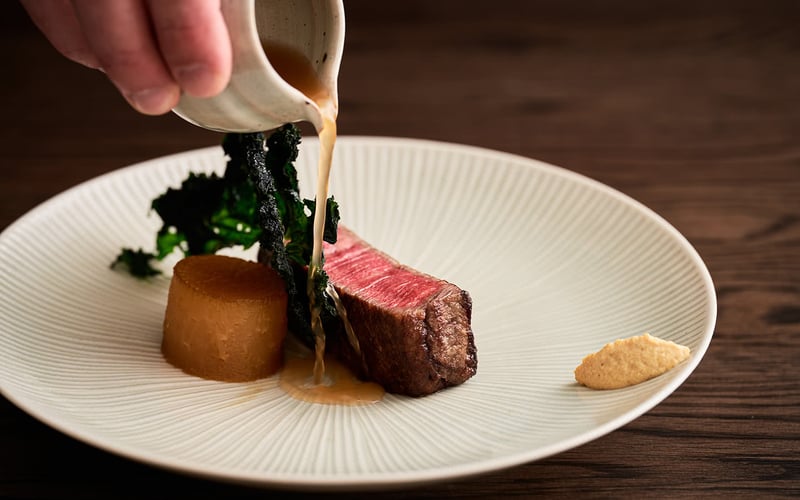
Roasted Yamato Beef with rice koji sauce and star anise-infused consomme presented itself as a Japanese composition of hushed elegance, served on a large matte black tray where every element breathed precision. A slice of roasted beef, pink at the center and finely glazed, was topped with delicate filaments that accentuated its sensation of lightness, while alongside it came small accompanying bites with contrasting textures, between vegetal notes and more indulgent touches.

Local noodles with Sakura shrimp and grated yam embraced minimalist elegance. Following the beef and its fermented notes, a nest of fine noodles, delicately coated and crowned with strips of nori, awaited immersion in an ivory sauce, creamy and satin-smooth, punctuated by marine notes and aromatic touches. The grated yam brought its almost airy softness and velvety texture, while the condiments (a spicy accent, a discreet powder) allowed the balance between freshness, umami, and liveliness to be adjusted, for a bite that was light, refined, and profoundly local.

Dessert finally appeared as a fresh bite, crowned with a quenelle of local milk ice cream, creamy white and satin-smooth. The strawberry compote brought tangy sweetness, while a few delicately cut fruits, gleaming with juice — citrus, grapes, and dark berries, with a more exotic note — added relief, color, and a play of textures between melting, juicy, and frozen. Light and impeccably composed, the whole was enjoyed by the spoonful as a refined finale, simple in intention and luxurious in execution.

The SUI Spa
At SUI Spa, well-being is experienced as a rare ritual, where Japanese heritage meets hushed luxury in a building with the Western charm of the Showa era. Through a personalized consultation, therapists compose holistic treatments using Japanese and Chinese herbs grown in Nara, intended to rebalance qi, blood, and water. To extend the experience, Shisui offers two private spas, Haku-Ruri and Kon-Ruri, each with an outdoor bath fed by the natural Suzaku-no-yu spring, a light water reputed to soothe stiffness, chronic pain, and fatigue, for an interlude of absolute serenity reserved for guests.

Every Evening, Champagne Becomes a Ritual
Every evening, Shisui offers all its guests a moment around champagne, an elegant interlude that fully embodies the spirit of omotenashi. At Cafe Zeze — nestled in a Kofukuji sub-temple dating from 1804 — guests can choose between Joseph Perrier Brut Champagne and a non-alcoholic Duc de Montagne Rose, with other alcohol-free options also available, all accompanied by savory amuse-bouches. Inside, large picture windows open onto a lush garden and create that rare feeling of being connected to nature without leaving the comfort of the lounge; outside during the summer season, the experience takes on an even more distinctive dimension as the sun begins to set. Very popular, the venue fills quickly, but the welcome remains warm and perfectly orchestrated, with attentive service that turns this daily appointment into a ritual.


Nara’s Art de Vivre, Daily Experiences Orchestrated by the Hotel
For a delicate immersion into the soul of Nara, the hotel orchestrates a selection of cultural activities that vary by day: an ink-making workshop — Nara being one of Japan’s great cradles of Sumi ink — a guided walk through Nara Park, or morning yoga classes in the Yoshiki-en gardens just next door. I experienced a rare moment there during a 7 a.m. meditation and stretching session: the garden, still empty of tourists, seemed to belong only to us, in an almost sacred silence. Composed of a pond garden, a moss garden, and a flower garden dedicated to the aesthetics of the tea ceremony, Yoshiki-en unfolds its perspectives with Mounts Kasuga and Wakakusa in the background, for a refined interlude close to Japanese traditions.


My Review
Staying at Shisui means adopting another rhythm for Nara: that of paths emptying in the evening, gardens still silent at dawn, and natural proximity to temples and shrines without enduring the crowds. Between heritage restored with tact and contemporary lines, the address cultivates a hushed luxury made of light, materials, and landscape, found in the room facing the garden, the thermal spring baths, precise gastronomy where Nara dialogues with a French touch, and a spa conceived as a ritual. Champagne at dusk and cultural experiences, orchestrated with discreet precision, complete the stay with an intimate and lasting character.
What I loved:
- The magnificent view from the room, open to nature and completely private. The place is very quiet, with a countryside feel, while being ideally located in the heart of Nara, close to the main points of interest.
- The charm and history of the setting, with beautiful historic buildings used as the hotel’s common areas.
- The excellent gastronomic offering, featuring authentic Japanese cuisine with a few original and contemporary touches.
What I regretted:
- Communication in English with reception, which was sometimes a little difficult.
Practical Information
- Superior Room at €570 per night in March 2026.