


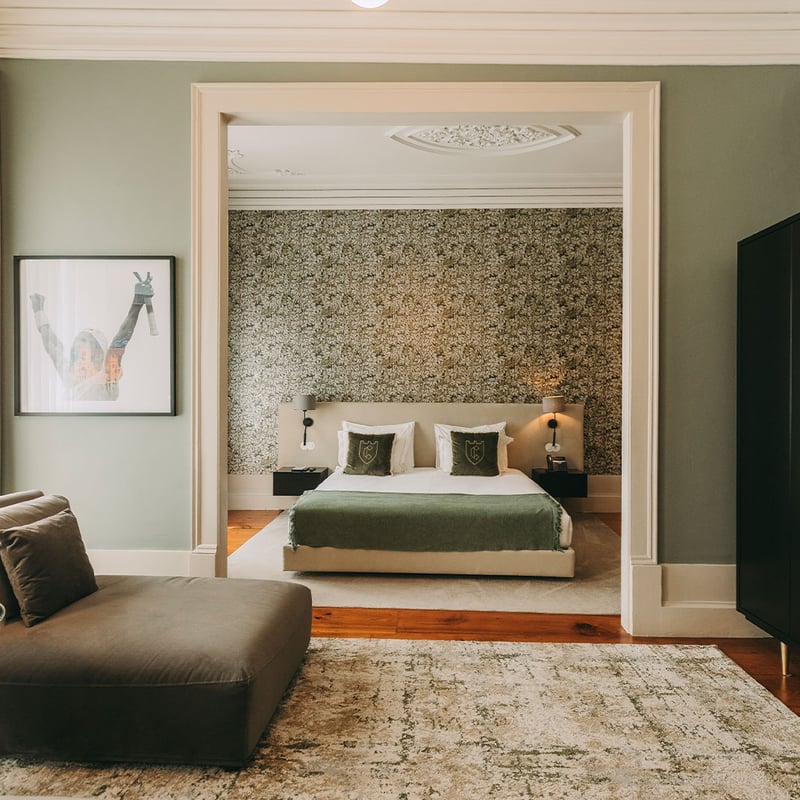
An 1827 palace turned boutique hotel, Torel Royal Court preserves its original stucco ceilings and noble proportions across 18 spacious rooms—each bearing the name of a city linked to Portuguese tennis champion João Sousa. Guests drift between the outdoor pool, on-request spa treatments, and the historic streets of Guimarães just beyond. Dogs are welcome for a fee, adding to the relaxed aristocratic atmosphere.
Guimarães Travel Guide: Best Hotels, Restaurants & Experiences 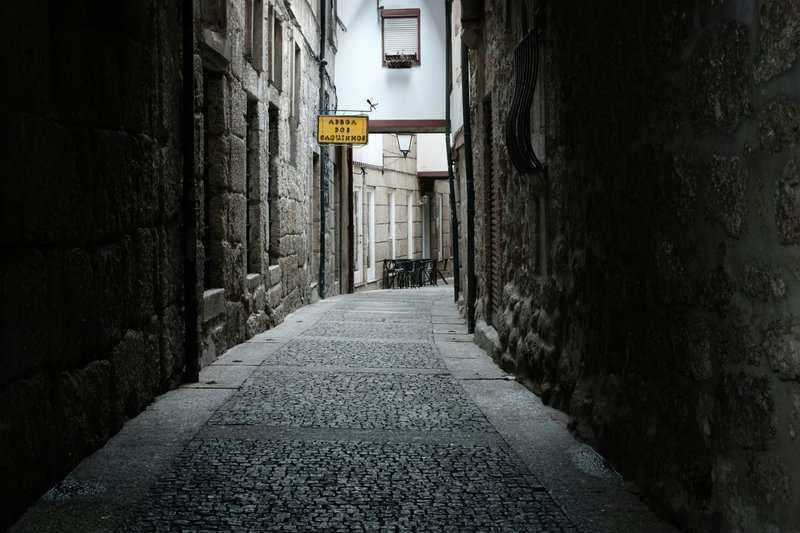
Explore Guimaraes
Restaurants (5)
Where to Stay
Where to Eat

★ Michelin
Chef António Loureiro's glass-walled kitchen anchors this one-Michelin-starred address in Guimarães' UNESCO-protected medieval quarter. His Equilíbrio tasting menu—available in six or nine courses—channels traditional Portuguese cooking through a modern sensibility, with signature dishes like butter-soft veal paired with cauliflower demonstrating his reverence for pristine ingredients. Upstairs, a private dining room opens onto a terrace fragrant with culinary herbs.

Michelin Selected
Stone walls and wooden-beamed ceilings set a historic stage for Chef Vítor Matos's modern cuisine, executed daily by Chef Liliana Moura within Hotel da Oliveira. The kitchen draws on Portuguese tradition while threading Mediterranean influences through two tasting menus—Raízes and À Descoberta—that reward travelers seeking creative cooking rooted in regional identity, steps from the medieval Church of Nossa Senhora da Oliveira.

Bib Gourmand
From a terrace overlooking the Church of São Gualter, Norma delivers traditional Portuguese cuisine through an inventive lens. Chef Miguel Marques, shaped by kitchens in Zurich, Munich, and Portugal, builds his menu around the concept of human evolution—courses that honor ancestral techniques alongside modern refinement. The seven-course tasting format, paired with well-chosen Portuguese wines, earns a Bib Gourmand for its compelling value.

Michelin Selected
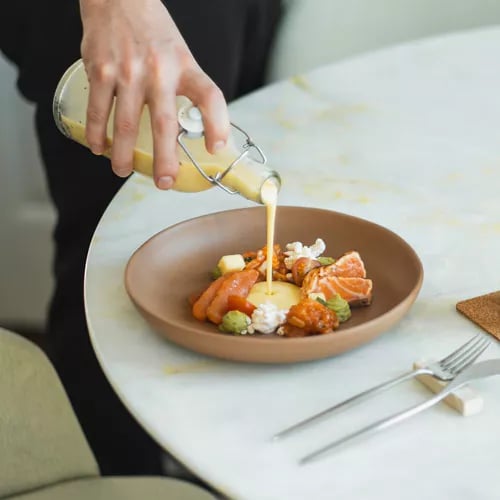
From its third-floor perch on Largo do Toural, Restaurant 34 delivers panoramic views of the Basilica of St. Peter alongside a Michelin Plate menu that roams confidently across continents. Fresh burrata shares billing with Japanese-inflected salmon toro, while heartier plates—lamb paired with chestnut purée, slow-cooked pork ribs—anchor the offering. Warm wooden interiors and an unhurried pace suit leisurely, view-soaked evenings.

Michelin Selected
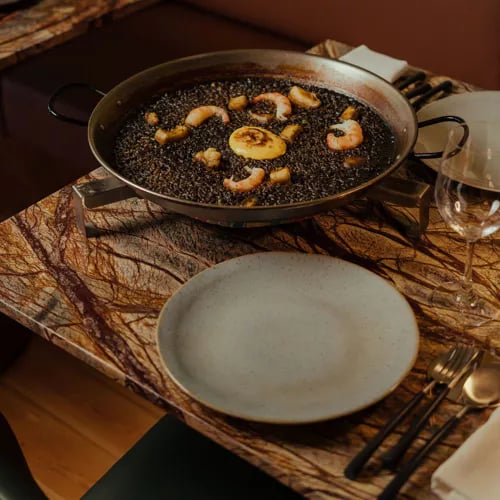
Within a UNESCO-protected building that preserves fragments of Guimarães' medieval ramparts, chef Christian—trained at Paris's École Lenôtre—and his partner Bárbara deliver contemporary Mediterranean cooking with French inflections. The bistro-style room maintains an informal ease, though a dedicated tasting menu reveals more ambitious intentions. Seasonal Portuguese ingredients anchor dishes like their signature beef tartare and richly layered rice preparations.

Michelin Selected
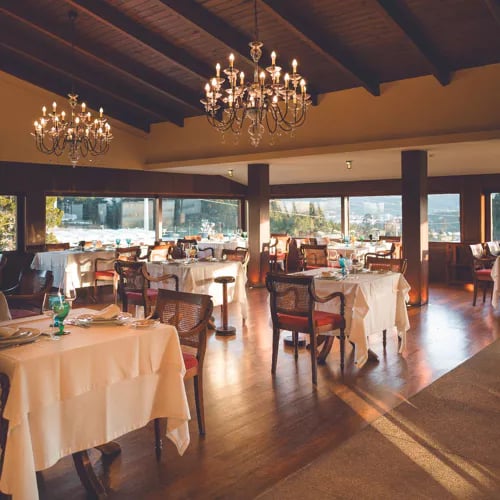
A suspended fireplace anchors the dining room at this family-run address near Guimarães, where father and son Pedro and João Nunes orchestrate a devoted tribute to Northern Portuguese cooking. Generous plates showcase regional tradition with refined touches—the signature figs stuffed with foie gras and bathed in Port reduction exemplify the kitchen's confident hand. Views stretch to the local football stadium, grounding the experience in its terroir.
Frequently Asked Questions
What is the best area to stay in Guimarães?
+
The historic center within the medieval walls offers the most atmospheric setting, with accommodation in converted manor houses and heritage buildings. Properties near Largo da Oliveira and Praça de Santiago place you within steps of the main monuments and restaurant concentration. The Zona de Couros district appeals to those preferring a contemporary setting in rehabilitated industrial architecture.
What traditional dishes should visitors try in Guimarães?
+
Northern Portuguese cuisine dominates local menus. Rojões à moda do Minho features marinated pork with chestnuts and roasted potatoes. Arroz de sarrabulho combines rice with various pork cuts in a rich blood-thickened sauce. Papas de sarrabulho offers a porridge variation. For dessert, toucinho do céu — a dense almond cake — originated in Guimarães convents.
How does Guimarães connect to Portugal's history?
+
Guimarães served as the seat of the first Portuguese count, Henrique de Borgonha, in the eleventh century. His son Afonso Henriques, born here around 1109, became the first King of Portugal after the Battle of São Mamede in 1128. The castle where he was likely born still dominates the hilltop, and the phrase "Aqui nasceu Portugal" — Portugal was born here — marks the city's identity.
Nearby Destinations
Explore Portugal




Guimaraes
The birthplace of Portugal wears its medieval origins without pretense. Guimarães keeps its tenth-century castle and Romanesque churches as working landmarks rather than museum pieces, while the historic center — a UNESCO site since 2001 — remains a living quarter where locals outnumber visitors in the granite-paved squares. The Largo da Oliveira still hosts its weekly market as it has for centuries.
Dining here follows northern Portuguese traditions: tender veal from the Minho region, arroz de sarrabulho, and rojões served in family-run tascas along Rua de Santa Maria. The Zona de Couros, a former tannery district, has been converted into a cultural campus where old industrial buildings now house contemporary restaurants and wine bars pouring Vinho Verde from nearby estates. Evening drinks gravitate toward the arcaded Largo do Toural, where café terraces fill with university students and weekenders from Porto, forty minutes south.