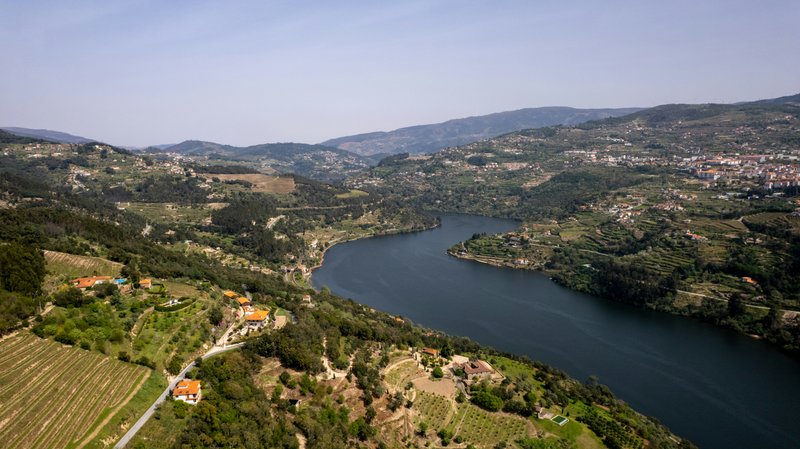
The terraced hillsides of the Alto Douro rise sharply from the river, their schist-walled vineyards carved into the landscape since the eighteenth century when the Marquis of Pombal first demarcated these slopes for port production. Today, historic quintas that once served purely agricultural purposes have opened their doors to guests, their granite manor houses converted into intimate retreats where harvest traditions continue each September. The river itself remains the region's defining feature — a ribbon of water reflecting ochre cliffs and whitewashed estates, navigable by traditional rabelo boats that once carried barrels downstream to Vila Nova de Gaia.
Pinhão sits at the valley's heart, its railway station decorated with azulejo panels depicting vineyard life, while upstream villages like São João da Pesqueira and Foz Côa offer quieter alternatives with views across the UNESCO-protected landscape. Dining here follows the rhythm of the quintas: long lunches on shaded terraces, evening tastings in barrel-vaulted cellars, and regional cooking built on cabrito assado, bacalhau, and the dry white wines that rarely leave the valley. The spa culture draws on thermal springs at Caldas de Aregos and the prevailing philosophy that recovery happens slowly, with a glass in hand.