Skip to content

Cannes

Explore Cannes

Hotels (5)

Where to Stay

Verified
Forbes Five-Star · Verified

Théo Petit's 1920s Art Deco palace faces the Palais des Festivals, its white facade and crimson awnings framing the Croisette's most coveted views. The 450 m² Spa Diane Barrière offers warm-seashell massages, while Fouquet's—under Pierre Gagnaire's direction—anchors the dining. Below, a private beach stretches beneath one of the boulevard's longest jetties, where Mauro Colagreco's BFire serves the Riviera set.

2. Carlton Cannes, a Regent Hotel

Forbes Five-Star

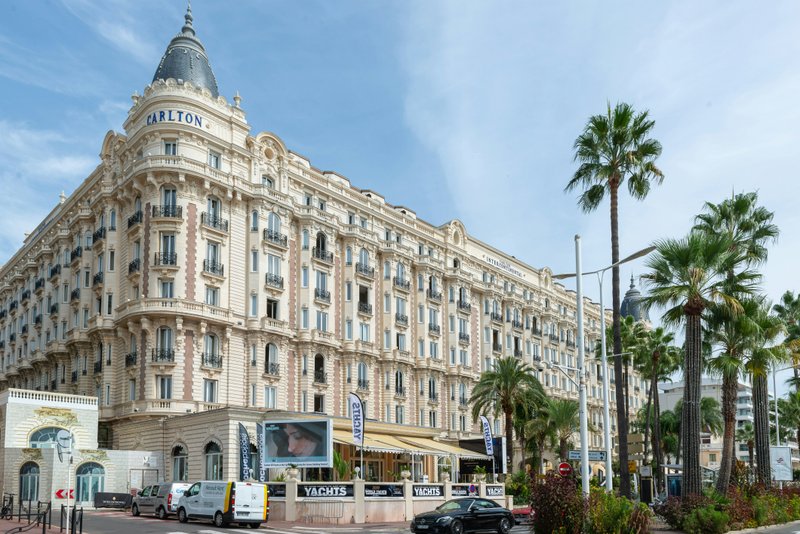
Grace Kelly filmed To Catch a Thief behind this Belle Époque facade, and the Carlton remains the only Côte d'Azur address royalty still frequents. A meticulous restoration by 750 French artisans—including Mathieu Lustrerie, custodians of Versailles' chandeliers—has added Cannes' largest infinity pool within a 22,000-plant courtyard. Seventh-floor suites honor Kelly, Cary Grant, and Sean Connery with Mediterranean panoramas, while the beachside Carlton Beach Club and Anatolian restaurant Rüya anchor the dining scene.

3. Hôtel Martinez

Forbes Five-Star

The Martinez commands the Croisette with its grand ivory Art Deco façade, a landmark that draws film stars and festival crowds each May. Inside, Pierre-Yves Rochon's neo-Deco interiors anchor 410 spacious rooms, while La Palme d'Or holds a Michelin star under chef Jean Imbert. The private beach club, Oasis Spa by Carita with its heated garden pool, and a 12,100-square-foot penthouse complete the picture for travelers seeking cinematic glamour.

4. Hotel Tiara Yaktsa Côte D’Azur (Côte d'Azur)

Perched on the Corniche d'Or cliffs where red porphyry rocks tumble into turquoise waters, this adults-only Relais & Châteaux retreat channels Arabian Nights through moucharabieh screens, carved copper lanterns, and golden silks within a Provençal palace. Just 22 rooms face the Mediterranean or Estérel massif, while L'Or Bleu delivers one-starred cuisine from M.O.F. chef Alain Montigny. An infinity pool and access to the nearby MoYa Beach Club complete the escape.

5. JW Marriott Cannes (France)

Forbes Five-Star

Rising from the site of the original Palais des Festivals, this 263-room property on Boulevard de la Croisette maintains an 825-seat theater still active during May's film festivities. The five-story atrium showcases white Carrara marble with black and gold accents beneath a spiraling golden crystal chandelier. A rooftop pool surveys Mediterranean yacht traffic, while the Sunset Terrace and private beach access complete the cinematic setting.

6. Château de Théoule

1 Michelin Key

A 17th-century soap factory turned coastal château, this 44-room retreat commands sweeping views across the Bay of Cannes from the Esterel Massif. Rooms occupy three distinct structures—including a 1930s Art Deco villa—with suites named for fragrances like Numéro 5 de Chanel, nodding to the building's aromatic past. Chef Francesco Fezza's Mareluna delivers refined Mediterranean-Italian plates, while a private beach and rooftop round out the resort experience.

7. Five Seas

A Design Hotels member steps from the Croisette, the Five Seas channels vintage travel glamour through contemporary art-filled interiors across 45 rooms and suites. The rooftop draws guests upward: an infinity pool heated to 28°C overlooks Cannes, while chef Lori Moreau's restaurant has earned Michelin recognition. Below, the spa complex offers twin saunas, hammam, and five treatment cabins—a refined retreat for aesthetes and cinephiles alike.

8. Ermitage de l'Oasis (Cote d'Azur)

A seafront boutique hotel with marina views in Mandelieu-la-Napoule, the Ermitage de l'Oasis operates as the coastal extension of the Barbossi estate, granting guests access to golf, tennis coaching, and vineyard tours inland. Recently refreshed interiors channel Provençal warmth through art-filled spaces, while the kitchen delivers notably accomplished dining. Families benefit from a pool, dedicated menus, and nearby beach club arrangements.

9. Le Grand Hotel Cannes (Cannes)

Mondrian Cannes commands a prime stretch of La Croisette, its contemporary design aesthetic drawing international travelers seeking both scene and sanctuary. Beyond the beachfront buzz lies a landscaped garden of unexpected tranquility. The private beach club anchors the social experience, while ten interconnecting rooms accommodate families without compromising the property's fashion-forward sensibility.

10. Radisson Blu 1835 Hotel & Thalasso (Cannes)

Perched above Cannes' old port, this four-star property draws an eclectic crowd of design-conscious travelers and young families alike. A rooftop restaurant delivers panoramic harbor views, while the pool and spa provide respite between beach outings. The hotel takes families seriously: connecting rooms, apartment options, complimentary breakfast for under-12s, and an all-day café with leather-cushioned high chairs and dedicated children's menus.

Where to Eat

1. La Villa Archange

★★ Michelin· Relais & Châteaux

Perched in the hills above Cannes, this 18th-century Provençal villa with its linden-shaded courtyard has been Bruno Oger's stage for two-Michelin-starred cuisine since 2011. The Breton-born chef bridges his native coastline with the Mediterranean, pairing Groix abalone with Provençal artichokes, Alpilles lamb with technical precision. His chef's table offers front-row seats to watch this cross-regional dialogue unfold.

2. Bessem

★ Michelin

Trained under Pierre Gagnaire, Marc Meneau, and Michel Del Burgo, chef Bessem Ben Abdallah now commands his own kitchen with confident precision. The one-star table occupies a town house where plane trees shade a fountain-cooled terrace. His modern Mediterranean cooking—catch of the day lifted by yuzu-kombava broth and lovage—draws on Tunisian single-estate olive oil and eggs from his own hens. Two seasonal surprise menus reward curious palates.

3. L'Or Bleu

★ Michelin

Perched above the Mediterranean at Tiara Miramar Beach Resort, this one-starred table delivers commanding views of the Estérel massif alongside chef Alain Montigny's refined seafood compositions. The Meilleur Ouvrier de France 2004 demonstrates exacting technique through dishes like roasted langoustine paired with beetroot tartare and raspberry, or line-caught turbot with lemon-marinated courgette and sheep's-milk cheese—Mediterranean precision with creative flourish.

4. La Palme d'Or

★ Michelin

Inside the Hôtel Martinez, chef Jean Imbert orchestrates a one-starred Mediterranean table where cinema obsession permeates every detail—wood panelling evoking golden-age yachts, authentic film props lining the walls, menus designed as storyboards. Wild gamberoni from the Gulf of Genoa arrive with mango and kumquat sauce vierge; John Dory comes barbecued and glazed alongside rocket pesto. During the Film Festival, the room fills with industry luminaries.

5. Mareluna

★ Michelin

A 17th-century soap factory turned luxury hotel provides the dramatic setting for chef Francesco Fezza's one-starred cuisine. Trained under Alain Ducasse at Le Meurice and alongside Ryuji Teshima at Pages, the Italian chef brings Mediterranean ingredients into dialogue with Asian technique—ikejime-matured yellowtail with asparagus yuzukosho, osso buco pasta swimming in Thai consommé. The terrace surveys the Bay of Cannes, Cap d'Antibes, and the Lérins islands.

6. Kashiwa

Michelin Selected

A former tapestry-maker's workshop in Le Cannet now houses Kashiwa, a compact Japanese table recognized by Michelin. The kitchen delivers precise sushi, sashimi, and soba in an intimate setting where craft tradition permeates both the historic walls and the plates. A small terrace offers open-air dining steps from the Musée Pierre Bonnard, appealing to those seeking refined simplicity after an afternoon among the painter's canvases.

7. Riviera

Michelin Selected

Inside the Carlton's marble-clad dining room, tables dressed in Gien porcelain face an open kitchen where Mediterranean cuisine takes center stage. The terrace commands prime Croisette views, while tableside carving of lamb and fish recalls a more ceremonial era of French gastronomy. Seasonal ingredients from local producers anchor a menu that balances opulence with restraint—think Alpilles rack of lamb, impeccably executed.

8. La Maréa

Michelin Selected

Facing the dramatic ochre cliffs of the Estérel massif, La Maréa commands views over La Figueirette's beach and port from its seaside terrace. Chef Jérôme Cervera, a former fishmonger, brings an expert eye to his modern seafood menu—the lightly seared red mullet with fruity olive oil showcases his commitment to pristine ingredients. Attentive service and a luminous dining room complete the Mediterranean tableau.

9. Le Repère

Michelin Selected

A terrace planted directly on the sand at Port de la Rague offers unobstructed views across the Bay of Cannes to the Lérins Islands—a setting that carries the Michelin Plate-recognized kitchen's creative, colourful cooking from morning through evening. The menu favours simplicity over complexity, letting the panoramic backdrop and fresh coastal flavours share equal billing throughout an unhurried, all-day dining experience.

Frequently Asked Questions

Which Cannes neighborhood offers the most authentic local atmosphere?

+

Le Suquet, the original fishing village perched above the old port, retains its Provençal character with winding cobblestone lanes, family-run bistros, and the 11th-century Tour du Suquet. Morning visits to Forville market below reveal fishermen selling the night's catch alongside farmers from the Grasse hinterland.

What is the best time to visit Cannes without the festival crowds?

+

September offers warm seas, fewer visitors, and the Régates Royales sailing competition. Late spring before the film festival — particularly early May — brings mild weather and blooming mimosa. Winter attracts a quieter clientele drawn by the mild climate and off-season rates at the grand hotels.

How accessible are the Lérins Islands from Cannes?

+

Ferries depart every thirty minutes from the old port to Île Sainte-Marguerite, a fifteen-minute crossing. The smaller Île Saint-Honorat, home to Cistercian monks producing wine since the Middle Ages, requires a separate boat with less frequent service. Both islands offer car-free walking through pine forests and rocky coves.