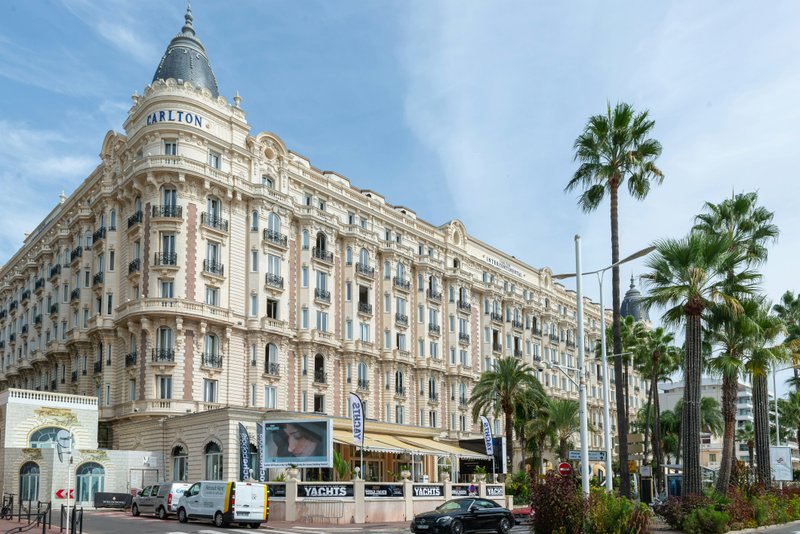
The pink dome rising above the Promenade des Anglais shelters 6,000 artworks spanning five centuries, from 17th-century paintings to Niki de Saint-Phalle's Yellow Nana in the Salon Royal. Each of the 128 rooms mixes Louis XIII furniture with modern art against Mediterranean silk hangings. Meilleur Ouvrier de France Virginie Basselot leads Le Chantecler, where theatrical tableside flambéing unfolds beneath 1751 woodwork, while the 700-square-meter spa features an indoor pool playing underwater melodies and a 100-square-meter private suite for duo treatments.
Explore Nice
Where to Stay
This former 17th-century convent crowning Vieux Nice shelters 88 rooms designed with monastic restraint—no televisions, just terracotta floors and Fragonard olive oil soaps from nearby Grasse. Two-and-a-half acres of terraced gardens supply 80 herbs to the onsite boulangerie and La Guinguette's seasonal menus, while subterranean Roman Baths guide guests through tepidarium, caldarium and frigidarium chambers. The 20-meter lap pool commands sweeping views across Baie des Anges to Promenade des Anglais.
Anantara's European debut occupies an 1848 Belle Époque landmark facing Place Masséna and the Promenade des Anglais, renovated by David Collins Studio with minimalist interiors in earthy tones. The rooftop SEEN by Olivier serves Mediterranean cuisine inflected with Brazilian and Thai notes, while suites with sea-view terraces and a private beach club channel French Riviera glamour. The 300m² spa features a signature hot stone massage with mimosa-ginger oil crafted by local Mouans artisans, alongside hammam and sauna.
The 1929 Art Deco facade that once welcomed Josephine Baker and the Fitzgeralds now fronts a thoroughly modern rebuild blending period detailing with contemporary comfort. The colonnaded courtyard pool doubles as prime people-watching real estate, while Le 3e's terrace serves Mediterranean small plates and creative cocktails with sea views. Generous bathrooms feature separate showers and tubs; select rooms command sweeping coastal panoramas. Indoor and outdoor pools, hammam, sauna, and beachfront access complete the resort amenities.
Maison Albar – Le Victoria occupies a historic Belle Époque building between the Promenade des Anglais and Place Masséna, reimagined by architect Jean-Paul Gomis with Art Deco interiors in light blue and white. The rooftop Taulissa restaurant, helmed by three-Michelin-starred chef Glenn Viel, delivers Provençal sharing plates alongside 360° views from the Mediterranean to the Mercantour mountains. Below, the 7,000-square-foot Oria spa offers signature 24-karat gold facials, a marble indoor pool, hammam, and mosaic-lined Jacuzzi, while top-floor suites open to sea-view terraces nearly as large as the rooms themselves.
Carved into the cliffside beneath the Colline du Château, La Pérouse conceals a heritage-listed pool hewn from limestone rock and a rooftop terrace with jacuzzi at Tour Bellanda height. Studio Friedmann & Versace dressed the 53 rooms in marine motifs—Sicilian coral lighting, aquatic tapestries—while chef Damien Andrews serves Niçois cuisine beneath century-old lemon trees at Le Patio, its bar encrusted with seashells by artist Caroline Perrin.
The 1913 Belle Époque façade conceals thoroughly renovated interiors where contemporary minimalism meets occasional rococo flourishes—note the white Louis-XIV armchair in the lift. Deep Nature spa, Nice's only facility of its kind, delivers aquatic therapy via jet pool, hammam, sauna and ice fountain. Marble-clad rooms in ivory and cream open onto the Bclub Rooftop, where Mediterranean plates complement the plunge pool. Direct tram access to the airport suits short-stay sophisticates.
Perched on a rocky promontory overlooking the Baie des Anges, this Niçoise hotel delivers sweeping seafront views from its privileged position between the Old Town and the port. The property's intimate scale and polished interiors attract couples and solo travelers seeking a refined base for coastal exploration. Superior and Privilege rooms sleep three, while suites accommodate four, though the pristine environment skews toward adults.
Hôtel Amour brings Parisian bohemian flair to Nice's Quartier des Orangers, just steps from the Promenade. Emmanuel Delavenne, Thierry Costes, and artist André Saraiva conjured 38 eclectic rooms—teal walls, vintage finds, bathtubs planted centre-stage, pink-tiled bathrooms—that reject convention in favour of character. Concert posters and pin-up prints set the tone at check-in. The rooftop pink pool commands 360-degree city views, while the beach club hosts curated sets from La Femme, Laurent Garnier, and Parcels, programmed by local DJ Eddie Megraoui.
L'Abeille inhabits the space between boutique hotel and residential haven, offering just nine apartments where Pop-inspired interiors—raw concrete, naked timber, ultra-saturated primary hues—contrast sharply with Nice's old port nostalgia outside. Each unit pairs a fully equipped kitchen and Carrara marble bath with Bang & Olufsen sound, while the garden supplies herbs and produce to Jan, a Michelin-starred restaurant several streets east. Contemporary art and honeycomb motifs honor the name: the bee.
Where to Eat
Brothers Gaël and Mickaël Tourteaux earned their second Michelin star in 2018 for cuisine that balances audacity with precision. Both trained under Alain Llorca at the Negresco, and their modern cooking pairs Niçois ingredients with global spices—scorpion fish meets vadouvan-infused broth. The boldness pays off consistently, delivering fine, masterful plates suited to serious gastronomic occasions in Nice.
Jan Hendrik van der Westhuizen, a South African chef with a past navigating private yachts and photojournalism, brings a singular vision to this intimate 20-seat dining room near the port. His single set menu layers smoky, spicy, and acidic notes with sweet-sour interplay, drawing on South African culinary traditions. The Michelin-starred experience culminates in a dedicated cheese bar across the street, where a buffet of twenty selections, preserves, and dried fruit awaits.
Mickaël Gracieux, whose career spans the kitchens of Louis XV, Le Bristol, and Plaza Athénée, runs this one-starred venue near Place Masséna with precision and ambition. His modern repertoire draws on Mediterranean waters—San Remo prawns, local green crab, trumpet courgettes—arranged with technical elegance inside a glazed dining room dressed in granite, untreated wood, and a monochrome palette of black, white, and gold.
Inside Le Negresco's storied walls, Chef Virginie Basselot—'MOF' 2015—crafts a Michelin-starred Mediterranean repertoire rooted in local artisan partnerships. Her pared-back approach surfaces ingredient purity: monkfish bathed in lemon balm and Var lemon butter, red mullet paired with combava cabbage purée and a liver-derived jus. The Promenade des Anglais setting and polished service frame a gastronomic occasion for serious eaters seeking regional excellence.
Samuel Victori, once second chef at Passage 53, runs this smart rue Bonaparte bistro with a disruptor's sensibility—playfully titled dishes like "What the sea gave us" deliver technical precision and textural intrigue, the signature poached seabass layered with kochihikari rice, raw turnip, seaweed, and dashi-spiked beurre blanc showcasing his Michelin-starred command of modern French technique. The vibe skews lively and buzzy, with Victori himself often narrating the nuances of his local-supplier repertoire to an engaged dining room.
Italo-Argentinian couple Lorenzo Ragni and Florencia Montes, alumni of Mauro Colagreco's three-starred Mirazur, earned their Michelin star for gutsy Mediterranean cooking that follows the local catch. In an intimate dining room within Nice's antiques quarter, they craft unexpected pairings—cuttlefish tagliatelle with citron, seabass in champagne-cockle emulsion, bloody orange sorbet with koji rice pudding—that deliver consistency and verve in equal measure.
Art Deco maritime elegance defines this Italian table perched above the Bay of Angels, where refined pastas and seafood unfold against panoramic views stretching to the Estérel range. The cruise liner-inspired dining room channels 1930s Riviera glamour, earning a Michelin Plate for technique-driven dishes that balance tradition with contemporary polish. Expect elevated pricing befitting the setting and precision.
Bruno Cirino and José Vidal craft Michelin-starred kitchen garden cuisine from local organic produce picked at peak ripeness. The single set menu celebrates Mediterranean staples—garlic, olive oil, basil—through dishes like red spring onion soup, purple artichoke with cheesy emulsion, and compressed root vegetables. The bargain-priced format, paired with accessible vintages and smiling service, makes one-star dining surprisingly approachable in Nice's compact dining room.
A Piedmontese chef helms this navy-hued bistro in a refined quarter, crafting market-driven plates shaped by the Mediterranean and Italy's northern traditions. Fillet of bass arrives with crushed courgette trumpet and Taggiasca olives; the blackboard shifts with the seasons and the chef's daily inspiration. Almost everything is made in-house, save for artisan bread sourced from a neighbouring bakery, underscoring a commitment to craft at every turn.
Chef Stéphane Chenneveau—originally from Vendée—brings an outsider's perspective to Niçoise traditions, most notably in his daring reinterpretation of socca, the chickpea flatbread that remains a signature fixture. His creative cuisine balances flavoursome regional recipes with a more ambitious seasonal carte blanche menu that shifts with his mood. A splendid biodynamic wine list complements the Michelin Plate-recognised cooking, making L'Atelier a compelling address for discerning diners seeking contemporary takes on local flavour.
Frequently Asked Questions
Which neighborhoods in Nice are best for walking and dining?
+
Vieux-Nice offers the densest concentration of restaurants, cafés, and evening atmosphere — particularly around Cours Saleya and Place Rossetti. The Port neighborhood has a more local feel with excellent seafood addresses. For a quieter pace, the Cimiez district provides tree-lined avenues and proximity to the Matisse and Chagall museums.
What is the best time of year to visit Nice?
+
May, June, and September offer warm weather without peak-summer crowds. The Carnival de Nice in February transforms the city with parades along the Promenade des Anglais. Winter remains mild — rarely below 10°C — making it appealing for off-season visitors seeking lower rates and clearer skies.
How accessible are the hilltop villages from Nice?
+
Èze is a 20-minute drive via the Grande Corniche, with its perfumeries and cactus garden perched above the coast. Saint-Paul-de-Vence, favored by artists since the 1920s, sits 30 minutes northwest. Both can be reached by local bus, though a car allows stops at viewpoints along the three coastal roads — the Basse, Moyenne, and Grande Corniches.
Nearby Destinations
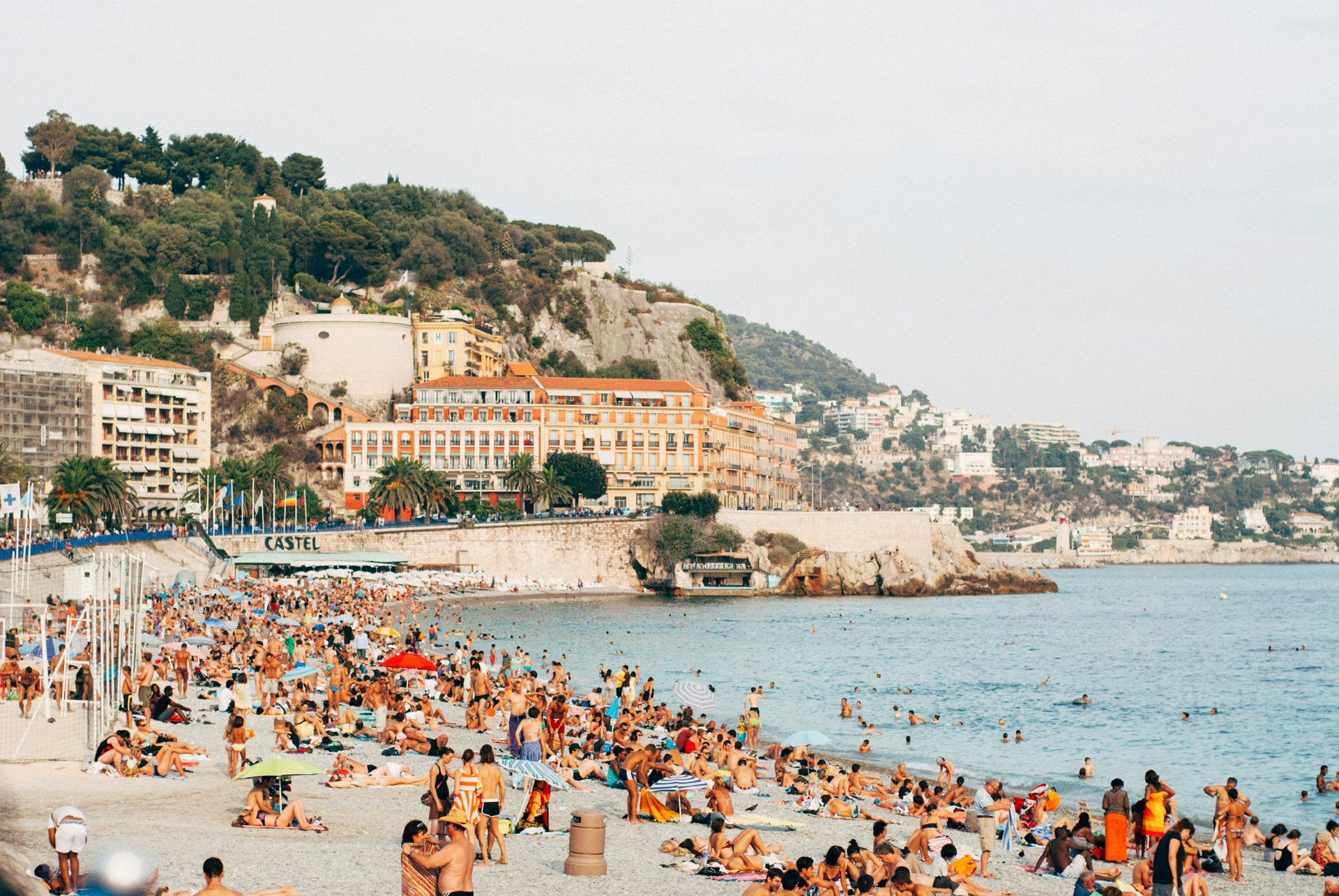
Explore FranceThe Promenade des Anglais curves along the Baie des Anges, its Belle Époque façades facing a coastline that first drew British aristocrats in the 18th century. The old town — Vieux-Nice — is a tangle of ochre buildings, Baroque churches, and market stalls selling socca and pissaladière at Cours Saleya. The city's historic hotels preserve this architectural heritage, while the port district of Villefranche and the hilltop villages of Èze and Saint-Paul-de-Vence sit within easy reach.
Dining here follows the rhythms of the Mediterranean. Chefs work with Menton lemons, olive oil from the arrière-pays, and fish landed at the port each morning. The restaurant scene ranges from Michelin-starred tables to casual trattorias in the pedestrian lanes off Place Garibaldi. For accommodation, the seafront promenade offers hotels with sweeping bay views, while quieter properties occupy the Cimiez hill, where Matisse once painted and Roman ruins still stand among olive groves.