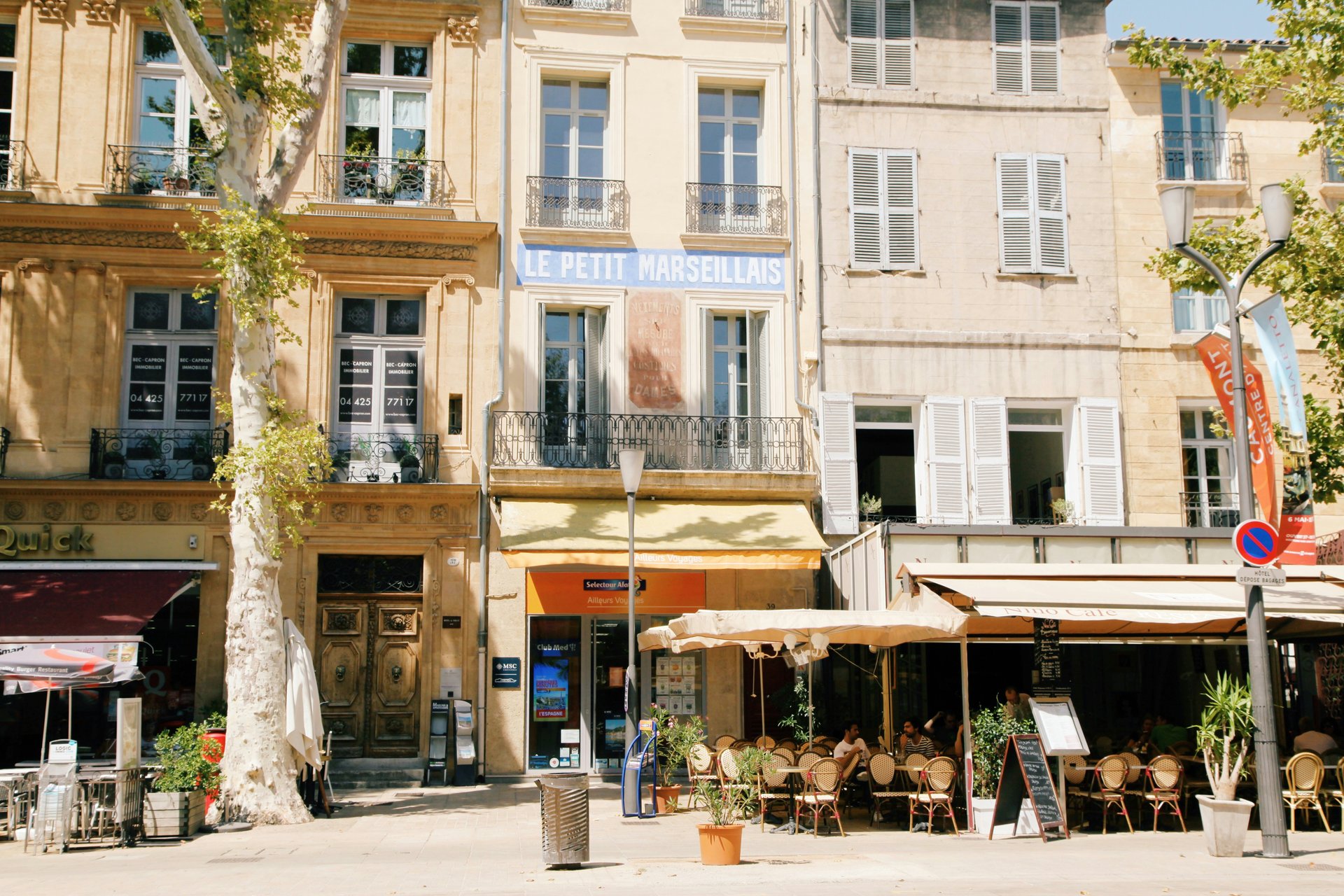
The Cours Mirabeau divides the city into two distinct worlds: the aristocratic Quartier Mazarin to the south, with its seventeenth-century hôtels particuliers, and the medieval old town to the north, where fountains punctuate every square. Morning markets on Place Richelme sell tapenades, calissons, and lavender honey—ingredients that appear on the menus of the city's gastronomic restaurants. The historic hotels occupy converted mansions behind massive wooden doors, their courtyards shaded by wisteria.
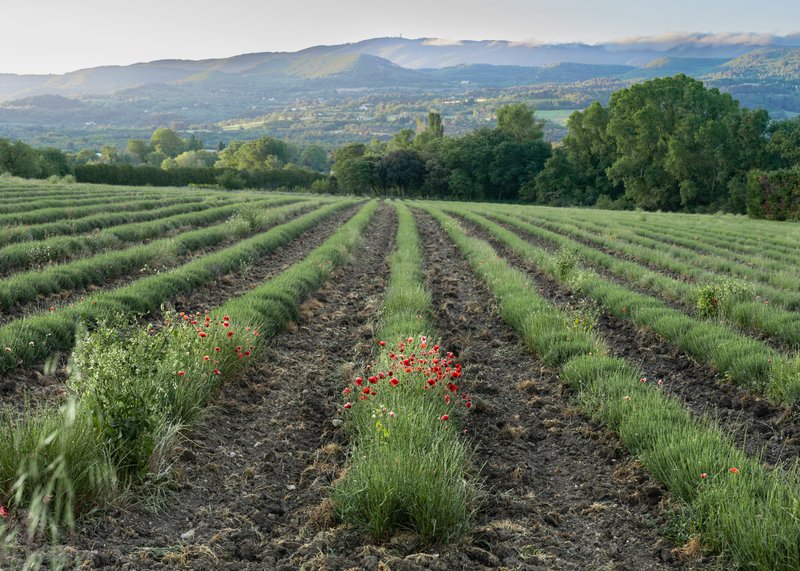
Beyond the ramparts, the countryside that Cézanne painted repeatedly rises toward Montagne Sainte-Victoire. Estates outside the centre offer pools overlooking vineyards, while the compact old town keeps everything within walking distance—the Granet museum, the thermal baths, the café where Émile Zola once argued with his childhood friend. Dinner reservations cluster around Place des Cardeurs, where tables spill across limestone paving stones until late into the Provençal night.