Occupying a restored 1950s art deco landmark, Royal Mansour Casablanca channels old-world glamour through a lobby lined with seventy varieties of marble and an Amazonian aquarium. The 149 accommodations include themed suites with vintage record players and couture displays. A 27,000-square-foot spa features twin hammams and an infinity plunge pool, while Moroccan, Japanese, and French restaurants—plus a rare well-stocked bar—anchor the dining scene.
Where to Stay
Casablanca's sole ultra-luxe address occupies a prime Corniche position, its architecture channeling Moroccan romance through a decidedly contemporary lens. Sea-facing rooms and suites capture Atlantic panoramas, while Morocco's only Guerlain spa—complete with hammam and jacuzzi—anchors the wellness offering. Dining spans upscale pan-Mediterranean and Middle Eastern cuisines, and families find extensive facilities alongside pet-friendly policies.
Legend links this 1930s Art Deco mansion to an Italian entrepreneur's romantic gesture—a gift to his Moroccan wife. The period architecture remains intact, from curved balustrades to geometric flourishes. Le Jasmine restaurant delivers refined Moroccan cooking, while the Petit Spa draws on oriental traditions: eucalyptus steam baths, argan oil treatments, hammam rituals. Cooking classes let guests master local cuisine firsthand.
A few hundred meters from the old medina, this 255-room property channels Casablanca's colonial Art Deco heritage through a contemporary lens. Upper floors survey the Hassan II mosque and Atlantic coastline; the spa draws on traditional Moroccan design for its hammam rituals. Dining splits between Café M's refined French plates and Dar Beida's local repertoire—a practical base for travelers seeking polish without losing proximity to the city's historic quarters.
Where to Eat
Legend credits an Italian entrepreneur with gifting this 1930s Art Deco mansion to his Moroccan bride—a romantic origin befitting Le Jasmine's intimate atmosphere. The kitchen pursues terroir-driven Moroccan cuisine in a bistro register, with Halal certification and thoughtful vegetarian options. Cooking classes allow deeper immersion into local techniques, while the preserved period interiors provide an elegant backdrop for unhurried meals.
What to Do
Housed within a 1930s Art Deco landmark, Spa le Doge channels authentic Moroccan wellness traditions. The ritual begins with a hammam steeped in eucalyptus and jasmine steam, followed by deep exfoliation using black soap and Ghassoul clay. Argan oil massages complete the sequence, while the relaxation room offers fresh fruit juices and herbal infusions—a distillation of oriental spa heritage in Casablanca's historic quarter.
Morocco's first hotel partnership with Guerlain unfolds across 700 square metres of refined wellness space, where the French house's exclusive Orchidée Impériale Prestige facial and imperial massages meet ancestral Moroccan rituals. Hammam ceremonies incorporate traditional tea traditions and heritage scrubs, while a signature treatment layers eight botanical ingredients—clays, herbs, natural oils—into a grounding mask. Heated jacuzzi, steam room, and tiled loungers complete the retreat.
Casablanca's largest spa stretches across 2,510 square metres on two floors, anchored by twin white marble hammams—one for women, one for men—where three temperature-graduated rooms culminate in a cold plunge pool, reviving a millennia-old cleansing ritual. Eight treatment rooms deploy Hydrafacial, Indiba and Cold Plasma technologies alongside Ayurvedic Subtle Energies and Moroccan-inspired marocMaroc products, while a fifth-floor swimming pool glows beneath an immense glass canopy.
Frequently Asked Questions
Which neighborhoods in Casablanca are best for upscale accommodation?
+
Anfa offers quiet residential streets with proximity to shopping and the Corniche beaches. Downtown near Place Mohammed V suits those wanting Art Deco architecture and walkable access to Hassan II Mosque. The Corniche beachfront appeals to visitors prioritizing ocean views and resort amenities.
What is the best time of year to visit Casablanca?
+
Spring (April to June) and autumn (September to November) bring mild temperatures ideal for exploring on foot. Summer can be humid along the coast, though ocean breezes temper the heat. Winter remains mild by European standards, with occasional rain.
How does Casablanca differ from Marrakech as a destination?
+
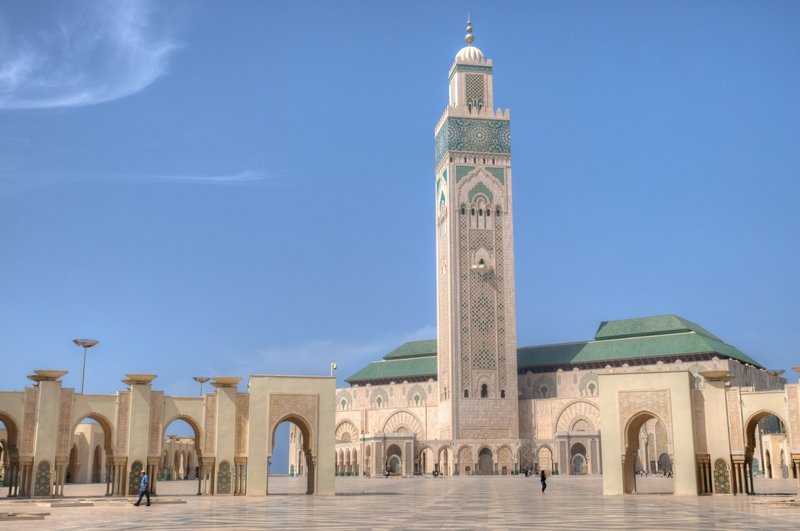
Casablanca functions as a working metropolis rather than a preserved imperial city. The atmosphere is cosmopolitan and business-oriented, with Art Deco architecture, Atlantic beaches, and a dining scene influenced by French colonial history. It lacks Marrakech's medina spectacle but offers urban sophistication and the monumental Hassan II Mosque.
Nearby Destinations
Explore MoroccoMorocco's economic capital spreads along the Atlantic coast, its skyline a collision of white Art Deco facades and contemporary glass towers. The Corniche stretches west toward Aïn Diab, where beach clubs and seaside terraces face the ocean. Inland, the Habous quarter offers a 1930s interpretation of traditional medina architecture, its arcaded streets lined with olive merchants and pastry shops selling cornes de gazelle.
The city's accommodation scene reflects this architectural duality. Downtown properties occupy restored colonial buildings near Place Mohammed V, while the Anfa district draws those seeking residential calm and proximity to the Morocco Mall. The old medina, compact and less touristed than Marrakech's, rewards early morning walks through its fabric souks and spice stalls. Evening dining gravitates toward the Gauthier neighborhood, where French-Moroccan tables serve updated tagines alongside Atlantic seafood.