Triana finally has its first luxury address. This 12-room boutique occupies a handsome corner building where wrought-iron balconies and traditional ceramic tilework meet exposed brick walls and emerald-green accents within. The rooftop Alzali Garden Club—complete with pool, loungers, and cocktail bar—captures golden-hour views across the river, while downstairs, tile-adorned Balbuena y Huertas draws neighborhood regulars alongside hotel guests for refined Andalusian dining.
Explore Seville
Where to Stay
This 18th-century palace in Santa Cruz showcases Mudéjar architecture—baroque details, marble columns, ornate archways—refreshed with contemporary furnishings and bold color accents. A rooftop pool and bar offer views across the historic quarter, while the full spa features hammam, Turkish bath, and sauna. The restaurant reimagines Andalusian classics with modern flair. Families benefit from connected suites and complimentary cots.
A five-acre working olive estate between Seville and Cádiz, Hacienda de San Rafael scatters three swimming pools through citrus groves and drapes its courtyards in vermillion bougainvillea. The fourteen rooms layer Andalusian, Indian, and Zimbabwean design beneath beamed ceilings; Casita and Pool Suites function as private villas with their own pools. The restaurant draws on market-fresh regional produce—ideal for couples seeking pastoral Andalusian refinement.
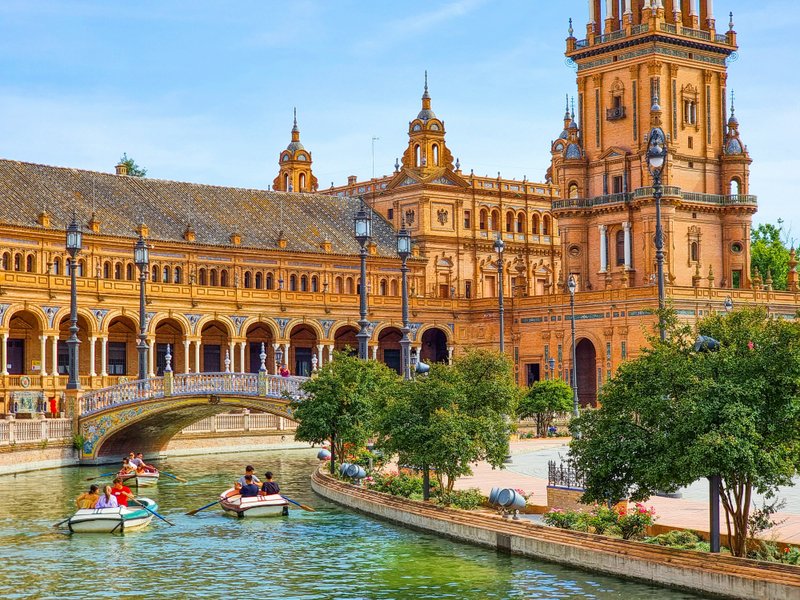
Constructed for the 1929 Ibero-American Exposition, this palatial landmark channels Baroque and Moorish grandeur through intricate tilework, mahogany paneling, and marble halls that once hosted Hemingway and W.H. Auden. Palm trees frame the entrance while crown-topped lamps illuminate regal interiors. The traditional San Fernando restaurant reinforces the timeless atmosphere—ideal for travelers seeking theatrical old-world magnificence over contemporary minimalism.
A 19th-century Sevillian mansion bearing its original owner's name, Casa Palacio Don Ramón channels Don Ramón's legendary obsession with Andalusian elegance across 26 rooms appointed with hand-painted tiles and bespoke fabrics. Days drift from the rooftop pool to cocktail hour on the terrace, while a curated art collection lines the corridors. Pet-friendly and intimate, this palacio suits travelers seeking noble-house atmosphere over conventional hotel anonymity.
Behind a whitewashed 18th-century façade in Seville's historic quarter, this 41-room property surprises with coolly contemporary interiors—slate floors, iron-framed beds, frosted glass partitions. Two central courtyards anchor the layout, their inward-facing rooms opening onto private patios for genuine quiet. A compact rooftop pool surveys the surrounding rooftops, while modern Andalusian cooking moves from the ground-floor restaurant to the sun-drenched terrace above.
Behind a handsome period façade on Calle de los Reyes Católicos, this adults-only property houses 39 rooms where deep greys and painted stone meet vintage furnishings and vivid canvases by Spanish artist Balcris. An infinity pool crowns the rooftop alongside the Ático bar, while below, Casa Aníbal plates creative Sevillian cooking and Atico Hall serves cocktails beneath a domed ceiling and a whimsical suspended elephant sculpture.
Two 1920s family residences on Plaza San Francisco now house just 25 rooms, a deliberate choice favoring generous proportions over volume. Original Andalusian patios, decorative tilework, and wrought-iron railings meet minimalist interiors with Japanese wood paneling and exposed brick. Some suites span two levels with freestanding tubs. The rooftop bar delivers sunset views across Seville's Gothic spires, while an outdoor pool and pet-friendly policy complete the picture.
Fragments of Seville's original Islamic walls emerge in the lobby of this converted row of buildings on a tree-shaded plaza—once the city's red-light district, now seventy rooms dressed in traditional Andalusian textiles and hand-painted ceramic tile. Many rooms open onto private balconies or patios, while the rooftop terrace offers a small pool and open-air lounge, essential relief in one of Europe's hottest cities.
Behind the gates of Casa Palacio Castelar, an 1880 palace preserving its original Andalusian structure and majestic staircase, the Mercer Sevilla operates with rare intimacy—just twelve rooms and suites. The interiors play 21st-century designer furniture against period architecture, while select accommodations offer private terraces. A rooftop pool and bar survey the surrounding cityscape, minutes from the Cathedral and Alcázar.
Where to Eat
Julio Fernández Quintero's one-Michelin-starred kitchen channels Andalucian tradition through a decidedly contemporary lens, presenting nine- or twelve-course tasting menus with optional wine pairings. The dining room evokes a gallery space—spare, contemplative—while a ten-seat chef's table offers front-row immersion in the brigade's precise choreography. A serious destination for travelers seeking Seville's gastronomic avant-garde rooted in regional authenticity.
Between Los Remedios and Triana, this family-run address has built its reputation on fish and seafood delivered daily, much of it line-caught using traditional methods. The kitchen's philosophy is restraint—simple preparations that let impeccable ingredients speak. An elegant, classically appointed dining room sets the tone for meals that might begin with a silken salmorejo crowned with shrimp, a signature worth the visit alone.
Two decades near the historic Buhaira Gardens have cemented Tribeca as a Sevillian institution for creative cuisine. The kitchen's focus falls on day-caught fish from the Gulf of Cádiz, sold by the slice and prepared with contemporary flair—the battered grouper with ginger and kumquats exemplifies this approach. Two tasting menus, Corto and Largo, reward those who reserve ahead, while desserts like Jerte cherries with horseradish ice cream and aged balsamic deliver unexpected finesse.
A fishmonger's counter greets diners at Cañabota, displaying the Atlantic catch that will define the day's menu. Behind it, an open kitchen reveals chefs working the grill with practiced precision—one Michelin star earned through this transparent, elemental approach. Seafood arrives direct from Andalucía's coast, prepared with techniques spanning traditional to contemporary. The daily-changing carte rewards those who trust their server's guidance.
Award-winning chef Eneko Atxa brings his conceptual Basque cooking to Plaza de la Magdalena, where sharing plates and expertly grilled proteins anchor the menu. The smoked Iberian pork and matured beef chop showcase precise fire work, while two tasting menus—Labur and Luze—offer deeper exploration with optional wine pairings. A commanding destination for serious gastronomes seeking contemporary Spanish creativity.
Named for the guild of children's shoemakers who once traded on this pedestrian lane behind City Hall, Chicarreros channels Seville's artisan past through a lens of sophisticated eclecticism. The kitchen delivers contemporary European cooking anchored in Spanish produce, with the matured beef steak tartare enriched with bone marrow earning devoted followers. A Michelin Plate holder suited to unhurried, ingredient-focused dining.
Chef Iván Valero runs this glass-fronted bistro in Los Remedios with a clear philosophy: let exceptional ingredients speak. The kitchen bridges Andalucian and Basque traditions, sending out Galician shellfish, fish from Conil's daily auction, and prime cuts sourced across Spain. The approach is deliberate simplicity—no flourishes obscure the quality on the plate. A serious table for product-driven dining.
At this spirited tapas counter, the day's catch dictates the menu—fishermen's fortunes at sea determining what appears on the plate. Guests perched at the bar watch chefs work through pristine seafood with unfussy confidence, each dish a simpler echo of sibling restaurant Cañabota's exacting standards. The approach is refreshingly honest: exceptional ingredients, minimal intervention, maximum flavor.
Named for the Andalucian concept of a gathering place for artisans and trades, Leartá channels that spirit of craftsmanship into a single tasting menu rooted in southern Spain. The young kitchen sources with precision—Iberian ham from Cumbres Mayores, white prawns from Isla Cristina, honey from Aznalcóllar—then applies contemporary technique through delicate broths and textural contrasts that honor tradition while pushing it forward.
Taking its name from the Arabic word for olive juice, Az-Zait grounds its contemporary cuisine in Andalusia's liquid gold. The Bib Gourmand kitchen delivers traditional and international dishes through three tasting menus named after olive oil estates, with slivers of foie gras on olive bread earning particular acclaim. Two classic dining rooms host impeccable service, complete with cheese and an unusually extensive digestif trolley.
Frequently Asked Questions
Which Seville neighborhoods are best for walking and exploring on foot?
+
Santa Cruz offers the most atmospheric walking with its labyrinthine streets and hidden plazas, though you'll share them with tour groups during peak hours. For a more local experience, cross the Triana bridge in the evening when residents fill Calle Betis and the surrounding tapas bars. El Arenal and El Centro connect major monuments and shopping streets, making them practical bases for exploring without transport.
When is the best season to visit Seville?
+
Spring brings Semana Santa processions in late March or April, followed by the Feria de Abril's flamenco dresses and horse parades — both spectacular but crowded. Autumn from late September through November offers warm days without summer's punishing heat, which regularly exceeds 40°C in July and August. Winter remains mild and sees fewer visitors, though some establishments reduce hours.
What are Seville's signature dishes and food traditions?
+
Tapas culture originated here, and the ritual of hopping between bars for small plates remains central to local life. Essential dishes include salmorejo (a thick chilled tomato soup), espinacas con garbanzos (spinach with chickpeas), and carrillada (slow-braised pork cheeks). Seafood arrives fresh from Cádiz and Huelva — look for gambas blancas and chocos (cuttlefish). Most restaurants serve lunch from 1:30-4pm and dinner from 8:30pm onward.
Nearby Destinations
Explore SpainSeville unfolds along the Guadalquivir River, its neighborhoods each carrying distinct personalities shaped by centuries of Moorish, Jewish, and Catholic influence. Santa Cruz, the former Jewish quarter, threads narrow lanes between whitewashed houses draped in bougainvillea, while Triana across the river maintains its working-class soul through ceramic workshops and late-night flamenco bars. The Arenal district anchors the city's ceremonial life around the Maestranza bullring, and El Centro pulses with commerce beneath baroque church facades.
The city operates on Andalusian time — lunch rarely before 2pm, dinner after 10pm, and the ritual paseo filling streets at dusk. Summer heat pushes life indoors during siesta hours, then spills onto terraces and plazas as temperatures drop. Hotel culture here ranges from converted noble houses with interior courtyards to contemporary properties reimagining traditional azulejo tilework. The dining scene balances reverence for tapas traditions with a generation of chefs applying modern technique to Iberian ingredients, from Huelva prawns to acorn-fed jamón from the Sierra de Aracena.