


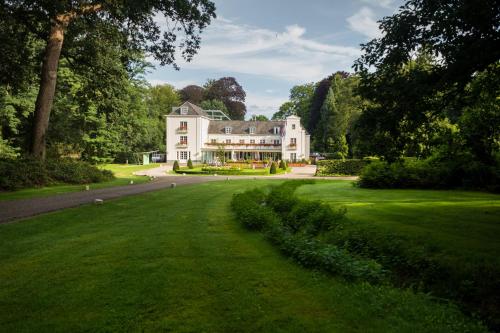
This stately country house presides over a sprawling private park on Arnhem's outskirts, its forty rooms appointed in understated elegance. A French-inflected restaurant anchors the culinary offering, while the historic orangery serves private gatherings with period charm. Active guests find a tennis court on the grounds and golf courses within easy reach—a refined retreat for those seeking pastoral tranquility near the city.
Arnhem Travel Guide: Best Hotels, Restaurants & Experiences 
Explore Arnhem
Hotels (1)
Restaurants (5)
Where to Stay
Where to Eat

★ Michelin
A Michelin star has burned steadily here since 1971, making this 17th-century Saxon farmhouse one of the Netherlands' most enduring gastronomic addresses. Chef Tonny Berentsen layers Asian influences into classical foundations—five-spice-laced venison jus, quail roulade with foie gras and truffle sauce. Crackling fires warm the rustic dining room while maître d' Ronnie Brouwer guides diners through considered wine pairings.

★ Michelin
Fourth-generation chef Mike Cornelissen earns his Michelin star through dishes of striking technical ambition—a signature creation layers goose liver crémeux with raw oyster, apple brunoise, and sea buckthorn cream spiked with sambal. Local produce from 't Smallert farm and Betuwe orchards meets global seasonings across a quarterly-changing menu. The playful finale: toasting marshmallows tableside over charcoal.

★ Michelin
Behind the 1863 façade of 't Raedthuys, contemporary art lines the walls while chefs Tom Lamers and Hans den Engelsen command a kitchen visible through glass. Their cooking honors tradition—tournedos Rossini, impeccably roasted Dutch lamb—yet surprises with dishes like Jerusalem artichoke served four ways alongside smoked eel. A thirty-cheese trolley and sommelier Karina van der Kolk's imported wine collection complete the experience; the front terrace suits lingering summer dinners.

Michelin Selected· Green Star ●
Named after the Dutch word for rabbit food, Konijnenvoer turns that notion on its head with chef Demian Parasmo's inventive plant-based cooking. Local oyster mushrooms undergo shio koji fermentation before hitting the grill, delivering concentrated umami alongside hazelnut cream and wild onion. The dining room pairs period details with modern lines, while a casual antipasti bar offers a lighter entry point. A Michelin Green Star confirms the kitchen's sustainable commitment.

Michelin Selected
A former Lutheran church with stained-glass windows and weathered pews provides the theatrical backdrop for chef Bart Leussink's bold organic cooking. The open kitchen commands attention as dishes emerge—lamb neck under a crispy herb crust, fillet brightened with sweet-sour cucumber, seafood threaded with citrus notes. A handful of rooms tucked into the rafters extend the experience for those reluctant to leave.

Michelin Selected
Chef Jin Hu structures his cooking around Japan's micro-seasons, a philosophy that shapes every French-Asian fusion plate at The Green Rose. Livestock raised on local farms appears nose-to-tail, while North Sea cockles arrive with yuzu-brightened butter and chive. The wine list leans natural, the beer selection artisanal, and the flavors land with quiet, uncompromising intensity.

Michelin Selected
A 600-year-old watermill provides the atmospheric backdrop for chef Ramon Klaassen's creative cooking, where classic techniques receive inventive interpretation. His soft-boiled duck ham rolled with poultry mousse arrives with playful accents—onion chutney, crushed nuts, balsamic reduction—each plate composed with evident pride. The secluded terrace draws summer diners, while a flexible set menu accommodates vegetarian preferences without compromise.

Michelin Selected
Directly opposite Arnhem Central station, this vegetarian-focused restaurant grows herbs in an upstairs vertical farm that supplies the kitchen daily. The chef builds dishes around Dutch-sourced ingredients—lentils transformed into curry with farm-fresh herbs, seasonal vegetables, and briny seaweed. Fish and meat, when featured, come from regional producers. A Michelin Plate holder with genuine farm-to-table credentials.

Michelin Selected
Sardinian traditions find spirited expression at this cheerful trattoria on the Markt, where chef Giulio shapes fresh pasta and bakes bread daily. The signature orata arrives in a salt crust, filleted tableside with practiced flair, while house-made pappardelle draped in creamy duck sauce demonstrates his mastery of rustic Italian cooking. An aromatic panna cotta with juniper jam provides a fitting finale to Arnhem's finest Italian table.
Frequently Asked Questions
Which neighborhoods in Arnhem are best for upscale dining?
+
Jansstraat in the city center concentrates several respected restaurants, while the Klarendal district offers contemporary dining in converted industrial spaces. The area around Sonsbeek Park attracts establishments focused on seasonal Dutch produce.
What regional specialties should visitors look for in Arnhem restaurants?
+
Menus often feature Veluwe game (wild boar, venison, hare), white asparagus during spring season, and orchard fruits from the Betuwe river region. Gelderland's proximity to Germany also influences preparations, particularly smoked meats and hearty stews.
How does Arnhem's location affect its culinary character?
+
Positioned at the edge of the Veluwe heathlands and the Rhine floodplain, the city draws on two distinct terroirs—forest and game from the east, river fish and orchard produce from the west. This geography shapes menus that shift markedly with the seasons.
Nearby Destinations
Explore Netherlands


Arnhem
This Gelderland capital sits where the Rhine splits into its lower branches, a strategic position that shaped both its wartime history and its postwar reinvention. The reconstructed center around Korenmarkt mixes 1950s modernism with medieval street patterns, while the surrounding villa districts—Sonsbeek, Gulden Bodem—preserve their leafy nineteenth-century character. The city's hotel landscape reflects this duality: intimate properties in converted townhouses alongside contemporary builds with views across the water meadows.
The dining scene draws heavily on regional identity. Restaurants along Jansstraat and around the Duivelshuis serve interpretations of Veluwe ingredients—game from the nearby heathlands, asparagus from the sandy soils, apples and pears from Betuwe orchards. The café culture centers on Korenmarkt's terraces and the smaller squares radiating from it, where the boundary between afternoon coffee and early evening drinks blurs comfortably. South of the station, the gentrifying Klarendal neighborhood—once the city's working-class heart—now hosts design studios and independent eateries in former workshop spaces.