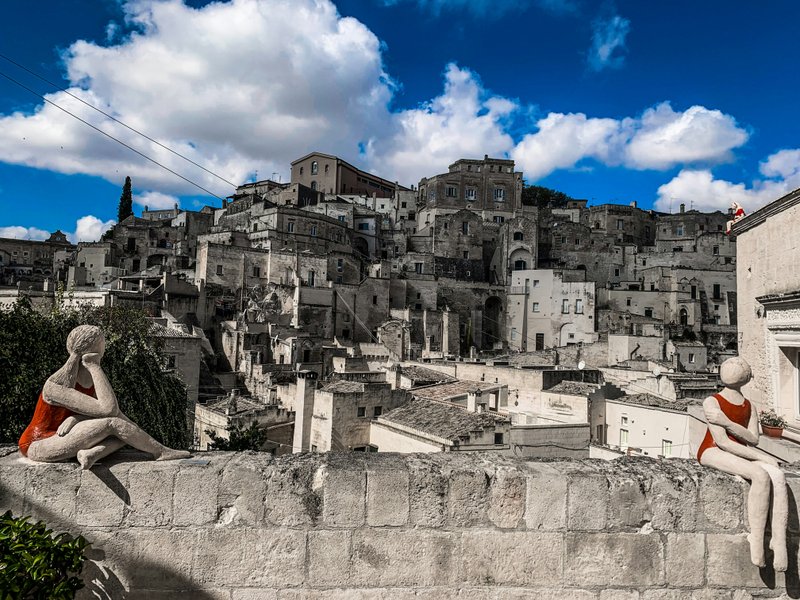
Overlooking Matera's Cathedral square, this six-century-old noble residence offers an alternative to the city's typical cave hotels. The twenty rooms occupy a meticulously restored palazzo where suites feature vaulted ceilings and Roman fountain-style bathtubs—one includes a private terrace pool. Below, a spa carved into ancient cisterns provides an atmospheric retreat, while summer evenings bring dining on the panoramic terrace overlooking the Murgia Materana.
Where to Stay
Paleolithic cave dwellings carved into Matera's limestone cliffs now house 23 ultra-luxe accommodations—some subterranean with vaulted stone ceilings, others elevated with panoramic views across the UNESCO-listed Sassi. The Elysium spa features relaxation pools hewn directly from the rock, while Artema restaurant presents Basilicata's regional cuisine with wine cellar dining available. A singular address for travelers seeking ancient geology reimagined as contemporary luxury.
Francis Ford Coppola converted his grandfather's hometown palazzo in Bernalda into a nine-suite retreat where hand-painted frescoes—including the Rococo Amore and Psyche ceiling in the Gia suite—crown rooms furnished with claw-foot tubs and rattan armchairs. A swimming pool anchors the fountain garden, while the on-site wine cellar connects to regional vineyard tours. The UNESCO caves of Matera lie thirty minutes east.
Milanese hotelier Daniele Kihlgren carved this albergo diffuso from Matera's ancient volcanic caves, some inhabited since Paleolithic times. The 24 rooms embrace their raw stone origins—bare rock cavern bathrooms fitted with impeccable Milanese fixtures and luxurious soaking tubs create an arresting contrast. Pet-friendly with garden spaces, this radical experiment in historical immersion suits travelers seeking atmosphere over convention.
Sant'Angelo occupies an entire converted neighborhood within Matera's ancient sassi, its 33 rooms divided between limestone cave dwellings and a restored palazzo. Le Residenze chambers carved directly into the rock allow guests to rest against centuries-old stone, while La Torre apartment offers a private mini-spa beneath Madonna dell'Idris. Restaurant Regiacorte serves regional cuisine inside vaulted caves, its terrace commanding panoramic views across the ravine.
Carved into the ancient Sassi district, Corte San Pietro operates as an albergo diffuso—seventeen suites scattered across multiple tufa cave dwellings, each identified by its original street number rather than hotel sequencing. Vaulted stone ceilings and small "wolf's mouth" windows define interiors where recycled wood and Corten steel meet centuries-old rock. Several suites conceal private spas within their chambers, while communal courtyards preserve the neighborhood's historic rhythm.
Architect Katia Vitale carved ten residences from Sasso Barisano's tufa cliffs, preserving barrel vaults and soaring ceilings while introducing restrained contemporary furnishings. The façade displays ornamental stone brackets—locally called 'big cats'—and original shelving hewn into the rock. Several suites retain their mangiatoie, the ancient feeding troughs that once served animals. Steps from Matera's Cathedral, the property suits travelers seeking raw authenticity over polished luxury.
The Malvini Malvezzi family, once rulers of southern Italian fiefdoms, left behind this palazzo now restored with coccio-pesto plaster, lime wash, and tuff stone by local tufaroli artisans. Two suites descend into ancient rock-cut cisterns converted to heated pools, waterfalls striking raw tuff walls. A cave suite and Sassi-view terrace round out sixteen rooms furnished with baronial antiques, steps from Matera's Cathedral.
Perched on a hilltop with views stretching to the Ionian Sea, this whitewashed Basilicata masseria gathers 13 rooms around a central courtyard, each mixing antique furniture with contemporary touches. The restaurant serves regional cuisine to guests and locals alike, while cooking classes reveal the secrets of Lucanian tradition. A wine cellar and nearby vineyard tours complete the immersion for travelers seeking authentic southern Italian farmhouse hospitality.
Where to Eat
A former abandoned cave in the Sassi district now houses this one-Michelin-starred table where chef Vitantonio Lombardo channels Lucanian traditions through a distinctly modern lens. His signature tuna tartare arrives with crispy crapiata, smoked olive oil, and red onion ice-cream, while the calamarro—squid stuffed with lamb entrails—speaks to deeper regional roots. After dinner, the belvedere at Piazza Duomo awaits just steps away.
A restored palazzo provides the atmospheric setting for this modern Italian table, where three tasting menus—Contaminazioni, Dimora Ulmo, and A mano libera—trace a path between contemporary technique and Basilicata's culinary heritage. The summer terrace delivers commanding views over the ancient Sassi, while an intelligently assembled wine list balances regional Lucanian bottles with broader Italian and international selections.
Carved into ancient caves facing Matera's storied rock churches, Baccanti occupies one of the Sassi's most atmospheric settings. The kitchen channels Basilicata's culinary heritage through a distinctly modern lens, presenting creative interpretations that have earned Michelin recognition. Each dish reflects the surrounding landscape—earthy, elemental, yet refined—making this an essential table for travelers seeking the intersection of history and contemporary gastronomy.
A family from Venosa—hometown of the poet Horace—runs this restored dining room in Matera's upper Sassi, the father commanding the kitchen while mother and daughter orchestrate the floor. The menu reworks Basilicata traditions with contemporary precision, available as tasting sequences or à la carte. A small terrace offers intimate outdoor seating, and a thoughtfully assembled wine list rounds out the experience.
What to Do
Carved into thousand-year-old rock within Matera's ancient Sassi district, Elysium SPA occupies chambers that were homes in the Paleolithic era. Hydromassage pools have been excavated directly from the stone, while a thermal circuit of sauna and hammam winds through the troglodyte spaces. The multi-sensorial journey concludes in a relaxation area overlooking the UNESCO-listed landscape—a view that has served as backdrop for countless films.
Frequently Asked Questions
What are the Sassi districts and how do they differ?
+
Sasso Caveoso, the southern district, retains a more raw and residential character with fewer commercial establishments. Sasso Barisano to the north underwent earlier restoration and hosts most cave hotels, restaurants, and artisan workshops. Both districts are UNESCO-listed and connected via the ridge-top civita where the Romanesque cathedral stands.
When is the best season to visit Matera?
+
Late spring (April-May) and early autumn (September-October) offer mild temperatures ideal for exploring the stepped streets. Summer brings intense heat to the exposed rock, though cave interiors remain naturally cool. Winter sees fewer visitors and occasional snow dustings that transform the sassi into something resembling a nativity scene — fitting, given the city's history as a filming location for biblical epics.
What local dishes should visitors seek out?
+
Beyond the ubiquitous orecchiette, look for crapiata (a seven-legume soup traditional to August 1st), lamb cutturidd slow-cooked with wild herbs, and ferricelli pasta with breadcrumbs. The peperone crusco — a dried sweet pepper fried until crisp — appears as both garnish and central ingredient. Pair with Aglianico del Vulture from neighboring vineyards on Monte Vulture.
Nearby Destinations
Explore ItalyThe Sassi di Matera rise in two natural amphitheaters — Sasso Caveoso to the south, Sasso Barisano to the north — connected by a maze of stepped alleys and tufa-rock passages. Hotels here occupy structures continuously inhabited for nine millennia, their rooms cut directly into the calcareous rock face with vaulted ceilings that maintain cool temperatures year-round. The Piano district above offers more conventional palazzo hotels with terraces overlooking the ravine, while properties along Via Fiorentini provide immediate access to the cathedral and the historic grain stores of the medieval quarter.
Dining gravitates toward the Via delle Beccherie and Piazza del Sedile, where trattorias serve orecchiette with wild arugula and crusco peppers dried in the Lucanian sun. The local bread, baked in communal wood-fired ovens and stamped with family marks, remains central to the table — its dense crumb ideal for cialledda, a traditional peasant dish now reinterpreted across the city's restaurants. Evening aperitivo unfolds on terraces perched above the gravina canyon, the limestone facades opposite glowing amber as the sun drops behind Monte Pollino.