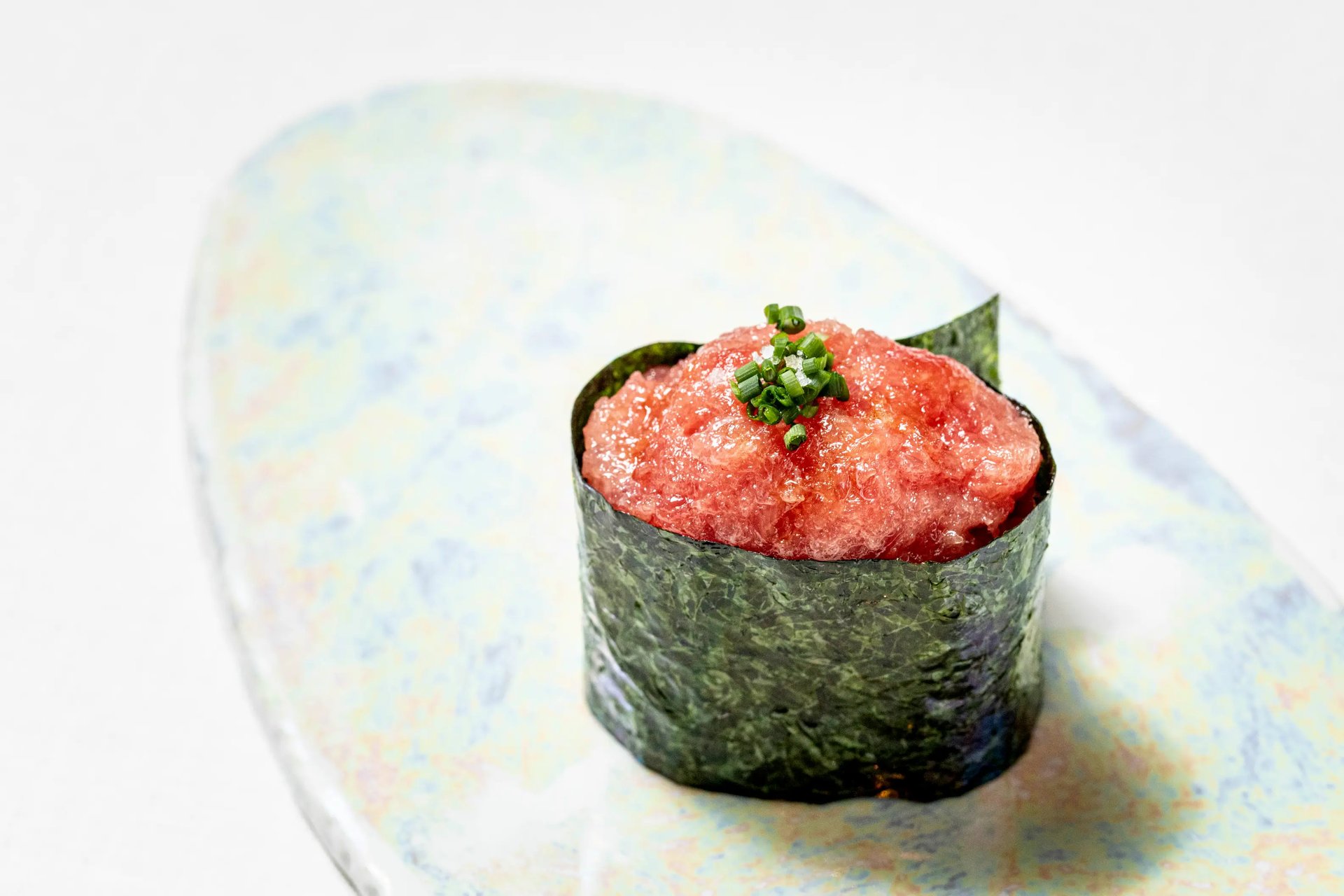
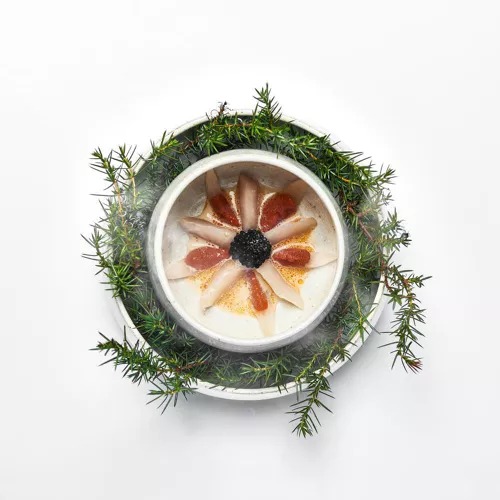
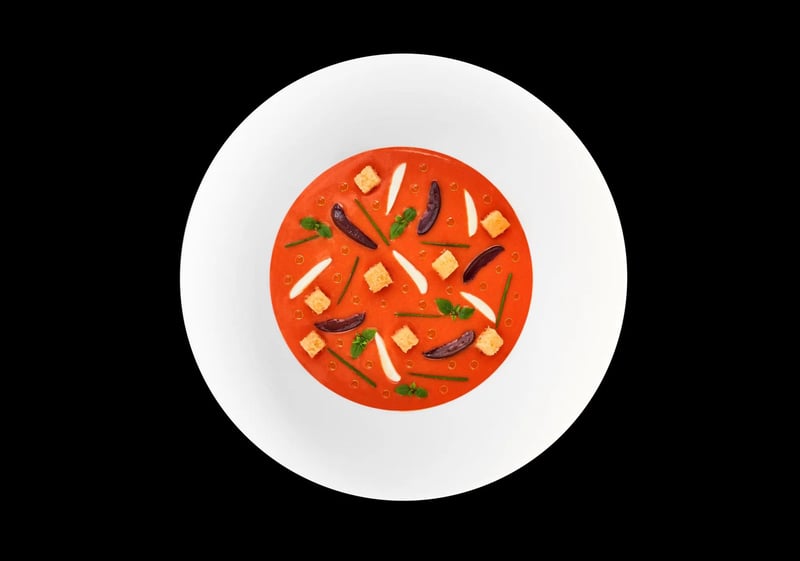
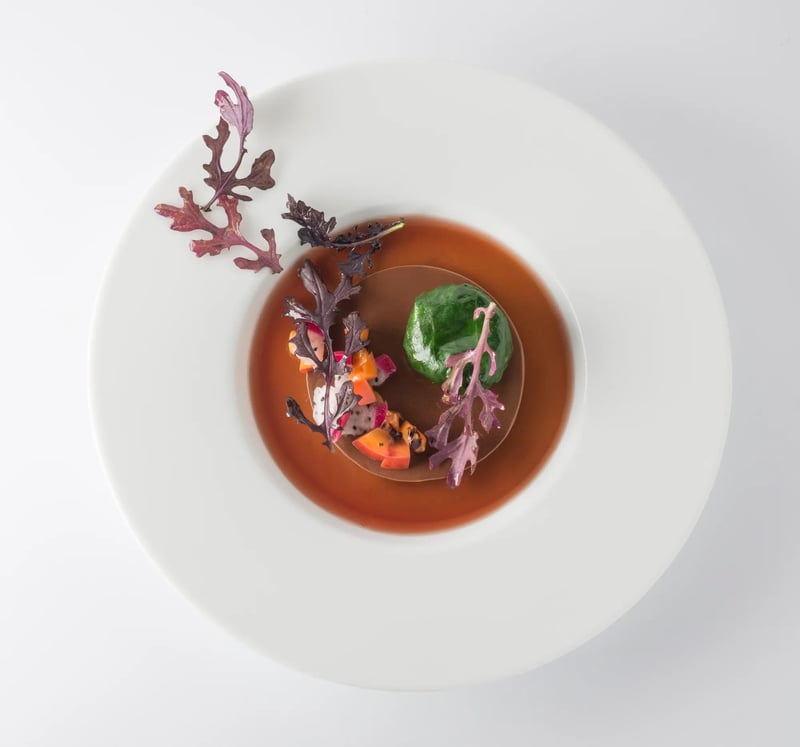
Chef Akrame Benallal's Michelin-starred address hides behind a monumental carriage gate near La Madeleine, revealing a striking black-dominated interior inspired by Pierre Soulages. Japanese flavors meet inventive technique across carte blanche menus that spotlight exceptional produce and bold culinary surprises. The cutting-edge décor—punctuated by sculpture and photography—creates a fashionably secretive backdrop for gastronomic dining that rewards adventurous palates.
Explore Paris Japanese
Chef Maxime Bouttier's one-starred table in Oberkampf pairs cerebral technique with seasonal restraint: his signature mamelle de vache with smoked hay cream and Sturia caviar anchors a pared-back tasting menu that favours clarity over ornamentation. The upstairs kitchen opens onto a light-filled dining room where counter seats face the brigade in full rhythm, while sommelier Vincent Glaymann steers nearly 1,000 natural and biodynamic cuvées through dishes that feel instinctive yet meticulously composed.
Chef Hideki Nishi, who honed his craft at Taillevent and the George V, marries Japanese precision with classical French technique at this Michelin-starred table. His minimalist compositions spotlight fish and vegetables from Brittany, often kissed by flame, creating dishes built on subtle counterpoints and oxymoronic contrasts—poised, delicate, and as unexpected as the restaurant's poetic name suggests.
Aveyron-born chef Julien Boscus marries bold Japanese expression with rigorous French technique at this Michelin-starred address on rue de Ponthieu, where crisp seasonal compositions—morel mushroom tartlet creamed in sous-voile wine, sautéed calf sweetbreads with Vaucluse asparagus, a reinterpreted hare à la royale—unfold across a genuine à la carte menu. The contemporary dining room and impressive French wine selection frame an experience that feels both rare and considered in the capital.
Jason Gouzy, alumni of Le Bristol and Le Baudelaire, crafts exuberant modern French cuisine with Japanese influences near Palais Royal. His signature gargantuan egg with rice and leeks, and croq'homard with Breton lobster bisque exemplify a playful virtuosity, while courses like venison with carrot and sea urchin arrive as four distinct preparations rather than single plates—a theatrical profusion befitting Rabelais's giant, served in a Directoire-styled dining room.
Boutary offers a rare chance to explore caviar from sturgeon raised by the owners' family in southern Bulgaria for generations. The intimate carte blanche menus highlight osetra, sterlet, and baeri varieties, culminating in the traditional tasting ritual served on the back of the hand. The plush, stylish interior frames this focused Japanese-inflected gastronomic experience tailored to caviar connoisseurs seeking Michelin-recognised finesse.
Opposite the Odéon Theatre, this Japanese bistro earned its Bib Gourmand for ingredient-driven precision: king crab and lime enliven egg mayonnaise, fragrant bouillabaisse arrives in a tureen, sole meunière glistens under a golden butter crust. Mediterranean frescoes brighten the dining room, while attentive service keeps the pace unhurried. A polished choice for traditional French technique applied to seafood-centric Japanese flavours.
Pierre Touitou, a leading figure in Parisian bistronomic cuisine, runs this modern Japanese-influenced restaurant where black-and-white tiles lead to an open kitchen framed by stainless steel. Diners watch the brigade prepare dishes like bonito with fresh peas, capers, and barberry, or ox tongue with spinach pkaila and house-made harissa. Natural wines anchor the beverage program, earning the establishment a Michelin Plate distinction for its creative, seasonally driven approach.
Firebrand chef Norbert Tarayre, discovered on Top Chef in 2012, brings Japanese cuisine to the Prince de Galles, a 1928 Art Deco landmark on avenue George-V. The cosy dining room honours Parisian artistic heritage while serving thoughtfully prepared dishes that include a signature dessert trolley. The Michelin Plate distinction and notably accessible pricing make this an approachable introduction to luxury hotel dining for Japanese food enthusiasts.
Host to the Goncourt and Renaudot literary prizes since the early twentieth century, this historic Opéra quarter address serves French classics reimagined with delicate precision—leek vinaigrette wrapped in nori, turbot meunière, vol-au-vent—under Romain Van Thienen's confident direction. The dining room's hand-laid mosaic floor and preserved Art Deco staircase set an elegant backdrop, while private salons upstairs include the Goncourt room where jury members convene monthly.
Frequently Asked Questions
Where is the main Japanese restaurant district in Paris?
+
Rue Sainte-Anne in the 1st and 2nd arrondissements remains the historic hub, with dozens of ramen shops, udon counters, and izakayas concentrated within a few blocks of Opéra. The street emerged as a gathering point for Japanese businesses and residents in the 1970s and retains that authentic, unpretentious character today.
Do Paris Japanese restaurants serve lunch sets like in Japan?
+
Many do. The teishoku tradition—a main dish with rice, miso soup, pickles, and small sides—appears on lunch menus throughout Rue Sainte-Anne and beyond. Sushi restaurants often offer chirashi or nigiri sets at midday prices significantly below dinner service, making lunch an excellent entry point for omakase-style dining.
Are reservations necessary for omakase dining in Paris?
+
Essential for most counter experiences, particularly those with fewer than twelve seats. Popular omakase addresses book weeks in advance, especially for weekend dinner sittings. Lunch slots tend to be more accessible, and some establishments keep a seat or two for walk-ins willing to dine early or late.
Nearby Destinations
Explore FranceThe Japanese culinary presence in the capital has evolved far beyond the concentrated stretch of Rue Sainte-Anne near Opéra. While that street remains the historic epicenter—where izakayas serve yakitori alongside bowls of steaming ramen—the scene now extends across multiple arrondissements. The 1st and 2nd host the original wave of noodle shops and gyudon counters that drew homesick Japanese expats decades ago. More recently, the 6th and 7th have attracted refined kaiseki and sushi omakase establishments, while the 11th embraces contemporary Japanese-French fusion with characteristic Oberkampf edge.
What defines the Parisian interpretation is precision meeting terroir. Chefs trained in Tokyo or Osaka source Breton sea bass for sashimi, Landes duck for robatayaki, French wagyu for yakiniku. The counter culture thrives here: intimate eight-seat omakase experiences where the chef's knife work unfolds inches from your plate. For those exploring the broader dining scene, Japanese addresses offer a compelling counterpoint to French tradition—minimalist aesthetics, seasonal obsession, and the quiet theatre of food prepared with absolute focus.