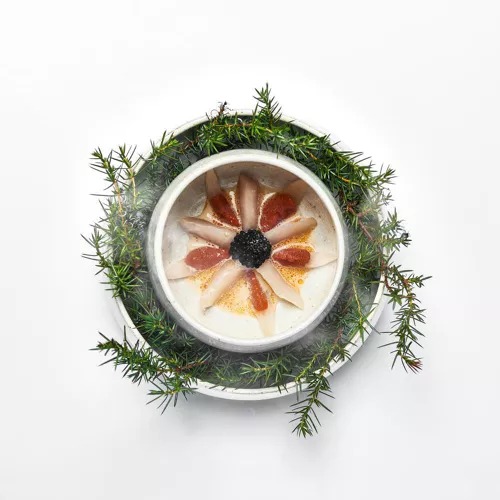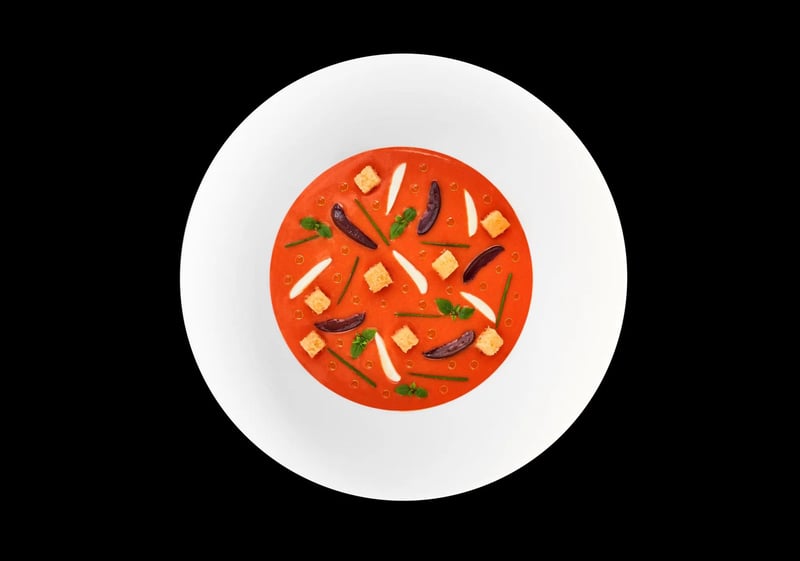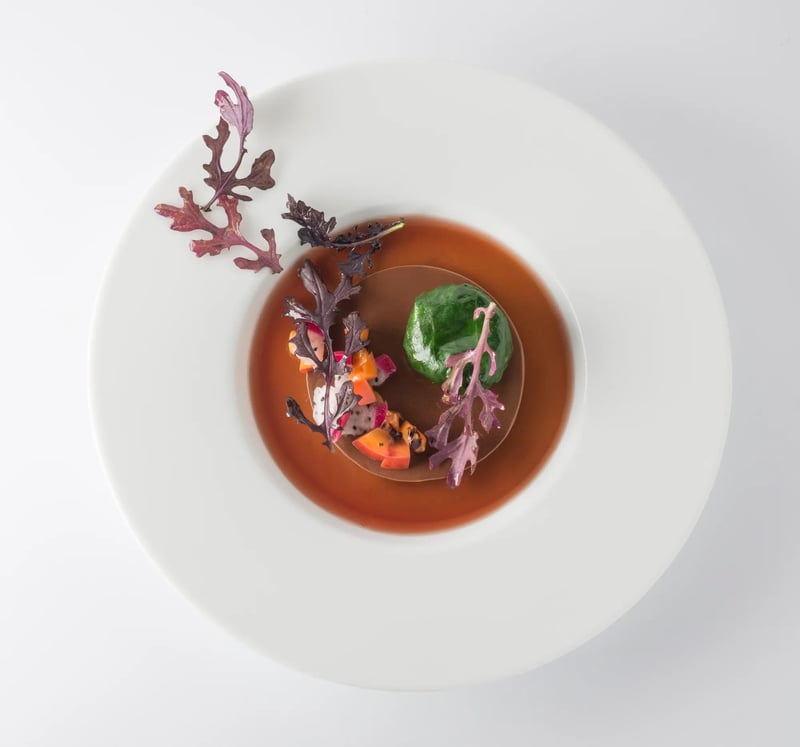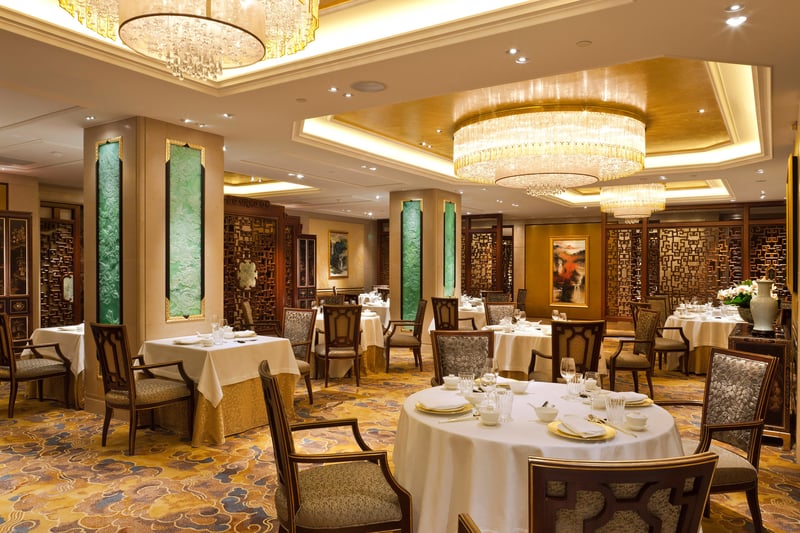
An 1892 château-style private mansion shelters this one-star table, where chef Grégory Garimbay crafts a vegetable-forward, seafood-focused menu drawn from the estate's own garden—over 250 varieties of produce and herbs. The dining room, reimagined by Laura Gonzalez as a contemporary winter garden with palm-filled Anduze pots and delicate panoramic murals, hosts his signature langoustine preparation: one service in hot consommé, the other raw in herbaceous oil pressed from the claws.
Explore Paris Historic Restaurant
Yannick Alléno commands this three-Michelin-starred pavilion in the Jardins des Champs-Élysées, where classified historical woodwork and vast windows frame a masterclass in contemporary French technique. His revolutionary approach to sauces and extractions—langoustine amplified by carapace essence, turbot in precision-calibrated beurre blanc—delivers flavors of startling intensity. The gastronomic concierge tailors each multi-course experience, while tables spaced beneath subdued lighting and garden views provide the setting haute cuisine demands.
Shintaro Awa, Eric Frechon's former second at Le Bristol, now presides over this triple-Michelin-starred institution on Place des Vosges, preserving Bernard Pacaud's exacting legacy while adding subtle Japanese precision. The dining room layers eighteenth-century antique mirrors and tapestries against red-lit contemporary panels and black-and-white marble; the cooking honours timeless French technique—langoustine feuillantine with sesame and curry, roasted Bresse poularde, throat sweetbreads à la financière—executed with uncompromising rigour.
Jérôme Banctel's three-Michelin-starred restaurant occupies a nineteenth-century Napoleon III mansion refurbished by Jacques Garcia, where Spanish gilt leather and Versailles parquet set a grandiose tone. His two tasting menus—Virée, honouring Breton roots, and Périple, spanning Japan and Turkey—showcase techniques like limewater cooking discovered abroad. Full-bodied sauces deliver tart, spicy, and briny layers with cosmopolitan precision, making this a quintessential fine-dining address for travellers seeking high-flying culinary art near the Champs-Élysées.
Arnaud Faye's three-Michelin-starred table unfolds beneath Louis XVI furnishings and tall French windows opening onto Le Bristol's formal garden. His minimalist approach yields light, refined preparations that balance purity of flavor with generous execution—heirloom wheat bread baked on-site, sauces concentrated yet feather-light, and art-directed plating that reflects flawless technique. The mirrored dining room and garden views complete an experience defined by precision and restraint.
Frédéric Anton has commanded this Napoleon III pavilion in the Bois de Boulogne for over a quarter century, earning three Michelin stars with his precise, understated technique. Pierre-Yves Rochon's redesign frames the dining room in green, white, and silver against parkland views. The tasting menu showcases scallops, langoustine, and caviar alongside signature cherry-smoked salmon and squab with nettle jus—haute cuisine at its most refined.
Named for Anne of Austria, this one-Michelin-starred table occupies the Pavillon de la Reine on Place des Vosges, where history permeates every stone. Chef Mathieu Pacaud and executive chef Matthieu Pirola deliver classic French cuisine with exacting precision—scallops dressed in hazelnut oil, brightened by lemon and champagne gelée, exemplify their refined touch. A courtyard terrace offers rare calm amid the capital's bustle.
Guy Savoy's two-Michelin-starred table occupies six intimate salons within the Hôtel de la Monnaie, where contemporary sculpture from the Pinault Collection frames views of the Seine. Named best restaurant in the world for eight consecutive years by La Liste, the kitchen delivers iconic French gastronomy: artichoke soup with black truffle and brioche feuilletée, salmon cold-cooked tableside on ice, roasted pigeon with Madeira and Timut pepper. The 680€ Menu Couleurs explores seasonal technique and precision service in a historic riverside setting.
Andrea Capasso delivers two-Michelin-starred surf-and-turf inventiveness inside an 1884 mansion off the Champs-Élysées, owned by Mission Haut Brion's Bordeaux stewards. Each course unfolds as three miniature creations—mackerel with crispy pig's ear, turbot paired with cauliflower and sardine head, raw langoustine laced with raspberry—transforming a five-course menu into fifteen plates of bold, Breton-inflected luxury beneath gilded mouldings that recall Napoleon III's opulent dining halls.
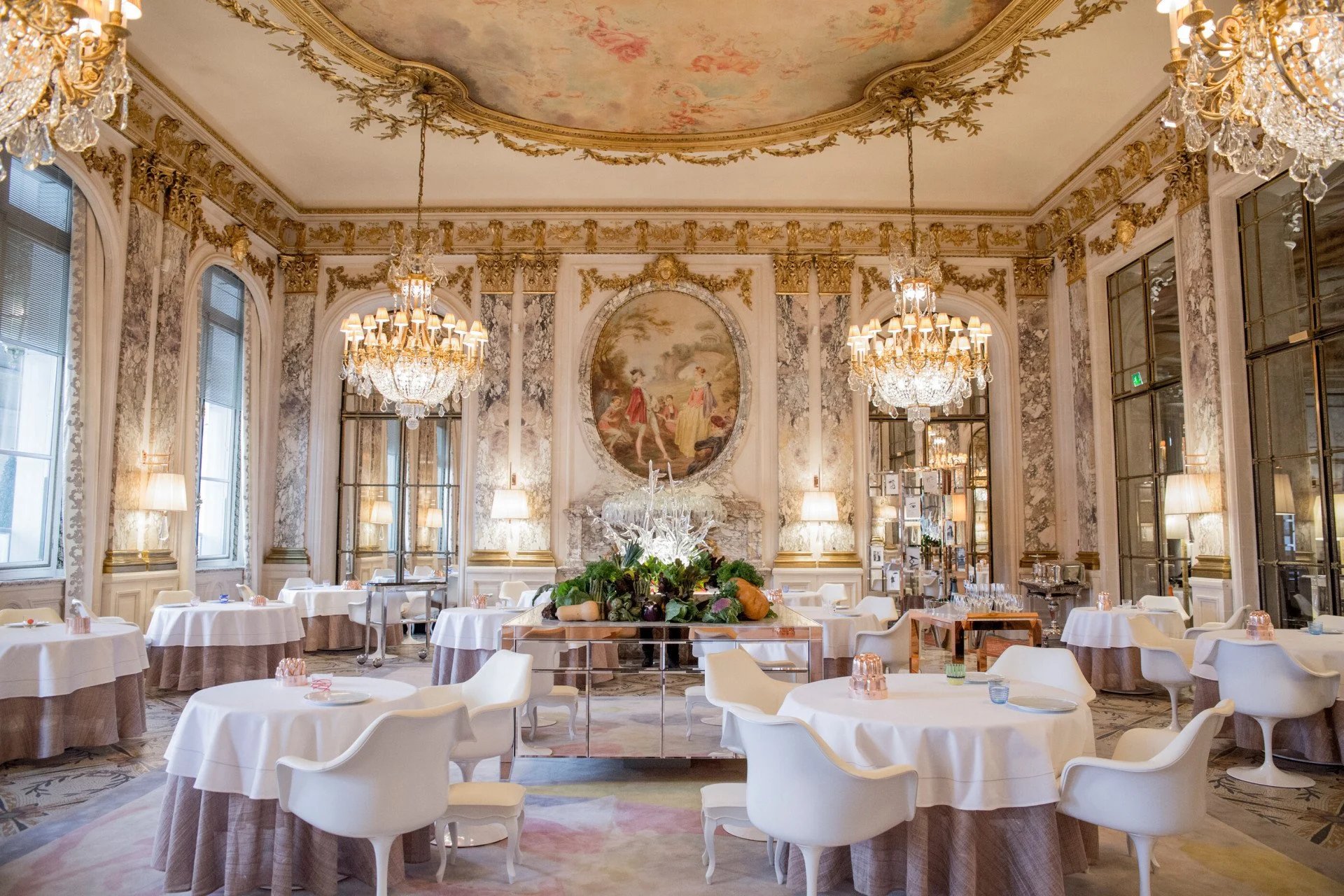
Facing the Jardin des Tuileries, this two-Michelin-starred dining room channels Louis XVI grandeur with gilded ceilings and cascading crystal chandeliers. Executive chef Amaury Bouhours interprets Alain Ducasse's vision through tasting menus that honor classical French technique while showcasing contemporary creativity, served in elegant small portions. Cédric Grolet's Instagram-famous desserts provide a fitting finale to meals that attract an international luxury clientele seeking quintessential Parisian refinement.
Frequently Asked Questions
Which Paris neighborhoods have the most historic restaurants?
+
Saint-Germain-des-Prés, the grands boulevards near Opéra, and the covered passages of the 2nd arrondissement contain the densest concentration. Montmartre and the Latin Quarter also preserve significant Belle Époque and early 20th-century establishments.
Do historic Parisian restaurants require reservations?
+
Most iconic brasseries accept walk-ins for their large dining rooms, though peak hours fill quickly. Smaller historic establishments with limited seating typically require booking several days ahead, especially for dinner service and weekend lunch.
What dishes are traditional at Paris heritage restaurants?
+
Expect classic French brasserie fare: oysters and seafood platters, steak frites, sole meunière, duck confit, and traditional desserts like profiteroles or baba au rhum. Many maintain recipes unchanged for decades, served with the same silver and porcelain.
Nearby Destinations
Explore FranceThe grand boulevards and Saint-Germain-des-Prés hold the highest concentration of historic dining rooms, many operating since the 19th century under the same addresses. Look for original features: etched glass partitions, zinc bars, mosaic floors, and mahogany paneling that no amount of money could recreate today. The 1st and 2nd arrondissements preserve covered passage restaurants dating to the 1820s, while Montmartre maintains Belle Époque establishments that once fed artists and writers.
These addresses function as working museums—expect formal service traditions, classic French preparations, and clientele mixing tourists with regulars whose families have dined there for generations. Many appear in our Paris restaurant guide, and pair naturally with stays at the city's heritage hotels that share the same architectural DNA.