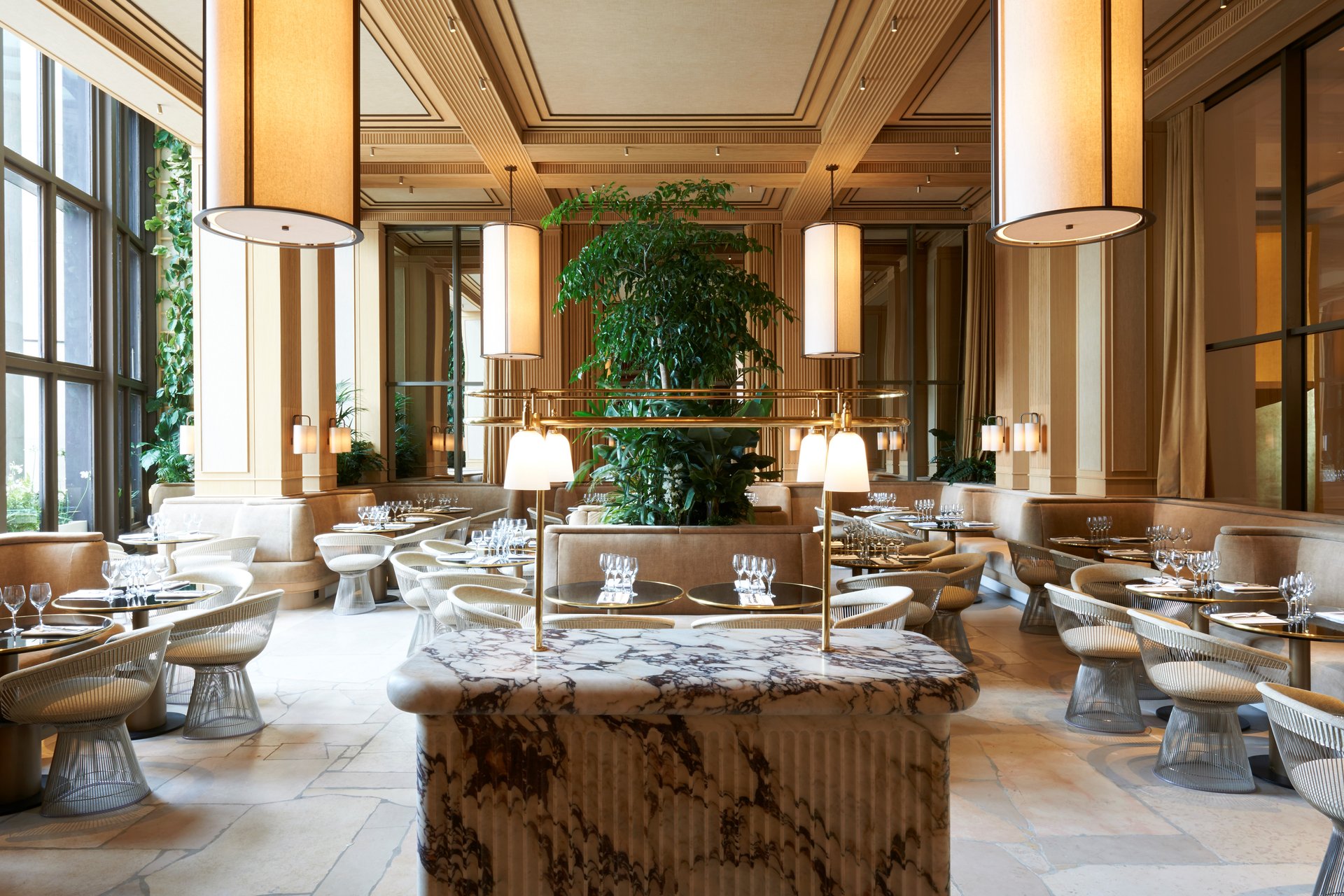
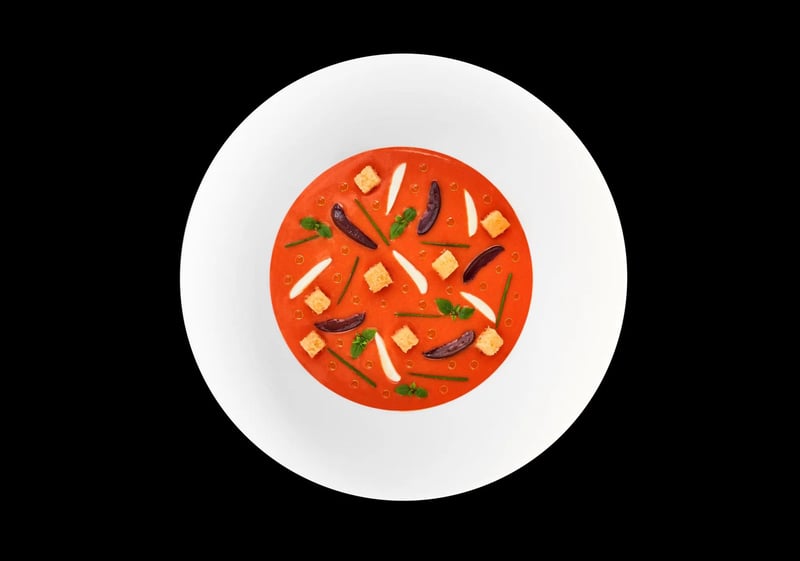
Stéphanie Le Quellec's first solo restaurant earned two Michelin stars within four months, built on her vision to make haute cuisine more approachable without sacrificing rigor. The open kitchen and brass-fitted dining room—designed to recall a cruise-ship cabin—set the stage for big-flavored modern French cooking anchored by vintage sherry vinegar sauces and a constantly evolving red-mullet signature. Magnums and jeroboams pour by the glass from an unconventional cellar.
Explore Paris Design Restaurant
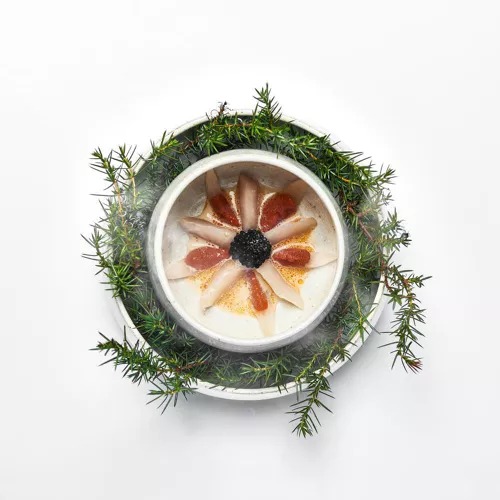
Shinichi Sato's two-Michelin-starred table occupies a striking circular dining room beneath a vault of interwoven wooden slats, where minimalist design meets technical precision. The chef privileges purity of flavour through surgical attention to detail: Finistère sea urchin tongues with stracciatella and kombu jelly, minute monkfish with ginger and artichoke, osciètre caviar paired with oyster ice cream. A Burgundy-focused wine list and impressive whisky selection at the hushed bar complete the refined experience.
Japanese sushi master Tomizawa Katsutoshi and chef Yannick Alléno collaborate at this two-Michelin-starred counter inside Pavillon Ledoyen, where twelve pale-wood seats overlook Atlantic ikejime fish undergoing artisan maturation and rice vinegar techniques. Ceramic walls by William Coggin and a striking installation of thousands of chopsticks by Tadashi Kawamata frame each ritualized course. Critics rank it among Europe's finest Japanese restaurants, delivering profound precision alongside sought-after sakes and creative inflection.
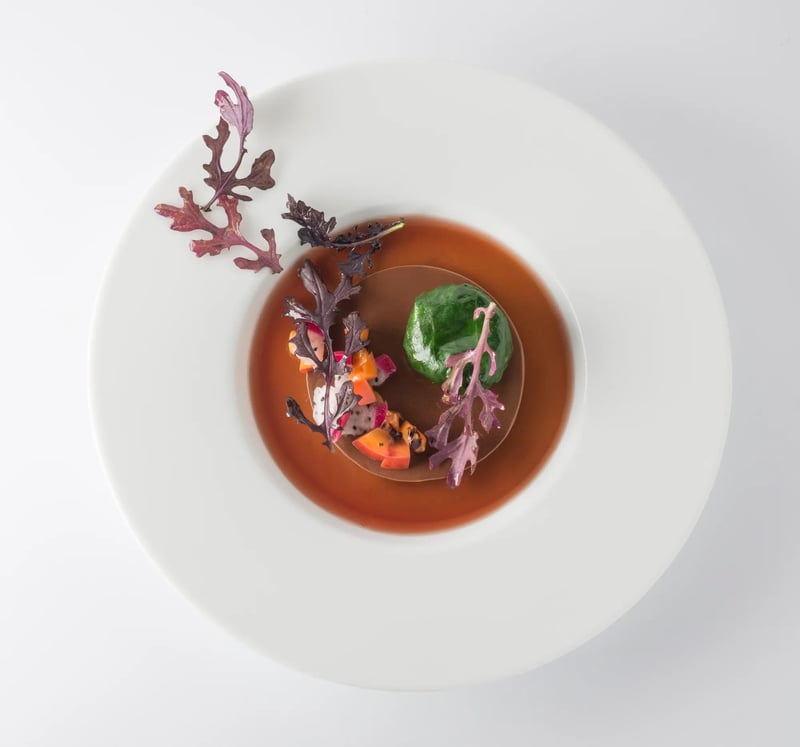
Alan Taudon's two-starred table occupies a glass-walled courtyard at the George V, crowned by a suspended porcelain sculpture of bougainvillea petals. The menu shuns meat entirely, spotlighting vegetables, dairy, and seafood with surgical precision: blue lobster grilled over binchotan, merguez-spiced claws arranged on crunchy herbs with beetroot-horseradish, all lifted by feather-light sauces that marry maritime and garden notes in unexpected harmony.
Jean-François Piège's two-Michelin-starred table occupies an intimate space beneath a sculptural glass ceiling that fractures and reflects light across the room. The tasting menu explores French regional traditions through mijotés modernes—contemporary slow-cooked preparations informed by Piège's legendary cookbook collection. Expect dishes like veal sweetbread roasted on walnut shells with whelks and lettuce-emulsified stock: technically precise, emotionally resonant, never showy.
Sushi master Tomoyuki Yoshinaga orchestrates a culinary performance for just ten diners, preparing surgically precise cuts of fatty tuna in a space adorned with artist-designed ceramics, rosewood chopsticks, and maple panelling. The two-Michelin-starred omakase unfolds through house-crafted marinades, bespoke soy sauces, and warm opening courses, delivered by a chef-maître d' partnership whose silent choreography and subtle humour elevate an already exacting gastronomic ritual.
Le Bristol's Michelin-starred brasserie captivates with its singular aesthetic: gilded columns rise beside orange walls adorned with luminescent dahlia motifs, while a grand staircase descends to a lower level where tables face open kitchens. The setting—shimmering, bustling, yet intimate—frames discreetly inventive interpretations of French classics, each dish carefully presented with refined flavor pairings that honor tradition while embracing contemporary technique.
Steps from the Seine, this discreet modern address showcases Chef Atsushi Tanaka's precision-driven approach to seasonal ingredients, honed during his tenure at Pierre Gagnaire. The single tasting menu shifts frequently, ensuring every visit unfolds with fresh surprises, while the minimalist dining room reflects an unfussy commitment to craft over theatre. A vaulted cellar beneath the restaurant doubles as a wine bar and take-away counter, extending the one-starred experience beyond the upstairs tables.
Behind a redesigned mineral-toned interior by Franco-Japanese architects Maïa Laville and Mamoru Kondo, Romain Mahi finishes plates at the counter while Ayumi Sugiyama orchestrates desserts of quiet technical brilliance—sugar bubbles suspended over rosemary emulsion, reduced milk spheres floating in sparkling cardamom water. The cuisine layers roasted and smoked aromatics across Arctic char, clementine-braised cauliflower, and poularde paired unexpectedly with smoked eel. Even the tableware shifts with each menu, shaped by the chefs themselves.
Eight counter seats face teppanyaki griddles in this minimalist white dining room, where a single tasting menu traces culinary connections between France and Japan. The Michelin-starred kitchen carves, slices, and grills Brittany lobster, châteaubriand, and sweetbread with surgical precision, allowing each ingredient to speak for itself. Seasonal sashimi and Burgundy pairings complete an intimate omakase experience defined by restraint and visual purity.
Frequently Asked Questions
Which Paris neighborhoods have the most design-focused restaurants?
+
The Marais, particularly around rue de Bretagne and the Haut-Marais, concentrates many architect-designed spaces in converted industrial buildings. Saint-Germain-des-Prés and the area around Odéon attract more polished, gallery-influenced interiors. The 10th and 11th arrondissements near Canal Saint-Martin feature emerging designer-chef collaborations with bold experimental concepts.
Do design restaurants in Paris require advance reservations?
+
The most visually striking addresses often book weeks ahead, particularly for dinner service. Their limited seating—sometimes just twenty or thirty covers to preserve the spatial concept—means walk-ins rarely succeed. Lunch service tends to be more accessible, and some offer counter seating that doesn't require booking.
Are design restaurants in Paris suitable for business dinners?
+
Many work exceptionally well for this purpose, offering private rooms or semi-enclosed spaces designed for conversation. The acoustics in architect-planned restaurants are typically superior to conventional dining rooms. Several in the 8th arrondissement and near the Champs-Élysées specifically cater to corporate clients with AV capabilities and discreet service.
Nearby Destinations
Explore FranceThe city's design-forward restaurants cluster in predictable pockets: the Marais delivers industrial-chic conversions in former workshops, while Saint-Germain-des-Prés favors midcentury elegance reimagined by contemporary architects. Near the Canal Saint-Martin, younger chefs collaborate with set designers to create immersive spaces where the room itself becomes part of the meal. These are addresses where the furniture might be museum-worthy, the lighting installation took months to complete, and every material—terrazzo, brass, smoked glass—was chosen with obsessive intention.
What unites these spaces is serious ambition on the plate to match the visual drama. Many share DNA with the best design hotels in the capital, sometimes occupying the same buildings or working with the same interior studios. For visitors exploring the broader restaurant scene, these architect-driven addresses offer a distinctly Parisian proposition: meals as total aesthetic experiences, where what surrounds you matters as much as what arrives on the plate.