Commanding views of Lake Geneva from its Belle Époque terraces, this 1909 palace honors King Edward VII with Gustave-Louis Jaulmes frescoes now classified as Historic Monuments. The 1,700 m² spa features a rare snow cave, while chef Patrice Vander's Michelin-starred Les Fresques draws from a 3,000 m² kitchen garden. Families find exceptional programming; golfers access championship-level courses minutes from alpine skiing.
Where to Stay
A vintage chalet-hotel perched above Morzine, Les Côtes delivers sweeping Alpine panoramas from its wood-paneled rooms while keeping families thoroughly entertained below. Après-ski diversions run from bowling lanes to a swimming pool and hot tub, complemented by hearty Savoyard cooking in the restaurant. Quad rooms with bunk beds and two-room suites sleeping five make multi-generational stays effortless; three self-catering chalets in the grounds offer added independence.
British hospitality meets Alpine convenience at this Morzine stalwart, where ride-in-ride-out access to the slopes eliminates the morning shuttle scramble. The two-star rooms keep things functional rather than fussy, freeing budget for what matters: time on the mountain. Come evening, the in-house bar-restaurant draws skiers for convivial après-ski, while family rooms accommodating up to five make it a practical base for multi-generational groups.
Villa Cécile commands a hillside garden on Lake Geneva's southern shore, its terraces descending toward the water through manicured greenery. Several rooms frame romantic lake panoramas, while the year-round spa and outdoor pool provide respite regardless of season. Traditional French cuisine showcases regional ingredients, and families find thoughtful provisions: interconnecting rooms, a shallow children's pool, baby equipment on request.
A family-run chalet at the foot of Col de Joux-Plane, La Bergerie operates exclusively during ski season, with Saturday arrivals and week-long stays setting an unhurried Alpine rhythm. The 29 rooms feature blond wood and traditional fabrics, while a central fireplace anchors the après-ski bar. Summer brings an outdoor pool and garden terrace; families appreciate the children's table d'hôte and kitchenette suites for self-catered excursions.
Perched at 1,250 meters on the Col de la Faucille, this family-run chalet commands sweeping views from Lake Geneva to Mont Blanc. Three generations have shaped the property since 1941, now refined by designer Xavier Cartron's warm contemporary interiors. Chef Julien Thomasson's Michelin-starred kitchen showcases Léman fish and Bresse poultry, while Le Panorama offers alpine brasserie fare against that staggering mountain panorama. A retreat for skiers, hikers, and gastronomes alike.
A striking angular silhouette rises above Avoriaz's snow-covered slopes—Les Dromonts, a Le Corbusier-inspired landmark from the 1960s now protected as a French historic monument. Its 34 cedar-walled rooms retain original archways beneath a contemporary gray palette, while ski-in, ski-out access leads directly to Portes du Soleil. After runs, stone fireplaces warm the lounge, the retro-chic Le Festival Bar pours après-ski drinks, and Les Enfants Terribles serves classic French fare.
Arriving by horse-drawn sleigh sets the tone at this ski-in, ski-out retreat perched at 1,800 meters in the Portes du Soleil. The futuristic wooden chalet channels 1960s Alpine modernism with mod furniture and tavaillon-shingled balconies, while an altitude bar stocks nearly 300 wines for après-ski. A heated infinity pool and glass-walled spa survey the peaks; families appreciate a dedicated game room—complete with climbing wall—where adults are politely barred.
Where to Eat
Chef Benjamin Breton, formerly of Geneva's Ritz-Carlton, earns a Michelin star at this Lucinges village address with a monthly set menu built on rigorously sourced local produce. Blue lobster receives the gentlest sear; ikejime Arctic char demonstrates precise technique; vegetables command equal attention through sublime sauces and striking contrasts. A glass-walled cellar showcases natural and organic wines within the bright, contemporary dining room.
Gustave Jaulmes' Art Nouveau frescoes preside over this one-Michelin-starred dining room at the Hôtel Royal, where chef Patrice Vander crafts precise, ingredient-driven cuisine. Arctic char, perch, and crayfish arrive fresh from Lake Geneva, while herbs and vegetables come from the estate's cottage garden. The panoramic lake views and polished service complete an evening of refined gastronomy.
A fifteenth-century castle with exposed stone walls and original timber beams provides the atmospheric setting for chef Jérôme Mamet's one-Michelin-starred cuisine. His mystery menus showcase rigorously sourced, often organic ingredients through inventive preparations where plating receives meticulous attention. Winter evenings unfold beside the fireplace in romantic intimacy, while warmer months reveal a terrace overlooking the surrounding countryside—an ideal destination for Lake Geneva visitors seeking refined gastronomy.
Perched at the Col de la Faucille, this regional institution commands sweeping views of Mont Blanc and Lake Geneva through floor-to-ceiling windows. The kitchen delivers polished modern cooking rooted in classical technique—veal sweetbreads prepared blanquette-style, turbot à la grenobloise—using premium ingredients with confident restraint. For a more casual meal with the same panorama, the adjacent Le Panorama offers an accessible alternative.
Breton chef Jean-Philippe Lemaire brings an unexpected culinary vision to this Vallée d'Aulps address, drawing on formative years at Le Clos des Sens, Le K2, and Le Farçon. His one-starred kitchen navigates between Alpine ingredients and Asian inflections, punctuated by nods to his coastal origins—churned butter with buckwheat, caramelized milk. Beneath the cathedral ceiling, plates like biscuit de brochet arrive with refined simplicity, sauce boats left tableside.
Chef Hubert Chanove's one-star table occupies a renovated Belle Époque dining room in Machilly, a former raspberry-farming village near the Swiss border. His modern cuisine draws on Haute-Savoie's seasonal larder—Lake Geneva fish, autumn game, black truffles—accented with foraged wild flowers and herbs. Wife Fanny orchestrates front-of-house with familial warmth, making this an essential detour from the lakeside resorts.
A sixth-generation fisherman supplies this one-starred lakeside table in the tiny port of Séchex, where his sister runs the dining room and chef Lucas Dumelie commands the kitchen. The catch—whitefish, pike, trout, crayfish—arrives hours from the net, prepared with exacting technique: whitefish lacquered in kalamansi, finished with tarragon beurre blanc. Herbs and vegetables descend from the surrounding mountains. Three guestrooms allow the evening to linger.
Fifteen years at Le Grand Véfour in Paris shaped the chef-owner who now helms this seasonal French table on the approach to Évian. The generous cooking draws on classic technique—fricassée of sweetbread with spring peas, free-range chicken brightened by lemon confit—while lake perch and Charolais beef tartare anchor a menu rooted firmly in terroir. Michelin-noted, unpretentious, and satisfying.
A short drive from Évian through the Pays de Gex, this village auberge near Divonne operates on a refreshingly simple premise: one generous tasting menu, no choices required. The kitchen takes a modern approach to fine ingredients, presenting them with quiet confidence in rustic-toned dining rooms. When weather permits, the terrace overlooking the church makes for an unhurried countryside meal.
A family-run address near Lake Geneva, Baud draws from the alpine larder of Savoie to compose its modern repertoire. Trout from local waters arrives poached then chilled, paired with tarragon pesto and herb emulsion, while Muscovy duckling meets celeriac and Roscoff onions beneath a crimson-ceilinged dining room. Summer meals migrate to the riverside terrace, shaded by a pergola overlooking the water.
Frequently Asked Questions
What is the best way to travel between Évian and Switzerland?
+
CGN ferries operate year-round between Évian and Lausanne, crossing in roughly 35 minutes. The boat service provides direct access to the Swiss Riviera without requiring a car, and the journey itself offers panoramic views of both shorelines. During summer months, services run frequently; winter schedules are reduced but still practical for day trips.
When is the thermal season in Évian-les-Bains?
+
The thermal establishment operates from February through November, with peak season running May to September when the mild lakeside climate complements water-based treatments. Spring and early autumn offer quieter periods with full access to thermal facilities, ideal for those seeking wellness retreats without summer crowds.
Which nearby villages are worth exploring from Évian?
+
Yvoire, a twenty-minute drive west, is a fortified medieval village with stone ramparts and the acclaimed Jardin des Cinq Sens. Thonon-les-Bains offers a larger town experience with its château and fishing port at Rives. For alpine excursions, the Abondance valley leads toward traditional chalets and the abbey that gave its name to the local cheese.
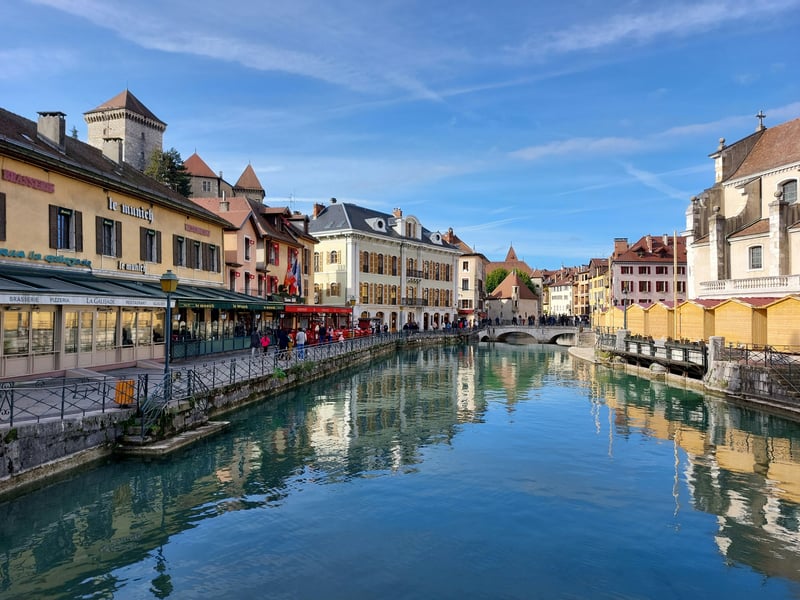
The southern shore of Lake Geneva curves gently between the Chablais peaks and waters so still they mirror the Swiss Alps opposite. Évian-les-Bains retains the Belle Époque grandeur of its casino-era heyday — wrought-iron balconies, manicured esplanades, and the constant presence of that famous mineral water bubbling from public fountains throughout town. The lakefront promenade connects the thermal quarter to the port, where ferries depart for Lausanne, creating an easy cross-border rhythm.
Beyond Évian, the French Léman shore stretches toward Thonon-les-Bains with its upper and lower towns, and the quieter villages of Excenevex and Yvoire, the latter a medieval walled commune classified among France's most beautiful. The regional table draws from both mountain and lake: féra and perch pulled fresh from the water, Savoyard cheeses from summer alpages, and Chasselas wines from terraced vineyards that climb the slopes above Ripaille. Spring brings the Fête de l'Eau; winter transforms the lakeside into a contemplative retreat between ski excursions to nearby Morzine and Avoriaz.