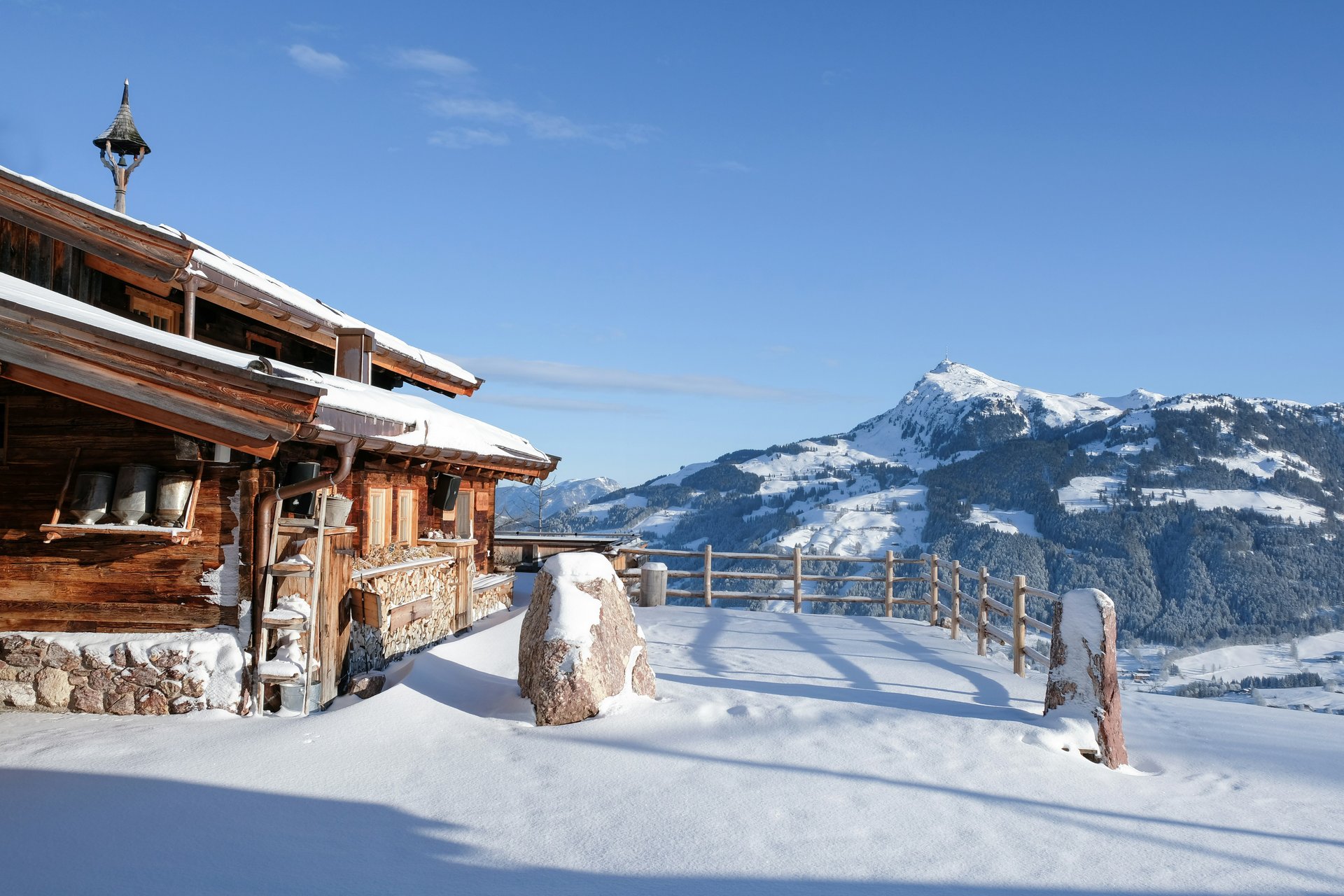

Rising from the Tyrolean countryside with a striking multi-turreted silhouette, Panorama Royal channels the grandeur of an Alpine country estate. The 90-room property draws wellness seekers to its exceptional spa complex—twelve distinct relaxation zones encompassing Turkish bath, jacuzzi, and sauna facilities. Guest rooms showcase contemporary mountain design through abundant natural wood surfaces, while dual swimming pools, indoor and outdoor, extend the aquatic offerings.
Explore Kitzbuhel
Frequently Asked Questions
When is the Hahnenkamm race weekend and how does it affect hotel availability?
+
The Hahnenkamm World Cup races take place in late January, transforming the town into an international sporting event. Hotels book months in advance for this weekend, with rates at their annual peak. Many properties require minimum stays of three to four nights during the race period.
What distinguishes summer stays from winter visits?
+
Summer offers hiking on over 1,000 kilometers of marked trails, golf on three courses including the elevated Eichenheim layout, and swimming in the Schwarzsee, one of Austria's warmest alpine lakes. Hotels typically offer lower rates from May through October, and many include cable car passes for mountain access.
Is Kitzbühel suitable for non-skiers during winter?
+
The town caters well to non-skiers with cleared winter walking paths, cross-country skiing on groomed Loipen trails, and extensive spa facilities. The medieval center provides atmospheric browsing through sporting goods shops, traditional crafts stores, and cafés without requiring ski boots.
Nearby Destinations
Explore AustriaThis medieval mining town turned winter sports capital sits at 800 meters in the Kitzbüheler Alps, its cobblestoned Vorderstadt lined with painted facades dating to the 16th century. The Hahnenkamm downhill course, site of skiing's most dangerous World Cup race each January, drops precipitously toward town. Summer brings a different crowd — hikers tackling the Kitzbüheler Horn, golfers on championship courses, and cyclists on the valley's extensive trail network.
The dining scene reflects both Austrian mountain tradition and international polish. Hotel restaurants dominate, many with chefs who've earned regional recognition for their interpretations of Tyrolean cuisine — game from local forests, dairy from alpine pastures, herbs foraged from surrounding meadows. The après-ski ritual here involves less raucous beer halls than refined wine bars and café terraces overlooking the Schwarzsee lake.