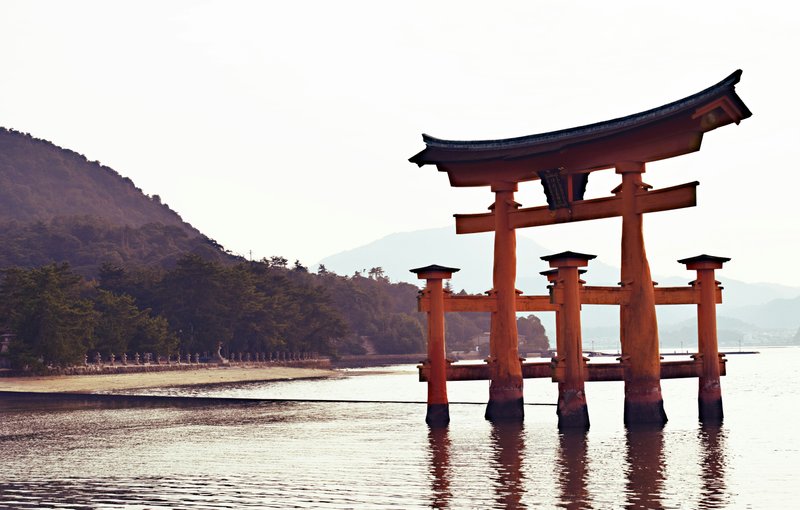
Itsukushima — the island's formal name — has drawn pilgrims since the sixth century, when the vermilion torii gate was first erected in the tidal flats facing the Seto Inland Sea. The main settlement clusters along Omotesando arcade, a narrow pedestrian street where momiji manju vendors steam their maple-leaf cakes in open shopfronts and the scent of grilled oysters drifts from waterfront stalls. Beyond the shrine precinct, forested Mount Misen rises to 535 meters, its summit accessible by ropeway or hiking trails through primeval forest.
Accommodation here follows the ryokan tradition: multi-course kaiseki dinners served in-room, futons laid on tatami, and rotenburo baths overlooking the floating torii as it illuminates at dusk. The island enforces a contemplative pace — no cars, no bicycles on the main paths, and by evening, when day-trippers return to Hiroshima, the deer wander freely through emptied streets. Coffee culture has arrived in recent years, with specialty roasters occupying converted machiya along the backstreets behind Tahoto pagoda.