Rosewood Beijing reimagines the traditional hutong courtyard as a luxury hotel in the central business district, with original cloisonné metalwork adorning each spacious guest room and gongbi brush paintings filling the lobby. The sixth-floor outdoor pool sits amid lush greenery, while Sense spa offers bamboo linen treatments and Lorenzo Villoresi bath products. Seven restaurant concepts, a yoga studio, and obsessive attention to detail define this sophisticated urban retreat.
Explore Beijing
Where to Stay
Forty-two courtyard suites occupy restored hutong houses in the historic Qianmen district, their classic siheyuan architecture framing Zen courtyards within a labyrinth of narrow alleyways. Contemporary interiors contrast with centuries-old structure, while the Tea House offers traditional ceremonies led by resident ambassadors. The spa centers on Chinese wellness traditions—sound baths, singing bowl therapy, treatments rooted in ancient practice—alongside Cantonese and Italian dining. Complimentary bikes facilitate exploration of surrounding hutongs.
Antonio Citterio and Patricia Viel's design for this Chaoyang property fuses imported marble, premium leather and wood with Enzo Enea's curated gardens of 200-year-old pines along the Liangma River. The subterranean pool area channels ancient Roman baths through volcanic Vincenza stone and gold-inlaid mosaics, while Niko Romito's Michelin-starred Italian kitchen pairs simplicity-driven cuisine with 500+ wine labels. Butler service, Maserati transfers and an 11-room spa complete the offering.
Among Beijing's most generously proportioned guest rooms, many overlook the Forbidden City's imperial rooftops. Frank Gehry's scarlet fish sculpture anchors the lobby, while the rooftop MO Bar delivers sunset cocktails with terrace views. Chef Wong Wing-Keung's Café Zi serves dim sum and Cantonese classics; the spa's four themed suites offer treatments including the two-hour Emperor's Longevity ritual. Families appreciate children's menus, babysitting, and proximity to Hamley's flagship toy store.
Perched in the mountains west of Beijing, Xitan Hotel occupies two hectares of a late-Ming village, its 38 courtyards blending vernacular architecture with contemporary interiors. Each room follows a distinct design concept marrying historical reference and modern restraint. The House of Rong, helmed by Chef Jun Wang, draws on Xin Rong Ji's culinary tradition, while the Qin Spa centres on hydrotherapy amid views of forested peaks.
Since 1989, The Peninsula Beijing has anchored Wangfujing with the city's most generous accommodations—all-suite layouts beginning at 645 square feet, each with oversized bath, walk-in dressing room, and separate sleeping and living quarters. A lobby adorned by Qin Feng's avant-garde ink paintings opens onto three floors of designer boutiques, while Jing delivers modern French cuisine and Huang Ting classic Cantonese dishes with full supplier transparency. Yun Summer Lounge crowns the property with rooftop Mediterranean plates and cocktails.
German architect Ole Scheeren's striking glass cube—its façade echoing traditional hutong brickwork—rises steps from the Forbidden City, where Grand Deluxe rooms frame rooftop views of imperial Beijing. Minimalist interiors showcase Chinese artistry and craft traditions, while Fu Chun Ju's Michelin-starred Cantonese kitchen and the Guerlain Spa anchor a serene, adult-focused retreat. Complimentary breakfast, laundry, and minibar reflect the group's "hostmanship" philosophy.
A striking copper-and-bronze latticework façade by Adrian Smith + Gordon Gill announces this 176-room property in Wangfujing, minutes from the Forbidden City. Inside, Yabu Pushelberg's interiors layer silk-lined corridors, gold-flecked Italian marble, and black lacquer accents with red and gold overtones. The near one-to-one staff ratio ensures attentive service, while Peacock Alley channels art deco glamour for afternoon tea and cocktails.

A futuristic glass pyramid in the Parkview Green development shelters 100 rooms arrayed with Salvador Dalí and Andy Warhol originals, Philippe Starck furnishings, and Bang & Olufsen sound systems. Lagoon Suites offer private terraces and plunge pools, while every guest enjoys a Panasonic massage chair, 3D LCD screens, and Miller Harris bath products. Business travelers appreciate the Embassy District address and direct access to designer boutiques, restaurants, and cinemas.

A shimmering LED facade in hexagonal honeycomb patterns marks this sleek tower in Sanlitun's shopping and nightlife hub. Space shuttle-inspired rooms feature floor-to-ceiling windows framing the capital's skyline, while the cathedral-height lobby offers premium tea service beneath brass cable bookshelves. The fifth-floor asymmetrical pool appears to merge with Beijing's rooftops through panoramic glazing. Five dining venues span Cantonese classics to Spanish tapas, crowned by Top Bar's live music terrace.
Where to Eat
Chef Cheung brings Hong Kong and Shanghai expertise to this three-Michelin-starred Chaozhou restaurant, where the entrance corridor displays premium dried fish maws that signal the luxury ahead. His braised fish maw with 30-year-aged dried radish demonstrates the refined technique applied to regional classics, the aged radish lending profound aromatic complexity. An exceptional wine list and curated tea selection complement the sophisticated dining experience.
This flagship location commands three Michelin stars for its refined approach to Taizhou cooking, centered on East China Sea fish prepared in an elegant, modern Chinese dining room. The exclusive 28-day-aged baby Peking duck requires advance ordering and justifies the wait, while the duck stew with fish maw showcases taro so starchy it dissolves on the tongue—a signature of precision technique applied to regional tradition.
French chef Vianney Massot's two-Michelin-starred restaurant occupies an idyllic setting within Luohong Art Museum, its swan-themed dining room—white arabesques, feather motifs—overlooking a pond where swans and koi glide. His cuisine offers a distinctive interpretation of French tradition through seasonal ingredients, exemplified by slow-roasted wild turbot: firm, intensely briny flesh paired with two sauces that amplify rather than mask its oceanic character.
Jingji revives imperial Chinese cooking with a contemporary lens, holding two Michelin stars for its approach to royal cuisine and regional traditions. Housed at The Ritz-Carlton Beijing, the restaurant presents set menus centered on dried seafood and vegetables, with the braised fish maw in rich broth standing out for its texture and depth. Private rooms allow bespoke menu planning. The name fuses 'Beijing' with 'Yueji,' the capital's official flower.
Veteran chef Dai brings his Japan-honed mastery of plant-based ingredients to this intimate two-Michelin-starred dining room, where a pitched-roof skylight floods the space with natural light. The seasonal menu showcases Yunnan mushrooms chargrilled for his signature porcini dish with green pepper and sea salt, while the house tofu—steeped in richly layered broth—has earned near-mythic status among Beijing's steakhouse cognoscenti.
Lu Shang Lu holds two Michelin stars for its mastery of Shandong cuisine, spotlighting Confucius recipes and sea cucumber alongside live seafood flown daily from the Jiaodong peninsula. The Yantai-born chef's signature—roast 45-day-old duck paired with caviar, prawn crackers, and Shandong pancakes—bridges Beijing and Shandong traditions. An extensive tea menu with personalized service completes the refined dining experience.
Adjacent to the Yonghe Temple, this decade-old courtyard house pursues a lacto-ovo vegetarian ethos through Zen-inspired minimalism and therapeutic precision. Two Michelin stars and a Green Star recognize menus built on steaming, slow-cooking, and sautéing techniques that foreground seasonal produce and herbal properties. Three tasting formats, each spanning over ten courses, accommodate vegan preferences while channeling Beijing's philosophical culinary heritage into contemporary plant-forward gastronomy.
Two Michelin stars recognize this understated dining room where a Shanghainese head chef and team reinterpret regional classics with contemporary precision. The kitchen sources elusive Jiangzhe ingredients rarely found in Beijing, transforming them into seasonal compositions alongside impeccable dim sum—delicate xiao long bao and qingtuan dumplings stuffed with sweet rice and Chinese mugwort. The neutral-grey interior, accented with teal, frames refined Shanghainese gastronomy for serious collectors of culinary tradition.
The Milanese fashion house behind this elegant dining room brings the same refined sensibility to Northern Italian cuisine as it does to couture. One Michelin star recognizes hand-rolled agnolotti and linguine, veal Milanese pounded thin, and slow-braised Piedmontese beef, all paired with an all-Italy wine list spanning Barolo to Verdicchio. Freshly baked breads arrive warm at the table, completing the experience.
Milanese chef Niko Romito brings refined Italian cooking to Beijing's Bvlgari Hotel, housed beneath Murano glass chandeliers and marble-clad interiors that overlook manicured gardens. The one-Michelin-starred menu reworks antipasti classics with quiet precision—vitello tonnato arrives with veal sliced translucent-thin, its tuna sauce sharpened and balanced for contemporary taste. Expect sophisticated restraint rather than showmanship, each dish layered with depth that rewards close attention.
Frequently Asked Questions
Which Beijing neighborhoods offer the best access to historic sites?
+
Dongcheng district places you within walking distance of the Forbidden City, Jingshan Park, and the historic hutong lanes. Xicheng, on the western side of the palace complex, offers proximity to Beihai Park and the traditional Shichahai lake area with its courtyard restaurants and evening atmosphere.
When is the best time to visit Beijing?
+
Autumn — September through early November — brings clear skies, comfortable temperatures, and excellent visibility for Great Wall visits. Late spring (April to May) is also pleasant, though occasional sandstorms occur. Summer is hot and humid; winter is cold but uncrowded, with dramatic light over the palace rooftops.
What regional cuisines should visitors explore in Beijing?
+
Beyond Peking duck, the city excels in Shandong cuisine with its refined seafood and wheat-based dishes, Yunnan cooking from the southwest, fiery Sichuan and Hunan preparations, and increasingly accomplished interpretations of Cantonese dim sum. The diplomatic and business presence also supports strong French, Japanese, and Italian restaurants.
Nearby Destinations
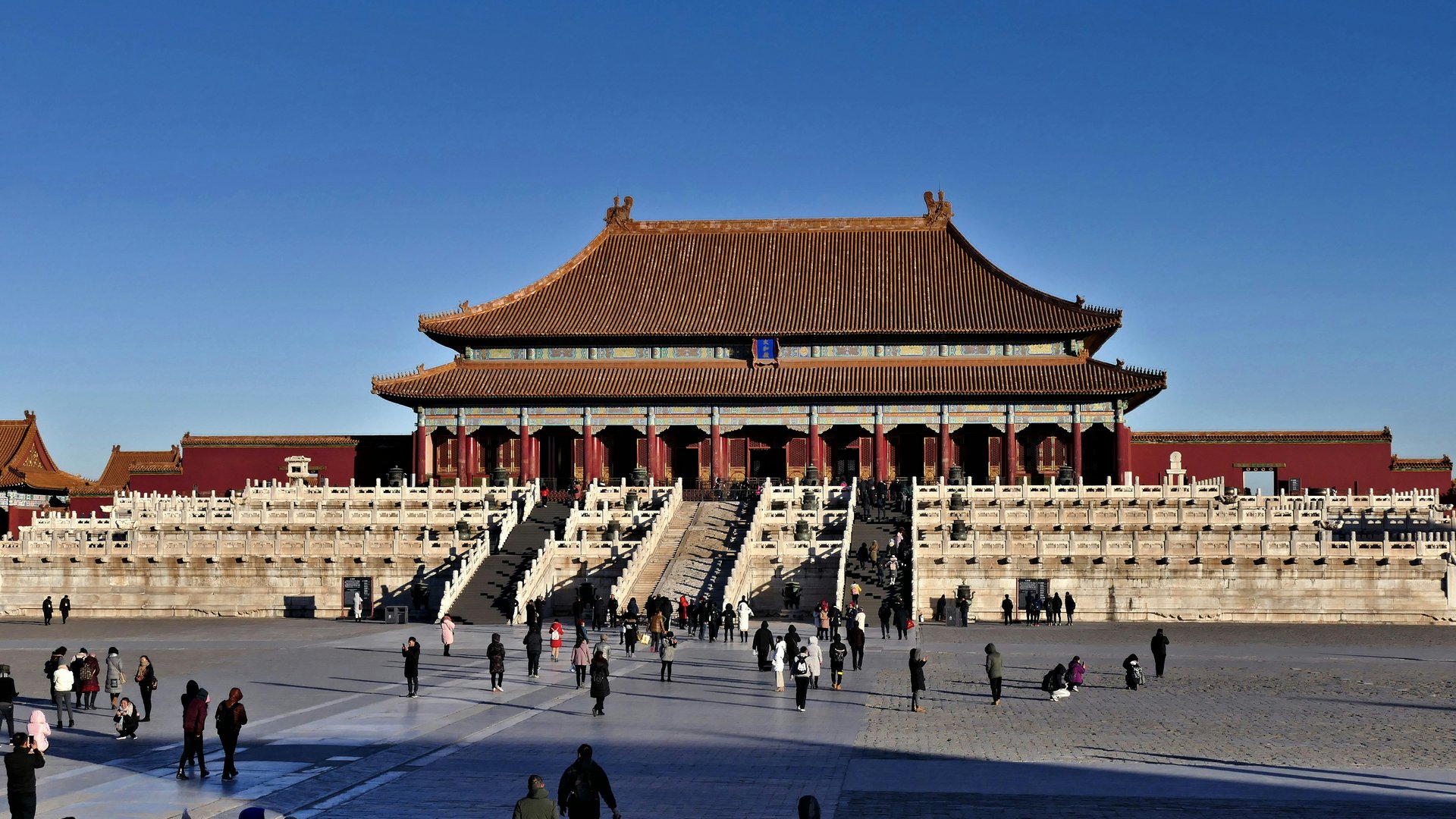
Explore ChinaThe capital sprawls across a vast northern plain, its ancient grid anchored by the Forbidden City and the ceremonial axis running from Qianmen Gate to the Olympic Green. The hutong neighborhoods — Nanluoguxiang, Wudaoying, the lanes around Houhai — preserve courtyard architecture now converted into boutique properties and intimate restaurants. Modern towers cluster along Chang'an Avenue and in the Central Business District eastward, where international hotels occupy the upper floors of glass skyscrapers overlooking ring roads and embassy compounds. The city's dining runs from imperial court cuisine and precise Shandong cooking to Sichuan hotpot and French tasting menus — the best restaurants range across every tradition.
Wangfujing and Dongcheng attract visitors seeking proximity to the palace quarter and its museums. Chaoyang's Sanlitun and CBD areas draw those preferring contemporary architecture and rooftop bars. Winter brings dry cold and clear skies; spring sees occasional dust storms from the Gobi; summer and autumn offer the best weather for temple visits and Great Wall excursions. Whether you favor a heritage courtyard stay or a modernist suite in a new tower, the best hotels accommodate both sensibilities. For serious gastronomy, the best gastronomic restaurants deliver elaborate multi-course experiences interpreting Chinese and international techniques.