Once an Italian duchess's private retreat, this 50-acre estate occupies Xpu-Ha beach, among the Riviera Maya's last undeveloped stretches. Hand-carved tzalam wood furniture and canopy beds dressed in white linen furnish suites that open onto jungle or sea. Three restaurants—Mistura's Mexican-Mediterranean cuisine, Taiyo's Japanese plates, Beefbar's steaks—anchor the culinary program, while a circular spa with outdoor tubs draws on ancient Mexican healing traditions.
Where to Stay
Asian refinement meets Mayan mystique at this secluded Riviera Maya retreat, where 132 private villas—each with its own generously sized pool—open onto a serpentine network of lagoons teeming with wildlife. The spa delivers treatments in thatched pavilions suspended over water, administered by therapists trained in Thailand. Dining proves equally distinctive: Saffron's authentic Thai cuisine, or a Mayan feast staged deep in the jungle.
Elevated walkways thread through dense mangroves to reach this 75-room retreat where regional stone towers rise above the canopy, every suite oriented toward calm waters protected by Cozumel Island. An in-house shaman sets the contemplative tone with daily ceremonies, while SANA spa channels Mayan healing traditions alongside a sound healing shala. Three restaurants span the culinary range—Itzam's comal-centered Mexican fare, Che Che's Japanese-Mexican seafood, and beachside ceviches at El Changarro.
Teak motor launches deliver guests along limestone canals to private docks at this 620-acre lagoon sanctuary dubbed "The Venice of Mexico." Suites on stilts hover above mangrove waters, each with plunge pool and roof deck. The 17,000-square-foot Sense Spa occupies its own island, offering shaman-led Mayan healing rituals. Adults retreat to Aquí Me Quedo's infinity pools and La Cantina's street food.
Palmaïa spreads 234 suites along Playa del Carmen's beachfront, each designed in contemporary-indigenous style with ocean views or swim-out pool access. The Atlantis Spa draws on Maya and Ayurvedic traditions, offering shamanic rituals and astrology sessions alongside conventional treatments. Dining runs vegan by default across Japanese, Mediterranean, and elevated Mexican kitchens. Separate adults-only zones and family facilities make it equally suited to couples seeking spiritual immersion and multigenerational groups.
Three circular structures hover above wild red mangroves, their geometry echoing the Pleiades constellation visible each December from this secluded cove adjacent to Sian Ka'an Biosphere Reserve. Ground-level rooms feature private plunge pools; suites add outdoor showers and hammocks. The bar showcases a Tulum artist's solar mural and serves the Kanai Mary, a Mayan-inspired bloody mary. The spa draws on indigenous rituals with outdoor hydrotherapy pools.
Forty-one thatched-roof villas disappear into coastal jungle, each with a heated plunge pool and handmade hammock swaying on private patios. A resident Mayan shaman performs copal blessings and crafts treatments in the spa's Herbal Healing Kitchen, while a soap concierge delivers hand-sliced organic bars in rose and watermelon. Thursday chef's tables pour Mexican wines; Friday barbacoa moves to the sand. Adults only, with rare tequilas at the bar.
Edmonds International's wave-shaped architecture ripples outward from a central bamboo yoga deck, with cascading greenery evoking the region's cenote sinkholes throughout the 181 rooms. The lagoon-style pool channels French Riviera ease, while chefs Paco Ruano at KI'IS and Tomás Bermúdez at SO'OL anchor five dining venues. A spa with treatment rooms named for white flowers completes Ian Schrager's vision of barefoot Mexican sophistication.
Seventy freestanding villas built from traditional stone and wood line 200 yards of private Caribbean beach at Punta Maroma, each with its own plunge pool and terrace dissolving the boundary between interior comfort and tropical air. Mexico City chef Jorge Vallejo brings coastal Yucatán flavors—ceviche, clams—to the table, while the spa draws on Maya healing traditions with hammam, sauna, and jacuzzi.
Ronald Zürcher's architecture threads through coastal mangroves to meet Caribbean sand at this 214-room Mayakoba address. Rooms open onto lagoon, garden, or sea views from private terraces, while restaurants champion Mexican street-food traditions with generous seafood menus. Golfers find Greg Norman's El Camaléon course steps away; spa devotees retreat to sauna, steam room, and jacuzzi. A polished choice for active beach seekers.
Where to Eat
Chef Nahúm Velasco holds one Michelin star at this Grand Velas dining room, where ocean panoramas frame an ever-evolving tasting menu built on textural contrasts and unexpected pairings. Spider crab meets silky jackfruit; smoked bacon accompanies tuna; Jerusalem artichoke foam mingles with huitlacoche. A wine pairing spotlighting boutique Mexican producers deepens the experience for gastronomes seeking creativity rooted in local terroir.
Reached via a jungle path winding past Chablé Maroma's private villas, Bu'ul delivers contemporary Mexican cuisine rooted in ancestral ingredients. The kitchen's sophisticated command of corn, beans, and chiles yields dishes like a puffed masa salbute filled with spiny lobster and green apple under earthy recado rojo, and creamy rice enriched with Ocosingo cheese alongside venison longaniza—an unmistakably Mexican riff on risotto. A molten Oaxacan chocolate cake with mezcal closes the experience.
Water flows gently past tables at this breezy Mexican restaurant within The Riviera Maya EDITION at Kanai, where the kitchen sources ingredients from across the country to craft dishes of unexpected inspiration. Tlayudas arrive spread with artichoke puree and topped with tuna and Serrano peppers; lamb comes charred and paired with guacamole enriched by pistachios and cocoa nibs. A dark chocolate tamale with passion fruit sorbet closes meals with equal creativity.
Curtis Stone's beachside restaurant at Maroma trades complexity for bold clarity, centering its compact menu on live-fire cooking from charcoal oven and wood-fired grill. The smoke-perfumed dining room frames a selection of local seafood and well-marbled Oklahoma steaks, while sides—crunchy potato pavé with jocoque, Parisian gnocchi with endive and poblano—deserve equal attention. A pineapple tarte tatin with mezcal caramel closes the evening on a distinctly Mexican note.
Beneath a traditional guano leaf palapa, this Bib Gourmand address delivers Yucatan cooking with contemporary finesse. Fiery salsas and blue corn tostadas topped with chapulines open the meal with regional authenticity, while fork-tender lamb birria anchors the mains. The kitchen's pastry work deserves attention—coconut cream with passion fruit and mango dressed in honey and orange foam close meals on a memorable note.
Frequently Asked Questions
What neighborhoods should I consider when choosing where to stay in Playa del Carmen?
+
The town divides into distinct zones. Centro, between Quinta Avenida and the beach from the ferry terminal to Calle 14, offers the most walkable access to restaurants and nightlife. North Playa, beyond Calle 38, attracts those seeking quieter beaches and a residential feel. Playacar to the south is an all-inclusive resort zone with golf courses and Mayan archaeological sites within the grounds.
When is the best time to visit Playa del Carmen?
+
The dry season from November through April brings lower humidity and minimal rainfall, though this coincides with peak tourist season and higher rates. May and June offer a shoulder period with warm weather before the summer rains begin. September and October see the lowest visitor numbers and occasional hurricane risks, but also significantly reduced prices and empty beaches.
How does Playa del Carmen differ from Cancún and Tulum?
+
Cancún's hotel zone occupies a purpose-built strip separated from the actual city, while Tulum trades on bohemian aesthetics and jungle-set accommodations. Playa del Carmen sits between these poles: a walkable town with an established restaurant culture, direct beach access, and enough scale to support diverse dining and drinking options without the manufactured feel of larger resort developments.
Nearby Destinations
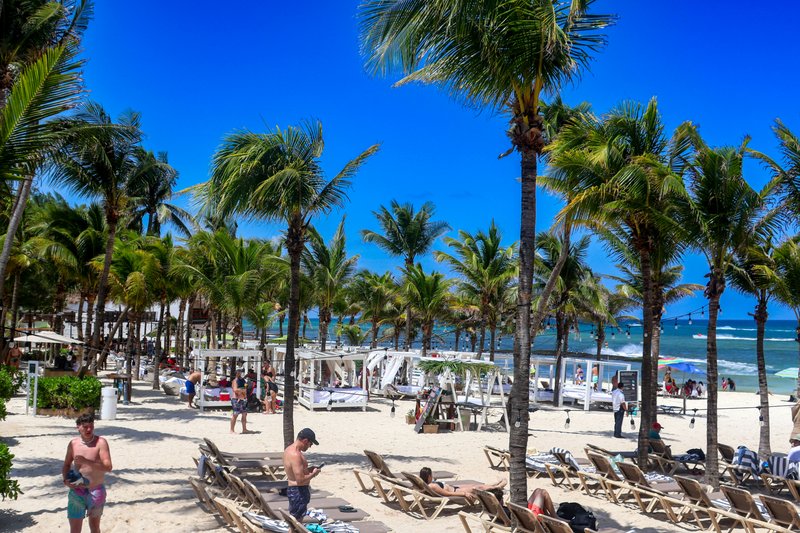
Explore MexicoThe Riviera Maya's most vibrant town stretches along a Caribbean shoreline where turquoise waters meet white sand. Quinta Avenida, the pedestrianized main artery, runs parallel to the beach for over twenty blocks — a corridor of boutique shops, mezcalerías, and restaurants serving everything from Yucatecan cochinita pibil to contemporary Mexican tasting menus. North of the ferry terminal to Cozumel, the scene grows quieter: beach clubs give way to residential compounds and smaller independent hotels. South toward Playacar, gated resort communities occupy manicured grounds dotted with Mayan ruins.
The town emerged from a fishing village in the 1980s and retains pockets of that earlier identity along the backstreets west of the highway. Here, taquerías and family-run cenadurías serve the workers who staff the beachfront establishments. The dining scene has matured considerably: chefs trained in Mexico City and abroad have opened restaurants emphasizing regional ingredients — achiote, habanero, chaya, fresh catch from local cooperatives. Evening drinks tend toward mezcal bars and rooftop terraces overlooking the Caribbean, though the cenotes scattered through the surrounding jungle offer afternoon swims before sunset.