Designed in 1687 by Sir William Bruce, the king's personal architect, this 17th-century manor retains its original Cordoba leather panels and Mortlake tapestries beneath layers of unapologetic rococo splendor. Twenty acres of parkland—complete with Highland cows and wandering peacocks—separate guests from Edinburgh's bustle. The Rhubarb Restaurant delivers farm-to-table Scottish cooking in suitably theatrical surroundings, while the Owners Suite offers a four-poster draped in ostrich plumes and views toward Craigmillar Castle ruins.
Explore Edinburgh
Where to Stay
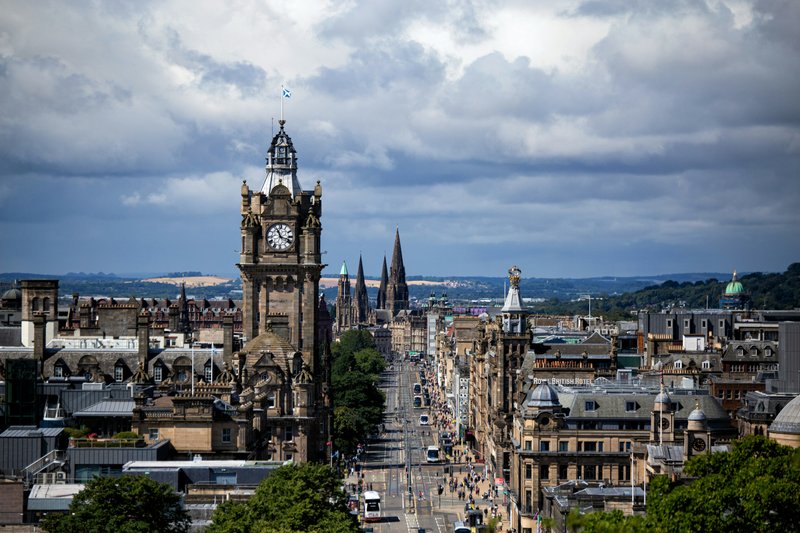
A baronial-style landmark of turrets and balconies presiding over Princes Street, The Balmoral channels Victorian grandeur into contemporary luxury. Beneath its central dome, Palm Court draws Edinburgh's afternoon tea devotees, while Bar SCOTCH pours from over 500 whiskies. Number One restaurant anchors the fine-dining scene, and the expansive spa with its 15-meter pool offers rare urban respite for travelers seeking polish and heritage in equal measure.
Occupying the former Royal Over-Seas League headquarters on Princes Street, this 30-room boutique property operates with members' club exclusivity—all facilities reserved for resident guests only. Each room features bespoke tartans by Scottish designer Araminta Campbell, Georgian antiques, and direct castle views. The Wallace restaurant showcases Aberdeen Angus beef and local produce, while Ghillie's Pantry pours from a hundred-whisky collection.
Three cocktail bars with 22 rooms attached—that's the proposition at House of Gods, a maximalist rebellion against Edinburgh's buttoned-up hotel tradition. The accommodations channel Orient Express glamour: compact cabins swathed in velvet, faux fur, and moody lighting, where dark jewel tones replace conventional elegance. This adults-only address caters to nightlife seekers who prize atmosphere over square footage.
A glass-and-steel newcomer wedged between Edinburgh's austere stone facades, Market Street embraces sleek minimalism across its 98 rooms, where oak paneling meets polished granite. The rooftop Nor'loft bar delivers panoramic views best savored with champagne as the city unfolds below. Positioned precisely where Old Town meets New, this adults-only address suits design-conscious travelers seeking contemporary refuge without domestic distractions.
Five Georgian townhouses dating to 1775 form Edinburgh's oldest hotel, their interiors restored with solid oak, marble, and a palette drawn from Scotland's landscape painters. The Printing Press Restaurant, occupying novelist Susan Ferrier's former residence, grills 28-day-aged beef over Josper flames, while the literary-themed bar pours whisky cocktails beneath the King's Hall's Corinthian columns and blown-glass chandelier.
A coiled bronze ribbon wraps around W Edinburgh's egg-shaped silhouette, announcing the brand's arrival in Scotland with architectural bravado. The 12th-floor wraparound terraces deliver panoramic views across the historic skyline, while SUSHISAMBA brings Japanese-South American energy to the dining scene. Wow suites push further with fire-pit balconies and circular swiveling beds. The four-room Away Spa draws on Scottish seaweed traditions through Ishga treatments—a modern landmark for design-driven travelers.
A conservation architect and painter collaborated to restore this 17th-century merchant's house on Leith's historic Shore, creating an intimate retreat for just six guests. The interiors achieve a rare balance of period authenticity and artistic sensibility, earning perfect marks for style and character. A Michelin-starred restaurant sits fifty yards from the door—ideal for design-minded travelers seeking culinary proximity without compromise.
Nine theatrical suites await steps from Edinburgh Castle's gates, each a Gothic revival fantasy that channels Pugin and Poe in velvet, tapestry, and candlelight. The Witchery operates as an intimate restaurant with rooms—an adults-only retreat where maximalist décor deliberately defies contemporary restraint. Incurable romantics find their perfect stage here, surrounded by historic drama at every turn.
Occupying a grand St. Andrew Square address, Gleneagles Townhouse operates as both intimate 33-room hotel and exclusive members' club. Victorian interiors layered with Art Deco touches—velvet upholstery, festoon detailing, soft pastels—set a mood of refined theatricality. The Spence restaurant serves locavore brasserie fare beneath a soaring glass dome, while Lamplighters rooftop bar commands sweeping city views. Below ground, the original bank vault houses The Strong Room spa with infrared sauna and cryotherapy treatments.
Where to Eat
American chef Rodney Wages fell so deeply for Edinburgh that he transplanted his San Francisco restaurant to a Georgian townhouse in Stockbridge. The one-Michelin-star kitchen applies Californian lightness to Scottish produce—Orkney scallop with pineapple jus exemplifies the bold, precise style. A drinks flight weaving wine, sake, sherry and single malt adds playful depth to an already distinctive evening.
Six tables fill this understated dining room just beyond Edinburgh's centre, where a surprise tasting menu unfolds with only a hand-drawn bookmark hinting at the ingredients ahead. The kitchen's individual approach coaxes remarkable depth from humble produce—kohlrabi paired with goat's curd demonstrates the precision behind each carefully constructed flavour combination. A Michelin-starred destination for diners seeking thoughtful, ingredient-driven modern cuisine.
Overlooking the Port of Leith, this Michelin-starred seafood restaurant channels Scotland's coastal larder with precision and restraint. The kitchen builds its tasting menu around impeccable sea trout and Fife berries, each course interlocking with the next in deliberate sequence. Counter seating brings diners close to the action; window tables frame the working harbour beyond. Service maintains warmth without formality throughout.
Georgian grandeur meets contemporary Scottish seafood at this one-Michelin-starred restaurant occupying Royal Terrace's elegant townhouses. The evening unfolds across two acts: aperitifs and precise snacks at the first-floor bar's island counter, followed by a tasting menu in the understated dining room below. Wild halibut and Scottish langoustines arrive in dishes of quiet complexity, their flavours layered with restraint. Bedrooms upstairs extend the occasion into overnight indulgence.
For over two decades, chef Martin Wishart has anchored his Michelin-starred restaurant in Leith's historic port, where bright, contemporary interiors contrast with the weathered maritime surroundings. The kitchen applies rigorous French technique to prime Scottish ingredients—Orkney scallops, Highland grouse—delivering plates of striking clarity. Each dish arrives precise and uncluttered, flavors exactly as promised, nothing superfluous.
A converted whisky warehouse on Leith's historic quayside now houses one of Scotland's most celebrated tables. The kitchen here works in close dialogue with the seasons—game enthusiasts time visits for grouse, while the Prestige tasting menu reveals the full scope of the chef's ambition. Request seating near the pass, where a panoramic window frames the brigade at work.
Behind a big red door on Lady Lawson Street, a former warehouse now hosts one of Edinburgh's most compelling Michelin-starred tables. The kitchen practices restraint as philosophy—seasonal Scottish ingredients, minimally handled, yielding dishes of striking clarity. Winter brings the warmth of an open stove; summer opens onto a walled courtyard. The service moves with easy confidence, the soundtrack impeccable.
Tucked away in a quiet Edinburgh neighbourhood, Argile delivers technically accomplished seafood through a lens of global influences. Chef-owner Jack Montgomery brings dishes to the table himself, each one presented on handcrafted pottery and earthenware that echoes the restaurant's name. The intimate setting and personal service create an experience suited to diners seeking thoughtful, modern cooking with genuine warmth.
Inside the Balmoral Hotel, Number One wraps diners in red lacquered walls and deep banquettes before guiding them through a seven-course tasting menu built on Scottish luxury: hand-dived Orkney scallops, N25 caviar, each course flowing naturally into the next. The cosy cocktail bar sets the tone; unhurried, polished service carries it through. Modern British cooking at its most composed.
Behind a modest façade in Stockbridge, Eòrna operates as one of Edinburgh's most intimate dining experiences—just two people run the entire operation, with Brian at the stoves and Glen orchestrating service and wine pairings. The tasting menu draws deeply from Scottish terroir, showcasing Orkney beef and Perthshire strawberries across dishes that shift with the seasons. A Michelin Plate holder delivering refined Modern British cooking in counter-seat proximity.
What to Do
Beneath the turreted silhouette of a Scottish baronial estate, this subterranean sanctuary channels the surrounding landscape through heather-scented ESPA treatments and warm stone architecture. The heated outdoor infinity pool steams against views of grazing deer and rolling parkland, particularly ethereal at dusk. A Finnish sauna opens onto hidden gardens, while the fireside relaxation room delivers pheasants strolling past floor-to-ceiling windows.
Scotland's Ayrshire coastline frames every element of this coastal spa, from the glass-walled sauna surveying rocky shores to an infinity pool that seems to merge with the sea beyond. Treatments draw on Hebridean seaweed through the ishga skincare line, while the signature Seaweed Bath Sound Treatment layers Scottish botanicals with meditative soundscapes. The Fire and Ice Therapy pairs cryotherapy with heated basalt stones for contrasting thermal renewal.
Frequently Asked Questions
What are the best neighborhoods to stay in Edinburgh?
+
The New Town offers elegant Georgian architecture and proximity to Princes Street shopping. The Old Town places you within walking distance of the castle and Royal Mile attractions. Stockbridge suits those preferring a village atmosphere with independent shops and Sunday markets. Leith appeals to food-focused visitors with its waterfront restaurants and converted warehouse spaces.
When is the best time to visit Edinburgh?
+
August brings the Edinburgh Festival Fringe and International Festival — electrifying but crowded and expensive. May and September offer milder weather, longer daylight hours, and more reasonable rates. Hogmanay celebrations make late December festive but cold. Spring sees the Meadows carpeted in cherry blossom, while autumn colours transform the Botanic Garden.
How do I get around Edinburgh easily?
+
The compact city centre is best explored on foot — fifteen minutes connects Waverley Station to most central attractions. The tram links the airport to Princes Street in thirty minutes. Buses reach neighborhoods like Leith and Portobello efficiently. Steep hills and cobblestones make comfortable shoes essential, particularly in the Old Town.
Edinburgh splits dramatically between two personalities. The Old Town climbs vertically from the Palace of Holyroodhouse up the Royal Mile's volcanic spine to the castle, its medieval closes and wynds stacked like geological strata. Cross the Mound and the New Town unfolds in ordered Georgian crescents — Charlotte Square, Moray Place, the sweep of Royal Circus — where brass-plated doors open onto drawing rooms with original cornicing and views across the Firth of Forth.
The dining scene reflects this duality. Leith's converted warehouses draw chefs working with Scottish langoustines and Borders lamb. Stockbridge's deli-lined streets favour neighbourhood bistros. The West End clusters fine dining around William Street and Stafford Street. Come August, the Festivals transform every corner into performance space, and hotel rates reflect the global demand. The rest of the year belongs to locals — Sunday lunch in Bruntsfield, whisky bars in the Grassmarket, coffee roasters in Portobello.