Artist Heinz Julen's theatrical vision dominates central Zermatt through a striking façade that doubles as local landmark. Inside, twenty rooms showcase uncompromising creativity, with 3.70-metre Cube Lofts offering bunk-bed hideaways reached by ladder—ideal for families. The spa channels biblical creation mythology across hammam, jacuzzi and sauna, while an adjacent gallery, cinema and club extend the cultural programme. Ski rental available on-site.
Where to Stay
Architect Heinz Julen's signature vocabulary—glass, steel, raw wood—shapes this 30-room property where nearly every balcony frames the Matterhorn. A private lift descends directly to the Matterhorn Express, making first tracks effortless. After skiing, the mountain-facing spa delivers Turkish bath, jacuzzi, and sauna, while twin pools (indoor and outdoor) complete the offering. Ideal for design-minded skiers who value slope access without sacrificing wellness.
Arrival at The Omnia feels cinematic: a tunnel carved through rock leads to a glass elevator ascending the cliff face to a lobby suspended above Zermatt's rooftops. New York architect Ali Tayar shaped this 30-room retreat where Swiss Alpine tradition meets modernist restraint. The panoramic terrace's hot whirlpool frames the Matterhorn directly, while a full spa complex and Michelin-starred restaurant with refined vegetarian focus complete the picture for couples seeking seclusion without sacrificing sophistication.
Rough-hewn stone and weathered timber give way to refined interiors beneath exposed beams at this 33-room hillside retreat with direct Matterhorn views. Spa rooms come equipped with private saunas, hammams, and sculptural freestanding tubs, while a communal wellness area features steam grottos and an outdoor jacuzzi. Winter evenings bring fondue service in private four-seat igloos at Filet et Fils, the house grill.
Ski-in access from the Rothorn runs delivers guests directly to this mountainside compound of 54 rooms and seven standalone chalets, all bearing Dreimeta's alpine contemporary signature. The Mountain Ashram Spa draws on Japanese onsen traditions alongside Bhutanese and Nordic thermal rituals. Five restaurants—from Middle Eastern Bazaar to Valais-rooted Ferdinand—fuel days on the slopes, while legendary après-ski sessions with daily live music keep the energy high into evening.
Zermatt's first palace hotel, operating since 1852, resembles a fairytale castle with stone facades and dormer windows framing Matterhorn views. Rooms divide between Alpine style—olive tones, dark wood—and Chalet interiors wrapped floor-to-ceiling in timber and tartan. The 1,700-square-metre spa offers four sauna types, while dining spans the Michelin-starred Capri and refined seafood at Le Restaurant. Winter guests join guided Matterhorn Ski Weeks with professional mountaineers.
Zermatt's original hotel, built in 1855 by the Seiler family, witnessed Edward Whymper's legendary first Matterhorn summit a decade later. The 41 rooms and suites frame views of that iconic peak, while Restaurant 1818 — housed in the village's oldest chalet — serves inventive South American dishes like veal sweetbreads with mole sauce. Guests access the Nescens spa at nearby Mont Cervin Palace, complete with indoor pool and hammam.
Three generations of the Metry family have shaped this alpine retreat where contemporary design meets mountain tradition through warm wood and stone interiors. Balconies and the panoramic terrace frame the Matterhorn in dramatic fashion. Chef Maximilian Latt's restaurant Saveurs draws on local terroir, paired with selections from a 4,000-bottle cellar that includes wines from the family's own vineyards. A compact spa offers sauna, hammam, and hot tub for après-ski recovery.
Century-old stone walls and sandblasted wood create the mountain lodge character of this Bahnhofstrasse address, once Zermatt's third hotel. The après-ski reputation draws a grown-up crowd to five bars and clubs—dancing in the wine cellar, live sets upstairs—while a compact spa with sauna, jacuzzi, and hammam offers quieter recovery. Three restaurants complete an address built for nightlife-minded adults.
Michel Reybier's Zermatt outpost occupies prime real estate steps from the train station and lifts, its 95 rooms dressed in Kristian Gavoille's Alpine-meets-minimalist aesthetic—request 621 or 622 in the Bellevue building for Matterhorn-facing balconies. Four restaurants span Japanese-Peruvian fusion at La Muña to traditional fondue at Cheese Factory, while the indoor pool and spa with sport-detox treatments restore après-ski. Evening DJ sets keep the atmosphere lively without sacrificing refinement.
Where to Eat
Perched on the third floor of Backstage Hotel, this one-Michelin-starred table showcases Chef Florian Neubauer's surprise menus of five or six courses—think mussel with artichoke and chorizo, or beef with sansho pepper—prepared in an open kitchen. A chandelier fashioned from musical instruments hints at owner Heinz Julen's artistic vision, while bread baked tableside and regional Valais wine pairings complete the theatrical experience.
Wood-panelled elegance frames views of the Pfarrkirche St Mauritius at this one-Michelin-star table within the Grand Hotel Zermatterhof. The kitchen dispatches two tasting menus—one international with alpine inflections, one entirely vegetarian celebrating regional produce—both distinguished by deeply flavored stocks and sauces that provide striking counterpoints. A sharp sommelier team offers wine or alcohol-free pairings with equal conviction.
Behind an unassuming Kirchstrasse façade, two chefs work an open kitchen through a 3.5-hour surprise tasting menu that earned both a Michelin star and a Green Star for sustainability. The cooking mines Valais terroir—pike-perch paired with Swiss caviar and creamed sauerkraut, turnips served raw and marinated—while the room channels a casual Berlin-meets-New York energy, tables packed close, conversation easy. No à la carte; vegetarian menus require advance notice.
Each winter, the culinary team from Capri Palace relocates to this one-starred dining room on the fourth floor of Le Petit Cervin, bringing southern Italian finesse to the Swiss Alps. The creative cuisine draws on premium ingredients, delivering classic preparations with pronounced, confident flavors. Elegant surroundings and polished service complete an evening suited to travelers seeking refined Italian gastronomy at altitude.
The Matterhorn fills the frame from Saveurs' panoramic terrace, where chef Maximilian Latt interprets Swiss Alpine terroir through creative, ingredient-driven plates. Third-generation family ownership shapes the intimate atmosphere, while a 4,000-bottle cellar—featuring wines from the Metry family's own four-generation vineyard—anchors each meal. Vegetarian, vegan, and gluten-free menus ensure the kitchen's precision extends to every guest.
Named after an Andean medicinal plant believed to counter altitude sickness, La Muña brings a Peruvian-Asian fusion to Zermatt's winter dining scene. The kitchen operates exclusively during ski season evenings, offering either à la carte selections—organized into crudo, gyoza, hot dishes, and sides—or refined four- and six-course omakase menus. A sophisticated choice for après-ski suppers with culinary ambition.
Perched above Zermatt at the CERVO Mountain Resort, Madre Nostra delivers classic Italian cooking with an unwavering commitment to ingredient quality and pure flavors. The slopeside location means skiers can transition directly from piste to table, while the impressive terrace offers panoramic alpine views. Lunch draws from both the evening menu and the resort's wider culinary repertoire, making it equally suited to midday refueling or leisurely dinner.
Perched at the end of a ski slope within CERVO Mountain Resort, this Bib Gourmand restaurant draws from Arab, Chinese, Indian, and Tibetan kitchens for a predominantly vegetarian menu. Baba ganoush, dal makhani with sweet potatoes, and Tibetan momos share the table beneath a glass conservatory framing the Matterhorn. Decorative objects throughout double as merchandise—a bazaar in spirit as much as name.
Perched beside the pistes above Furi gondola station, Aroleid occupies a modern chalet where panoramic Matterhorn views meet rustic Alpine warmth. The chef draws on international travels to craft a menu rooted in mountain cuisine, while coffee comes from the hotel's own roastery and ceramics are fired in-house. Adventurous guests can earn their lunch via a scenic ninety-minute hike from the village.
Perched at 2,100 metres on a ski slope above Findeln village, this wood-clad chalet commands one of Zermatt's most dramatic Matterhorn panoramas—terrace tables are fiercely coveted. The kitchen honours Valais tradition through dishes like mountain goat cheese ravioli with thyme-scented nut butter and caramelised local pear, alongside generous platters of house-cured meats and Alpine cheese. A twenty-minute walk from Sunnegga funicular adds to the alpine pilgrimage.
What to Do
Beneath the Matterhorn's shadow, Chalet Hotel Schönegg's Infinity Spa draws on wellness traditions spanning continents—Hawaiian lomi-lomi, Thai massage, Swedish techniques, Tibetan and Chinese practices—all incorporating reflexology and essential oils. The indoor pool frames Alpine peaks through floor-to-ceiling glass, while a full thermal circuit of Finnish sauna, hammam, hot tub and cold plunge awaits. Guests finish fireside, wrapped in mountain stillness.
Frequently Asked Questions
How do I reach Zermatt without a car?
+
The Matterhorn Gotthard Bahn train runs regularly from Visp and Brig, both on the main Swiss rail network. The scenic journey from Visp takes approximately one hour through the Matter Valley. Private vehicles must be left in Täsch, five kilometers down the valley, where shuttle trains depart every twenty minutes.
When is the best season to visit Zermatt?
+
The ski season runs from November through April, with the highest slopes on the Klein Matterhorn glacier open year-round. Summer hiking season peaks between July and September when the high alpine passes are snow-free. September offers fewer crowds and golden larch forests, while January and February bring the most reliable powder conditions.
What local specialties should I try in Zermatt?
+
Walliser cuisine centers on cheese and preserved meats suited to long winters. Raclette—melted cheese scraped over potatoes—appears everywhere, alongside fondue made with local Bagnes or Gomser cheese. Dried beef (Walliser Trockenfleisch) and rye bread complete the traditional spread, often paired with Fendant or Humagne Rouge wines from lower Valais vineyards.
Nearby Destinations
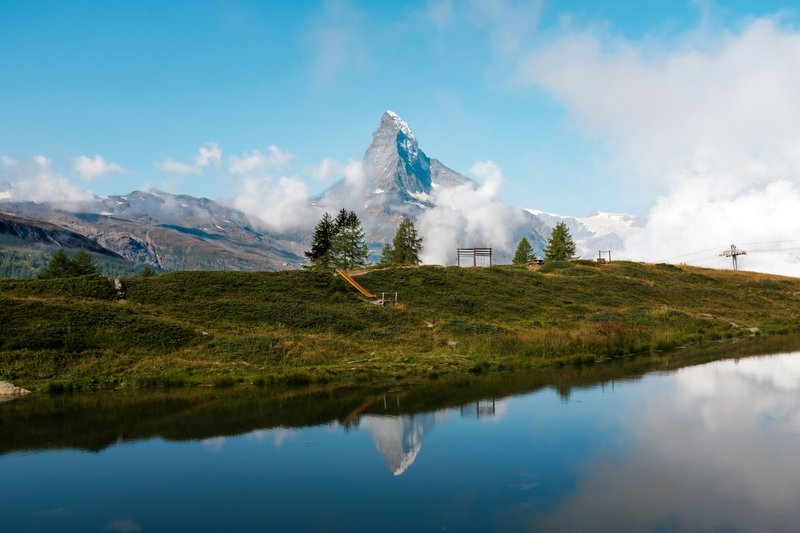
Explore SwitzerlandThe Matterhorn's silhouette dominates every sightline in this car-free village at 1,620 meters. Electric taxis and horse-drawn carriages move guests along the Bahnhofstrasse, where century-old timber chalets stand beside contemporary architecture. The village divides roughly into the Dorf quarter near the church and the livelier Steinmatte area closer to the Gornergrat railway station, each with distinct character.
Summer hiking trails lead through meadows dotted with edelweiss; winter brings access to 360 kilometers of pistes connecting to Cervinia across the Italian border. The dining scene splits between traditional Walliser establishments serving raclette and dried meats, and modern kitchens where chefs work with foraged alpine herbs and local Valais wines. After dark, the village grows quiet early—this remains a place oriented toward mountain pursuits rather than nightlife.