This Neo-Baroque grande dame commands the Engadin Valley with frescoed ceilings, Swiss pine paneling, and nine individually designed suites draped in velvet. The spa's infinity pool stretches toward Alpine peaks through two-story windows, while three restaurants range from chandelier-lit fine dining to terrace fondue sessions. Winter guests step directly onto 215 miles of ski terrain; families find a dedicated kids' club and bowling alley.
Where to Stay
Three generations of the same family have shaped this Art Deco grand hotel in Pontresina, Switzerland's oldest mountain village. The stuccoed foyer with its fireplace sets a tone of alpine elegance, while Swiss pine junior suites offer warmth against panoramic Engadine peaks. The Aqua Viva spa—Turkish bath, jacuzzi, sauna, indoor pool—rewards skiers and hikers returning from nearby National Park trails.
Ivy clings to medieval stone walls at this nine-room castle perched above tiny Fürstenau, where Romanesque archways and fine wood paneling frame an intimate alpine retreat. The contemporary rooms inject bold color against centuries-old masonry, while an on-site restaurant and bar anchor leisurely evenings. Pet-friendly policies welcome four-legged companions to this rarefied address suited to travelers seeking seclusion with substance.
Architect Gion A. Caminada converted a 300-year-old barn and stable in tiny Fürstenau into this ten-room retreat where weathered timber beams frame deliberately spare, contemporary interiors. Rooms look out over village rooftops or Alpine peaks. The real draw lies next door: Schloss Schauenstein, where chef Andreas Caminada holds three Michelin stars. A garden and pet-friendly policy suit extended stays.
Four generations of the Kochendörfer family have shaped this 38-room Pontresina address into a quietly confident Alpine retreat. The on-site bakery supplies each morning's breakfast spread, while three attic rooms rank among the most coveted for their character and light. A bright relaxation area frames the surrounding peaks, complemented by sauna and hammam facilities that suit active travelers returning from Engadine's trails.
Perched above Sils Maria with views across glacial lakes and Alpine peaks, Hotel Waldhaus remains in the same family after five generations—original key racks intact, wooden staircases still creaking underfoot. The 140-room property balances grand hotel formality with endearing eccentricity: a forest-fringed spa complete with hammam, sauna, and jacuzzi, plus sprawling gardens for travelers who prefer their luxury with character rather than polish.
Steps from Lake Sils in the Upper Engadine, Chesa Randolina occupies a landscape that once drew Europe's literary giants. The intimate property preserves traditional Engadine character through its pine-paneled interiors, where warm wood benches line dining spaces. Couples predominate here, though families find accommodation with extra beds available in most rooms—a relaxed mountain retreat suited to those exploring one of the Alps' most storied valleys.
A sixteenth-century manor house in the sgraffito-decorated village of Bever, Hotel Chesa Salis preserves its aristocratic origins through ornate stuccowork, hand-painted walls, and massive timber ceilings. The restaurant holds 14 Gault-Millau points, while a garden with sun loungers offers summer repose. Cross-country ski trails and walking paths unfold directly from this pastoral base near St. Moritz.
Dating to 1565, Gasthaus Krone occupies a storied riverside position along the Inn, its weathered walls housing just seventeen rooms done in crisp contemporary Alpine style. Art punctuates the public spaces, curated by hands-on owners who maintain an unhurried, personal atmosphere. A sauna and gardens offer quiet recovery after days on nearby golf courses or hiking trails—ideal for travelers seeking heritage without pretense.
A 19th-century castle transformed into contemporary Alpine luxury, Hotel Schloss Pontresina pairs romantic architecture with thoroughly modern comforts. Renovated rooms feature knotty wood cabinetry and red fabric accents, the finest commanding views of the Bernina glacier through oversized windows. Five kilometers from St. Moritz's slopes, the property embraces families with dedicated suites while offering spa facilities including Turkish bath, sauna, and indoor pool.
Where to Eat
Andreas Caminada's three-Michelin-starred table occupies a medieval castle at the foot of Piz Beverin, where the kitchen works almost exclusively with Graubünden produce—much of it from the estate's own gardens, earning a Green Star for sustainability. The elaborate pre-menu of amuse-bouches sets the tone before signatures like the 2003 veal tortellini with nut butter foam arrive, balancing regional terroir with exacting technique.
Warm Engadine wood paneling meets minimalist elegance in this one-Michelin-starred dining room in tiny Madulain. The kitchen delivers modern Italian cooking shaped by Alpine seasons and regional produce, each plate bearing the chef's distinctive personal accent. A bistro offers casual alternatives, while chalet-style rooms upstairs allow guests to extend the evening into an unhurried overnight stay.
James Baron, formerly of Hong Kong's Amber, brings a refined Mediterranean sensibility to this intimate Engadine dining room, its walls wrapped entirely in aromatic Swiss stone pine. The kitchen favors precision over complexity, showcasing regional ingredients through four-, six-, or nine-course tasting menus. Even the cutlery carries local provenance, forged by a nearby blacksmith—a detail emblematic of the restaurant's exacting attention throughout.
Within the Schloss Schauenstein estate, chef Simeon Nikolov crafts a nine-course vegetarian tasting menu that draws entirely from the restaurant's permaculture garden and trusted local suppliers—an approach recognized with a Michelin Green Star. The U-shaped counter places diners in direct conversation with the kitchen, where dishes like sautéed wild mushrooms on puff pastry with celeriac straws and aromatic foam reveal the depth possible without meat.
Chef Bernd Fabian personally presents each course of his three-to-five dish surprise menu, explaining the predominantly regional ingredients transformed into modern, precise compositions. The intimate Stübli seats just a handful of tables, where sommelier and host Daniel Eisner draws from a cellar holding over 20,000 bottles—guests may request a private tour through this extraordinary collection spanning 1,500 vintages.
Cornelia and René A Donatz bring familial warmth to this elegant rustic dining room in Samedan, where Italian sensibilities meet Graubünden terroir. The kitchen excels with Angus beef preparations and classic veal, while Lostallo salmon showcases hyper-local sourcing. A cellar of 550 wines—twenty by the glass—reflects the owner's passion. The adjacent wine bar offers a lighter, more casual alternative.
Inside the Grand Hotel Kronenhof, warm pinewood panelling and refined fabrics create an intimate Alpine dining room where classic French technique meets Italian sensibility. The kitchen's signature canard à la presse—available for parties of two or more—demonstrates the sophisticated, old-school approach that defines this Michelin-recognized table. A destination for travelers seeking polished gastronomy in traditional Engadine surroundings.
Within the tranquil castle grounds of Fürstenau, Andreas Caminada's bistronomic outpost champions Grisons terroir through a vegetarian-leaning menu built on hyper-local sourcing—earning both Bib Gourmand recognition and a Green Star for sustainability. His signature quark bizochels anchor a repertoire of regional classics, while an on-site bakery supplies fresh bread to an adjacent shop. Bright, wood-warmed interiors open onto a sun-dappled terrace.
Adjacent to the Hotel Colani, this Bib Gourmand bistrot delivers Mediterranean cooking inflected with Alpine sensibility. The kitchen's daily-changing approach keeps regulars returning—one day venison loin, the next veal shoulder—while the signature ravioli remains a constant. Light wood, contemporary lines, and unhurried service create the kind of relaxed atmosphere that suits a post-hike lunch or casual evening among friends.
Inside the historic Hotel Walther, La Trattoria earns its Bib Gourmand through honest Italian cooking that spans the peninsula's regional traditions. Handmade pasta commands the menu, prepared with an unwavering commitment to freshness and bold, direct flavors. The dining room strikes a stylish rustic note—warm wooden accents, animated conversation, genuine Italian hospitality—creating the sort of convivial atmosphere that keeps tables full through long Alpine evenings.
What to Do
Sprawling across 1,500 square meters within Chasa Montana, the spa complex commands mountain panoramas from its aquatic realm of multiple pools and dedicated relaxation zones. Steam baths and saunas complete the thermal circuit, while the sheer scale—rare for an Alpine village property—allows guests to drift between water and warmth without crowds, the peaks visible through floor-to-ceiling glass.
Within Hotel Walther in Pontresina—Switzerland's oldest mountain village—Spa Aqua Viva spreads across 640 square metres of alpine wellness. The centrepiece, a 14-metre pool fitted with counter-current technology, enables serious swimmers to train against resistance. Beyond it, an Andeer granite cave diffuses lemon balm and citrus essences designed to soothe respiratory and nervous systems, while a sanarium releases gentle mountain herb aromas into the warm air.
Frequently Asked Questions
What is the best time to visit the Engadine Valley?
+
The valley operates on two distinct seasons. Winter runs December through April with reliable snow cover and the full apparatus of Alpine skiing, cross-country trails, and frozen lake activities including polo and cricket matches on the St. Moritz lake. Summer brings hiking, cycling, and sailing from June through September, with the Bernina Express and glacier excursions as primary draws. Shoulder seasons see many properties close entirely.
How do you reach the Engadine from major cities?
+
Zurich sits roughly three hours away by car via the Julier Pass or through the Vereina tunnel from the north. The Glacier Express and Bernina Express both traverse the valley, offering scenic rail connections to Zermatt and Tirano respectively. Samedan operates a small airport receiving private jets, while Engadin Airport handles charter flights during peak winter weeks.
What distinguishes Upper Engadine villages from each other?
+
St. Moritz draws the social scene, the fashion boutiques, and the historic palace hotels. Pontresina maintains a more mountaineering-focused character with direct access to the Diavolezza and Morteratsch glaciers. Sils Maria preserves the literary associations — the Nietzsche-Haus museum sits here — and attracts those seeking quieter lake walks. Celerina offers proximity to St. Moritz at lower prices, while Zuoz presents the valley's best-preserved medieval village architecture.
Nearby Destinations
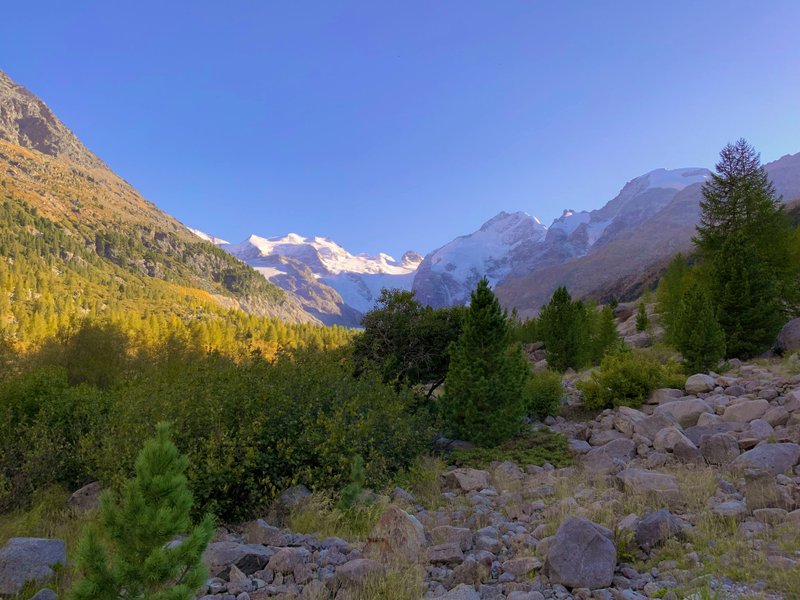
Explore SwitzerlandThe Engadine cuts through the Rhaetian Alps at elevations above 1,800 meters, a high valley where Romansch villages cluster around frozen lakes and the light takes on that particular crystalline quality that drew Nietzsche and Thomas Mann to convalesce here. St. Moritz anchors the Upper Engadine with its Belle Époque palace hotels and winter sports legacy dating to 1864, while smaller settlements like Pontresina, Sils Maria, and Celerina offer quieter alternatives with their own distinctive characters.
The valley's hospitality tradition runs deeper than most Alpine destinations. Families have operated hotels here for five and six generations, and the service culture reflects that continuity — staff who winter and summer in the same properties year after year, chefs who source from the same Bergell Valley producers their predecessors did. Dining leans heavily on Bündner specialties: air-dried beef, barley soups, nut tarts from recipes that predate the tourist era. The après-ski scene centers on hotel bars rather than standalone venues, with the Kulm, Badrutt's Palace, and Suvretta House each maintaining distinct atmospheres that have evolved over more than a century of continuous operation.