A private funicular whisks skiers from lobby to slopes in four minutes, while Mario Botta's sculptural 5,000-square-metre spa—its skylights rising like sails above the snow—anchors the après-ski ritual. The 130 rooms blend 1960s modernism with Carlo Rampazzi's warm interiors and panoramic Alpine views. Families find interconnecting suites and a kids' club; gastronomes, the two-Michelin-starred La Brezza.
Where to Stay
A substantial 450-square-metre Turkish bath anchors the spa at this Alpine address, complemented by both indoor and open-air saltwater pools. Accommodation spans three distinct styles—contemporary Alpenchic, refined Nostalchic, and compact Budget rooms—allowing guests to calibrate their stay. Families benefit from a dedicated kids' club and game room, while the Allegra restaurant handles à la carte dining with assured competence.
A century of Alpine hospitality unfolds across two distinct wings: the traditional Waldhotel and the contemporary Chesa Silva, together housing 124 rooms. The sophisticated spa complex features Turkish bath, sauna, and indoor pool, while skiers benefit from on-site equipment rental. Dining splits between the show kitchen theatrics of Thomas Mann Restaurant and the wood-panelled intimacy of Kachelofa-Stübli. Families appreciate the kids' club; pets welcome.
Where to Eat
Floor-to-ceiling windows frame Lake Heidsee and alpine peaks at this one-Michelin-starred table, where Chef Dominique Schrotter applies an inventive modern lens to regional classics. His signature king mackerel tartare tower, finished with pear gel and Périgord truffle dashi, signals a kitchen comfortable bridging European tradition with East Asian technique—periodic sushi festivals confirm the influence. A vegetarian tasting menu broadens the appeal for mixed parties.
A three-century-old cow byre provides the unlikely setting for this fine dining destination, its weathered timber beams now framing a spare, modern aesthetic. The kitchen commits almost exclusively to Swiss produce, channeling regional traditions through two tasting menus—one vegetarian—and à la carte options. Midday brings a more accessible three-course format, though the evening service reveals the full scope of alpine-focused gastronomy.
Scalottas Terroir brings sustainable gastronomy to Lenzerheide's alpine dining scene, earning recognition for its environmental commitment. The kitchen sources exclusively from regional producers, cultivating much of its own ingredients. Diners compose their meal by mixing dishes from a seasonal menu, while the sommelier guides through local wines with genuine enthusiasm. The trendy mountain-chalet atmosphere suits travelers seeking conscious cuisine without sacrificing sophistication.
Frequently Asked Questions
How are Arosa and Lenzerheide connected?
+
The Urdenbahn aerial tramway, opened in December 2013 and fully operational from 2014, links the two resorts across the 2,563-metre Urdenfürggli pass. The journey takes approximately five minutes and operates throughout the ski season, allowing skiers to move between the combined 225 kilometres of prepared runs without removing their equipment.
When did Arosa develop as a resort destination?
+
Arosa's transformation began in the 1880s when doctors established sanatoriums exploiting the village's high altitude and clean air. The arrival of the Rhaetian Railway in 1914 — the line from Chur featuring 365 curves and 19 tunnels — made the village accessible to winter tourists. By the 1920s, Arosa had shifted from health retreat to fashionable ski destination.
What local specialties should visitors try in the region?
+
Graubünden cuisine dominates local menus. Capuns — parcels of spätzle dough and dried meat wrapped in chard leaves — appear throughout the valley. Bündnerfleisch, the region's air-dried beef cured in the mountain air, features as both starter and raclette accompaniment. Pizzoccheri, the buckwheat pasta dish originating from neighbouring Valtellina, crosses the cantonal border regularly, while Nusstorte from the Engadin provides the obligatory dessert.
Nearby Destinations
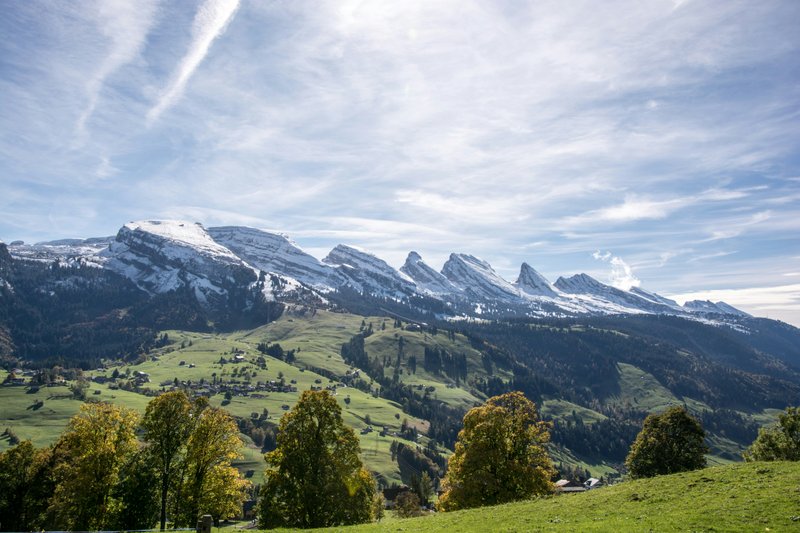
Explore SwitzerlandTwo villages linked by a single ski pass and a shared valley: Arosa sits at 1,800 metres in a sheltered bowl beneath the Weisshorn, while Lenzerheide stretches along the Heidsee at 1,500 metres. The 1897 railway from Chur to Arosa remains one of Switzerland's most dramatic approaches, climbing through the Schanfigg Valley past the medieval church at Langwies. Since the 2014 cable car connection across the Urdenfürggli pass, skiers move freely between the two resorts, but each maintains its distinct personality — Arosa quieter and more traditional, Lenzerheide livelier with its lakeside promenade.
The hotel landscape divides accordingly. Arosa's properties tend toward the grand tradition of Swiss mountain hospitality, many dating to the resort's early twentieth-century development as a tuberculosis sanatorium town turned winter destination. Lenzerheide's accommodation clusters around the lake and the Rothorn base station. Dining runs from mountain restaurants accessible only by lift — the Hörnligrat and Alp Stätz among them — to valley establishments serving Bündner specialties like Capuns and air-dried beef from the Graubünden farms. The Heidsee freezes reliably each winter, becoming a natural ice rink and cross-country circuit.