Adjacent to the Parador, Reina XIV channels the grandeur of the nearby Royal Palace through décor and menu alike. Chef Borja Aldea, shaped by stints at Etxanobe and Disfrutar, revisits the court kitchens of Philip V with contemporary precision—judiones de la Granja arrive in pheasant consommé, while Segovian trout gets a modern reimagining. A theatrical dining room for historically minded gastronomes.
A deconsecrated church from the Convento de las Oblatas provides the dramatic setting for this Michelin Plate restaurant, where stone arches and contemporary design create an atmosphere of refined theatricality. The kitchen channels Segovian tradition through a modern lens, offering two tasting menus—Esencia and Gran Manú—that showcase regional ingredients with technical precision and creative restraint.
A former royal foundry that once supplied plumbing to the nearby palace now houses this Bib Gourmand restaurant, its main dining room occupying the very space where the forge stood. The kitchen delivers updated Castilian traditions—oxtail ravioli glazed with foie gras sauce among the signatures—across multiple atmospheric settings, including a terrace-patio carved from the old infirmary. Contemporary comfort meets industrial heritage.
Owner-chef Óscar Hernando greets every table personally before presenting his contemporary take on Segovian classics. The signature cochinillo—roast suckling pig requiring advance order—arrives alongside butter beans from Real Sitio and vine-shoot-roasted lamb, ingredients partly sourced from the restaurant's own vegetable garden and vineyards. A spacious tapas bar and modern dining room accommodate both casual lunches and celebratory dinners.
A Segovian institution built on the asador tradition, José María draws its reputation from roast suckling pig raised on the family's own Agrocorte Gourmet farm—the kitchen's undisputed signature. Seasonal game like wild boar and venison rotate through the menu alongside the Nuestra Cocina Segoviana tasting option, while Pago de Carraovejas wines from Ribera del Duero provide the regional counterpoint this Castilian cooking demands.
A restored sixteenth-century posthouse beside the San Nicolás de Bari church in Torrecaballeros, La Portada de Mediodía channels the rustic spirit of Castile through impeccably grilled and roasted meats. The legendary Segovia suckling pig commands the menu, its crackling skin a regional benchmark, while lamb and goat require advance notice. Occasional full-day offal events draw dedicated gastronomes seeking deeper cuts of tradition.
Frequently Asked Questions
What is cochinillo asado and where is it traditionally served in Segovia?
+
Cochinillo asado is roast suckling pig, slow-cooked in wood-fired ovens until the skin turns glass-crisp. It has been Segovia's signature dish for generations, with several family-run restaurants near the aqueduct and Plaza Mayor continuing the tradition. The pig is carved using the edge of a plate — a theatrical gesture meant to demonstrate tenderness — then the plate is smashed for good luck.
Which neighborhoods are best for exploring Segovia on foot?
+
The walled old town rewards slow walking. Start at the aqueduct in Plaza del Azoguejo, climb Calle Real toward the cathedral, then continue to the ship-prowed Alcázar at the promontory's western tip. The Judería below the cathedral retains its medieval street pattern, while the San Marcos and San Millán neighborhoods across the valleys offer perspectives back toward the old town and quieter evening atmospheres.
How far is Segovia from Madrid and what is the best way to visit?
+
High-speed trains from Madrid's Chamartín station reach Segovia-Guiomar in 27 minutes, with regular departures throughout the day. The station lies outside town, connected by bus to the aqueduct. Driving takes roughly an hour via the A-6 and AP-61, crossing the Guadarrama pass. Many visitors come for the day, though staying overnight allows time for evening paseos and unhurried meals.
Nearby Destinations
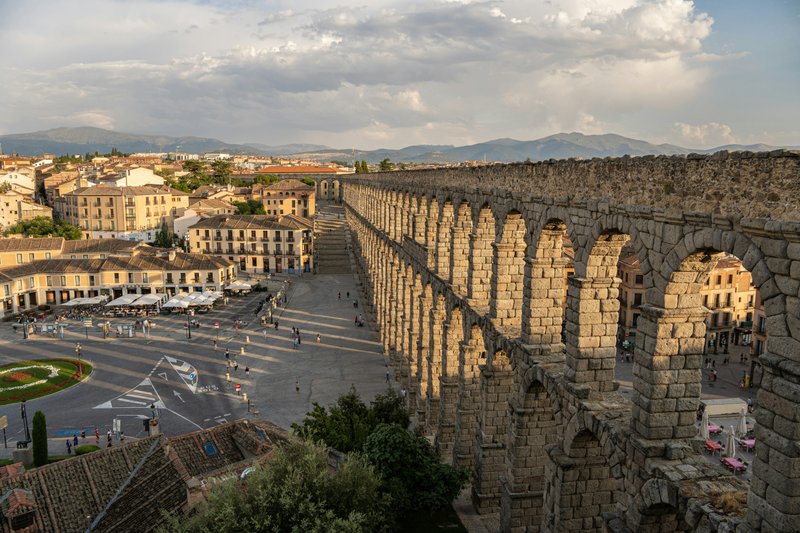
Explore SpainThe old town sits on a rocky promontory between the Eresma and Clamores rivers, its medieval street plan largely unchanged since Isabella I was crowned here in 1474. The Plaza Mayor anchors daily life — locals still gather under its arcades for morning coffee before climbing toward the Judería, the former Jewish quarter where narrow alleys open onto unexpected courtyards. The aqueduct's granite arches, assembled without mortar nearly two millennia ago, frame the lower town and remain the city's defining landmark.
Dining here follows Castilian rhythms: long lunches built around cochinillo asado carved tableside with the edge of a plate, or judiones de La Granja — massive white beans simmered with chorizo and morcilla. The restaurant scene clusters around the cathedral and along Calle Real, while smaller bars in the San Millán neighborhood pour local Ribera Duero wines by the glass. Hotels occupy converted palaces and historic buildings, their thick stone walls keeping rooms cool through August heat, many offering views across the meseta toward the Guadarrama mountains.