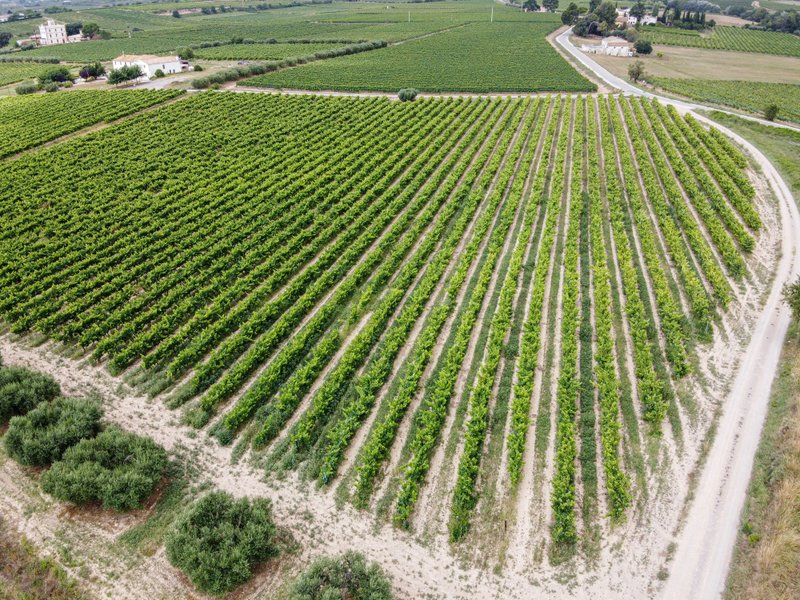
A former poultry farm in the Penedès vineyards, Casa Nova operates as a self-sustaining ecosystem where chef Andrés Torres cultivates shiitake mushrooms, roasts coffee, and keeps bees alongside his kitchen garden. His two tasting menus—Viña and Gran Vendimia—draw on his mother's regional recipes while incorporating techniques from Peruvian altiplano communities, including wood-fired bread. The Green Star-awarded cellar holds impressive vintage selections.
Named for chef Julià Bernet's maternal grandfather, Vilagut occupies a spacious two-floor dining room of minimalist elegance in central Vilafranca del Penedès. The kitchen honors regional traditions through both à la carte and tasting formats, with signature preparations like pigs' trotters paired with langoustine tartare and stuffed morels. A meticulously assembled wine list pays proper tribute to Penedès's viticultural heritage.
Perched above the Mercat de la Carn, chef Oriol Llavina's Bib Gourmand address draws directly from the market stalls below for its updated Catalan cooking. Guests choosing the bar counter watch the brigade at work, plating signature canelons and rice laden with cuttlefish and red prawns. Midweek brings the elaborate Menú del Cigró; weekends shift to à la carte freedom—both deliver remarkable value.
Chef-owner Sergi Torres runs this Bib Gourmand address in Sant Sadurní d'Anoia, where traditional Catalan cooking meets inventive technique in a classic-contemporary dining room. The daily set menu draws loyal regulars, while the seasonal à la carte rewards repeat visits. A cellar stocking over forty local cavas pairs naturally with every dish—fitting for Spain's sparkling wine capital.
For more than half a century, the same family has welcomed diners to this Sant Pau d'Ordal address, earning a Michelin Plate for their steadfast commitment to Catalan tradition. The kitchen turns out richly layered baked cannelloni and a signature preparation of pigs' trotters braised with plums—hearty, rooted cooking that rewards those seeking authentic regional flavour over contemporary flourish.
Frequently Asked Questions
What is the difference between cava and champagne?
+
Both are made using the traditional method of secondary fermentation in the bottle, but cava uses indigenous Spanish grape varieties—primarily Macabeo, Xarel·lo, and Parellada—rather than Chardonnay and Pinot Noir. The Penedès climate produces wines that tend to be fresher and more fruit-forward, with different mineral characteristics derived from the region's limestone and clay soils.
When is the best time to visit Penedès for wine tourism?
+
September and October during harvest season offer the most activity at bodegas, with opportunities to witness the grape picking and early production stages. Spring brings wildflowers between the vines and comfortable temperatures for cycling routes. Summer remains busy with visitors from Barcelona, while winter allows for intimate tastings and fewer crowds at family estates.
How do I get around the Penedès wine region without a car?
+
The R4 train line connects Barcelona Passeig de Gràcia to Sant Sadurní d'Anoia and Vilafranca del Penedès in approximately 50 minutes. Several bodegas offer shuttle services from these stations. Wine tour operators based in Barcelona provide guided excursions that handle all transport between estates. For independent exploration, some visitors rent bicycles in Vilafranca, though distances between wineries can be substantial.
Nearby Destinations
Explore SpainSouthwest of Barcelona, the Penedès wine region unfolds across a patchwork of vineyards that have produced wine since Phoenician times. The landscape divides into three distinct zones: the coastal Baix Penedès with its Mediterranean warmth, the central Penedès Mitjà where most cava production concentrates around Sant Sadurní d'Anoia, and the cooler Alt Penedès reaching toward Montserrat's foothills. Family-owned bodegas, some tracing their roots to the 19th century, share the territory with modernist estates designed by architects who understood that wine culture here extends beyond the glass.
The dining scene reflects Catalonia's obsession with seasonal produce. Restaurants work closely with local farms, serving calcots in winter, tomatoes at their peak in summer, and year-round interpretations of traditional Catalan cuisine. Vilafranca del Penedès, the comarca's capital, anchors the cultural life with its Saturday market and the Vinseum museum dedicated to wine heritage. Villages like Subirats and Torrelavit offer quieter bases for exploring, their stone houses and Romanesque churches marking routes between vineyards. The region's proximity to Barcelona—under an hour by train—makes it accessible without feeling suburban.