Sommelier Marcos Granda's return to Gijón produced this intimate one-starred address where chef Marcos Mistry commands an open kitchen before just twelve guests. The evening unfolds through aperitifs in the bar and library before revealing contemporary plates—tuna paired with sunflower seeds, prawns composed with musical precision—across two tasting formats that distill Asturian terroir into its purest expressions.
Perched on a breakwater within Gijón's marina, Auga commands sweeping views from its sea-facing terrace and bright, wood-accented dining room. Chef Gonzalo Pañeda holds one Michelin star for contemporary cooking that honours Asturian tradition while pivoting with the market—his creamy scallop with roe and seaweed exemplifies the approach. A compelling destination for seafood-focused gastronomy against an Atlantic backdrop.
Five generations of the Morán family have shaped this one-Michelin-starred institution since 1882, with father Pedro and son Marcos now orchestrating a kitchen where Asturian tradition meets measured innovation. The Fabada de Prendes and Pitu de Caleya chicken stew anchor tasting menus—Clásicos, Degustación 1882, Geles—each available with regional wine pairings. A pilgrimage for anyone serious about northern Spanish gastronomy.
Chef Álex Sampedro's Bib Gourmand address occupies the fringe of Cimadevilla, Gijón's oldest quarter, where an urban, market-driven philosophy shapes each plate. The kitchen reworks regional classics with notable precision—foie gras pizza, hake balls in prawn sauce, house-style tripe—balancing subtle seasoning against fine textures. Diners choose between sharing plates at the entrance bar or the pared-back basement dining room below.
Steps from the Plaza Mayor, this Bib Gourmand bistro channels chef Ricardo Fernández Señorán's dual heritage—Asturian seafood meets Extremaduran tradition—through four evolving tasting menus: Asina, Mangurrino, Dejalamío, and El Miajón. His signature escabeches demonstrate a restless culinary intelligence, while the 'Arrieros' program brings visiting chefs for collaborative four-hand dinners that keep the kitchen perpetually curious.
Lara Roguez, celebrated as the chef of the Cantabrian Sea, runs this intimate seafood-focused address where oysters, razor clams, and blue lobster arrive with full traceability documented in a distinctive logbook-style menu. Three tide-named omakase menus—Marea Baja, Marea Viva, Marea Alta—showcase her modern approach, while inventive gilda tapas with cured sea bass and smoked eel deliver concentrated maritime flavors.
Chefs Álvaro Gragera and Carlos Fraguas run this intimate counter near the marina, where eight seats face the action. Their approach draws on Japanese technique applied to Bay of Biscay and Mediterranean catch, with fish aged in-house to concentrate flavor. The nigiris—generous, precisely cut—anchor a sharing-focused omakase that rewards those seeking craft over ceremony in Gijón's dining scene.
The Manzano siblings, celebrated for their work at Casa Marcial, bring a relaxed Japanese-inflected sensibility to this designer-accented dining room on Plaza Florencio Rodríguez. The menu encourages sharing: pork cheek and prawn nems, impeccable potato tortilla, and the family's legendary ham croquettes. Counter seating offers front-row views of the kitchen's precise choreography—ideal for solo diners seeking connection alongside craft.
Frequently Asked Questions
What is the traditional way to drink cider in Gijón?
+
Asturian cider is poured from height—the escanciar technique—to aerate the naturally fermented drink. You'll receive a small amount in a wide glass, meant to be drunk immediately in one or two sips while the bubbles are still active. Most sidrerías expect you to leave a splash in the glass to rinse it before the next pour.
Which neighborhood is best for seafood dining?
+
Cimavilla, the elevated old town on the peninsula, concentrates the city's best seafood restaurants and traditional cider houses. The streets around Plaza del Marqués and the fishing harbor offer straightforward preparations of whatever came off the boats that morning, from grilled turbot to rice with lobster.
When do locals typically eat dinner in Gijón?
+
Dinner service rarely begins before 21:00, with most locals arriving between 21:30 and 22:30. Earlier evening hours are reserved for the paseo along San Lorenzo beach and pre-dinner cider and pintxos in the old quarter—a ritual that can stretch for hours before any proper meal.
Nearby Destinations
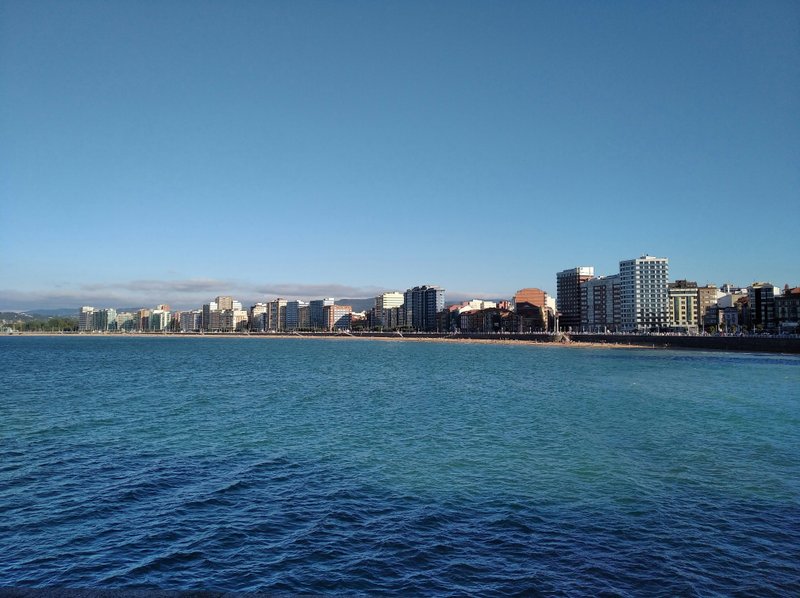
Explore SpainGijón sprawls along the Bay of Biscay, its crescent-shaped Playa de San Lorenzo anchoring a city that balances industrial heritage with genuine coastal charm. The Cimavilla peninsula—the old fishermen's quarter—climbs a rocky headland where Roman baths once stood and narrow streets now hide sidrería after sidrería. This is cider country: the ritual pour from overhead, the sawdust floors, the communal plates of cachopo and cabrales cheese.
West of the beach, the marina district draws a different crowd to its waterfront terraces, while the blocks around Plaza Mayor and Calle Corrida hum with pintxos counters and modern Asturian cooking. The city's culinary identity leans heavily on the Cantabrian catch—spider crab, hake, percebes—alongside mountain produce from the Picos de Europa foothills. Evening here means an espicha circuit through old-town bars, each glass of natural cider accompanied by small plates passed hand to hand.